Riyadh Can Gain from Iraq Elections, but U.S. Engagement is Crucial
Saudi Arabia’s accelerating campaign to revive its influence in Iraq may have been significantly bolstered by the results of the May 12 Iraqi parliamentary elections. But Riyadh will continue to face significant obstacles to strengthening its position and weakening Iran’s influence in the country, above all because the U.S. role in Iraq has become increasingly precarious....
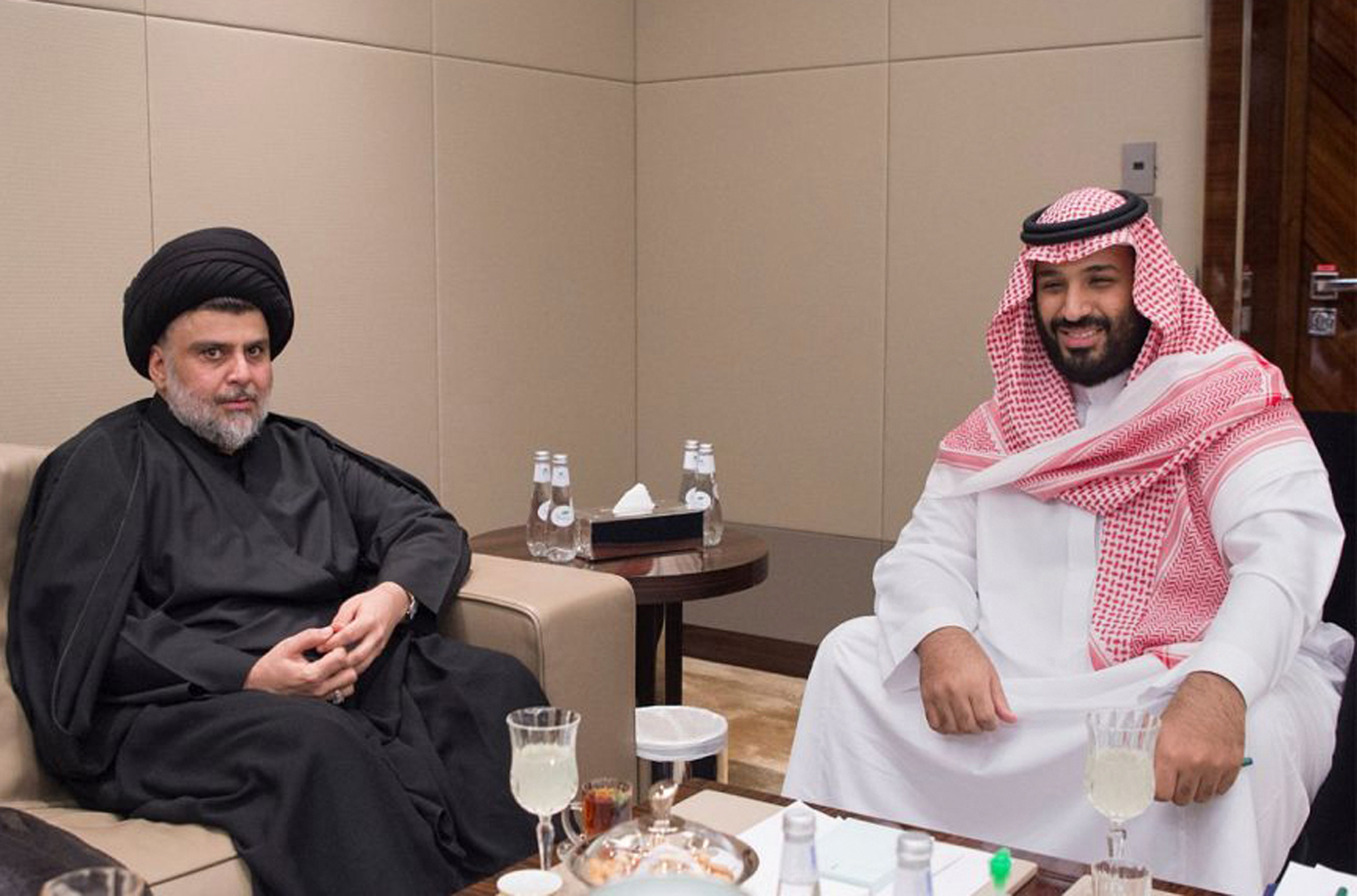
Saudi Crown Prince Mohammed bin Salman, right, receives Iraqi Shia cleric Muqtada al-Sadr in Jeddah, Saudi Arabia, July 31, 2017. (Saudi Press Agency via AP)
Saudi Arabia’s accelerating campaign to revive its influence in Iraq may have been significantly bolstered by the results of the May 12 Iraqi parliamentary elections. But Riyadh will continue to face significant obstacles to strengthening its position and weakening Iran’s influence in the country, above all because the U.S. role in Iraq has become increasingly precarious. As Washington and Tehran slowly developed a functioning modus vivendi in Iraq, particularly after the 2010 election, and with the rise of the Islamic State in Iraq and the Levant, Saudi Arabia found itself effectively shut out of Iraqi politics. But beginning in 2015, Riyadh began to reopen ties to Iraq, especially with more nationalistic elements among Shia political leaders. Washington and Tehran maintained some key but basic forms of cooperation while the battle against ISIL continued, but with ISIL effectively defeated and Iran facing a campaign of maximum pressure led by Washington, Saudi Arabia clearly senses a major opportunity to curtail Iran’s once-overwhelming influence in much of Iraq by promoting the country’s distinct national and broader Arab identity, and score a major regional victory.
As a result of the election, the biggest group in Parliament, with 54 seats, will be a coalition led by populist Shia cleric Muqtada al-Sadr, which is so broad-based it includes the three elected Communist deputies. This is good news for Riyadh, since Sadr has developed significant ties to Saudi allies in Iraq and made a much-publicized visit to Saudi Arabia in 2017. Sadr also visited Kuwait on May 29, which underscores his growing links to the Gulf Arab countries. Sadr’s nationalism positions him as a proponent of Iraq’s re-engagement with the Arab world and therefore a potentially crucial ally for some Saudi aims in Iraq.
Once primarily known for fiery anti-American rhetoric, Shia sectarian chauvinism, and leading a militia notorious for atrocities against Iraqi Sunnis, Sadr in recent years has recast himself as a nationalist and populist. He is a harsh critic of both Iran and the United States, raging against the two outside forces that have dominated Iraqi politics for the past 15 years. Sadr’s populist positions have appealed to Iraqi Sunnis, allowing him to expand his constituency from urban, and primarily poor, Shia areas. Along with incumbent Prime Minister Haider al-Abadi, who also presented himself as an Iraqi nationalist and ally of Saudi Arabia and other Gulf and Arab countries, Sadr’s agenda in recent months dovetailed with the Saudi campaign to promote Iraqi nationalism and its Arab character as a counterweight to pro-Iranian Shia sectarian politics.
Though Sadr is known for mercurial opinions and, like many other populists, has a long history of switching positions quickly and without warning, his victory, however narrow, is likely to be good news for Riyadh. It’s undoubtedly also encouraging that Abadi’s coalition came in third with 42 seats. However, the second largest bloc in Parliament, with 47 seats, was secured by the Fatah alliance, which essentially represents hard-line pro-Iranian interests in Iraq, including the notorious Popular Mobilization Forces militias. Led by sectarian Shia militia leader Hadi al-Amiri, Fatah represents everything that Riyadh fears and distrusts most in Iraq, most notably a profound commitment to Iran’s worldview and violent Shia extremism.
To form a government, 165 votes are needed for a parliamentary majority that can survive a confidence vote. This means that there are essentially two possible outcomes of the protracted, behind-the-scenes politicking that follows every Iraqi election. Because it will be hard to assemble 165 votes without Sadr’s grouping, he’s likely to be at the center of the next government, although he didn’t run for Parliament himself. He could join forces with Abadi’s group or other parties to form a new government that is likely to be relatively independent of Iranian influence and receptive to overtures from Riyadh and the rest of the Arab world.
That all looks good from a Saudi point of view; not so much for the United States. One thing Sadr has never wavered about is his anti-Americanism and demands that all U.S. troops leave Iraq as soon as possible. There is no evidence that is going to change, and the instinct of any government assembled around his followers would be to try to expel U.S. forces from the country rather than cooperate with them. Given the demise of the Iran nuclear deal and Washington’s mounting pressure on Tehran, the attitude of a pro-Iranian, Fatah-led government would hardly be more sympathetic, especially since Iran will be more determined than ever to defend its interests in Iraq. But that’s not just a problem for Washington. It’s also likely to prove a serious headache for Riyadh.
For many years, stability in Iraq was based on relative cooperation, as well as competition, between Washington and Tehran. But in the post-ISIL and, especially, post-nuclear deal environment, the grounds for such cooperation have evaporated and therefore competition, and possibly even some forms of confrontation, are far more likely. Both Riyadh and Washington have been maneuvering in recent months to secure each other’s cooperation in Iraq. That’s essential if Saudi and U.S. agendas are going to prove effective. In late October 2017, former Secretary of State Rex Tillerson and Saudi King Salman bin Abdulaziz emphasized the need to cooperate in Iraq to push back against Iran’s growing regional hegemony, just as Saudi investments and political outreach in Iraq reached new levels of intensity and effectiveness. Washington had been banking on another term for Abadi, but even if he does manage to stay in office, it will be under the aegis of either Sadr or Iran’s allies.
Despite the election result, which was largely negative from an Iranian perspective, Iran still has more leverage in Iraq than does any other country. Nonetheless, a combination of U.S. hard and soft power in Iraq with Saudi soft and “sticky” (largely investments) power could prove a formidable combination and could help Iraqi nationalists to gain much more independence from Iranian influence. But securing this partnership and preventing it from atrophying just as it begins to take effect will require overcoming two significant obstacles: finding a way to keep an Iraq-fatigued United States engaged in the country, and preventing the new Iraqi government, whether nationalist or pro-Iranian in orientation, from showing U.S. troops the door.
The bitter legacy of the 2003 U.S. invasion and occupation, and anti-American rhetoric by the likes of Sadr and Amiri, mean that Washington was, in effect, the biggest loser in the May 12 election. The new government is likely, unless it is overtly pro-Iranian, to provide Saudi Arabia with more opportunities to increase its engagement with Iraq in the coming months and years and continue to woo Iraq back into the Arab fold. But without a continued robust US. presence in Iraq, Riyadh’s ability to push back against Tehran’s influence will be significantly weakened. So, for Saudi Arabia’s interests, it is essential that Sadr’s coalition forms the next Cabinet and that Washington finds a way to work with a government dominated by a long-time critic. That’s by no means impossible. But it will be a significant test of Saudi diplomatic and political skill.
The views represented herein are the author's or speaker's own and do not necessarily reflect the views of AGSI, its staff, or its board of directors.
The significance of Kuwait’s defense pact with Pakistan lies less in any immediate military transformation than in what it reveals about the evolving security landscape of the Gulf.
President Trump has led the United States into an impossible dilemma in which resuming and intensifying the war presents one set of alarming consequences while ending it under current circumstances offers at least as many disasters for Washington.
The Trump administration has positioned the United States at a crossroads between a new regime of containment against Iran or a historic drawdown of U.S. influence in the Gulf and broader Middle East.
Riyadh and Abu Dhabi urged President Trump not to attack Iran, but now that the war is into its second month, leaving the current situation in place would be an unthinkable fiasco for them.
Though they were unsuccessful in preventing the current conflict, and, as expected, have been dragged into the U.S.-Israeli confrontation with Iran, Gulf Arab countries remain crucial to hopes for limiting the war and bringing it to a quick resolution.