Oct 14, 2025
Fearing War and Doubting Prospects for Energy Exports, Iranians Buy Gold
The October 14 edition of the Iran Media Review analyzes Iranian reactions to a new economic report forecasting a rise in inflation despite increasing oil exports.

Russian President Vladimir Putin relayed Israel’s assurance to Iran that it “is not seeking confrontation.” And hard-line Kayhan insists that Iran’s oil exports are on the rise – despite Washington’s efforts to bring them down to zero. Despite these assurances, Iranians remain anxious about what lies ahead, converting whatever cash they can into gold.
- October 11: Economic Donya-ye Eqtesad released Foreign Minister Abbas Araghchi’s reaction to Russian President Vladimir Putin’s October 10 statements delivered at a press conference in Tajikistan, in which he disclosed:
- “We continue to maintain trusting contacts with Israel and receive signals from the Israeli leadership asking to convey to our Iranian friends that Israel is committed to a further settlement and is not interested in any kind of confrontation.”
- Araghchi responded: “Our forces are on alert, and there is a possibility of deception by the Zionists … Of course, logically speaking, we must acknowledge that the Zionist regime no longer has the capability to launch another attack on Iran.”
- October 13: Hard-line Kayhan reported on increased Iranian oil exports:
- “Despite all of Washington’s efforts in recent years, a report by the International Energy Agency shows that Iran’s average oil exports in the first half of 2025 stood at about 1.7 million barrels per day. Meanwhile, according to data from the international tanker-tracking company Vortexa, Iran’s average crude oil exports between June 1 and June 20 reached 1.8 mb/d – the highest level recorded so far. Vortexa’s data, derived from satellite imagery and close monitoring of maritime movements, serve as a key benchmark for global energy market assessments … Analyses by Kpler also show that Iran’s average exports up to June 27 were around 1.46 mb/d, representing a 46% increase compared to May … Recently, Tanker Trackers announced, based on data from oil shipment tracking firms, that Iran’s oil exports reached nearly 2 mb/d in September – a figure not seen since mid-2018. The key point is that this record was achieved at the height of sanctions – and without the Joint Comprehensive Plan of Action, Financial Action Task Force compliance, or any negotiations.”
- October 13: Reformist Shargh published a summary of a World Bank report on the dire prospects for Iran’s economy:
- “The World Bank has predicted two difficult years ahead for Iran’s economy. The international institution emphasized that Iran’s economic growth has fallen to its lowest level in the past five years, noting that the combined impact of sanctions, shortages of water and energy resources, and geopolitical tensions has made the path of development increasingly difficult. Although the World Bank has revised its earlier forecasts for Iran, it still projects negative gross domestic product growth and a staggering rise in inflation – up to 56% – for 2025 and 2026. The World Bank’s latest report, which examines influencing factors such as sanctions and the 12-day war, reflects these revised projections for Iran’s economy.”
- October 13: Reformist Etemad reported on how Iranians are trying to protect themselves against inflation:
- “The rate of inflation is rising so rapidly, and price changes are so unpredictable and uncontrollable, that people prefer under no circumstances to hold on to cash. As soon as they receive money, they convert it into goods. According to the Statistical Center of Iran, inflation over the past 12 months has never dropped below 30%. The central bank reports that during the same period, inflation has generally fluctuated above 35%. Meanwhile, the interest rate on 1-year bank deposits is about 20%, and for longer-term deposits – such as 3-year accounts – it is set between 22% and 25%, roughly 30% lower than the inflation rate.”
- “This situation effectively eliminates bank savings as an investment option for small investors. Alternative markets include real estate, automobiles, the stock exchange, foreign currency, and, of course, gold. The problem with the housing and automobile markets is that they do not attract small capital. When 1 square meter of an apartment costs more than 10 times the legally set minimum monthly wage for the current year, it is unsurprising that small investors avoid this market. The car market is in a similar situation: Pride automobile, which since the start of its production line was known as an affordable car for the economically unprivileged classes, has recently reached a price ceiling of 500 million tomans – placing it far beyond the reach of small investors as well.”
- “The stock market, with its constant fluctuations and reputation for ‘burning’ small investors, has lost its ability to attract limited capital. This leaves gold and foreign currency competing to absorb small-scale investments.”
The views represented herein are the author's or speaker's own and do not necessarily reflect the views of AGSI, its staff, or its board of directors.
Related
Iran Media Review
Oct 10, 2025
Technocrats Prescribe Political and Economic Reforms as Survival Strategy
The October 10 edition of the Iran Media Review examines proposals from Iranian technocrats for political and economic reforms.
Iran Media Review
Oct 7, 2025
“Cosmetic Surgery”: Iran Removes Four Zeros From Bank Notes
The October 7 edition of the Iran Media Review highlights criticism of a move by the Iranian Parliament to remove zeros from the national currency.
Iran Media Review
Oct 3, 2025
Iran: Resigned to Sanctions
The October 3 edition of the Iran Media Review considers Iranian regime efforts to downplay the return of United Nations “snapback” sanctions.
Oct 10, 2025
Technocrats Prescribe Political and Economic Reforms as Survival Strategy
The October 10 edition of the Iran Media Review examines proposals from Iranian technocrats for political and economic reforms.
Oct 7, 2025
“Cosmetic Surgery”: Iran Removes Four Zeros From Bank Notes
The October 7 edition of the Iran Media Review highlights criticism of a move by the Iranian Parliament to remove zeros from the national currency.
Oct 3, 2025
Iran: Resigned to Sanctions
The October 3 edition of the Iran Media Review considers Iranian regime efforts to downplay the return of United Nations “snapback” sanctions.
Analysis
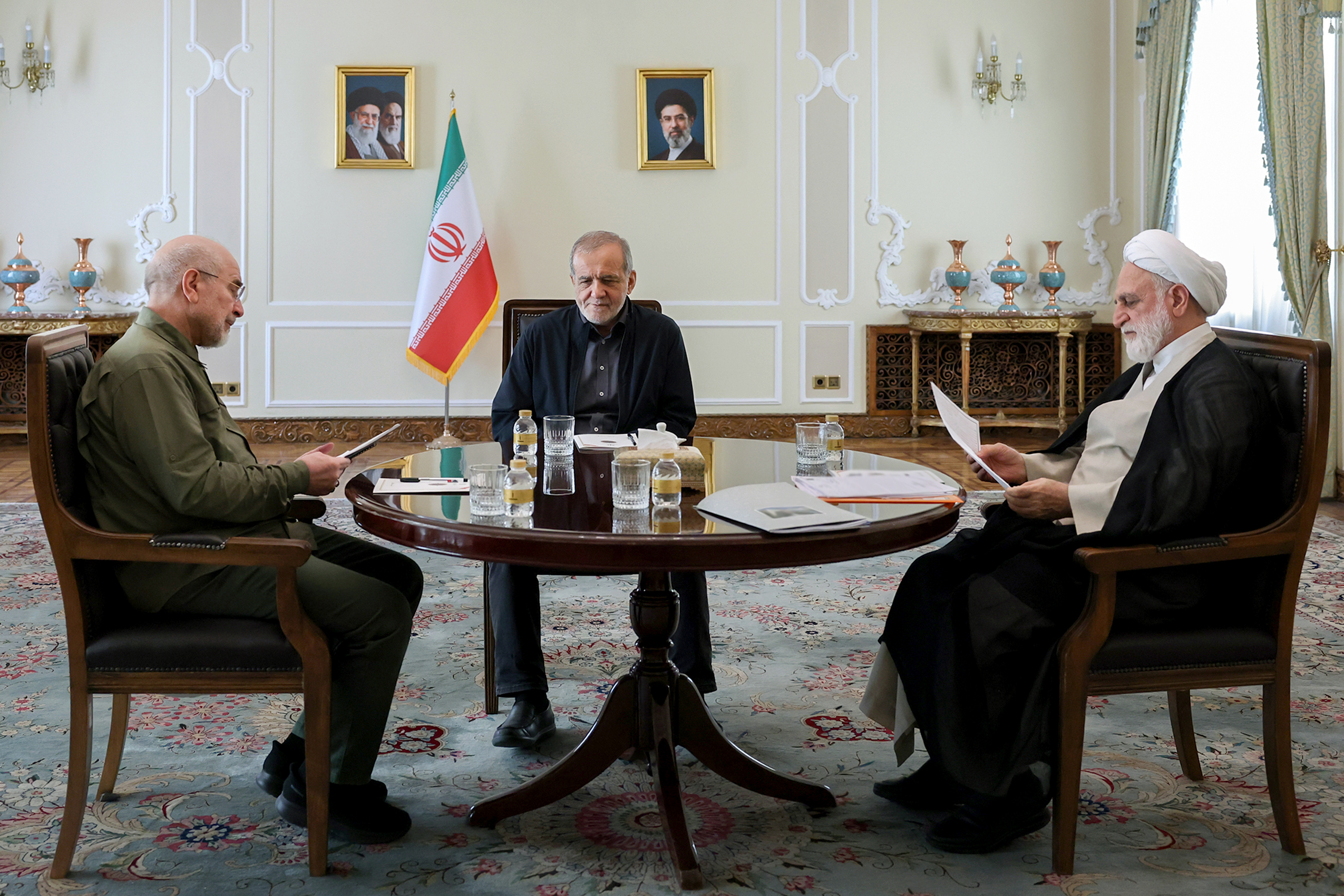
The Committee of Six and Strategic Decision Making in Iran
Remarks by Iran’s president offer a rare glimpse of how the Islamic Republic has adapted its decision making to the absence of its supreme leader.
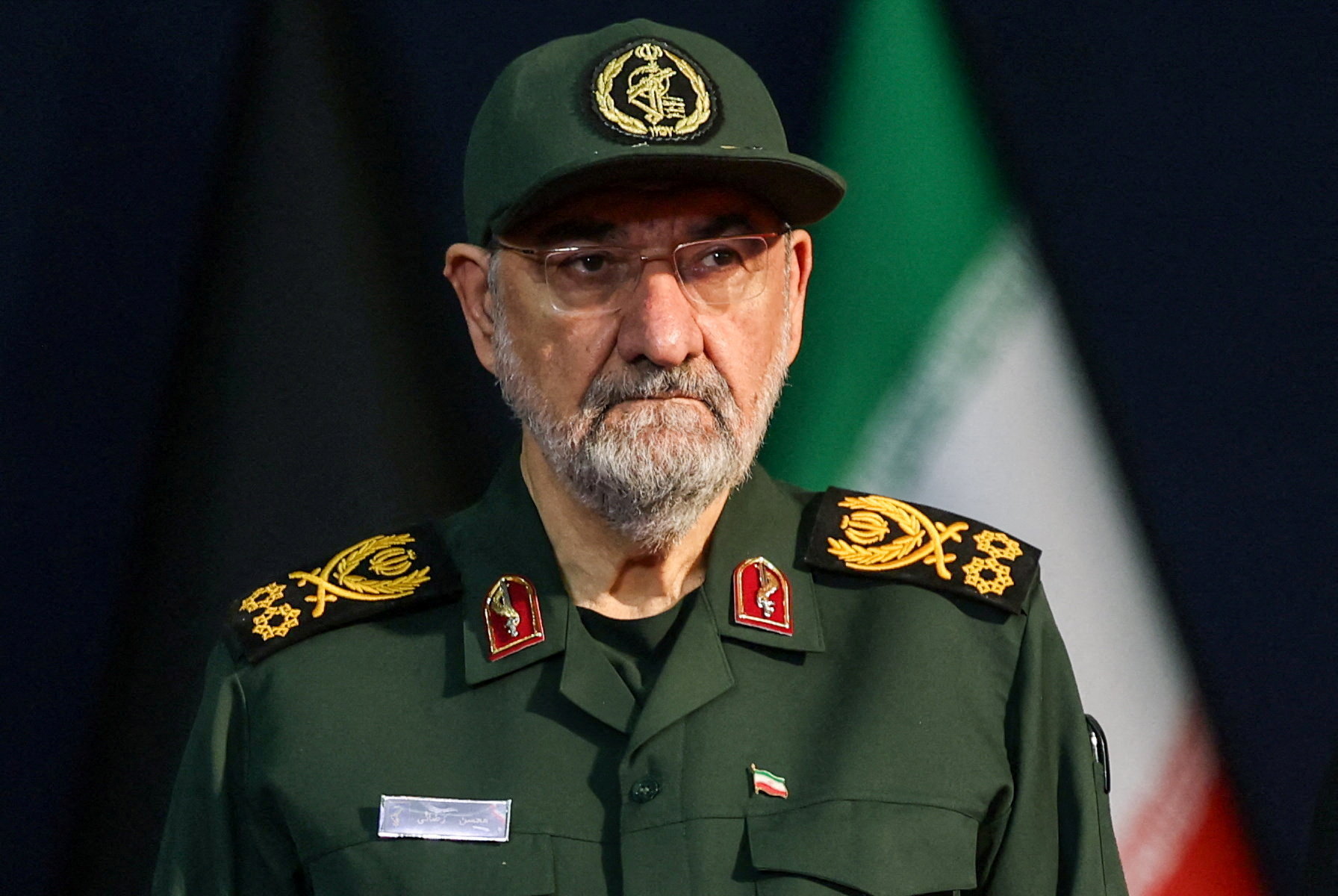
Mohsen Rezaei at the Helm of Iran’s Supreme National Security Council
Under Rezaei, the SNSC could prove constructive or paralyze strategic decision making.
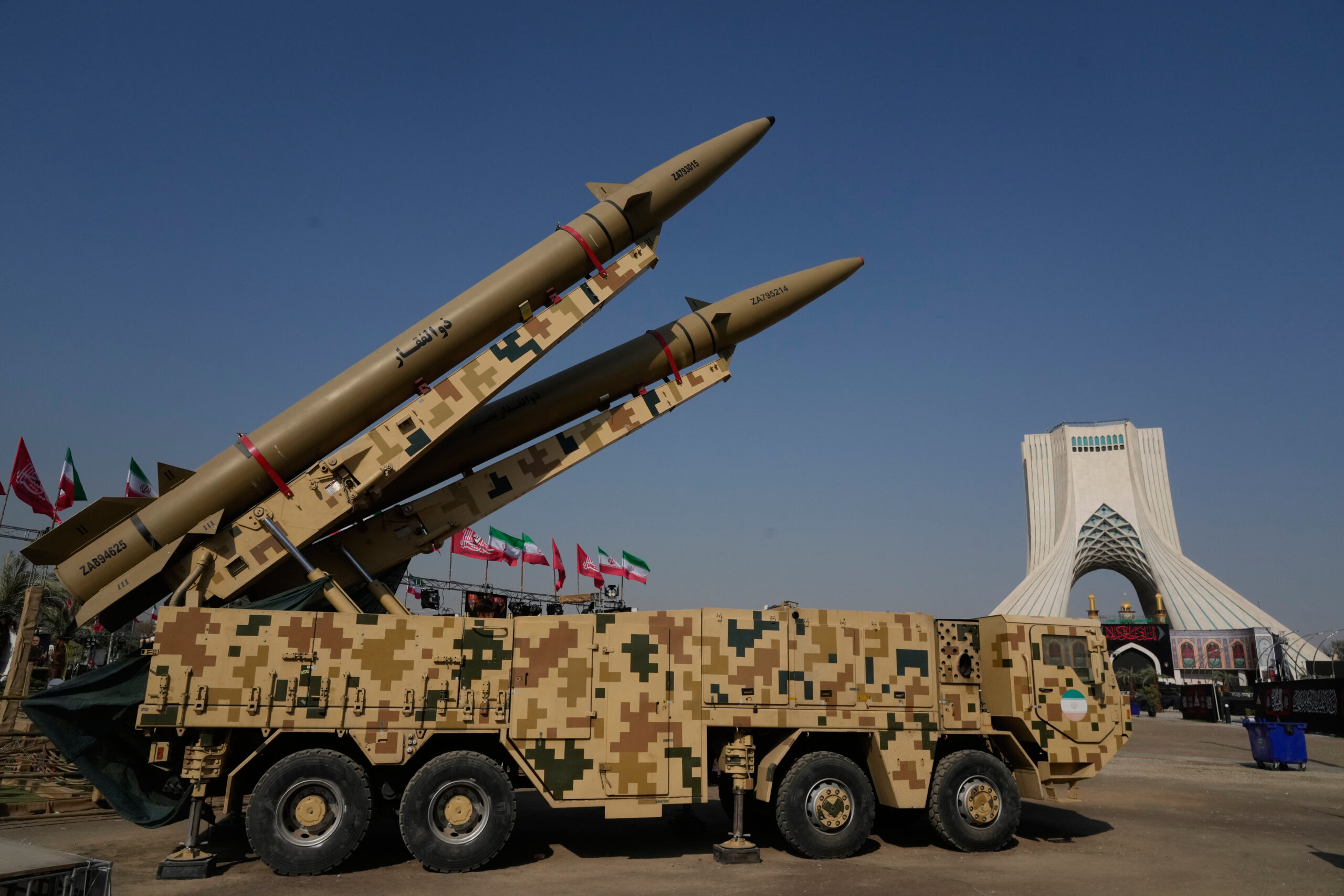
The Islamic Republic Returns to Offense
After U.S.-Israeli strikes killed Supreme Leader Ayatollah Ali Khamenei on February 28, Iran’s collective leadership has concluded that the best defense is a good offense.
Iran’s Collective Strategic Decision Making
Wartime pressure has temporarily aligned the leadership’s overriding interest in regime survival, even as its members continue to differ over the costs, methods, and ultimate objectives of the war.
Events
Oct 6, 2026
Is the U.S.-Iran Stalemate a “New Normal” or the Prelude to Another Explosion?
On October 6, AGSI hosted a discussion on the U.S.-Iran stalemate and the prospects for a cease-fire.
Speakers



Book Talk: Iran and the Bomb: The United States, Iran and the Nuclear Question
On June 16, AGSI hosted a discussion on the evolution of Iran's nuclear program.
Speakers

Apr 21, 2026
Inside Iran’s Wartime Leadership: Power, Succession, and Regime Stability
On April 21, AGSI hosted a discussion on the evolution of Iran's leadership during the war.
Speakers

Mar 18, 2026
In Its Conflict With the United States and Israel, Does Escalation Favor Iran?
On March 18, AGSI hosted a discussion on the escalation of the Iran war.
Speakers