As President, Clinton Would Adopt a Strong Foreign Policy
With less than three weeks to go before the American presidential election, virtually all credible observers believe that Democratic candidate Hillary Clinton is now assured of victory. It’s therefore reasonable to begin to look at what a Clinton administration might mean for international relations, particularly from the point of view of the Gulf states. Mrs Clinton was...
With less than three weeks to go before the American presidential election, virtually all credible observers believe that Democratic candidate Hillary Clinton is now assured of victory. It’s therefore reasonable to begin to look at what a Clinton administration might mean for international relations, particularly from the point of view of the Gulf states.
Mrs Clinton was Barack Obama’s secretary of state during his first term and there is a strong overlap in their policy positions. But the two conceptualise international relations in strikingly different ways.
Mr Obama is strongly influenced by the 2003 Iraq war and its consequences. This fiasco, and its accompanying nation-building debacle in Afghanistan, left him and many of his closest confidants convinced that, in the Middle East in particular, armed intervention is invariably quixotic and liable to leave Washington bogged down in a quagmire.
Mrs Clinton, however, came of age diplomatically at the end of the Cold War. Although she is well aware that American public opinion strongly opposes any unnecessary military engagements in the Middle East, and shares that caution, she has a more “muscular” outlook than Mr Obama. Her frame of reference includes relatively successful American military campaigns such as the liberation of Kuwait and the intervention in Kosovo. She therefore believes that American firepower, properly applied and with limited goals, can positively influence international realities without resulting in endless and fruitless commitments.
While there certainly won’t be any return to the irrational militarism of the George W Bush administration, Mrs Clinton will probably update the policies of her husband and his predecessor, George HW Bush. This essentially entails a balance between recognising and utilising the potential influence of American power, while acknowledging its limitations.
This orientation explains why Mrs Clinton wanted the Obama administration to adopt a far more proactive approach in Syria, and has supported creating no-fly zones and much more extensive programmes for arming rebel groups. A very serious re-evaluation of Syria policy after her inauguration is therefore likely.
Perhaps the sharpest specific disagreement between them has been over Mr Obama’s reversal on his “redline” regarding the use of chemical weapons by the Syrian regime. Mrs Clinton argued that once Washington has committed to such a red line, it must be enforced to avoid serious damage to American credibility. Mr Obama counters that taking military action to prove a willingness to do so is the “worst argument” for the use of force.
Another revealing difference between them is their diverting attitudes towards Russian president Vladimir Putin. Mr Obama has little regard for Mr Putin, unlike Donald Trump who seems to idolise the Kremlin bully. But the Obama administration has, nonetheless, done little to counter Russian adventurism in Ukraine and Syria.
Mrs Clinton, by contrast, seems to harbour a profound and personal distaste for Mr Putin and a much stronger sense of the challenge Russia is posing to the United States internationally. She is certainly not going to seek an open conflict with Russia. But she will want to put Mr Putin clearly on notice that he is dealing with a more resolute White House.
The best opportunity to do this in a meaningful way probably won’t be in Syria, but closer to home for Moscow, in Ukraine, Crimea or the Baltic states.
However, if such an initiative is deemed too provocative or dangerous, it’s possible that a confrontation over Syria could serve the same purpose. And a successful reassertion of a proactive American international role in Eastern Europe would, sooner or later, have a significant impact on the situation in Syria by diverting Russia’s attention, announcing that Washington’s patience with Russian adventurism is over, and altering everyone’s calculations.
Russia and its key allies, particularly Iran, seem well aware of the potential for a less risk-averse attitude from the next US administration.
The shockingly brutal campaign to overrun Aleppo by the Syrian regime, with strong support from Tehran and Moscow, while Mr Obama is still in the White House is an obvious example. So are the repeated attacks on American warships by Houthi rebels or their allies in Yemen, which primarily make sense from an Iranian point of view, particularly if Tehran seeks to establish itself as the address for negotiations that can actually end that troublesome conflict.
The Gulf states should be cautiously optimistic. This year, Mrs Clinton’s top foreign policy adviser, Jake Sullivan, called for a “more effective American strategy in the Middle East”, specifically by “raising the costs on Iran for its destabilising behaviour, and … raising the confidence of our Sunni partners that the United States is going to be there”.
The Arab Gulf states won’t get everything they want from her administration, but all signs point to a definite improvement from a Hillary Clinton White House.
This article was originally published by The National.
The views represented herein are the author's or speaker's own and do not necessarily reflect the views of AGSI, its staff, or its board of directors.
Rival camps within the Islamic Republic are increasingly turning to YouTube for policy debate, but there is a limit to the regime’s tolerance for that debate.
President Trump has led the United States into an impossible dilemma in which resuming and intensifying the war presents one set of alarming consequences while ending it under current circumstances offers at least as many disasters for Washington.
The Trump administration has positioned the United States at a crossroads between a new regime of containment against Iran or a historic drawdown of U.S. influence in the Gulf and broader Middle East.
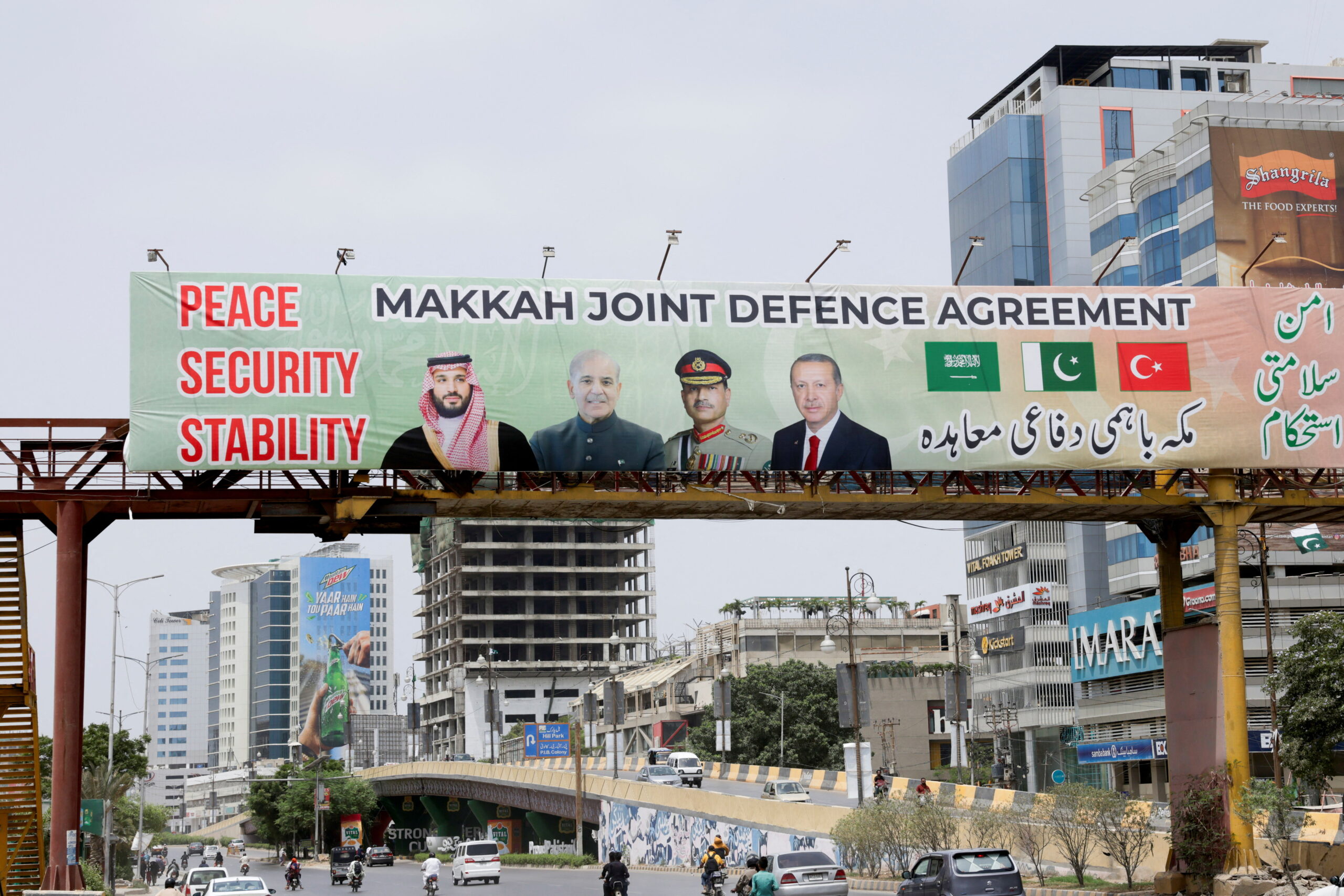
Riyadh and Abu Dhabi urged President Trump not to attack Iran, but now that the war is into its second month, leaving the current situation in place would be an unthinkable fiasco for them.
Though they were unsuccessful in preventing the current conflict, and, as expected, have been dragged into the U.S.-Israeli confrontation with Iran, Gulf Arab countries remain crucial to hopes for limiting the war and bringing it to a quick resolution.






Oct 24, 2016
As President, Clinton Would Adopt a Strong Foreign Policy
With less than three weeks to go before the American presidential election, virtually all credible observers believe that Democratic candidate Hillary Clinton is now assured of victory. It’s therefore reasonable to begin to look at what a Clinton administration might mean for international relations, particularly from the point of view of the Gulf states. Mrs Clinton was...
4 min read