Baghdad’s Dual Offensive: Reclaiming the Monopoly of Force and Oil
By explicitly linking the disarmament of nonstate armed actors to the eradication of oil smuggling, Iraq’s prime minister has targeted the financial lifelines that allow parallel power centers to persist outside constitutional order.
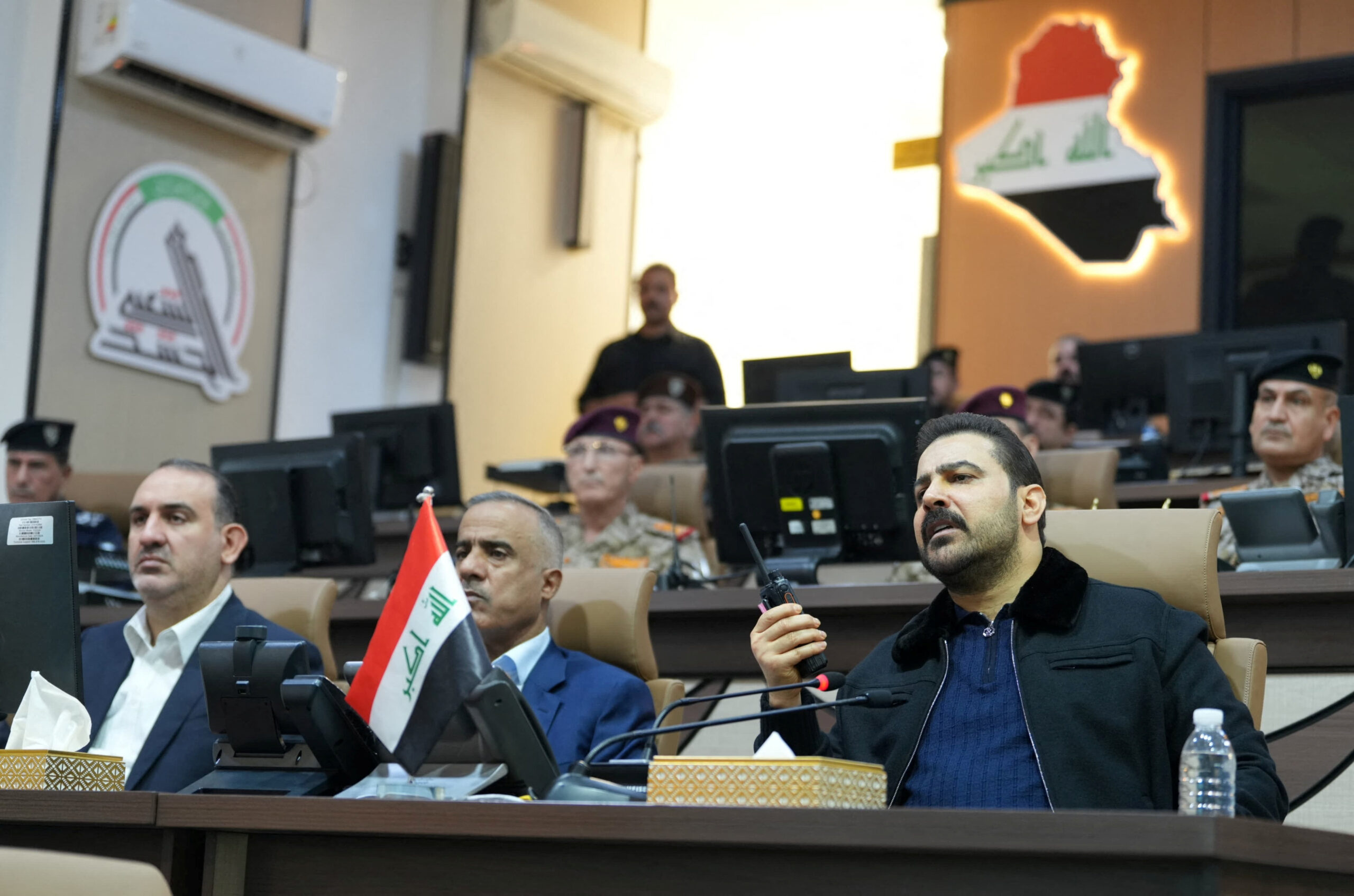
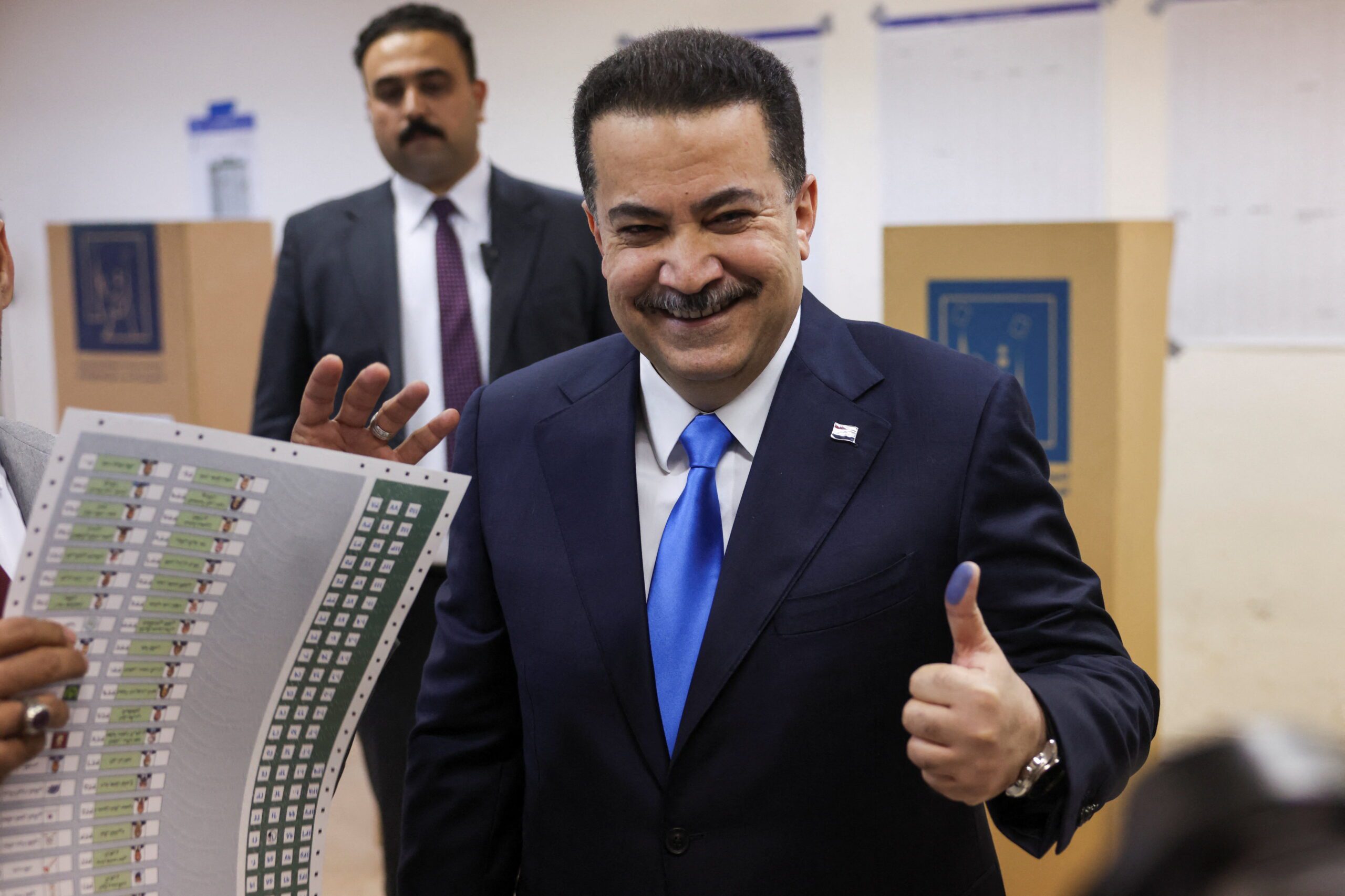
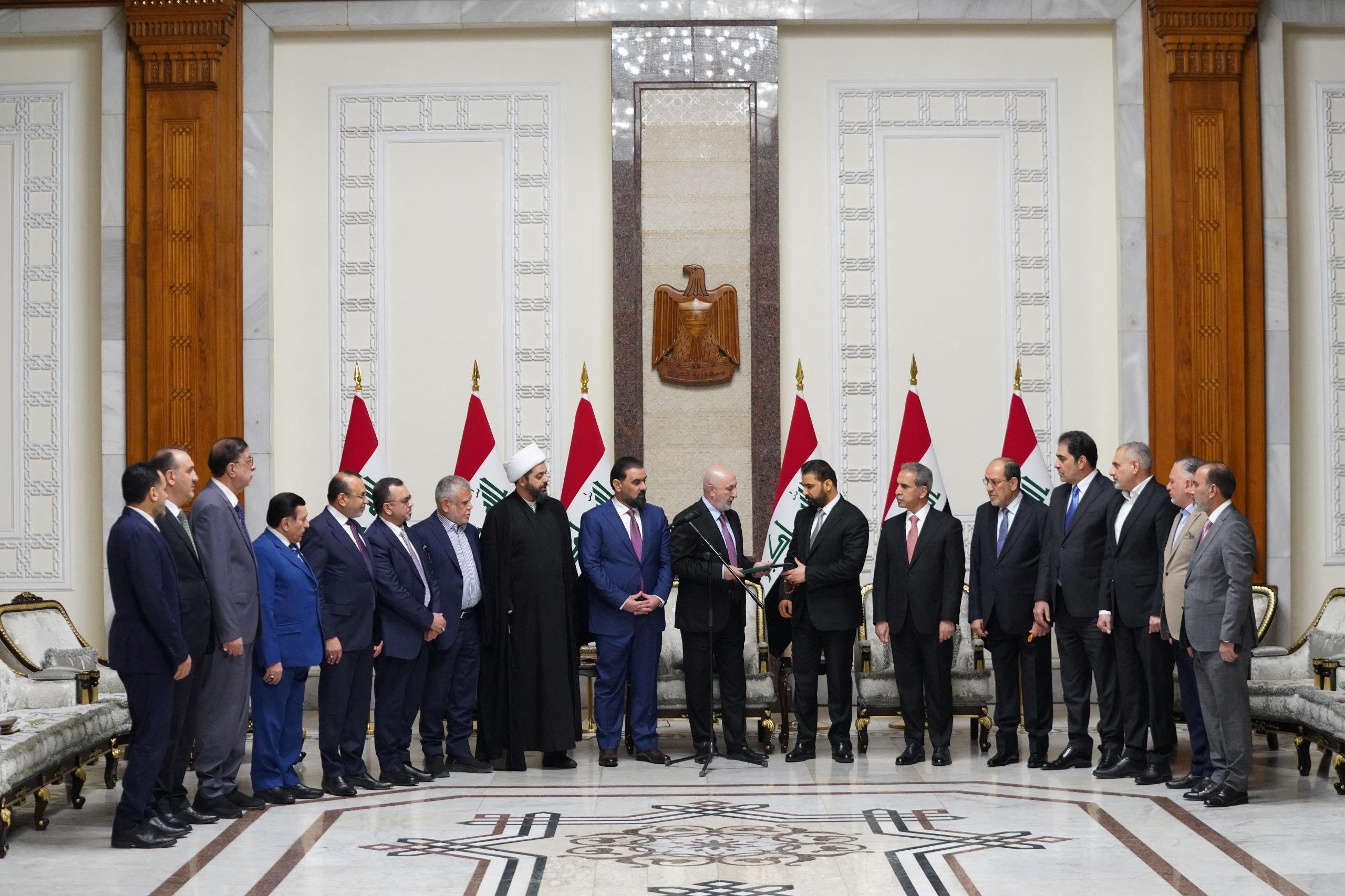
Iraqi Prime Minister Ali al-Zaidi speaks by radio from Baghdad to Iraqi security forces deployed in Jurf al-Nasr, Iraq, November 20. (Iraqi Prime Minister Media Office/Handout via REUTERS)
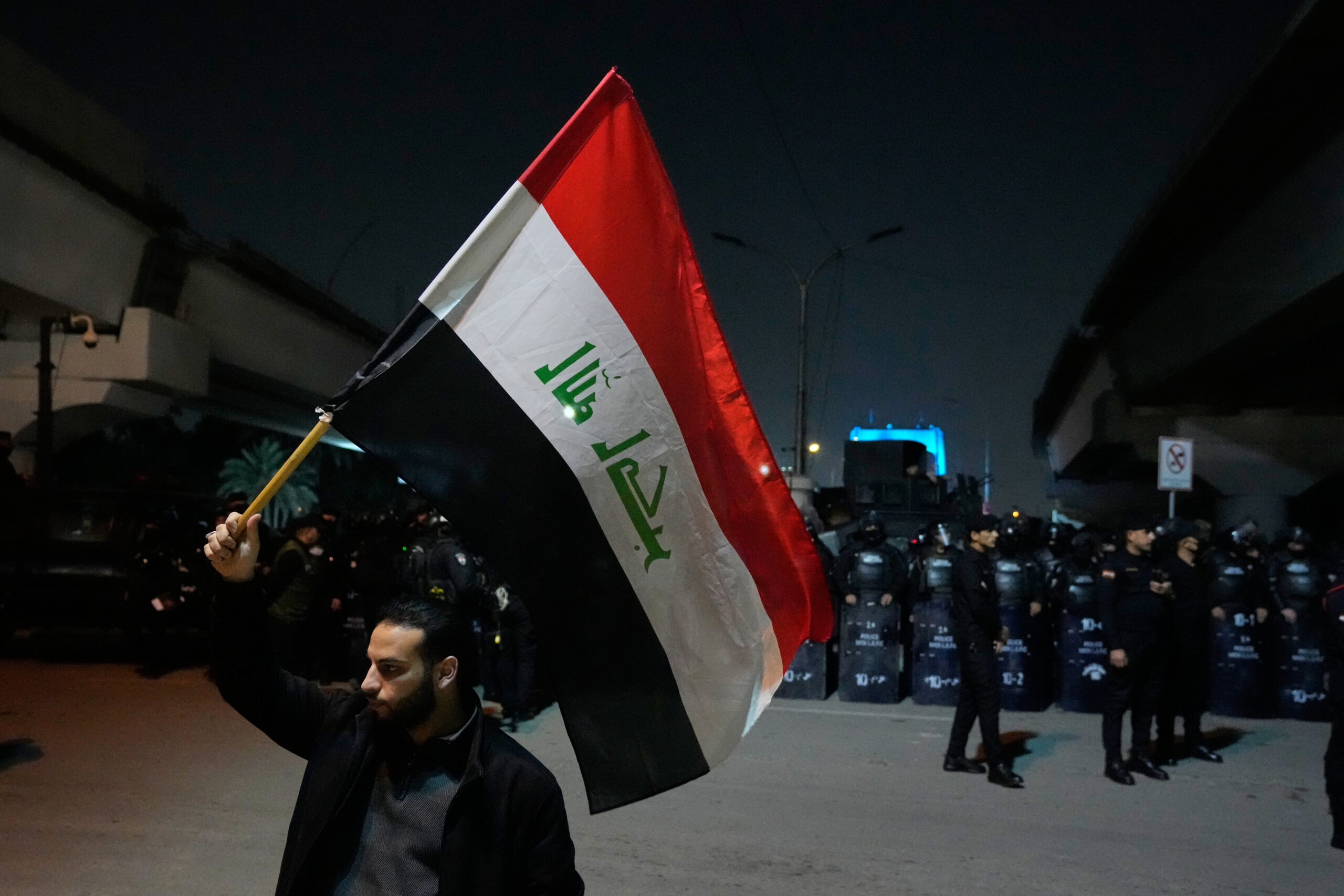
For nearly a decade after the territorial defeat of the Islamic State group in 2017, Iraq struggled with a chronic, dual erosion of sovereignty: armed factions operating outside federal command and billions of dollars in crude oil siphoned through illicit networks. Over the past several weeks, however, Prime Minister Ali al-Zaidi has launched an ambitious, dual-track campaign to confront both deficits simultaneously. Combining sweeping legal and administrative decrees with the credible backing of the regular Iraqi armed forces, Zaidi is testing whether the Iraqi state can finally subordinate nonstate armed actors and dismantle the entrenched oil-smuggling networks that sustain them.
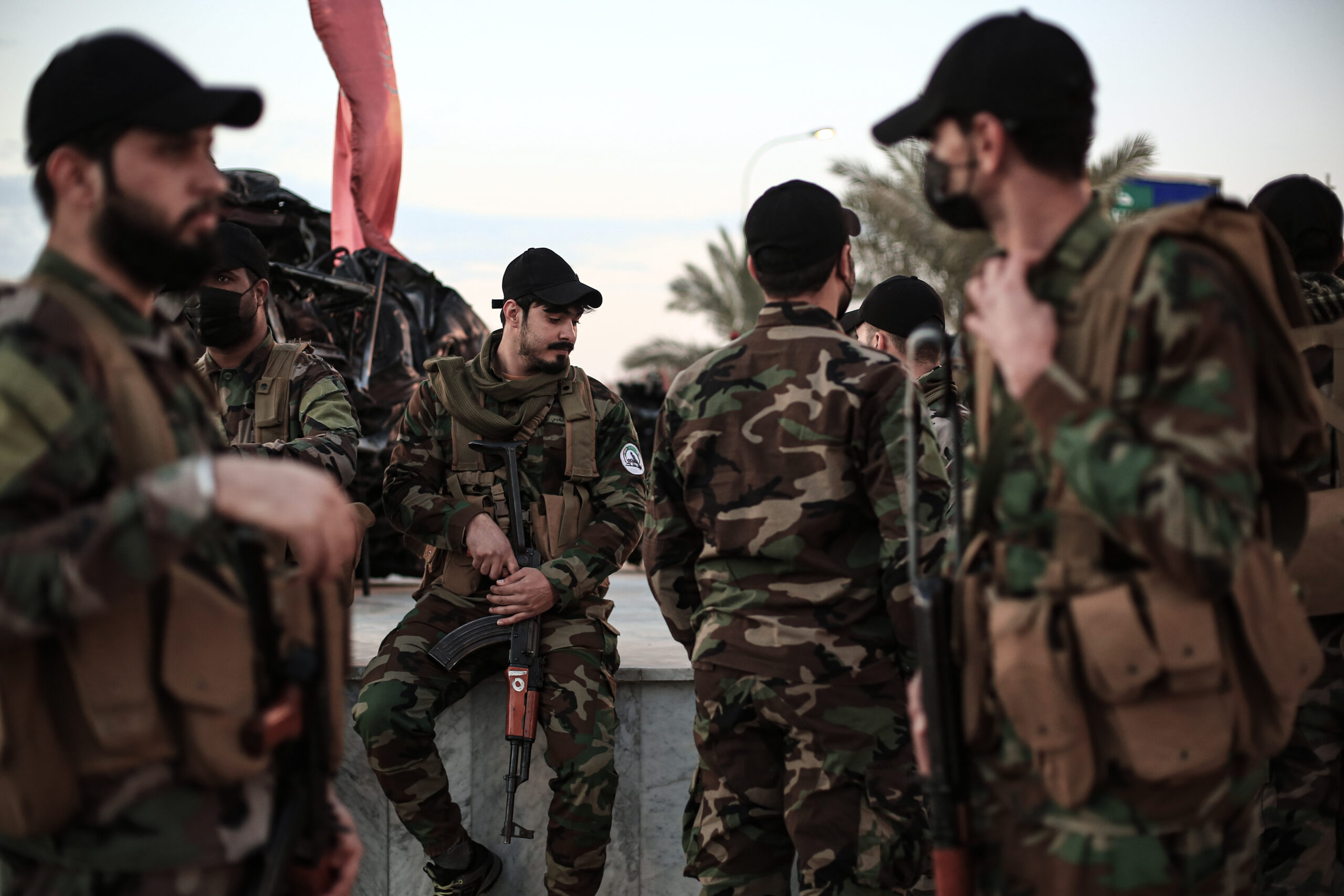
Zaidi’s current offensive traces back to the post-2017 trajectory of Iraq’s nonstate armed groups. When the regular Iraqi armed forces collapsed in the face of the ISIS onslaught in 2014, tens of thousands of volunteers mobilized under legitimate religious and national calls to fill the security vacuum. Those factions fought with undeniable courage, endured heavy sacrifices, and played an indispensable role in liberating Iraqi territory by late 2017. Yet once the existential threat of ISIS receded, the institutional trajectory of several prominent factions shifted dramatically. Rather than demobilizing or fully integrating into professional military structures, certain groups repurposed their wartime legitimacy and heavy arsenals to secure political leverage and build lucrative economic empires for their chains of command. Despite maintaining nominal allegiance to the commander in chief, some factions routinely bypassed Baghdad on existential questions of war and peace – launching cross-border strikes and regional escalations that directly contradicted official Iraqi security policy. This parallel decision making repeatedly exposed Iraq to retaliatory attacks, endangered national stability, and subjected the government to severe international scrutiny.
For years, armed groups outside state command justified their retention of weapons by citing the continued presence of foreign forces on Iraqi soil, particularly U.S. troops. Disarmament, they argued, could not be contemplated while foreign military missions remained active. Recognizing that this argument functioned as a durable political shield, the Iraqi government worked systematically to eliminate it. Through sustained diplomatic negotiations, Baghdad secured a phased withdrawal agreement for all foreign coalition forces, implemented across two stages in September 2025 and September 2026. By bringing the international coalition’s military mission to a close, the government stripped away the primary ideological pretext used by armed factions to operate independently of state command.
Concurrently, Iraq reached a strategic understanding with the international community, led by the United States, to bring all weapons under exclusive state control. While the September 2026 target date proved overly ambitious amid complex political and security negotiations, the deadline was moved to the end of June 2027. Reaction among the armed factions has remained sharply divided: Whereas most groups have declared their readiness to comply with the state’s roadmap, others have vacillated between contesting specific implementation mechanisms and rejecting disarmament altogether.
Baghdad’s move to restore federal control over Jurf al-Nasr in Babil governorate was the campaign’s most formidable test. Widely regarded by Iraqi and international observers as the hardest node in the entire weapons-consolidation project, Jurf al-Nasr had long functioned as a closed stronghold largely inaccessible to regular state institutions. Many analysts predicted that any attempt by Baghdad to reassert authority there would inevitably trigger armed resistance and plunge the country into internal bloodshed. Instead, Zaidi’s government executed the operation with extraordinary strategic patience. By pairing firm political resolve and legal mandates with disciplined security maneuvering, Baghdad deployed regular Iraqi armed forces into Jurf al-Nasr without shedding a drop of Iraqi blood – accomplishing peacefully what skeptics had deemed nearly impossible. Crucially, the government framed the operation not solely as a security measure but as an economic imperative aimed at shutting down illicit oil refining, smuggling, and informal taxation networks operating inside the area. In doing so, Zaidi underscored the defining dynamics of post-2003 Iraqi politics regarding how uncontrolled weapons and illicit economic rents have been mutually reinforcing pillars of parallel power.
Emboldened by the peaceful breakthrough in Jurf al-Nasr, Zaidi swiftly pivoted toward an even larger and more deeply entrenched theater of illicit economic activity: oil smuggling in Kirkuk and neighboring northern provinces. For years, crude oil and refined derivatives in northern Iraq have been siphoned through unauthorized pipelines, clandestine topping plants, and porous internal and international transit corridors, depriving the federal treasury of billions of dollars in vital revenue. Following investigative findings into systemic abuses at the state-run North Oil Company, Zaidi moved with decisive speed. He dismissed a sweeping roster of senior military, border-port, and civilian officials – including top security commanders in Kirkuk and border-control leadership – while suspending senior executives at the North Oil Company and referring the files to the Iraqi High Commission of Integrity. Backed by regular security deployments ordered to seal unofficial crossings and secure oil installations, the prime minister vowed that anti-smuggling enforcement would be applied uniformly across every governorate of Iraq, without political favoritism or geographic exceptions.
Beyond domestic governance and anti-corruption enforcement, curbing illicit crude oil flows carries major international and macroeconomic stakes for Baghdad. As a founding member of OPEC that relies on hydrocarbon exports for roughly 90% of its state budget, Iraq has long faced friction with fellow members over production quota compliance, as unrecorded, smuggled barrels quietly inflate national output beyond agreed upon ceilings. Shutting down unauthorized pipelines, illicit refineries, and informal border crossings directly strengthens Baghdad’s credibility within OPEC+ while recapturing critical nonbudgeted revenue needed to stabilize public finances, manage fiscal deficits, and fund stalled infrastructure and public-service projects across the country.
Predictably, Baghdad’s tightening grip on northern oil fields and border crossings triggered an immediate, defensive backlash from the Kurdistan Regional Government. Long accused by federal authorities and their political rivals of participating in – and directly profiting from – unauthorized crude exports and cross-border smuggling, KRG officials rejected Baghdad’s directives as an infringement on regional autonomy. In defending their posture, Erbil leaders invoked their own reading of the 2005 Iraqi Constitution – an interpretation that has already been repeatedly contradicted by the Iraqi Federal Supreme Court, which affirmed federal authority over oil management and exports through the State Organization for Marketing of Oil.
Baghdad’s legal position was swiftly fortified on November 25, when Iraq’s Federal Supreme Court – ruling on a formal interpretive request from Zaidi – issued a binding decision validating his directives. Passed by a majority vote, the court affirmed that securing international borders and supervising all border crossings fall under exclusive federal jurisdiction, including crossings within the Kurdistan region. Reinforcing its earlier landmark jurisprudence on hydrocarbon governance, the court confirmed federal supervisory authority over oil and gas fields, contracts, production, and exports alongside joint management mechanisms under Article 112 of the constitution, while delineating that territories outside the region’s officially recognized boundaries remain under federal administration subject to Article 140. By establishing that regional practices cannot supersede federal constitutional mandates, the ruling effectively stripped Erbil’s objections of their legal foundation.
Yet beyond immediate political friction between Baghdad and Erbil, the confrontation in Kirkuk exposes a deeper structural vulnerability that Iraq can no longer afford to defer. For more than two decades, the absence of a comprehensive federal oil and gas law has left the constitutional distribution of authority over hydrocarbon exploration, production, and revenue sharing mired in ambiguity and perpetual crisis. Administrative decrees and security deployments, however courageous, cannot permanently substitute for clear statutory law passed by the Council of Representatives.
Ultimately, Zaidi’s dual campaign marks a defining watershed in modern Iraqi statecraft. By explicitly linking the disarmament of nonstate armed actors to the eradication of oil smuggling, he has targeted the financial lifelines that allow parallel power centers to persist outside constitutional order. Yet translating these bold decrees into lasting reality will be an uphill battle, as Baghdad faces stiff resistance from entrenched militias and the KRG alike while testing the state’s chronic struggle to enforce sensitive reforms consistently over time. Therefore, neither the armed factions whose autonomy is threatened nor the KRG – which views federal encroachment on northern oil fields and border crossings as a direct challenge to its leverage – will cede ground without fierce political and institutional pushback. Sustaining this momentum through the June 2027 disarmament horizon will require unwavering institutional follow-through, impartial anti-corruption prosecutions by the judiciary and the Commission of Integrity, and the political courage in Parliament to finally enact a federal hydrocarbon law. If Baghdad succeeds in anchoring both the gun and the barrel firmly within sovereign state institutions, Iraq will take its most decisive step yet toward durable stability and genuine sovereignty.
The views represented herein are the author's or speaker's own and do not necessarily reflect the views of AGSI, its staff, or its board of directors.
As the September deadline for the U.S. troop drawdown approaches, Iraq’s period of comfortable neutrality is ending, but the country’s policymakers should not rush into unsustainable alignments.
The government-formation crisis is a test of whether Iraq can assert genuine sovereignty in a system still shaped by foreign influence, factional vetoes, and constitutional loopholes.
As the September deadline for the U.S. troop drawdown approaches, Iraq’s period of comfortable neutrality is ending, but the country’s policymakers should not rush into unsustainable alignments.
A strong relationship with the GCC acts as a stabilizing force for an inherently fragile Iraqi state. But to maintain this, Iraq needs to pair sophisticated regional diplomacy with assertive control over the nonstate actors operating within its borders.
The U.S.-Israeli attack on Iran has exposed Iraq’s structural fragilities: territorial permeability, economic monoculture, energy dependence, and politically mediated sovereignty.
The government-formation crisis is a test of whether Iraq can assert genuine sovereignty in a system still shaped by foreign influence, factional vetoes, and constitutional loopholes.
On January 8, AGSI hosted a virtual roundtable with its leadership and scholars as they look ahead and assess trends likely to shape the Gulf region and U.S. foreign policy during the coming year.