Oct 23, 2026
Closing Borders: The Blockade Moves Inland
The October 23 edition of the Iran Media Review considers Iranian admissions that U.S. economic warfare is pressuring Iran.

On October 22, Supreme National Security Council Secretary Mohsen Rezaei stated in an interview with Drop Site News that Iran’s economy and the Iranian people are suffering under U.S. economic warfare and that the Iranian government’s objective is not “to make it to 2029” – a reference to outlasting President Donald J. Trump’s term in office – but to “end the war on terms that reduce the likelihood of another war.” Just how severe the pressure on the Iranian economy has become is evident from a report by reformist Shargh on the tightening noose around Iran’s overland trade.
- October 22: In an interview with Drop Site News, Supreme National Security Council Secretary Mohsen Rezaei stated:
- “Iran will suffer from a prolonged blockade; anyone who says otherwise is not being realistic. Families will bear the costs, investment will suffer, and sustaining some sectors of the economy will become more difficult. But economic pain and strategic collapse are not the same thing. Washington has repeatedly made the mistake of assuming that, if it can make life inside Iran difficult enough, Iran’s political system will consequently accept America’s strategic demands. These are two different calculations. Our goal is not to make it to 2029. Our goal is to end the war on terms that reduce the likelihood of another war.”
- October 22: Reformist Shargh reported greater restrictions on Iran’s trade with neighboring countries due to pressure from the United States.
- Iraq:
- In connection with the September 10 attack from Iraqi territory against Saudi Arabia, the Iraqi government “temporarily closed its border crossings with Iran in what it called a ‘precautionary measure’ and subsequently announced the cancellation of flights between the two countries, a decision that left large numbers of travelers and commercial trucks stranded at the border. In this connection, an Iraqi security source told Alsumaria News TV that ‘the Shalamcheh border crossing has been temporarily closed on the orders of the Iraqi prime minister.’ Shortly afterward, however, Iraq reopened the border between the two countries and announced that Iraqi airlines would operate flights between Iran and Najaf … On Wednesday, October 21, Baghdad ordered the closure of the al-Shib border crossing (Chazzabeh on the Iranian side). Citing an Iraqi official, Al Jazeera reported that the measure was made on the direct orders of Iraqi Prime Minister Ali al-Zaidi, although the Iraqi government has not yet issued an official statement on the matter.”
- Pakistan:
- “After the U.S. naval blockade of Iran, Iranian merchants and exporters had been using Pakistani ports as an alternative route for moving goods. But on … October 17, a notice circulated on social media according to which the Foreign Ministry had announced that ‘border traffic and exchanges between Iran and Pakistan have been temporarily suspended.’”
- Although Foreign Ministry Spokesman Esmaeil “Baghaei attributed the closure of the border between the two countries to certain technical problems, business figures explained that Pakistan has recently imposed a strict requirement on Iranian traders that in practice amounts to a halt in trade between the two countries.”
- “Peyman Sanandaji, head of the Transport Commission of the Tehran Chamber of Commerce, explained: ‘According to the latest available information, the shared Iran-Pakistan border for overland trade is not closed; Iranian exports and Pakistani imports from Iran have stopped because of sanctions. This is because Pakistani importers, for shipments they import from Iran, and Iranian exporters must submit an electronic import and export form to the Pakistani banking network and, given the sanctions on Iranian banks and the country’s banking system, carrying out this process has become difficult and has created problems for Iran’s exports to Pakistan and for Pakistani importers who source their shipments from Iran.’ Ali Shariati, a member of the Chamber of Commerce and a businessman, confirmed this in an interview with Shargh, saying that Pakistan’s move effectively amounts to compliance with U.S. sanctions against Iran and that it is unclear whether the country will reconsider its new policy.”
- “News of the closure of the Iran-Pakistan border emerged as some reports indicated that certain Iranian trucks had been stuck at the border for 20 to 30 days, and Fars News Agency put the number of trucks stranded at the border at about 3,000.”
- Turkey:
- “For months there have been reports of Iranian trucks being held up at the Turkish border. According to these reports, 3,000 to 5,000 Iranian trucks a day are delayed at the Bazargan border crossing for around 20 days. Although these problems are attributed to infrastructure shortcomings, truck owners say Turkey has the capacity to admit 1,000 Iranian trucks a day but issues transit permits in dribs and drabs for only 200 to 300 trucks a day. According to the truck owners, while Iranian drivers wait nearly 20 days in the exit queue toward Turkey, Turkish trucks wait only a week in the queue to enter Iran. Customs officials had earlier announced that about 300 Iranian trucks leave the country through the border each day, while about 600 trucks enter Iran from the Turkish side, and more quickly.”
- “Business figures also report that transport costs to Turkey have risen dramatically, to the point that in some cases shipping by sea through the high-risk Strait of Hormuz works out cheaper than transport to the Turkish port of Mersin. Ehsan Malekzadeh, chairman of the board of the Iranian Association of International Transport Companies, told Mehr that logistics costs have risen to more than 10% of the value of goods and said that ‘freight charges from Turkish ports to Iran have reached $8,000.’”
- “These developments come as reports indicate that, following the naval blockade of the country, the United States has been pressuring Iran’s neighbors to impose a land and air blockade on Iran, and, in this context, a number of neighboring countries have recently restricted Iranian airlines’ flights to their airports.”
- Iraq:
The views represented herein are the author's or speaker's own and do not necessarily reflect the views of AGSI, its staff, or its board of directors.
Related
Iran Media Review
Oct 20, 2026
Who Authorized Iranian Strikes Against U.S. Vessels?
The October 20 edition of the Iran Media Review examines IRGC messaging about July 7 strikes against U.S. Navy vessels and the debate surrounding the confirmation of a new Iranian defense minister.
Iran Media Review
Oct 16, 2026
Qalibaf’s New Equation: War, Negotiation, and Deterrence
The October 16 edition of the Iran Media Review highlights the call by Iran’s parliamentary speaker for a combination of war and negotiation to establish deterrence against further attacks on Iran.
Iran Media Review
Oct 13, 2026
From Neighbor to Target: Iranian Analysts on the UAE
The October 13 edition of the Iran Media Review explores calls by senior Iranian strategists for Iran to target the United Arab Emirates and Dubai’s airport.
Oct 20, 2026
Who Authorized Iranian Strikes Against U.S. Vessels?
The October 20 edition of the Iran Media Review examines IRGC messaging about July 7 strikes against U.S. Navy vessels and the debate surrounding the confirmation of a new Iranian defense minister.
Oct 16, 2026
Qalibaf’s New Equation: War, Negotiation, and Deterrence
The October 16 edition of the Iran Media Review highlights the call by Iran’s parliamentary speaker for a combination of war and negotiation to establish deterrence against further attacks on Iran.
Oct 13, 2026
From Neighbor to Target: Iranian Analysts on the UAE
The October 13 edition of the Iran Media Review explores calls by senior Iranian strategists for Iran to target the United Arab Emirates and Dubai’s airport.
Analysis
Debating Policy in Public: Iranian Elites Turn to YouTube
Rival camps within the Islamic Republic are increasingly turning to YouTube for policy debate, but there is a limit to the regime’s tolerance for that debate.

The Committee of Six and Strategic Decision Making in Iran
Remarks by Iran’s president offer a rare glimpse of how the Islamic Republic has adapted its decision making to the absence of its supreme leader.
Mohsen Rezaei at the Helm of Iran’s Supreme National Security Council
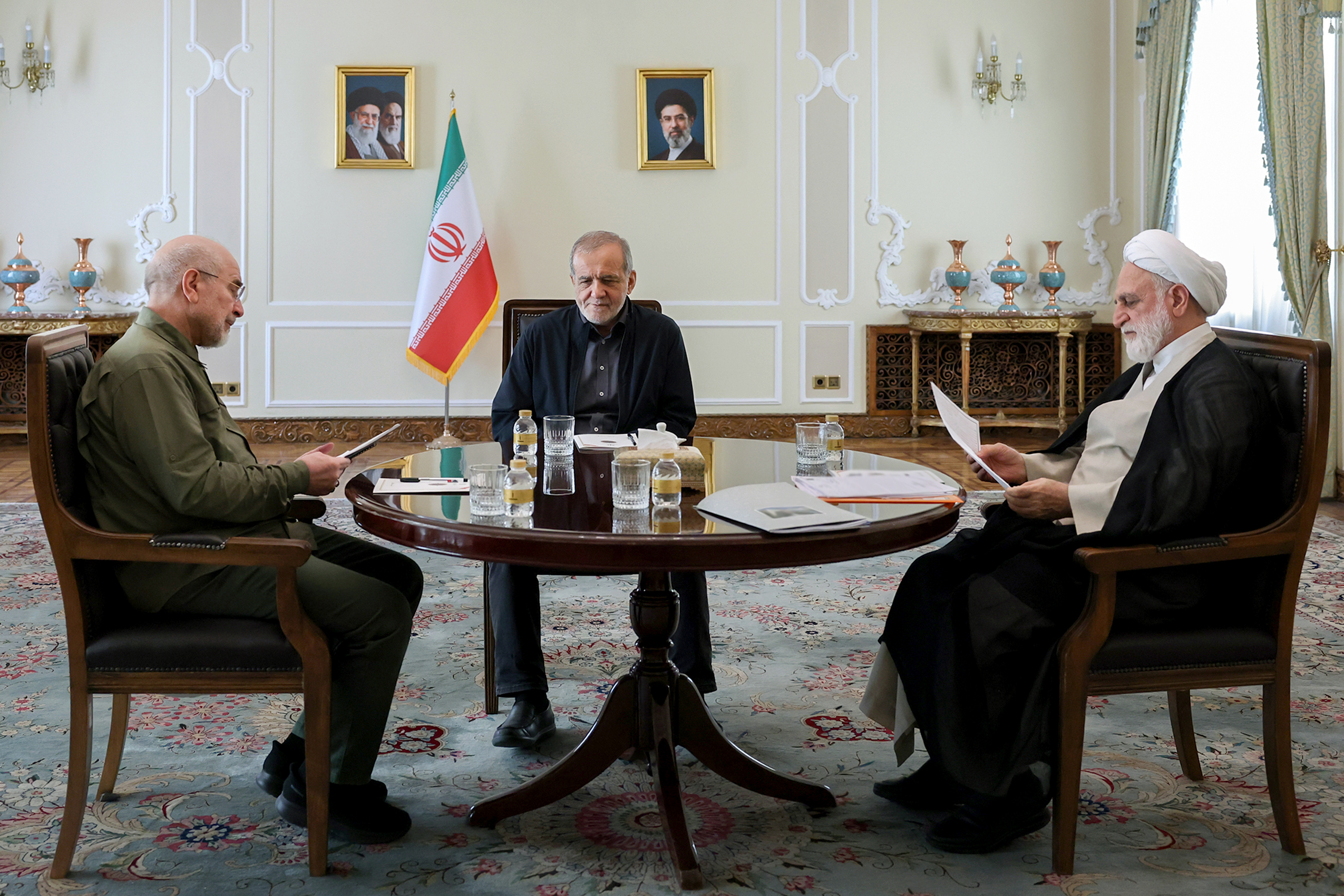
Under Rezaei, the SNSC could prove constructive or paralyze strategic decision making.
The Islamic Republic Returns to Offense
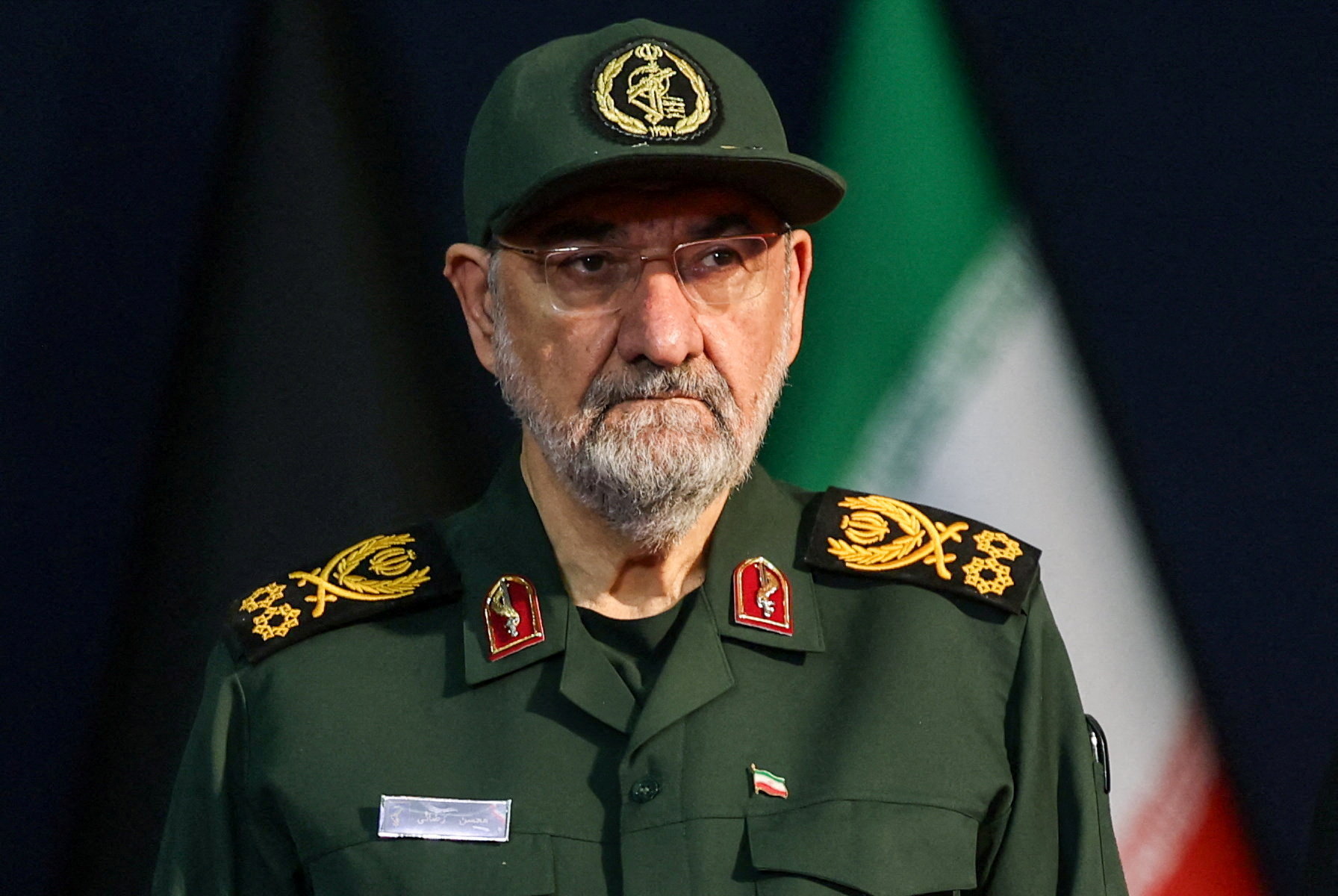
After U.S.-Israeli strikes killed Supreme Leader Ayatollah Ali Khamenei on February 28, Iran’s collective leadership has concluded that the best defense is a good offense.
Events
Oct 6, 2026
Is the U.S.-Iran Stalemate a “New Normal” or the Prelude to Another Explosion?
On October 6, AGSI hosted a discussion on the U.S.-Iran stalemate and the prospects for a cease-fire.
Speakers



Book Talk: Iran and the Bomb: The United States, Iran and the Nuclear Question
On June 16, AGSI hosted a discussion on the evolution of Iran's nuclear program.
Speakers

Apr 21, 2026
Inside Iran’s Wartime Leadership: Power, Succession, and Regime Stability
On April 21, AGSI hosted a discussion on the evolution of Iran's leadership during the war.
Speakers

Mar 18, 2026
In Its Conflict With the United States and Israel, Does Escalation Favor Iran?
On March 18, AGSI hosted a discussion on the escalation of the Iran war.
Speakers