The Trump Presidency, Iran War, and U.S.-Gulf Economic Relationship
The outbreak of the Iran war has halted the deepening of the economic relationship between the United States and the Gulf countries. While likely temporary, it could take some time before the upward trajectory is restored.
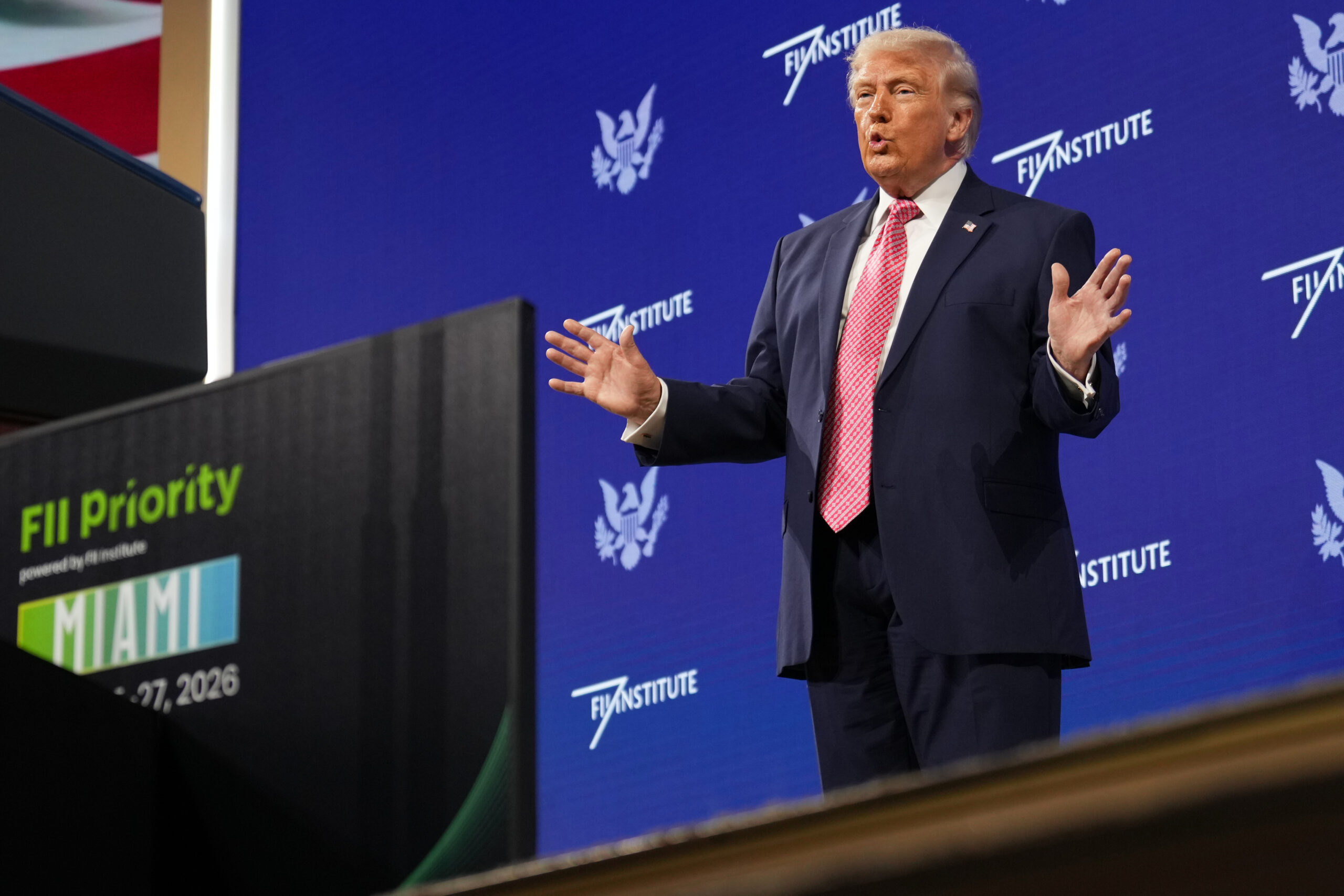
President Donald J. Trump takes the stage at the Future Investment Initiative Institute's summit, March 27, in Miami Beach, Florida. (AP Photo/Mark Schiefelbein)
Since President Donald J. Trump returned to office in January 2025, he has focused on securing large trade and investment commitments from foreign companies and governments, including those in the Gulf. Following the president’s visit to the Gulf in May 2025, a White House fact sheet claimed that commitments made by Qatar, Saudi Arabia, and the United Arab Emirates totaled $3.4 trillion. While there are doubts about whether these commitments can be met in full, trade and financial relations between the United States and the Gulf certainly deepened early in the second term of Trump’s presidency. The outbreak of the U.S.-Israeli war with Iran, however, has negatively affected trade and has led to some sales of U.S. financial assets by Gulf countries. While these setbacks are likely temporary, it could take some time before the upward trajectory is restored.
Trade Between the United States and the Gulf
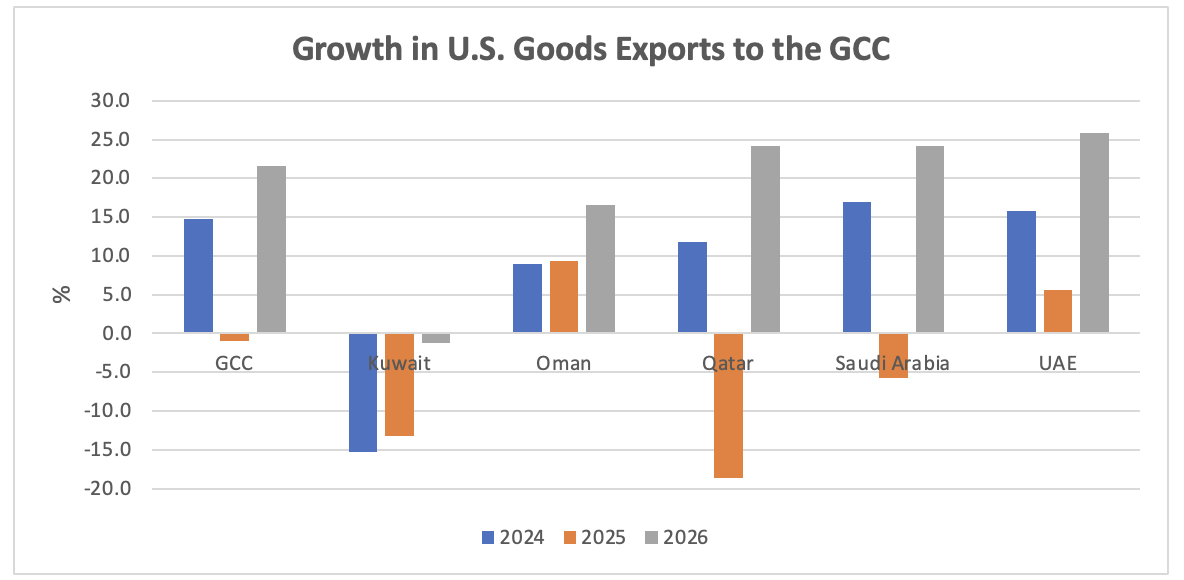
According to monthly trade data published by the U.S. Census Bureau, U.S. goods exports to the Gulf Cooperation Council countries (Bahrain, Kuwait, Oman, Qatar, Saudi Arabia, and the UAE) grew by over 20% during the 12 months from March 2025 to February 2026 compared to March 2024 to February 2025. This growth was led by exports to Qatar, Saudi Arabia, and the UAE, which grew by 24% to 26%. With U.S. imports from the GCC declining by 9% over the same period, the U.S. trade surplus with the region rose to $36 billion, nearly 60% higher than in the previous 12-month period.
Source: U.S. Census Bureau; author calculations Notes: The chart shows the growth rate in U.S. goods exports for the 12-months to February of that year. For example, 2026 shows the growth rate of the sum of monthly exports from March 2025 to February 2026 compared to March 2024 to February 2025. GCC is the sum of the six countries. Bahrain is not shown individually because the data is very volatile.
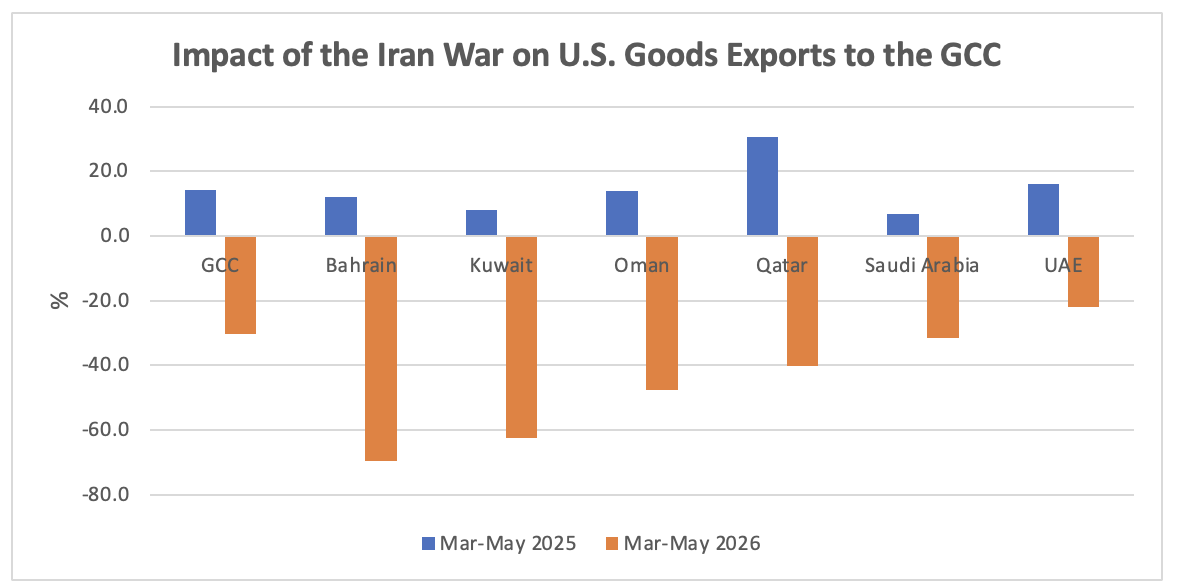
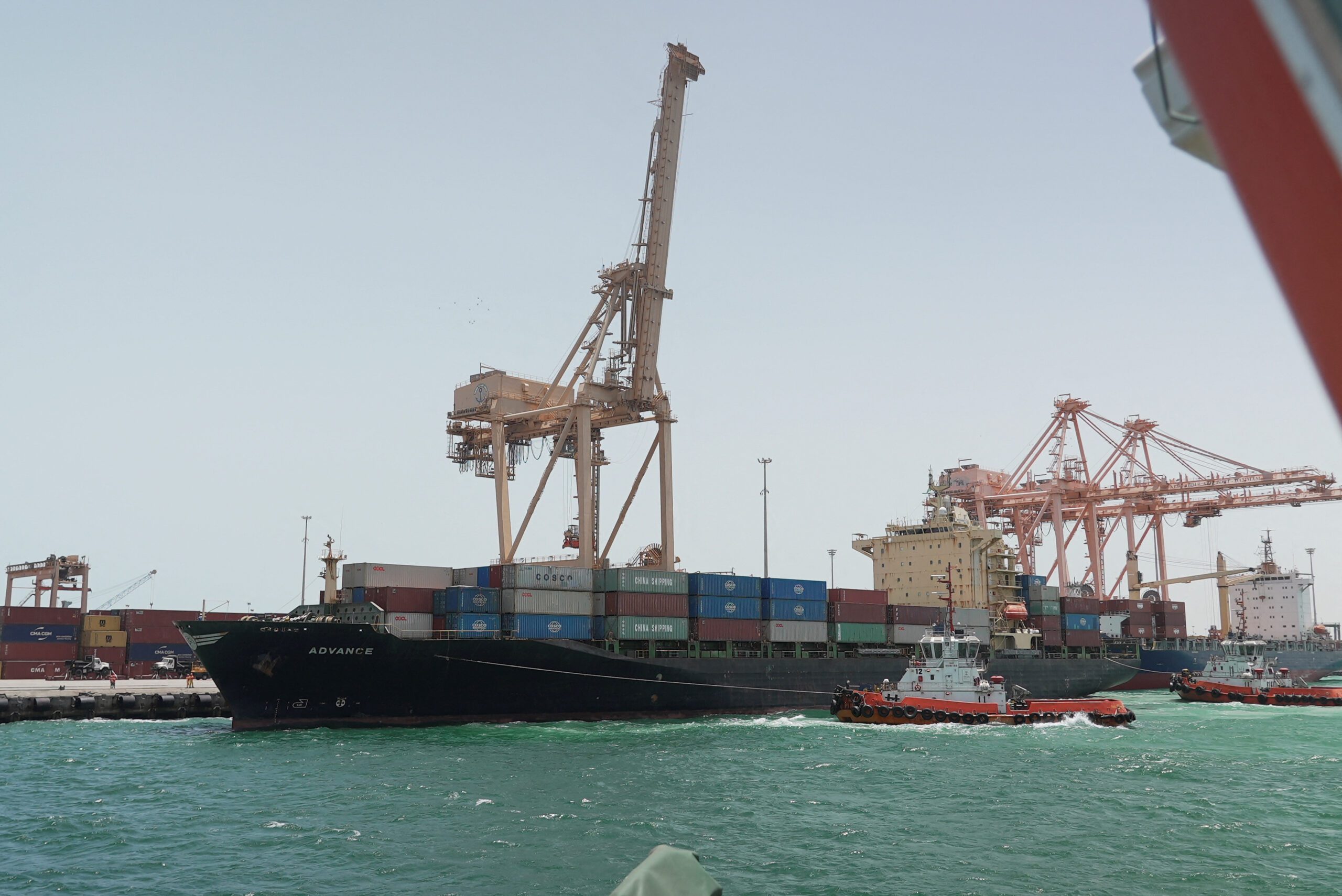
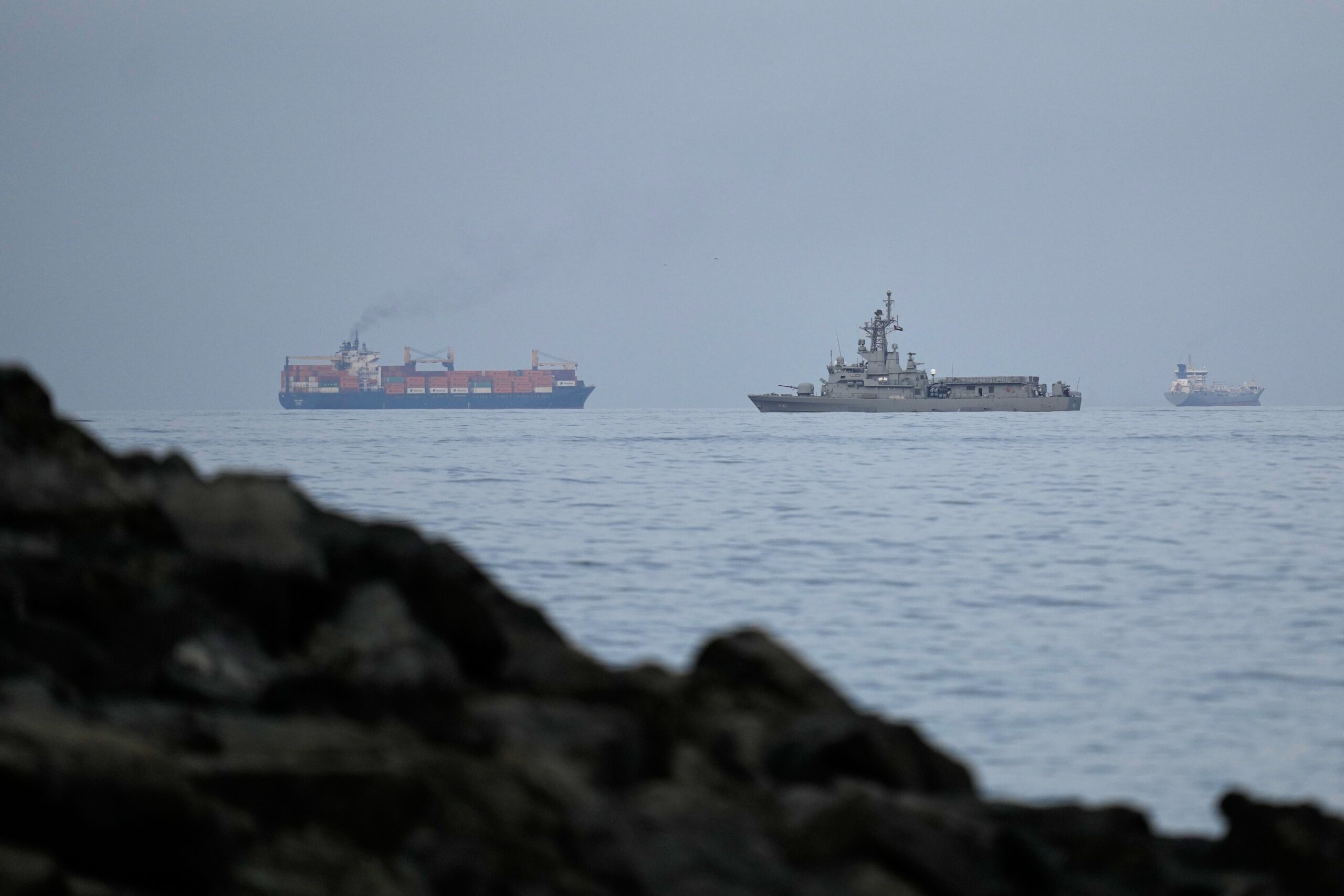
The war has significantly impacted trade flows. The closure of the Strait of Hormuz has impeded shipping, and only partial rerouting of goods has been possible. U.S. exports to the GCC fell by 30% during March-May 2026 compared to the same period in 2025. The decline ranged from 22% (UAE) to 70% (Bahrain). U.S. imports from the GCC declined by close to 16% during the same period. Those from Saudi Arabia and Oman increased by 33% and 20%, respectively, but those from the other four countries fell by between 33% and 78%. The U.S. trade surplus with the GCC shrank to $4.6 billion (March to May 2026) from $8 billion (March to May 2025).
Source: U.S. Census Bureau; author calculations Note: Chart shows the growth rate of U.S. exports during March-May 2026 relative to March-May 2025 and March-May 2025 relative to March-May 2024. GCC is the sum of all six countries.
Gulf Financial Investments in the United States
The U.S. Treasury publishes data on foreign holdings of short- and long-term U.S. financial assets through the Treasury Information Capital System. At its most comprehensive, this data covers holdings of equity (publicly traded and private), debt, and bank deposits and includes holdings by both public and private investors. The data excludes foreign direct investment (where the investor establishes a lasting interest and control in the asset), which is published separately by the Bureau of Economic Analysis. This data shows little new foreign direct investment in the United States by the GCC countries in 2025 and is not discussed further.
The comprehensive monthly Treasury Information Capital System data covering equities, debt, and bank deposits is only available for Kuwait, Saudi Arabia, and the UAE. For all six GCC countries, however, annual data on their holdings of U.S. equity and debt and monthly data on their holdings of short-term financial assets (short-term Treasuries, certificates of deposit, and bank accounts) is available, but each has its drawbacks. The former is dated – the latest available is for June 2025 – and the latter gives only a partial picture, as most Gulf investments are in long-term rather than short-term assets.
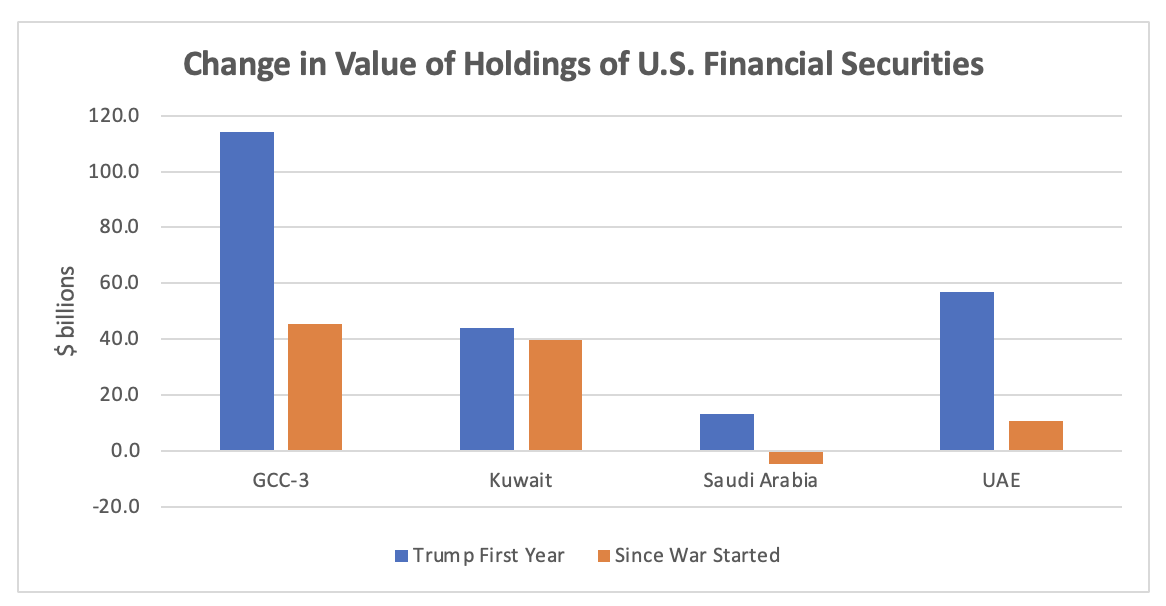
During the first year of Trump’s second term, Kuwait, the UAE, and, to a lesser extent, Saudi Arabia saw a combined $114 billion increase in the value of their holdings of U.S. financial assets. This increase, however, was entirely due to valuation gains rather than new purchases –the S&P 500 index, a proxy for the U.S. equity market, increased by 14% between the end of January 2025 and the end of February 2026. Indeed, the three countries combined actually sold a small amount of their U.S. financial assets during this period. Since the start of the war, Kuwait’s financial asset holdings have increased by a further $40 billion (again largely due to valuation gains), while Saudi Arabia and the UAE have sold U.S. financial assets ($19 billion for Saudi Arabia and $15 billion for the UAE). Both have seen valuation gains, however, which in the case of the UAE were sufficient to offset the impact of sales, and the value of the stock of financial assets rose slightly.
Source: U.S. Department of the Treasury; author calculations Note: GCC-3 is the sum of Kuwait, Saudi Arabia, and the UAE.
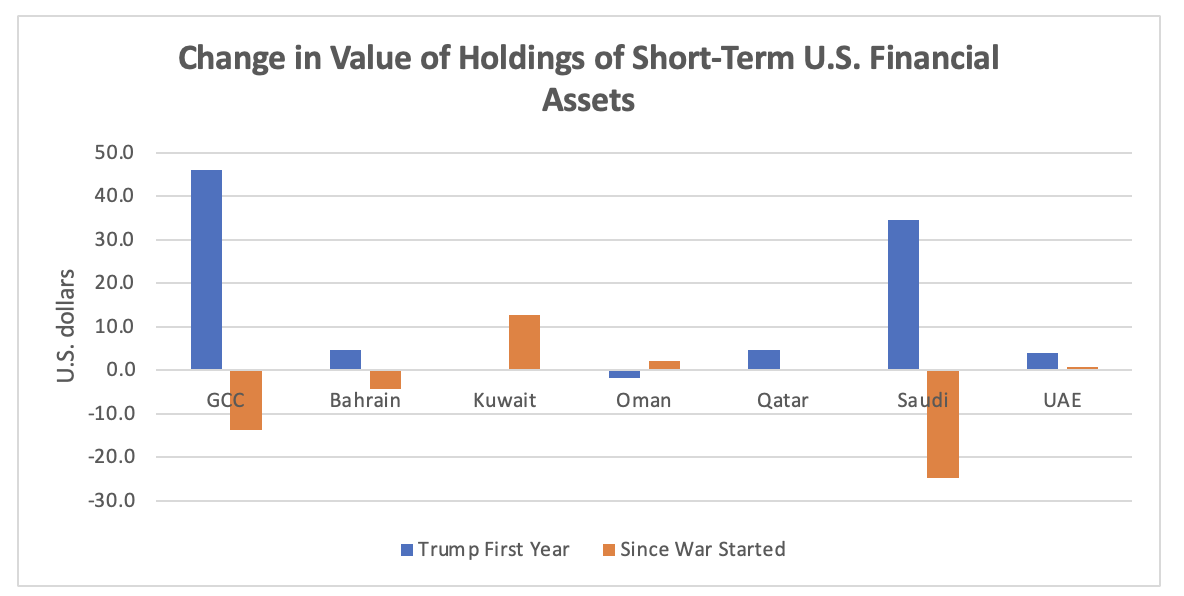
Holdings of short-term U.S. financial assets by GCC investors increased between February 2025 and February 2026, but they have declined since the war started. Most of this movement was due to Saudi investors who moved into short-term Treasury securities in February 2026 and then switched back to equities in March and April. Bahrain’s holdings of short-term U.S. financial assets have declined by over one-third since February. This is concerning given the country’s difficult financial position but is consistent with the decline in the Central Bank of Bahrain’s foreign exchange reserves over the same period.
Source: U.S. Department of the Treasury; author calculations
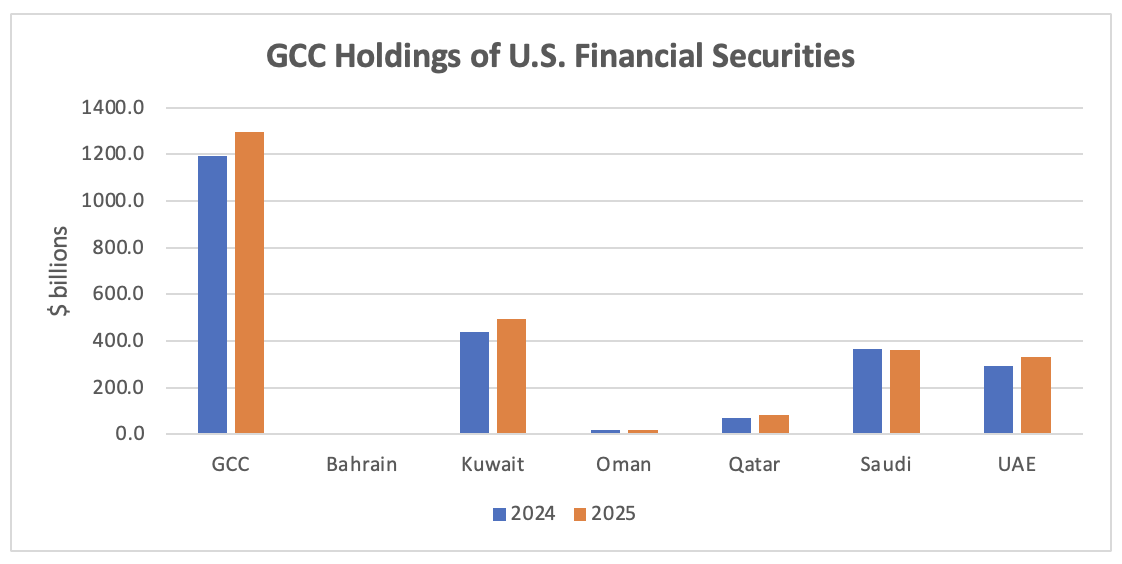
The GCC countries held $1.3 trillion of U.S. financial securities in June 2025. This represented 3.4% of total foreign holdings of U.S. financial securities. Holdings increased in Bahrain, Kuwait, Qatar, and the UAE and declined in Saudi Arabia relative to June 2024 (they were unchanged in Oman).
Source: U.S. Department of the Treasury; author calculations Note: Data is for June of each year.
An important caveat with the Treasury Information Capital System data is that investments made through companies registered in third countries (often offshore financial centers, such as Bermuda, the Cayman Islands, Ireland, and Luxembourg) are recorded as assets of that country rather than the country where the ultimate beneficial owner resides. This means that the size of the financial asset holdings of the GCC countries are likely underestimated in the data, potentially significantly so. Previous estimates have suggested that for Saudi Arabia, U.S. financial asset holdings could be underestimated by over $100 billion. Applying a similar methodology would imply GCC-wide investments could be underestimated by over $400 billion.
A Bump in the Road or Longer-Term Reset?
The decline in trade flows and the modest sales of U.S. financial assets in recent months is likely nothing more than a bump in the road on the way to deeper long-term trade and financial ties between the United States and the Gulf countries. The Gulf wants access to the latest U.S. technologies in artificial intelligence, defense, mining, and advanced manufacturing, while the United States sees the Gulf as a major source of investment capital. Closer economic ties seem a win-win for both sides.
Yet, it is too early to know how the political and economic repercussions of the conflict will influence future U.S.-Gulf relations. Trade will continue at a lower level until regional hostilities end and risks to shipping through the Strait of Hormuz and now the Bab el-Mandeb are reduced. The need to rebuild damaged infrastructure, diversify transport and trade networks, and renew domestic diversification strategies may see a refocusing of Gulf capital on domestic rather than foreign investments postconflict, particularly if a period of lower oil revenue follows. Other countries are also keen to do more business in the Gulf. China has deepened its economic relationship with the region and will likely continue to look to do so in the future.
None of these factors are likely to derail stronger U.S.-Gulf economic ties from developing, but they will present challenges. Postconflict, the Gulf may not be the easy export destination and source of capital for the United States that it was thought to be a year ago.
The views represented herein are the author's or speaker's own and do not necessarily reflect the views of AGSI, its staff, or its board of directors.
Saudi Arabia is an important economic and financial partner for the United States, but the dimensions of actual and potential Saudi investments and trade with the United States are currently being exaggerated.
The impact of the Iran war on the Saudi economy has been mitigated by investments in “economic resiliency,” including the East-West oil pipeline, relatively prudent fiscal policy, and the accumulation of a large stock of foreign financial assets.
If the memorandum of understanding between the United States and Iran holds, the Saudi economy will grow strongly in the second half of 2026 and into 2027.
On January 8, AGSI hosted a virtual roundtable with its leadership and scholars as they look ahead and assess trends likely to shape the Gulf region and U.S. foreign policy during the coming year.