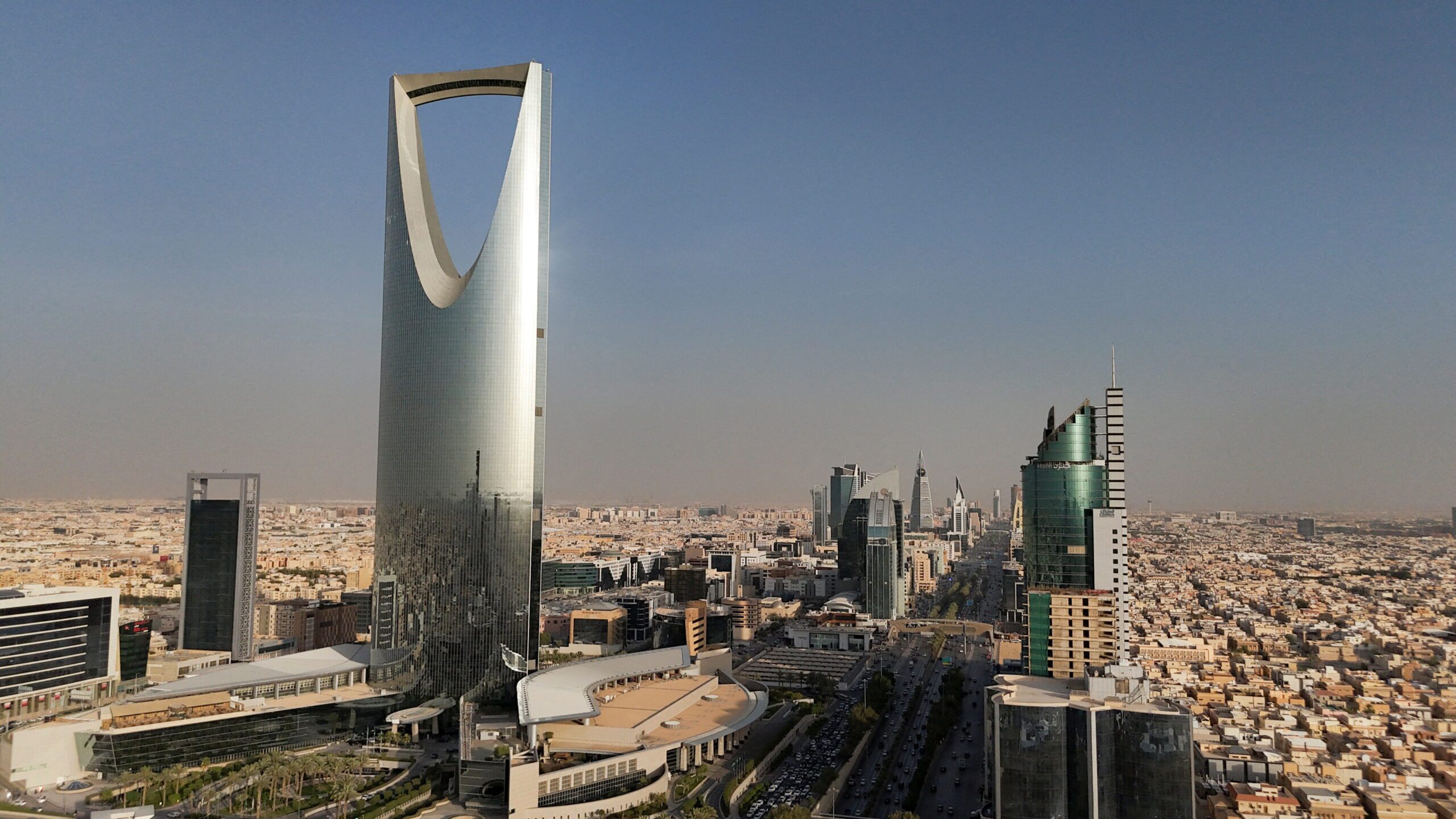
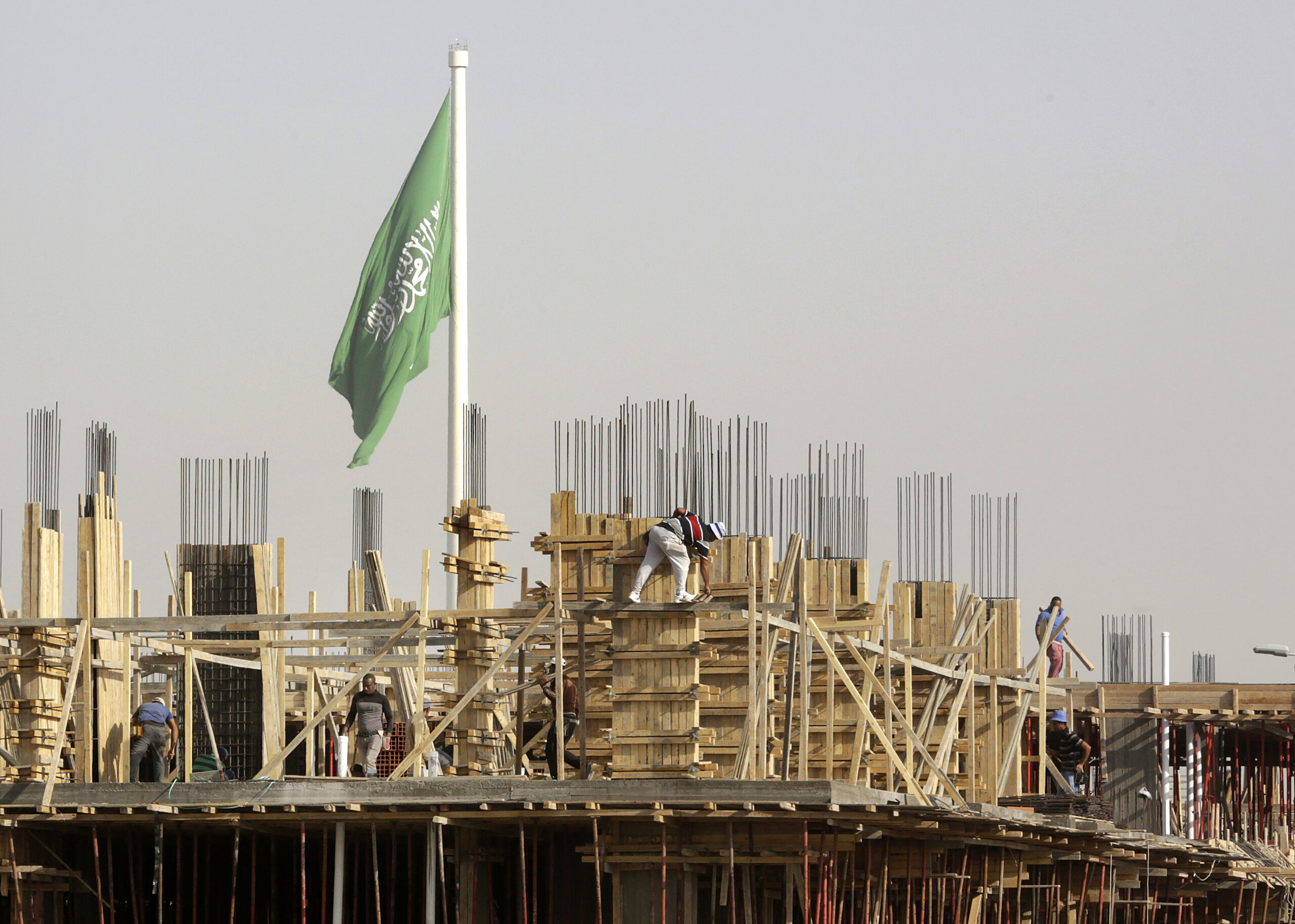
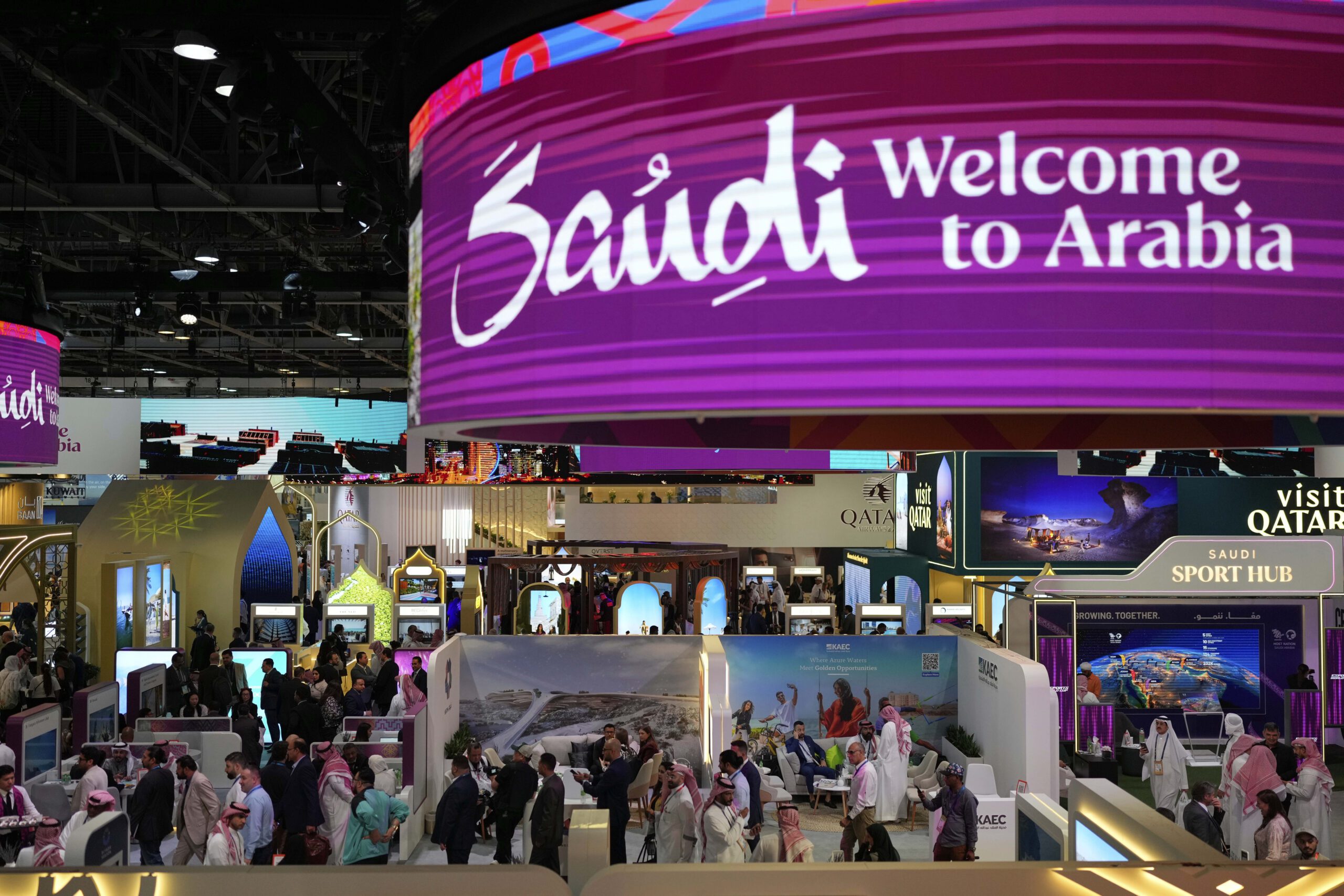
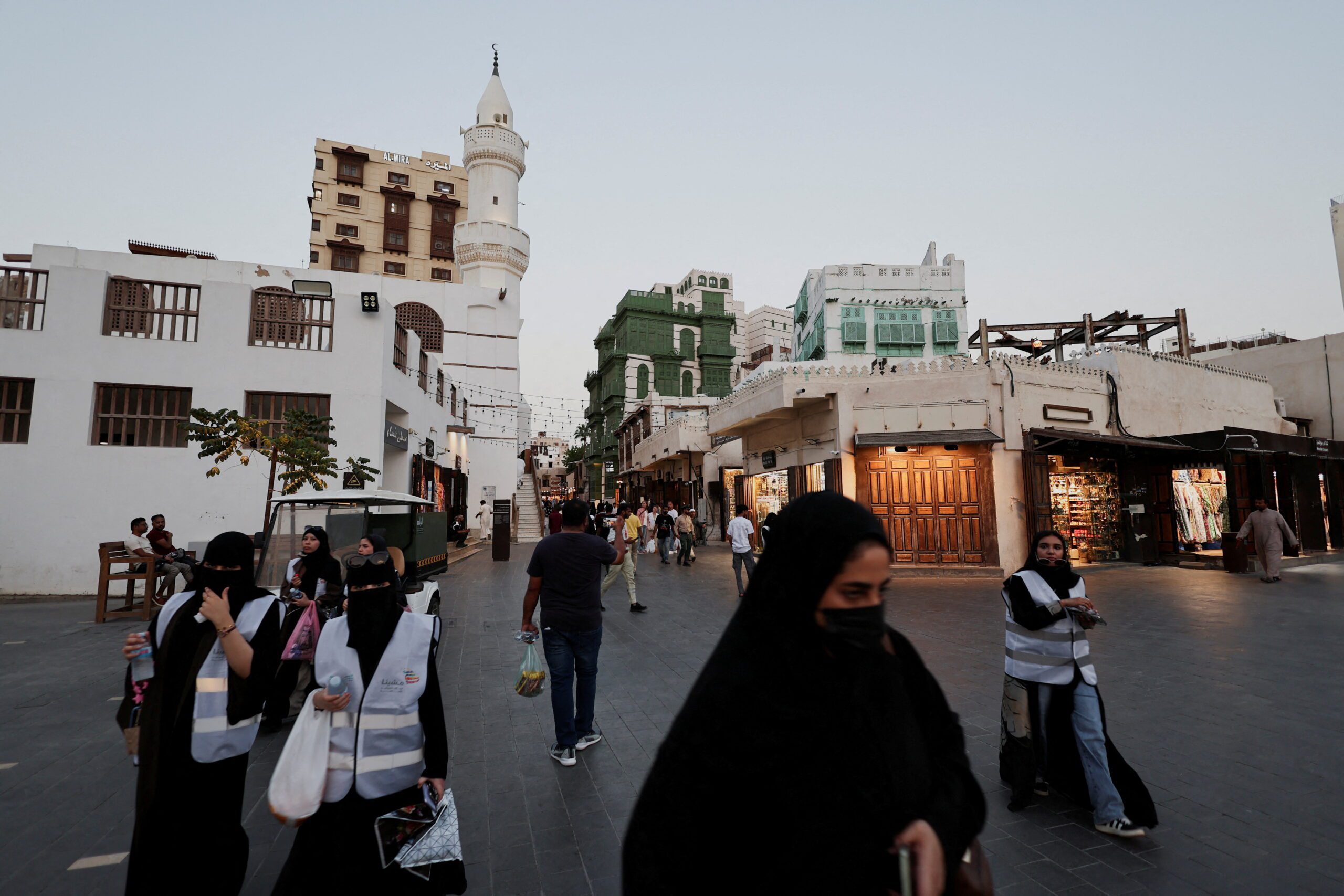
Lights and decorations in the shopping area of Riyadh Boulevard, in Riyadh, Saudi Arabia, November 2021. (Balkis Press/ABACAPRESS.COM)
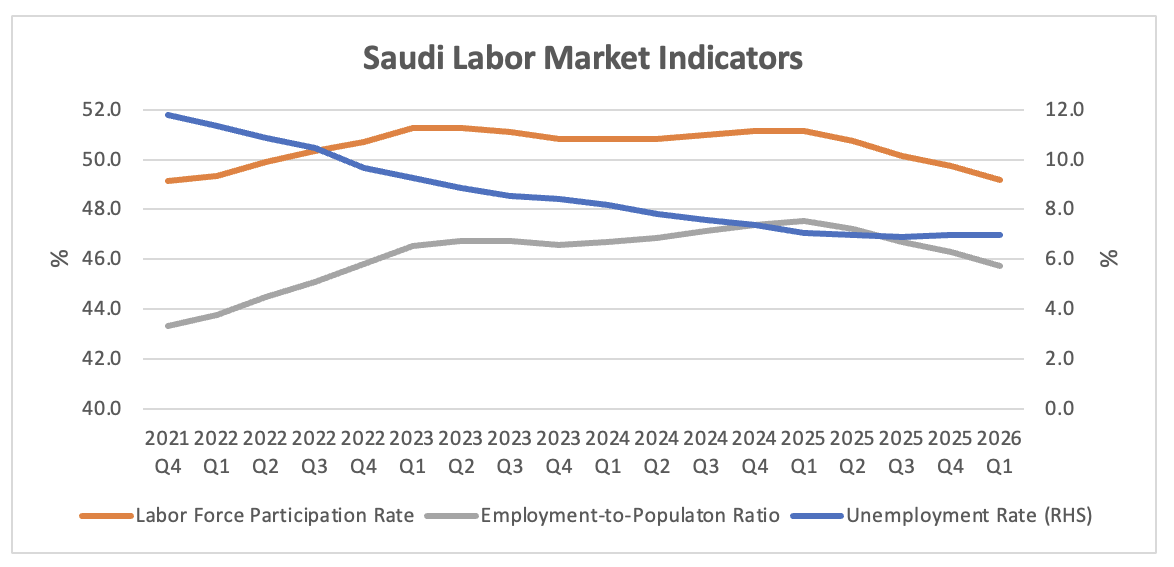
Saudi Arabia has implemented wide ranging labor market reforms over the past decade. These reforms have encouraged more Saudis to work, particularly in the private sector; increased the incentives for employers to hire Saudi workers; and enabled Saudi women to engage more actively in the labor market. The reforms have yielded positive results. The Saudi unemployment rate has fallen from 13% to 7%; the employment-to-working age population ratio (the share of the Saudi population aged 15 years and older who are employed) has increased by nearly 10 percentage points to 46%; and the labor force participation rate of Saudi women has doubled from 17% to 34%.
Recent data, however, suggests that the positive impact of these reforms may now be waning. Over the past year, previous gains in the employment and participation rates have begun to reverse, and the downward trend in the unemployment rate has come to a halt.
Interpreting the Labor Market Data
The labor market data published by the General Authority for Statistics is volatile quarter to quarter making it difficult to identify underlying trends. For example, at face value, the data for the first quarter of 2026 provided good news. The unemployment rate of Saudi nationals dropped to 6.4% from 7.2% in the fourth quarter of 2025. Yet, a similar large drop was seen in the first quarter of 2025, but the unemployment rate then increased and ended the year at a slightly higher level than in 2024. The labor force participation and the employment-to-working age population rates have also experienced large quarter-to-quarter movements in the past.
Looking at longer-term trends rather than quarter-to-quarter movements can provide a clearer picture of how the labor market is behaving. There are several ways that indicators can be “smoothed” to reduce volatility and help focus on the underlying trend. These range from applying a simple moving average to using sophisticated statistical filters. Applying a four-quarter moving average suggests that:
The unemployment rate of Saudi nationals has settled at around 7% since early 2025. The female unemployment rate is still on a downward trend, but this is being offset by an uptrend in the male unemployment rate.
The labor force participation rate of Saudi nationals peaked in the first half of 2023, remained broadly unchanged until early 2025, but has declined over the past year. The participation rate is now at its lowest level since late 2021. Both the male and female participation rates are trending downward.
The employment-to-population ratio peaked in early 2025 and has since been on a downward trajectory, with a more pronounced drop for men than women. The implication is that job creation (which remains positive) has been insufficient to ensure that everyone entering their working age years can gain employment.
Source: General Authority for Statistics; author calculations Note: Data shown is a four-quarter moving average.
Implications
The reforms have succeeded in meeting or exceeding the Vision 2030 targets of reducing the Saudi unemployment rate to 7% and increasing the Saudi female labor force participation rate to 30%. Yet, at current rates of unemployment and labor force participation, there is still a significant waste of human talent. To put things in perspective, less than one-half of working age Saudis are employed. While this is partly because many younger people are in education programs – which should improve their employability and productivity in future years – low rates of female employment (30% of working age population) and a sharp decline in male employment rates after 45 years of age are other important factors.
A key question, then, is whether the positive impact of the labor market reforms on employment, unemployment, and participation rates has now run its course or whether continued gains can be expected in the future (with the past year’s data being a pause rather than an end to progress).
Three factors may support the view that this is a temporary pause rather than an end to progress. First, slowing growth in the non-oil economy over the past year (from 5% to 2.6%) may have negatively affected the labor market. As growth rebounds, this should underpin increased employment and participation. Second, the Vision 2030 projects are heavy in expatriate employment during the construction phase, but it is hoped that they will create jobs for Saudis as they become operational. Third, labor market reforms take time to affect outcomes, and this is not a smooth process. For example, pension reforms were introduced in 2024 to raise the retirement age to 65, but this will be done gradually, and consequently the incentives for working until later in life will also only change slowly. Similarly, the easing of social norms and customs that previously kept many women out of the workforce will be gradual even as the legal framework governing female employment has been revised significantly in recent years.
However, the longer it takes for the positive trends in the employment, unemployment, and participation rates to reassert themselves, the harder it is to argue that this is a “pause” rather than the establishment of a new and less favorable trend. One notable concern is that while the U.S.-Iran conflict continues, a meaningful rebound in non-oil growth may prove elusive. Further, there is no guarantee that the projects and industries that are being developed under Vision 2030 will be competitive and able to provide employment at the wages that most Saudis expect. Last, it is still usually cheaper to employ an expatriate than a Saudi worker, meaning employment growth may continue to skew toward expatriates rather than Saudis.
How these forces play out in the coming years will be crucial to the future success of the Vision 2030 reforms. The quarterly labor market data published by the General Authority for Statistics will therefore remain one of the most important economic indicators to track on a regular basis to judge the progress of Saudi reform efforts.
The views represented herein are the author's or speaker's own and do not necessarily reflect the views of AGSI, its staff, or its board of directors.
The impact of the Iran war on the Saudi economy has been mitigated by investments in “economic resiliency,” including the East-West oil pipeline, relatively prudent fiscal policy, and the accumulation of a large stock of foreign financial assets.
The recent increase in the Saudi unemployment rate is puzzling and may be due to statistical issues with the Labor Force Survey rather than a reflection of economic conditions.
In its new strategy, the Saudi Public Investment Fund seems to focus more on investment returns and less on asset growth. How this will work in practice is less clear, including what it means for the future of existing projects, such as Neom.
Attacks on the East-West oil pipeline and other targets in Saudi Arabia will result in a larger-than-expected economic contraction in the kingdom this year.
The outbreak of the Iran war has halted the deepening of the economic relationship between the United States and the Gulf countries. While likely temporary, it could take some time before the upward trajectory is restored.
The impact of the Iran war on the Saudi economy has been mitigated by investments in “economic resiliency,” including the East-West oil pipeline, relatively prudent fiscal policy, and the accumulation of a large stock of foreign financial assets.
On January 8, AGSI hosted a virtual roundtable with its leadership and scholars as they look ahead and assess trends likely to shape the Gulf region and U.S. foreign policy during the coming year.