The Trump administration has positioned the United States at a crossroads between a new regime of containment against Iran or a historic drawdown of U.S. influence in the Gulf and broader Middle East.
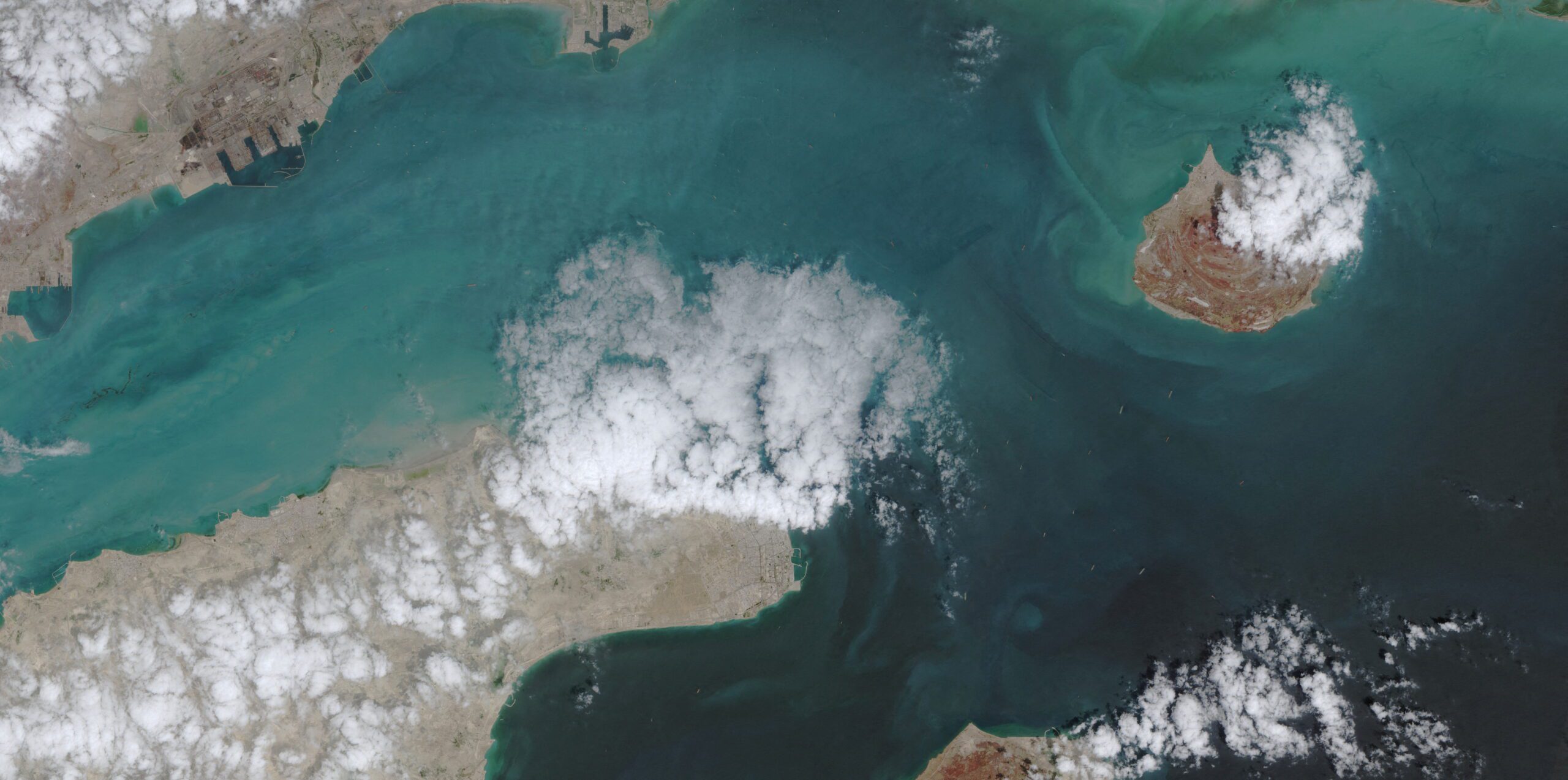
A satellite image shows the Strait of Hormuz, April 17. (EUROPEAN UNION/COPERNICUS SENTINEL-2/Handout via REUTERS)
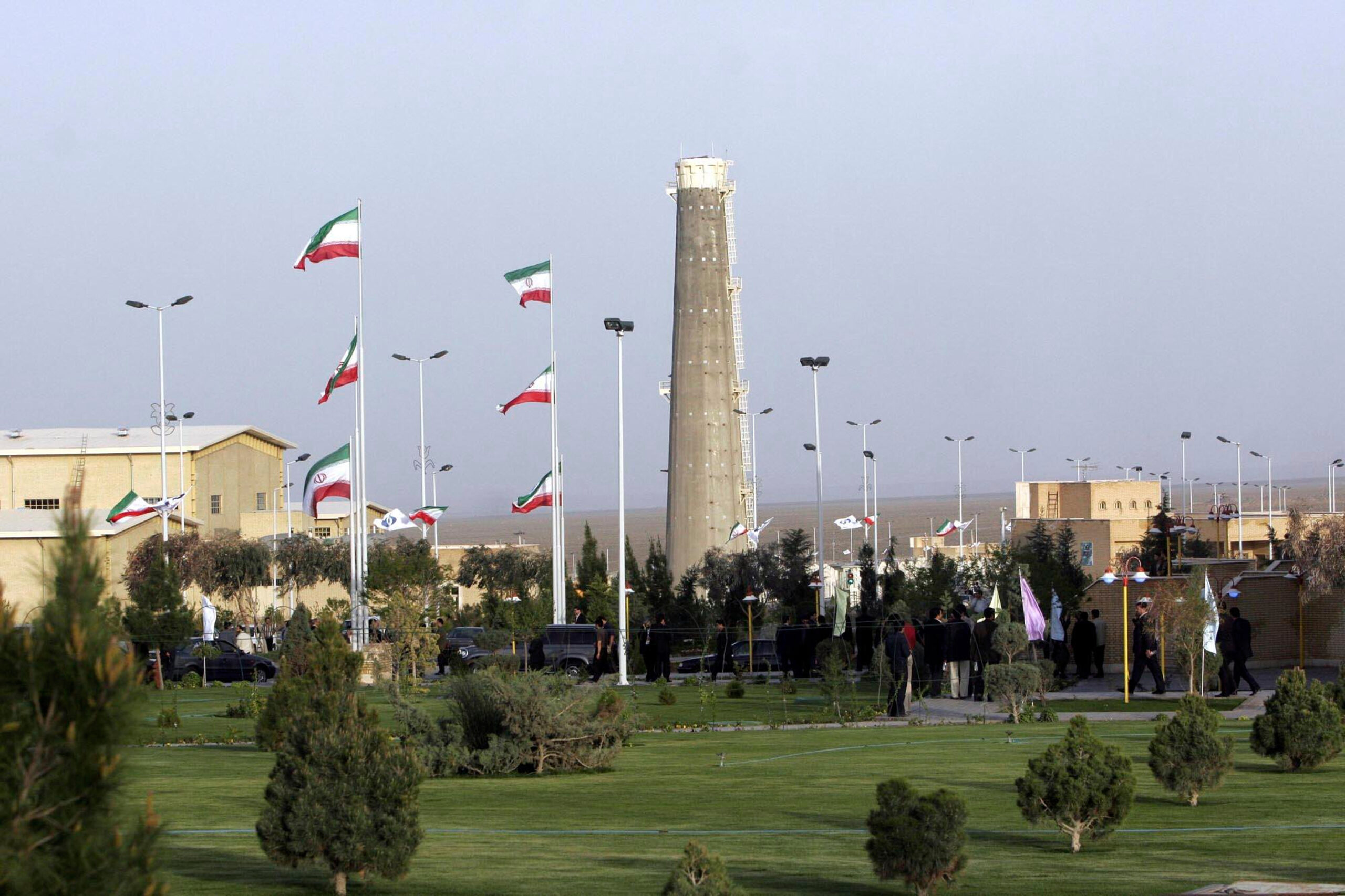
U.S. and Iranian leaders have reportedly digitally signed a cease-fire memorandum of understanding, with a formal signing ceremony expected in the coming days. While details remain murky, the agreement is likely to place Washington at a historic crossroads regarding its role as a security guarantor and key stabilizing actor in the Gulf region and, by extension, the broader Middle East. The administration of President Donald J. Trump and the Iranian regime have apparently agreed on a simple, lightly substantive, and, from the U.S. perspective, strikingly disadvantageous understanding for ending the war. There is no indication that anything other than the reopening of the Strait of Hormuz will be secured in return for the United States lifting its blockade of Iranian ports, halting its bombardment of Iranian targets, and, possibly, allowing Iran to access potentially billions of dollars in frozen funds. All other major issues, including the entire nuclear file – including Iran’s stockpile of over 900 pounds of highly enriched uranium, apparently buried near Isfahan – will be postponed to be resolved in negotiations during the planned 60 day cease-fire. Similarly, the memorandum apparently makes no progress on Iran’s manufacture, possession, and use of missiles and drones, including against the United States’ Gulf Arab partners, or Tehran’s military and other support for extremist groups around the Middle East, notably Hezbollah in Lebanon and the Houthis in Yemen.
This agreement seems remarkably lopsided in favor of Iran, which on paper is the far weaker of the two belligerents. The political equation explains everything. Trump apparently believed promises by Israeli leaders, including Prime Minister Benjamin Netanyahu, that Iran’s government was likely to fall if given a hearty push by external bombardment. It would’ve been the first time in history that an established regime collapsed simply because of outside pressure from bombardment and sanctions. The Israelis may have been successful in convincing Trump because they were saying something he wanted to believe. When, after a few days, it became very clear that that was not going to happen, the U.S. president was apparently still hoping for a “Venezuela scenario”: the emergence from within Iran’s regime or broader elite of a group that was ready, willing, and able to take power in the context of the war and prepared to largely cooperate with Washington’s most fundamental demands.
Once that scenario also became unattainable, Trump was left in charge of a highly unpopular war without achievable goals and, in effect, to no purpose. Worse, Iran had retaliated by focusing its revenge attacks on Washington’s Gulf Arab partners, who had opposed and tried to prevent the war but served as an ideal proxy for the global economy in general. Iran also discovered how easy it was to close the Strait of Hormuz to international shipping simply by issuing threats, harassing a few vessels, and dropping some mines. Ending the war became a personal and political imperative for Trump, who seemed almost indifferent to the cost or specifics of the arrangement. As easily as he got into it, he wanted to get out of it.
The Iranian regime presented a contrast in opposites. With its leadership decimated and command-and-control and other military assets badly damaged within the first week, the regime saw it was engaged in an existential conflict. Fighting to preserve its fundamental credibility as the repository of Persian national and foreign policy interests, the regime was willing to pay almost any price and endure almost any hardship to fight on and retaliate, especially against the Gulf Arab countries. But, as certain policies, such as blocking national access to internet coverage indicate, the regime realized that it was emerging not only in a secure but even in an advantageous position. The Iranian leadership gauged, and used, Trump’s unwillingness to return to all-out warfare and his mounting frustration to strike a hard bargain. Even if Trump had resumed massive bombardment, possibly extending to Iran’s critical national infrastructure, there was no indication that the regime would have relented.
Trump would have been left gambling on pressure from the Iranian public and elements within the regime that preferred a compromise to the extreme damage being inflicted, just as the Iranians were, to some extent at least, counting on global and Arab pressure on Trump to end the conflict because of the pain Iran was inflicting upon them. Trump’s numerous threats to unleash hell on Earth against Iran or end the “whole civilization” proved as empty as Iranian leaders frequently suggested they were. Ultimately, Trump’s desire to end the war as quickly as possible dovetailed with Tehran’s willingness to absorb all pressure without making meaningful compromises to produce an agreement that may well be regarded as one of the most strategically disastrous and humiliating in U.S. diplomatic history.
Iran’s leadership is trumpeting a great victory, and it does not need to exaggerate or embellish many facts to make its case. On the other side is the severe level of death and destruction inflicted by the United States and Israel. Whether this struggle was overall worth the cost from the point of view of Iranian society can only be answered by the Iranian people who will not be consulted by the regime.
Trump also has a hard time selling his side of the bargain to Americans. His two main claims (besides baseless claims that he rescued Israel from imminent destruction) are both easily debunked. First, he and his officials are repeating that Iran has promised, they insist for the first time, not to pursue or build a nuclear weapon. But Iran has always insisted it is not pursuing a nuclear bomb, and that may have been true until this war. It’s entirely possible that Iran had decided never to cross the threshold into nuclear weapons status but rather to become and remain a nuclear threshold state: a country in a position to quickly and easily build a nuclear bomb but not actually do it for the time being. It is highly likely that the war Trump and Netanyahu began in February will have settled that debate for good in regime circles and that it is simply going to be a matter of time and circumstances before Tehran charges headlong toward building a nuclear weapon.
Obviously, Iran’s insistence that it does not seek nuclear weapons capability was never to be taken seriously. But there is a mountain of assurances to that effect. Notably, a fatwa was expressed by Supreme Leader Ayatollah Ali Khamenei (who was slain in the first days of the war) first in private letters in the 1990s, then in an oral statement in October 2003, and finally via a statement from the International Atomic Energy Agency in August 2005. This was reiterated in the diplomacy surrounding the Joint Comprehensive Plan of Action and, especially, the legislation passed by the Iranian Parliament to confirm that agreement in 2015. There are many other examples, but there is not only nothing new about recent Iranian promises not to build a nuclear weapon but also no example of Iran expressing, to the contrary, a desire to build a nuclear bomb.
The second significant selling point will be the reopening of the Strait of Hormuz. Its closure only developed as a direct consequence of the war Trump and Netanyahu launched in February. Iran had often discussed and considered such a move, but the regime did not know how easy and effective it would be until it was put in a position to test it. The details of the reopening are unclear, although apparently the United States will reciprocally lift the blockade of Iran’s ports and possibly release a large portion of frozen Iranian assets, which could amount to over $25 billion. How much of these assets and under what circumstances they might be released remain unclear to the public. It’s also unclear whether Iran will attempt to extract payment from vessels navigating that chokepoint, possibly in the form of “fees for services,” the most recent euphemism Tehran has applied to what amounts to extortion on the high seas.
But even if Iran agrees to the unconditional and permanent reopening of the strait, any promises made by Iran never to try closing the strait again will be hollow. Now that Tehran has discovered how effective, cheap, and easy it is to wreak havoc on the global economy by threatening shipping in the chokepoint, it will simply put that capability back in its pocket for use at some other desperate moment. Whatever Tehran says now, it will not hesitate to repeat the gesture if it believes it is necessary. Indeed, the tactic could be extended by Iran’s Yemeni allies, the Houthis, in the Bab el-Mandeb, to close off the Red Sea and Suez Canal. Other countries and substate actors around the world near such chokepoints will have taken careful note of how easily shipping and insurance companies can be intimidated with minimal actions and threatening words to repeat the gesture even in different geographical, political, and strategic times and places. Iran’s promises on freedom of navigation are even less convincing than any promises it makes about building nuclear weapons. Now that the regime knows what it can do, it has a powerful new weapon to deploy when the need arises.
The world may be breathing a sigh of relief that the war may be over and shipping can resume, but Washington now finds itself in a highly parlous and unenviable position. Sixty days of upcoming negotiations, primarily on nuclear-related issues, including the remaining stockpile of highly enriched uranium and Iran’s future enrichment activities, are unlikely to produce any significant progress let alone a comprehensive agreement. That would require Iran to compromise. But why should it? There is simply no pressure on Iran, especially if the regime believes that Trump does not want to go back to war and is simply glad to be rid of it. Reassured that bombardment will not resume and that, since the whole point of the memorandum is to reopen the Strait of Hormuz, the U.S. blockade on Iranian ports will also not be reinstituted, meaningful pressure on Tehran will simply be lacking. Washington isn’t going to compromise either, although it has already done a tremendous amount when considering the contrast between statements by the president and his officials during the war and what they have just, apparently, accepted.
The objection that Israel is a wildcard may be overblown. During the conflict, Israel effectively pulled back from the Iranian front, which it led in the first few days of the bombardment, to focus on Lebanon and the fight against Hezbollah. While Washington is unlikely to be able to compel Israel to seriously curtail its activities in southern Lebanon, Israel is unlikely to defy the United States and resume major attacks against Iran. There is already more bad blood between Netanyahu and Trump than Israel can afford with its primary, and in many cases only, international backer – especially as Israel moves toward large-scale annexation in the West Bank. Iran may try to speak for Lebanon by insisting that the cease-fire applies there as well, but in practical terms the memorandum is unlikely to stop that conflict from continuing. But whatever Israel does and doesn’t do in Lebanon, the prospect of Israel resuming large-scale or open-ended bombardment of Iran seems very remote under present circumstances. That could change following what could amount to 60 days of fruitless negotiations between Washington and Tehran. But even if those two months pass without any agreement, it’s easy to imagine Trump telling Netanyahu or any other Israeli leader that he doesn’t want to hear about resumed warfare with Iran for the rest of his term.
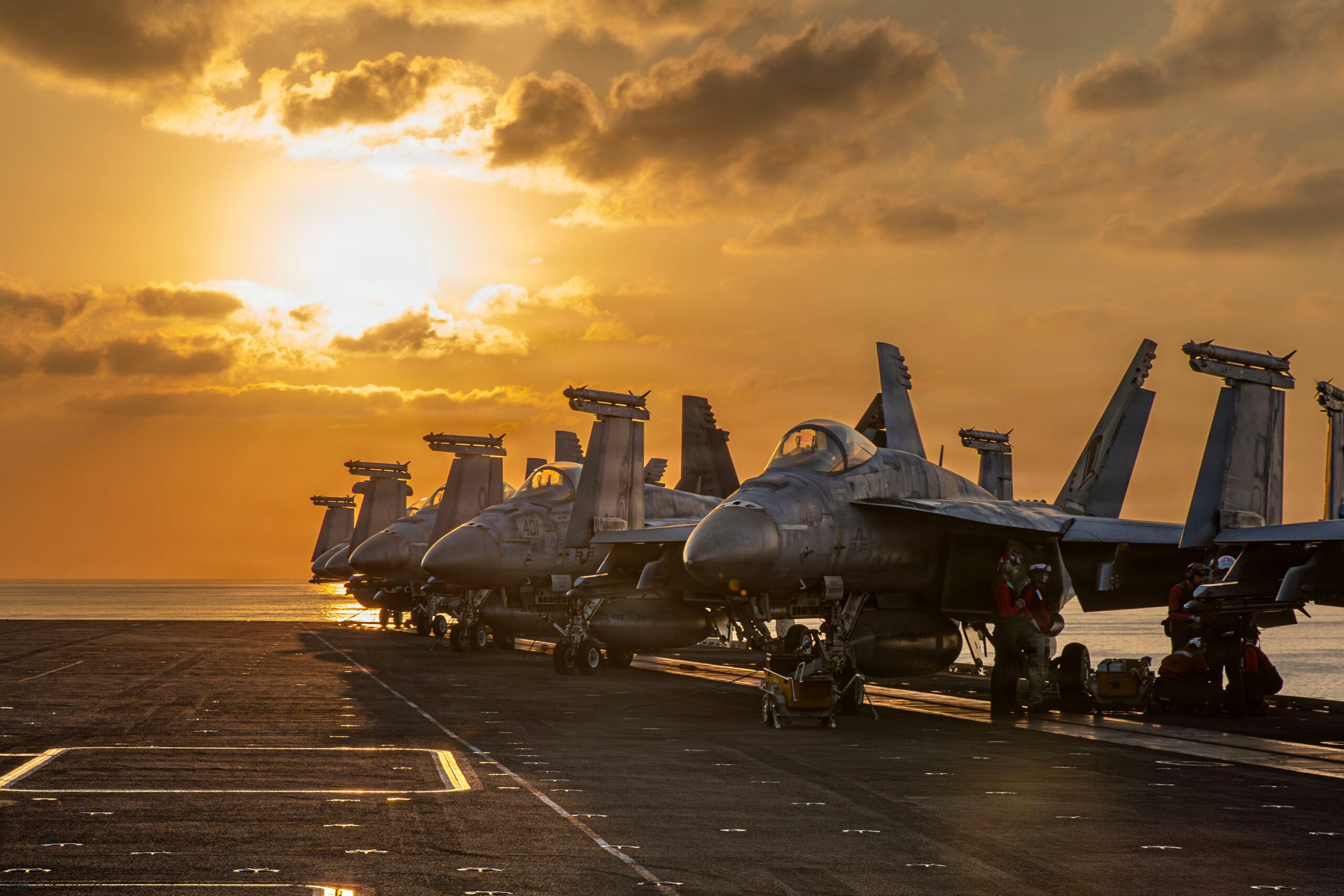
At that point, the United States will surely find itself at a historical crossroads in its Gulf and broader Middle East engagement. Assuming that nothing is agreed on to resolve the issues of Iran’s enriched uranium stockpile and uranium enrichment into the future, Washington will effectively be confronted with a stark binary of choices. Either it can craft and lead a regime of enhanced intensive containment against Iran, which would probably involve occasional use of force if Iran crosses stated or unstated U.S. red lines, or it can begin a long-anticipated and much-ballyhooed drawdown as a guarantor, protector, and hegemon in the Gulf region and broader Middle East.
If the United States does not work to contain Iran, Tehran is certain to capitalize on its newfound prowess and credibility. Perhaps slowly at first, but increasingly boldly and swiftly, Iran itself may attempt to assume a hegemonic posture in the region. It is the largest, most populous, and most militarily powerful state in its immediate environs. More important, Iran would be confronting potential adversaries that are not only highly vulnerable to its drone and missile arsenal and other threats but who are also badly divided and, as yet, unable to unite their purposes and capabilities sufficiently to pose an effective regional counterweight to Iran’s heft and reach. It’s possible that Tehran may find itself instead confronting a bloc of Sunni-majority states led by Turkey, Saudi Arabia, and Pakistan that effectively limits its hegemonic ambitions. But if Tehran is certain that Washington would not be a major player in the equation, it would surely try to reshape the strategic landscape in its own interests.
The Trump administration may not be willing to commit to the steadfast attention and effort required for a regime of enhanced containment against Iran analogous to the one Washington developed against Iraq in the 1990s. But this is what it would take if the memorandum is the last word on the current conflict. Otherwise, it’s hard to see why Iran would not feel justified in its declarations of a historic victory over Washington or how the United States could maintain enough practical power and credibility to continue its role as the decisive power in this region.
Washington’s Gulf Arab partners would find themselves in an impossible position. On the one hand, they will hardly want to be left at the mercy of a predatory, reckless, and radicalized Iranian regime. On the other hand, they know that just as they have recently been the primary targets of Iran’s retaliation, they will likely face similar travails as Iran bridles and strikes back under enhanced containment actions, especially any efforts at “mowing the grass” with additional U.S. strikes. Several Gulf states have already reached out to Tehran to resume and develop their independent bilateral dialogues. But if they remain divided, they will be even more at the mercy of Iran’s power and coercive capabilities.
It is unlikely that the United States under the remainder of the Trump administration and any plausible Republican or Democratic successor will have the willingness or ability to embrace enhanced containment against Tehran, especially as critics denounce it as a new iteration of a Middle Eastern “forever war,” even without boots on the ground. Even if Washington is willing to go down that path, as the North Korean experience demonstrates, even the closest scrutiny may not be sufficient to prevent Iran from ultimately developing its own nuclear deterrent. Realization of this may further undermine U.S. resolve and strengthen public calls for disengagement.
Trump may have gone to war to bring down the Islamic Republic or at least force its insiders into a craven “Venezuela scenario” of remaining in power in exchange for cooperating with Washington on certain key issues. Instead, he may have primarily succeeded in demonstrating to Iran that it possesses hidden strengths, such as power over the Strait of Hormuz and the ability to withstand massive external bombardment without regime destabilization or mass defections, and, above all, that its national priority must be the immediate acquisition of a nuclear deterrent to avoid any repetition of bombardment by the United States or Israel.
Whether such Iranian nuclear ambitions can be realized in coming years is obviously unpredictable. Yet the U.S. conundrum outlined above may be even more complicated than Iran’s likely intensified and reinforced quest for its own nuclear weapons. “Should I stay, or should I go?” The Clash asked. The answer will illuminate much about the global U.S. role in the rest of the 21st century and be followed with enormous interest by adversaries, such as China and Taiwan. The United States could still meet its responsibilities, especially by working closely with its Gulf Arab allies and ignoring self-serving falsehoods spouted by ruthless and fanatical Israeli leaders.
Unfortunately, it’s easier at the moment to imagine Washington instead choosing to begin the long, slow, and humiliating drawdown from the region that has been discussed and anticipated since the administration of President Barack Obama, if not the second term of President George W. Bush. The word “Hormuz” may one day be spoken in the United States in the same tones and similar connotations as the word “Suez” once was in Britain and France: a signifier encapsulating an era of national humiliation and imperial climbdown by a waning global power watching its once-decisive influence slip away, especially in the Middle East.
The views represented herein are the author's or speaker's own and do not necessarily reflect the views of AGSI, its staff, or its board of directors.
The blockade, artfully deployed, and a focus on coalition building, international law, and interests-based negotiations can help the United States and its Gulf allies extricate themselves from the current impasse.
In the future landscape of Gulf security, the United States may remain an essential arms supplier but wield less influence over force structure and military doctrine.
Iran may still call itself an Islamic Republic. In practice, however, it increasingly resembles a state in which the military governs from behind clerical robes.
President Trump has led the United States into an impossible dilemma in which resuming and intensifying the war presents one set of alarming consequences while ending it under current circumstances offers at least as many disasters for Washington.
Riyadh and Abu Dhabi urged President Trump not to attack Iran, but now that the war is into its second month, leaving the current situation in place would be an unthinkable fiasco for them.
Though they were unsuccessful in preventing the current conflict, and, as expected, have been dragged into the U.S.-Israeli confrontation with Iran, Gulf Arab countries remain crucial to hopes for limiting the war and bringing it to a quick resolution.
After decades of tolerating Hezbollah’s warmaking independence, the current crisis has compelled Lebanese leaders to ban its military activities; this project will do much to determine the reach Iran can maintain in the Arab world.