Billions of dollars in infrastructure destruction from the war, combined with decades of mismanagement, corruption, and international sanctions, has sparked an unprecedented economic crisis in Iran.
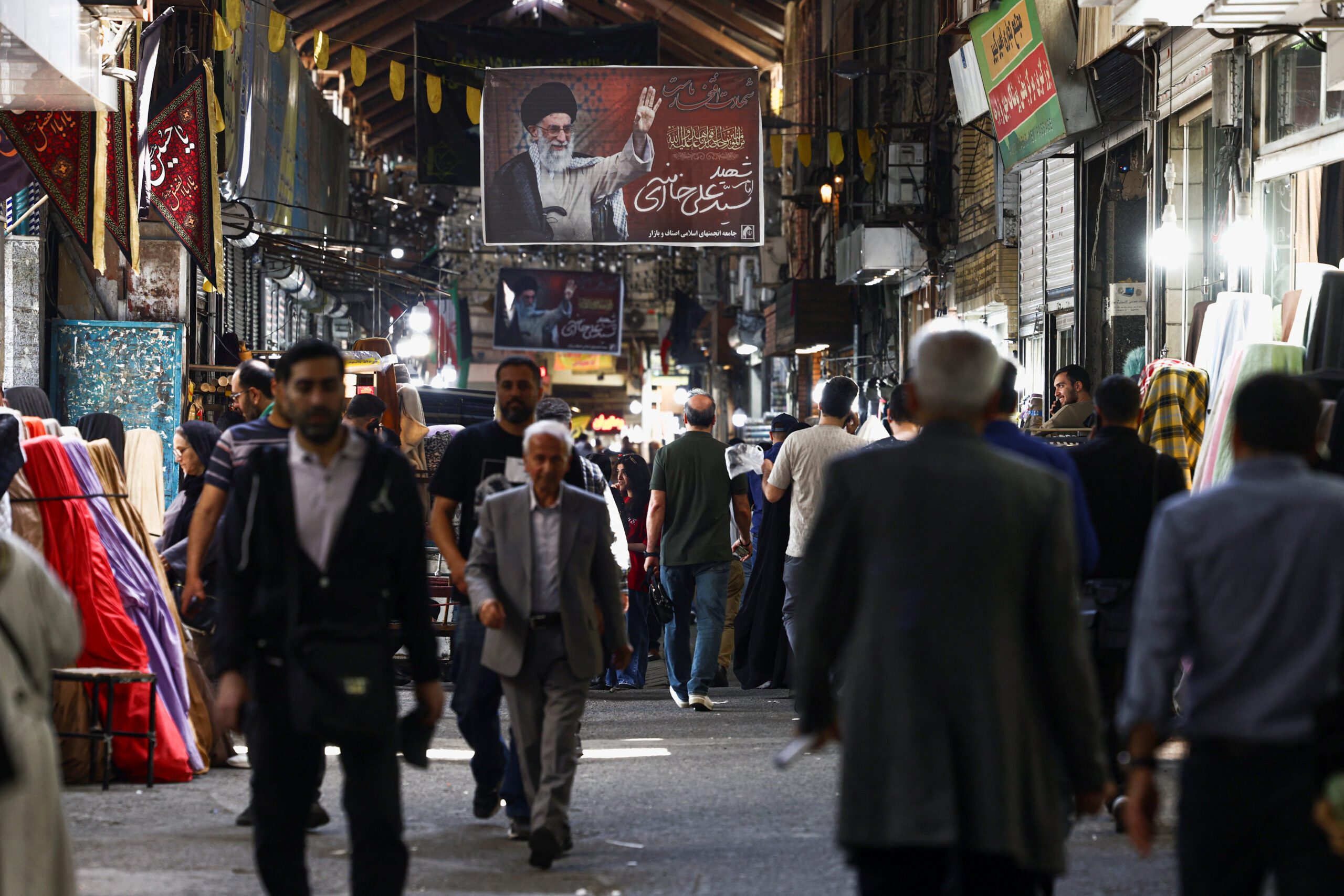
A banner bearing a picture of the late supreme leader of Iran, Ayatollah Ali Khamenei, is displayed in Tehran Bazaar, amid a cease-fire between United States and Iran, in Tehran, Iran, April 21. (Majid Asgaripour/West Asia News Agency via REUTERS)
Iran’s economy did not enter the U.S.-Israel conflict from a position of strength. Long before the first strikes February 28, decades of accumulated mismanagement, endemic corruption, and the cumulative weight of international sanctions had already eroded the foundations of a functioning economy. Growth was sluggish, inflation chronic, the currency in long-term freefall, and public trust in economic institutions, particularly the banking sector, badly eroded. The economy was, in many respects, already a managed crisis: held together by state subsidies, informal networks, and the extraordinary adaptability of a population long accustomed to scarcity and improvisation. Beneath the surface, poverty was spreading. The World Bank estimated that by the beginning of 2026, nearly 33 million Iranians were living under the poverty line, defined as earning less than $8.30 per day. Amid the war, chronic economic challenges have become acute, particularly in already fragile areas, such as the banking system, currency devaluation, the digital economy, and household finance.
The Direct Costs of War
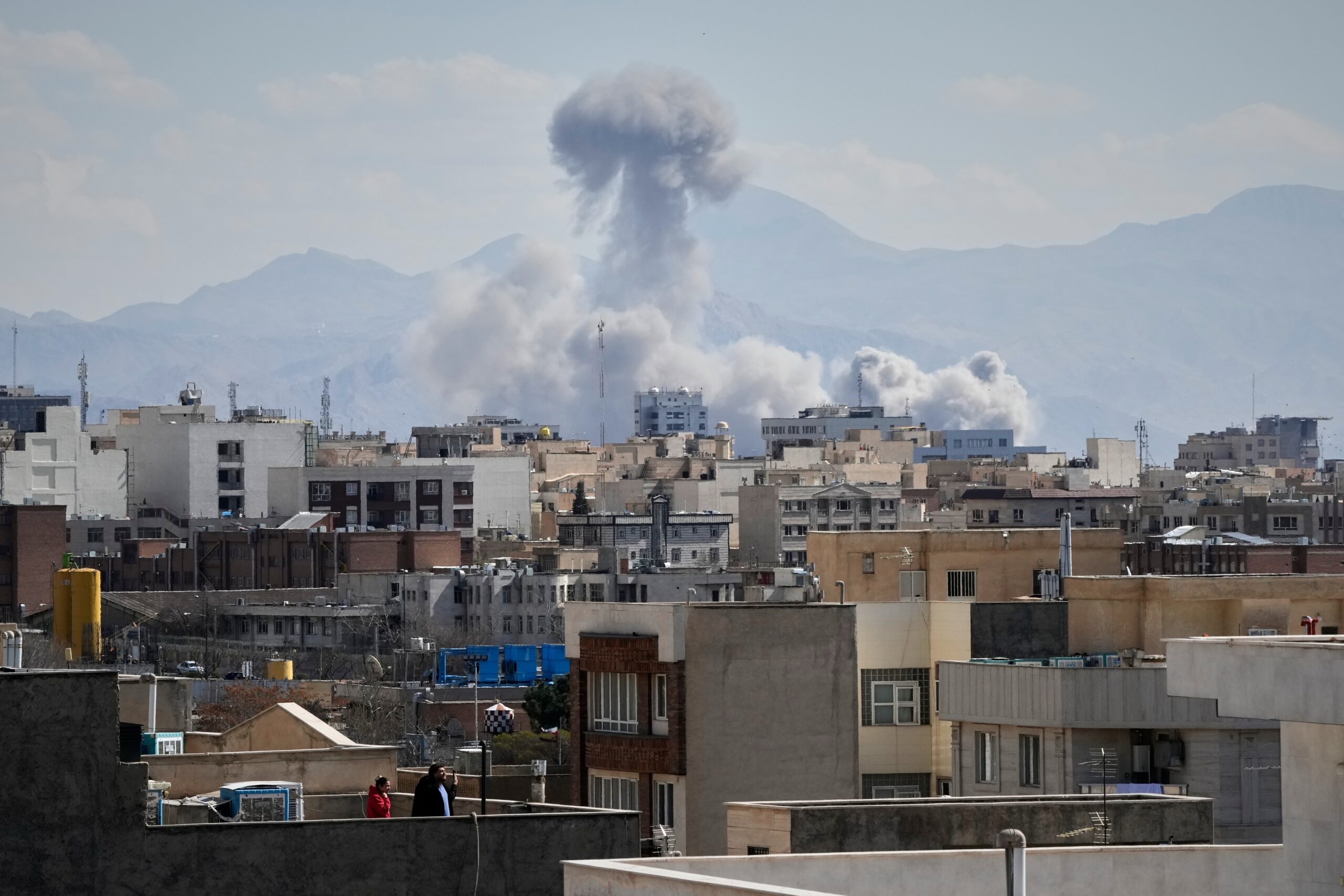
As part of its negotiations with the United States to end the conflict, the Iranian government demanded $270 billion in compensation for damages inflicted by U.S. and Israeli attacks and warned that the total destruction cost could be significantly higher. Energy infrastructure, heavy industry, and military sites bore the brunt of the airstrikes. Transportation networks, oil storage facilities, universities, and residential homes were also damaged. The war inflicted between $34 billion and $58 billion in damage on energy infrastructure alone – more than 80 energy facilities were attacked, and over one-third sustained severe damage.
The civil aviation and tourism sectors were also hit. Major airports across the country, including in Tehran, Tabriz, Urmia, and Khorramabad, sustained extensive damage. Domestic airlines grounded civilian aircraft, some of which are permanently inoperable, leading to cumulative deficits of over $190 million within the first 40 days of the war.
Cost of Internet Shutdown
The damage now unfolding across Iran’s economy is not limited to war destruction costs. Afshin Kolahi, head of Knowledge-Based Companies’ Commission at the Iran Chamber of Commerce, told local media that a bridge the scale of the B1 Bridge costs up to $20 million to build, while each megawatt of capacity in an electricity power plant costs between $1 million and $3 million. By comparison, he estimated the cost of an internet shutdown was around $80 million per day – meaning that, in his estimate, every single day of connectivity blackout could cost the Iranian economy the equivalent of destroying four bridges or building an entire power plant. This is the first time a local official admitted the economic loss of the government-imposed digital shutdown.
The shutdown is, in some respects, more damaging than physical destruction, because it strikes at the economic activity of millions of people simultaneously rather than at a single piece of physical infrastructure. The Tehran Chamber of Commerce estimated that at least 500,000 Instagram-based businesses operated in Iran before the war, supporting approximately 1 million jobs. These were not large enterprises. They were clothing sellers, food vendors, craftspeople, and beauty service providers, mostly women, who had built livelihoods through social media platforms precisely because formal employment was either unavailable or inaccessible. The shutdown suddenly stopped all these activities. Moreover, online ride-sharing services, food delivery platforms, online retail, streaming services, and digital financial tools all ceased functioning simultaneously.
Banking Sector on the Brink
For years, Iranian banks were chronically undercapitalized, burdened by nonperforming loans, structurally dependent on central bank borrowing, and insulated from accountability by a deeply politicized regulatory environment. Since the outbreak of conflict, the banking system has been pushed to the edge of functional collapse. Infrastructure at Bank Sepah, one of the country’s largest state-owned banks, which manages salary payments for the armed forces, was hit by missile strikes and cyberattacks.
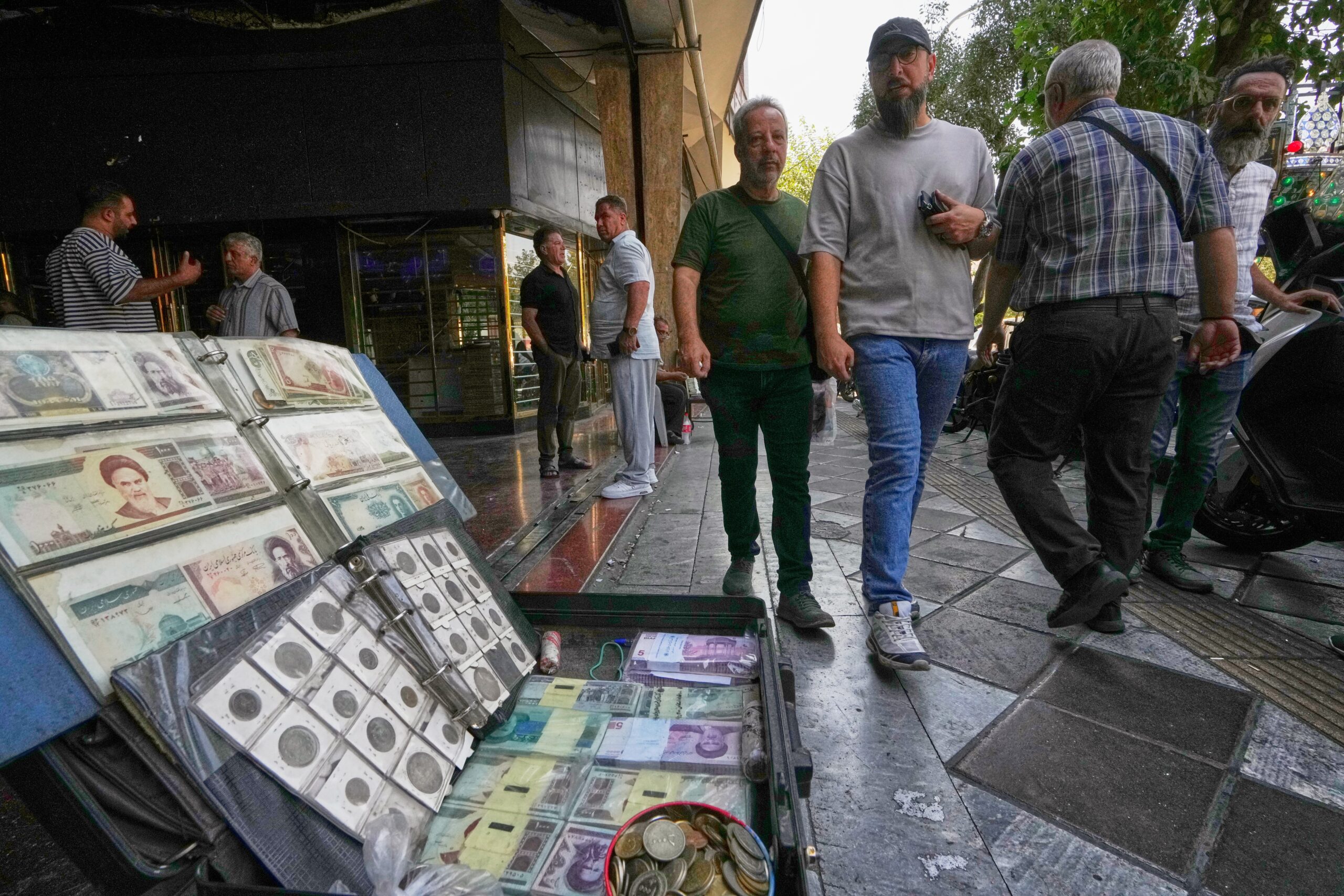
Across the country, cash became scarce after the war began. Customers lined up for hours only to find cash machines empty. Informal daily withdrawal caps had been imposed across the system, limiting account holders to withdrawing the equivalent of just $18 to $30 per day. The central bank issued a 10 million rial banknote, worth nearly $7, the largest denomination ever, a strong signal of coming higher inflation.
Rising Inflation
Inflation in Iran was already among the highest in the world before the war began, and it has severely diminished household purchasing power. By February, the average Iranian family was spending roughly twice what it paid for the same food basket a year earlier. At the same time, wages grew at barely one-third of that pace. The price for some food items rose significantly, including cooking oil (207%), bread and cereals (142%), meat (117%), and dairy and eggs (108%). As a result, for a lot of families, a minimal diet has become unaffordable.
More Than an Economic Crisis
The compounding weight of physical destruction, banking paralysis, currency collapse, and digital shutdown has produced a crisis that operates on multiple levels. Systems and sectors that took years to develop, particularly across digital services, are being dismantled and will not be easily rebuilt. The social costs fall hardest on lower-income Iranians, who are often informally employed and have no assets to fall back on when their income dries up. Equally significant is the psychological toll: The confidence of depositors, entrepreneurs, and Iranian families in any institution capable of safeguarding their futures has been steadily eroded. Rebuilding Iran’s economy could take a long time. Reconstruction will require the economic participation of generations of Iranians whose savings, businesses, and futures have already been lost. The longer-term question is not only whether Iran’s economy can be rebuilt. It is whether, after everything that has happened, the society around it holds together long enough to try.
The views represented herein are the author's or speaker's own and do not necessarily reflect the views of AGSI, its staff, or its board of directors.
The Iranian regime’s internet censorship and shutdowns function as comprehensive weapons of political warfare, designed to isolate, demoralize, and ultimately suppress dissent.
This series examines the acceleration of poverty in the Islamic Republic, the state's perception of the political and social impact of poverty and its response to dissent, and the economic challenges facing Iran’s next administration following the June 2021 presidential election.
The Iranian regime’s internet censorship and shutdowns function as comprehensive weapons of political warfare, designed to isolate, demoralize, and ultimately suppress dissent.
As AI capabilities increasingly converge with cyber warfare, military superiority will depend not on troop numbers or weapons platforms but on algorithmic advantages and digital resilience.
The convergence of internal dysfunction and external pressure has renewed speculation regarding the Iranian regime’s downfall and scenarios for a political transformation.
On April 15, AGSI hosted a private workshop on understanding how the dynamics of Iran's defense technology, information control, and geopolitical competition connect, led by Visiting Scholar Sara Bazoobandi.