February talks between Saudi Arabia and Turkey signaled the emergence of a pragmatic regional order grounded in economic complementarity, defense cooperation, and shared anxieties about instability.
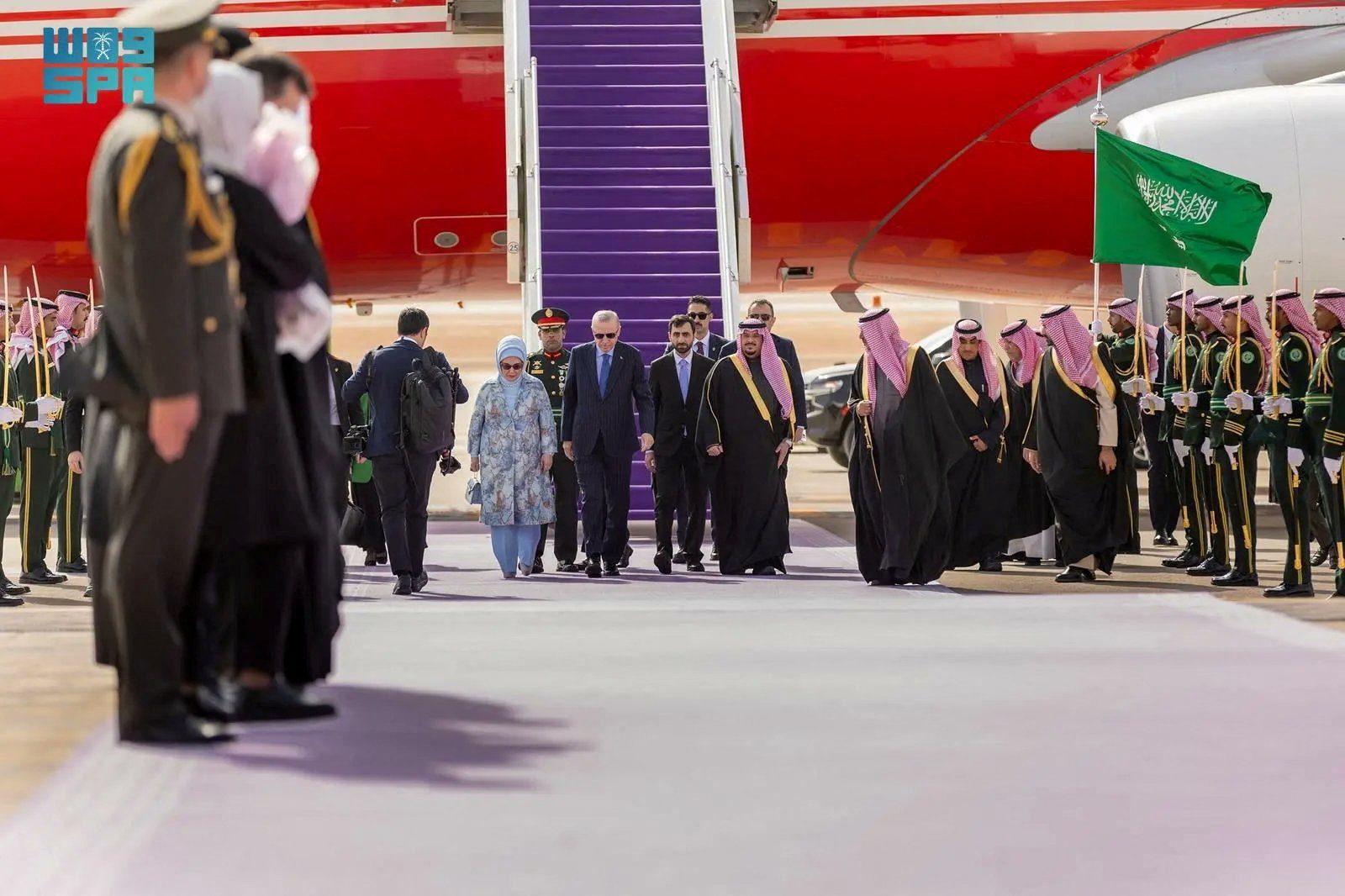
Saudi officials welcome Turkish President Recep Tayyip Erdogan and his wife Emine Erdogan upon their arrival in Riyadh, Saudi Arabia, February 3. (Saudi Press Agency/Handout via REUTERS)
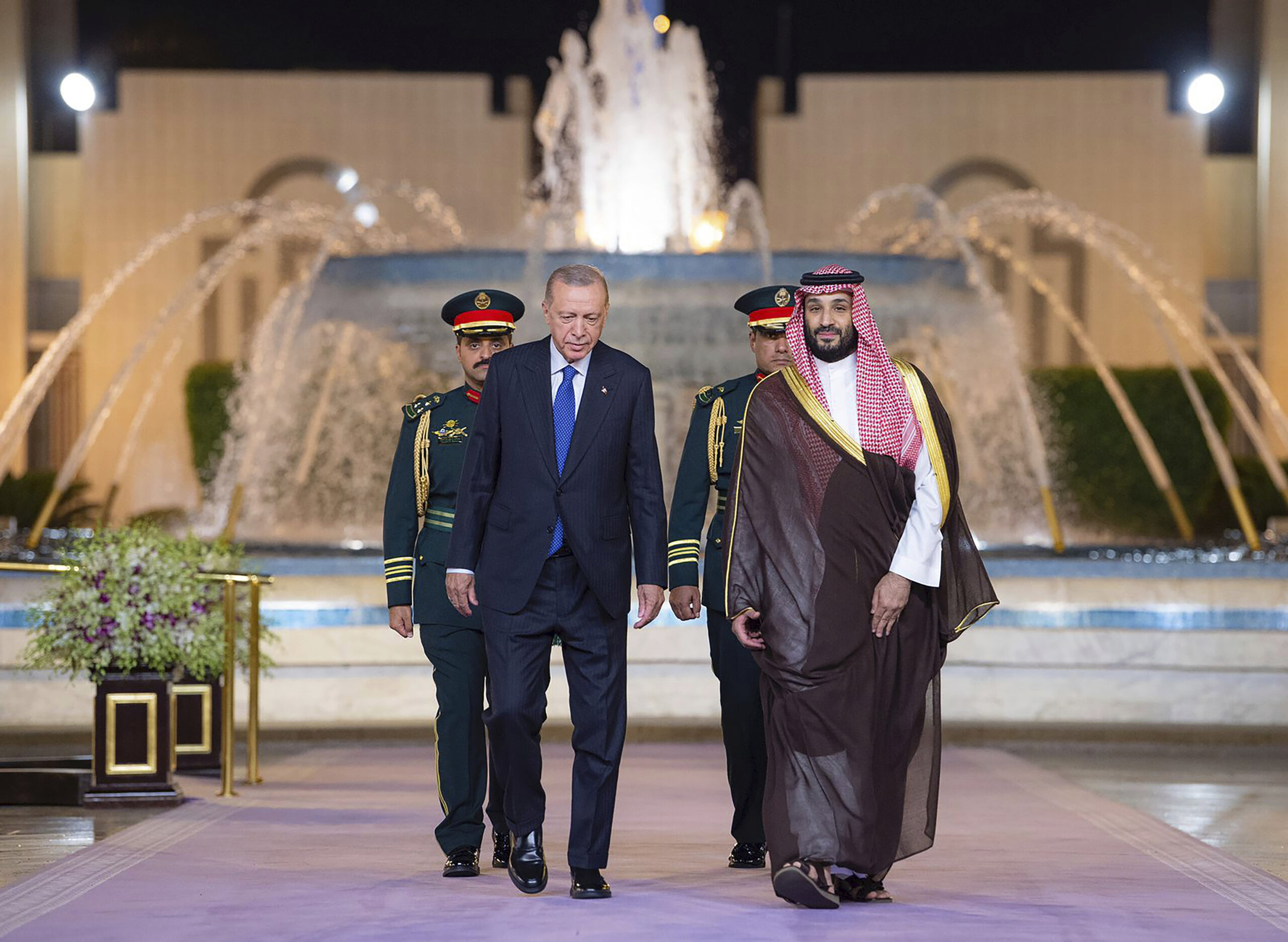
When Turkish President Recep Tayyip Erdogan arrived in Riyadh on February 3, it capped a carefully choreographed reconciliation reshaping the Middle East’s geopolitical landscape. Talks with Saudi Crown Prince Mohammed bin Salman signaled not just a bilateral reset but the emergence of a pragmatic regional order grounded in economic complementarity, defense cooperation, and shared anxieties about instability.
The Arc of Reconciliation
The killing of Saudi journalist Jamal Khashoggi at the Saudi Consulate in Istanbul in October 2018 plunged relations with Saudi Arabia into a deep freeze, prompting Turkish intelligence disclosures and informal Saudi economic boycotts. The 2022 transfer of the Khashoggi trial to Riyadh marked the beginning of a thaw, but what has emerged since goes far beyond mere normalization of relations.
Bilateral trade exceeded $8 billion in 2025, a 14% year-over-year increase. But the real transformation lies in the ambition, as the two sides target $10 billion by 2027 and $30 billion long term, driven by Saudi investments exceeding $2 billion mainly in Turkish real estate and construction.
Saudi Arabia has become a leading market for the Turkish construction industry. Over 5,600 Turkish firms operate in Saudi Arabia, completing projects valued at $32.5 billion, positioning them to take on Vision 2030 megaprojects, including Expo 2030 and the 2034 FIFA World Cup.
The February visit highlighted this economic complementarity. A business forum drew more than 700 participants. A joint statement lauded the “strength of economic ties” and underscored the need to conclude a free trade agreement between Turkey and the Gulf Cooperation Council.
The Defense Dimension: Beyond Drones to Fifth-Generation Fighters?
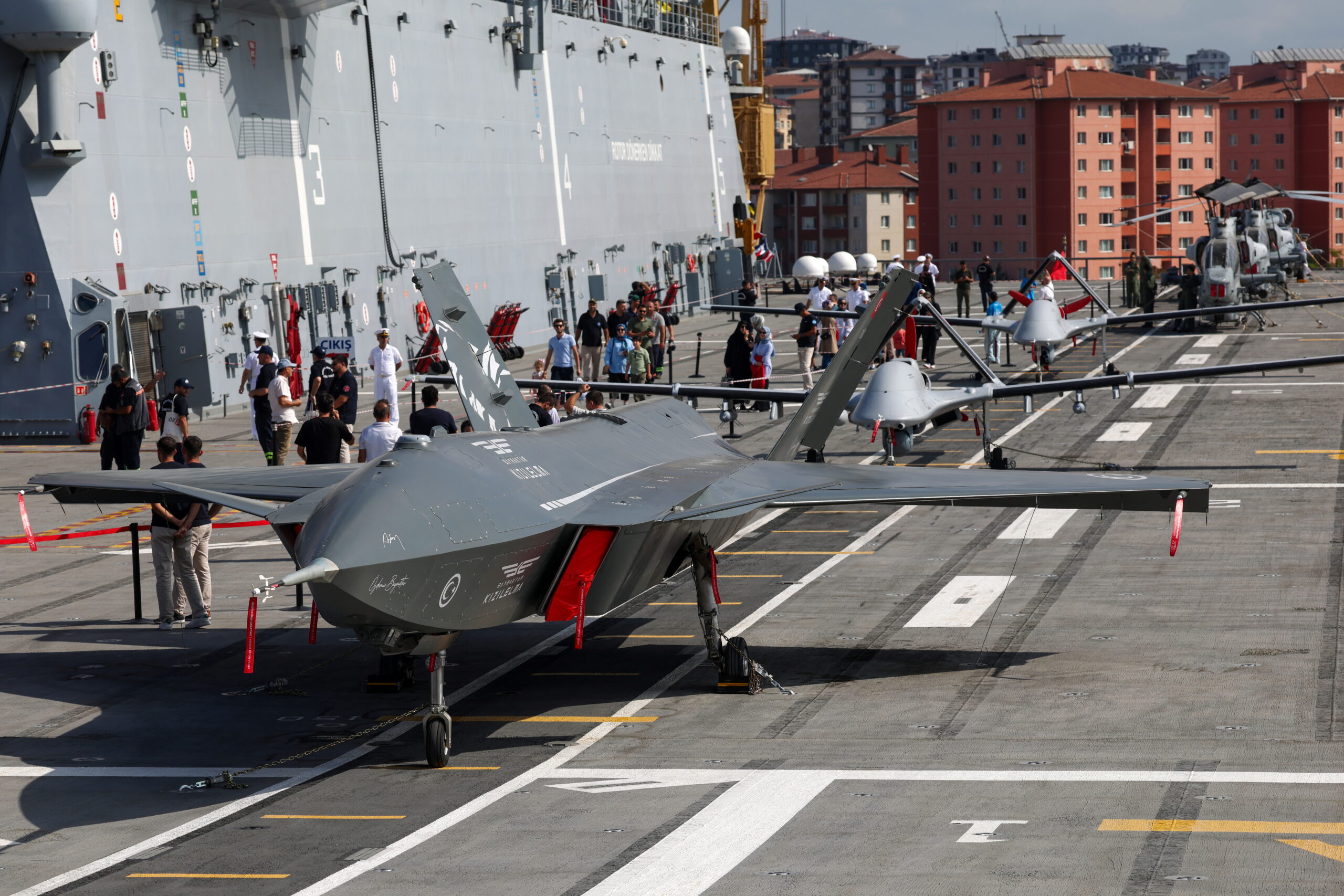
If economics provides the foundation, defense cooperation supplies the superstructure. Turkey’s defense exports to Saudi Arabia have evolved from transactional purchases into technology transfer partnerships aligned with Riyadh’s localization goals. A 2023 Bayraktar Akinci drone deal remains Turkey’s largest defense export contract ever with Saudi Arabia, but Erdogan exposed the partnership’s true trajectory on his return flight from Saudi Arabia. Erdogan told reporters that joint investment in Turkey’s fifth-generation Turkish Aerospace Industries KAAN fighter jet program “could be realized at any moment.” Turkish Aerospace Industries General Manager Mehmet Demiroglu confirmed that negotiations had reached “the final and highest level.”
For Saudi Arabia, which has yet to finalize an F-35 deal with the United States despite repeated requests since 2012, the KAAN represents more than procurement – it is strategic autonomy. The tech transfer built into potential partnerships directly supports Vision 2030’s defense localization objectives.
Turkey showcased the KAAN fighter at Riyadh’s World Defense Show days after Erdogan’s visit. Defense-industrial integration received a boost from a February memorandum between Roketsan and the Saudi Ministry of Investment and General Authority for Military Industries alongside an agreement for joint production (including tech transfer) of the Gokbey helicopter.
Regional Alignment: Syria as Test Case
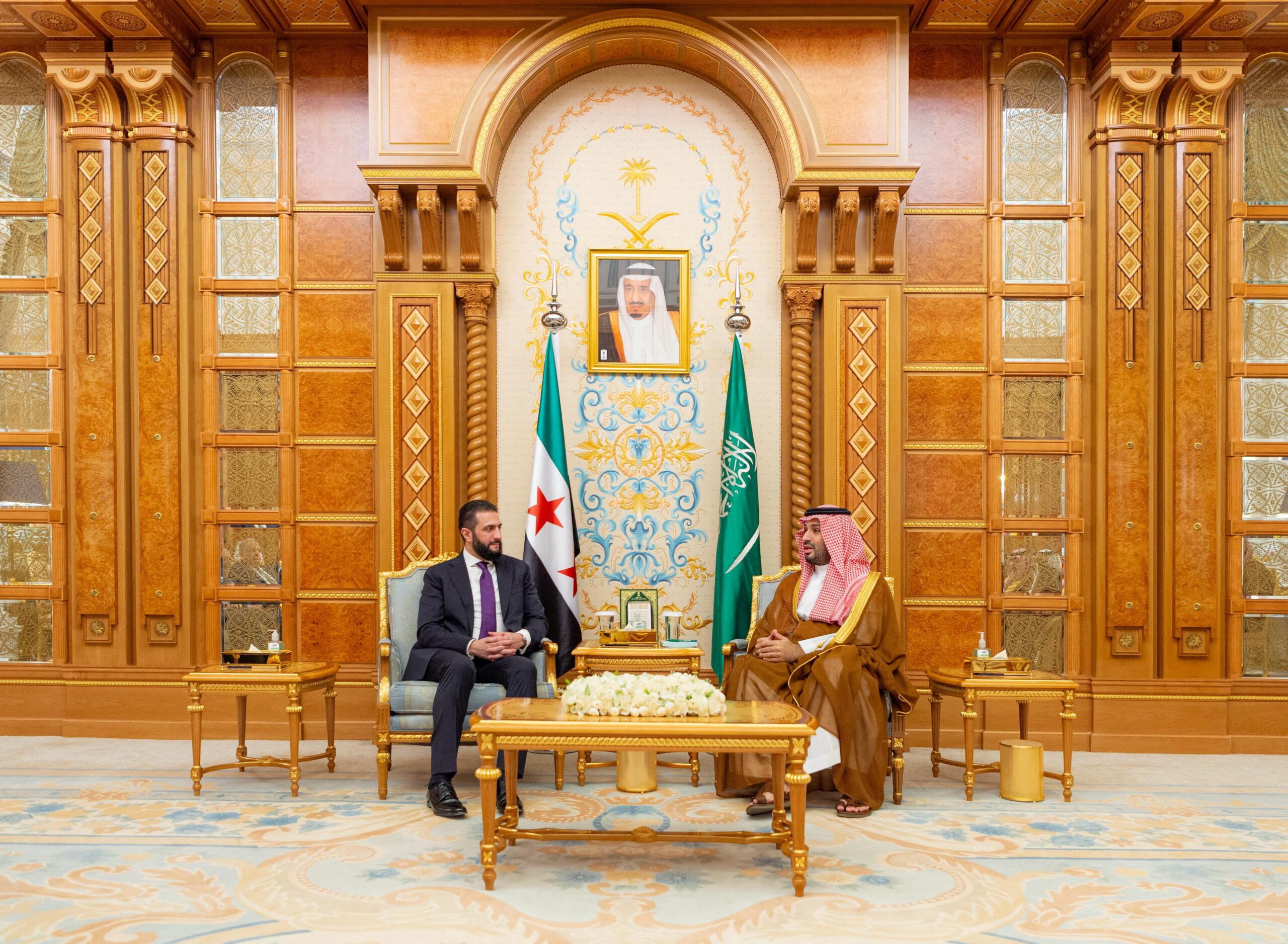
Yet the partnership’s durability will be tested on the ground in post-Assad Syria, where Turkish and Saudi interests converge but do not overlay perfectly despite all the convergence. Bashar al-Assad’s fall in December 2024 created both opportunity and urgency, underscored by the first two foreign visits of Syria’s interim president, Ahmed al-Sharaa, to Saudi Arabia and Turkey.
Both countries lifted sanctions on Damascus and have coordinated aid. More significantly, Riyadh welcomed plans to integrate the Syrian Democratic Forces into the Syrian state and reaffirmed “full support for the efforts of the Syrian government to strengthen social peace and preserve Syria’s sovereignty” – language closely aligned with Ankara’s security priorities regarding Kurdish forces but also consistently reinforcing Saudi discourse focused on conflict and recovery in other states in the region.
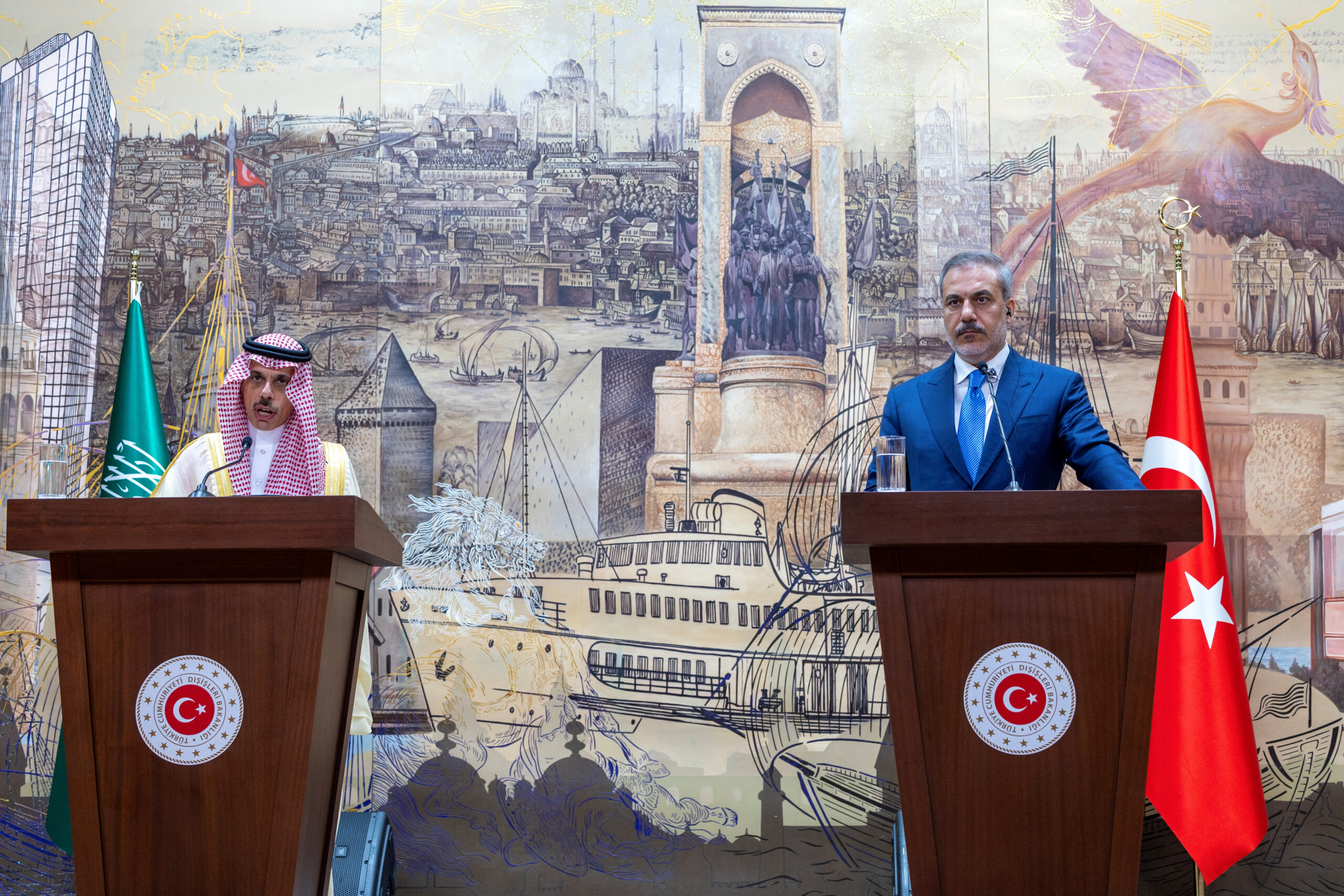
This coordination serves multiple purposes. Both powers are determined to prevent Iranian reentrenchment. In a December 2024 interview, Turkish Foreign Minister Hakan Fidan said, “We do not want Iranian domination in the region, nor do we want Turkish or Arab domination,” capturing the pragmatic equilibrium both Turkey and Saudi Arabia seek. Turkey and Saudi Arabia expended considerable diplomatic capital persuading the administration of President Donald J. Trump to recognize Sharaa’s presidency and provide sanctions relief for Syria, countering Israeli opposition.
Similarly, on Gaza, the Saudi and Turkish alignment has been equally pronounced, with both countries pushing two-state solutions and coordinating reconstruction planning.
Impediments and Fault Lines
Yet this convergence should not be mistaken for seamless partnership.
The Hamas divergence remains the most obvious friction point. Erdogan maintains rhetorical and material support for Hamas, while Saudi Arabia keeps the group at arm’s length. Competition for influence in Syria and Gaza also simmers beneath collaborative statements.
Recent Saudi-United Arab Emirates tensions complicate calculations. Turkey’s closer alignment with Saudi Arabia risks straining its improving ties with the UAE, particularly given the lingering competitive undercurrents in Saudi-Emirati relations. As Turkey has moved to normalize ties and deepen cooperation with both Gulf powers, balancing between them becomes more delicate.
A wider, still-fluid Sunni security geometry – less a bloc than a flexible balancing arrangement – may be forming at the margins of the partnership. Improving Turkey-Egypt ties, alongside Riyadh’s deep defense links with Pakistan, creates space for pragmatic coordination. Yet translating such informal alignment into formal security commitments remains uncertain. Initial reports suggested Turkey might join the Saudi-Pakistani mutual defense agreement, but Turkey ultimately declined to join the pact. This hesitation likely reflects Turkey’s NATO commitments.
Opposition from Israel to Turkish or Saudi access to fifth-generation capabilities could constrain defense cooperation; despite tentative signals of openness from the Trump administration, Israeli security concerns remain a powerful constraint in Washington. At the same time, Riyadh may hesitate to commit to the KAAN fighter given export dependence on General Electric engines, the availability of proven European alternatives, continued interest in U.S. fifth-generation platforms, and the program’s remaining technical, financial, and timeline uncertainties.
Strategic Implications
The Turkey-Saudi partnership is predominantly a pragmatic hedge against multiple uncertainties, ranging from U.S. unreliability and Iranian revanchism to Israeli unilateralism.
With Turkey supplying industrial capacity and transit access and Saudi Arabia providing capital and regional influence, the partners are exploring reconstruction opportunities abroad, including in Syria. The Turkish-Saudi Coordination Council institutionalizes collaboration across the digital economy, artificial intelligence, space, and other sectors.
For the United States, this alignment offers both opportunity and challenge. Turkey’s seemingly close alignment with the Trump administration in Syria could facilitate U.S. disengagement while maintaining regional stability. Yet Turkish and Saudi preferences for engagement over confrontation with Iran – and their support for a stable, Sunni-led Syria rather than apparent Israeli preferences for fragmentation – may complicate U.S. balancing between Sunni partners and Israel.
The partnership also signals shifts in global arms markets and tech transfer norms. If the KAAN-Saudi deal materializes, it would validate Turkey’s model of defense-industrial partnership built on tech sharing rather than end-user restrictions. This has implications far beyond the Middle East, potentially reshaping how medium powers approach defense procurement and alliance formation.
Continued Pragmatism?
The February summit demonstrated that Saudi-Turkish convergence has moved beyond tentative rapprochement into operational partnership. The $30 billion trade target, potential KAAN co-production, Syria coordination, and Gaza reconstruction planning are not aspirational. They are actively under implementation with ministerial oversight and business forums providing institutional momentum.
Yet durability depends on continued pragmatism. Syria’s stability will test whether both can manage overlapping influence without triggering zero-sum competition. Gaza reconstruction will reveal whether Hamas differences can be compartmentalized. Defense cooperation will show whether tech transfers materialize or remain symbolic gestures.
The partnership also requires managing third-party relationships that could force divergent choices, including Abu Dhabi’s rivalry with Ankara, Islamabad’s complications with New Delhi, Washington’s Israel commitments, and Tehran’s spoiler potential.
The views represented herein are the author's or speaker's own and do not necessarily reflect the views of AGSI, its staff, or its board of directors.
As the Gulf states pursue defense localization and seek to reduce dependence on the United States and Europe, Ankara offers cost-effective technology and a model of how to build capacity.
The durability of recent peace gestures, energy deals, and revenue-sharing agreements will hinge on political consensus and restraint, both within Kurdistan and across Iraq’s fractured national landscape.
By linking domestic renewable energy capacity with industrial-scale production and export corridors, Oman is building a framework to transform its hydrogen ambitions into a sustainable and globally relevant industry.
Cheap Russian pipeline flows could weaken Asian LNG demand, depress global prices, and force Gulf exporters to rethink the foundations of their growth strategies.