Political Life and Legacy of Iran’s Ayatollah Khamenei
Ayatollah Ali Khamenei was killed in his office in Tehran at age 86, leaving behind a country in ruins and on the verge of civil war and potential disintegration.
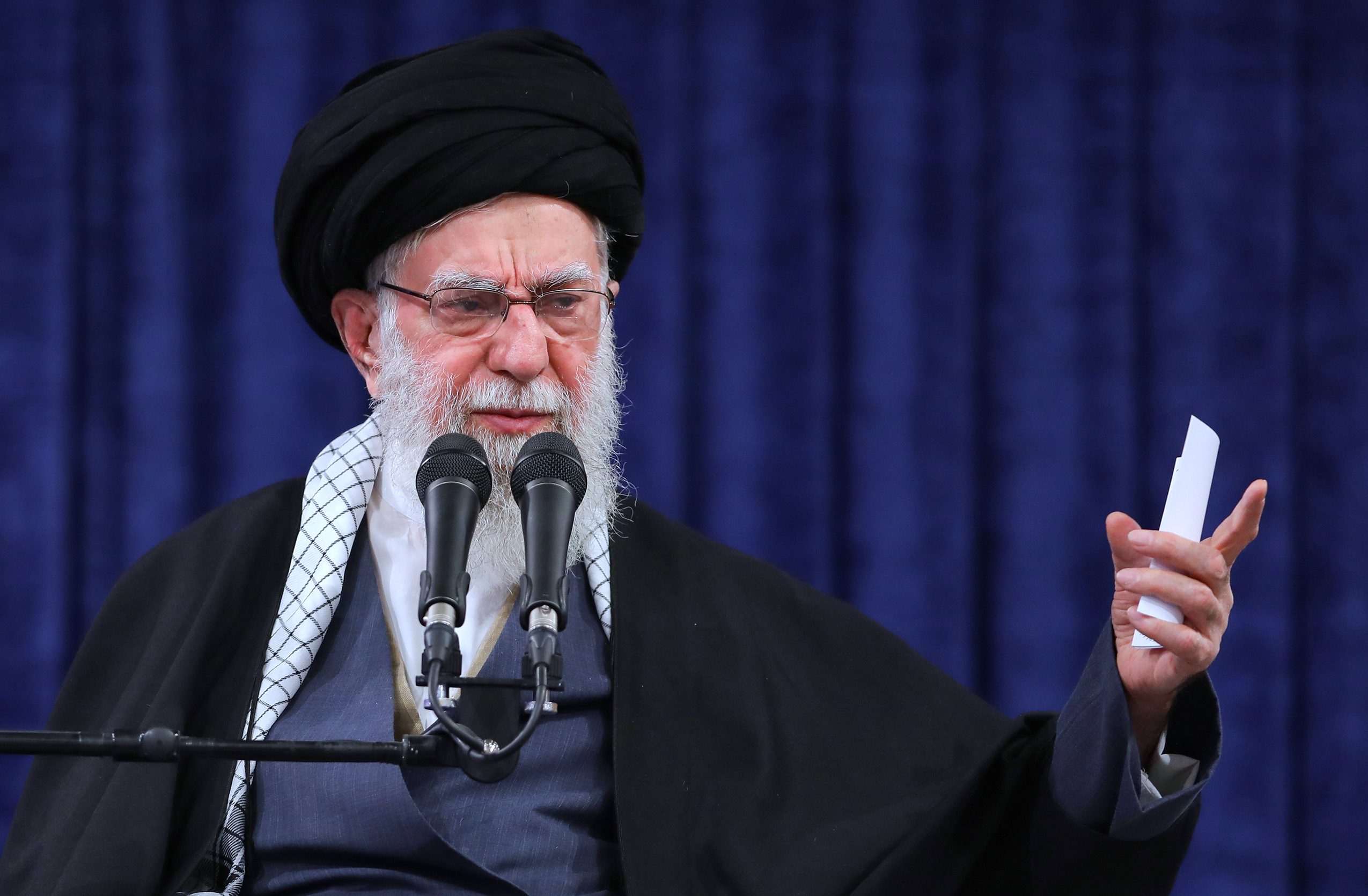
In this photo released by an official website of the office of the Iranian supreme leader, Supreme Leader Ayatollah Ali Khamenei speaks in a meeting in Tehran, Iran, February 17. (Office of the Iranian Supreme Leader via AP)
Ayatollah Ali Khamenei, Iran’s head of state since 1989, died in Israel’s bombardment of his office in central Tehran at age 86. He leaves behind a country in ruin, on the verge of a civil war and potential disintegration.
Born into a respectable but impoverished clerical family in 1939 in Mashhad, the capital of Khorasan province, young Khamenei was a lover not of theology or politics but of literature and poetry. Fairytales recounted to him by his illiterate mother and serialized novellas in newspapers opened a magical world of beauty and adventure to him. It was in literature that Khamenei found refuge from a disciplinarian father and school, where he was ridiculed for the rags he wore and his undiagnosed nearsightedness, which made him appear unintelligent to his classmates, he made clear in various statements. One day on his way home from school, Khamenei tested a pair of used spectacles out of curiosity. “The world became clear to me,” he remembered, but his father would not pay for his son “appearing the dandy.” It took his mother a full year of squirreling away money from the food budget before Khamenei could get an eye exam and a pair of glasses.
Coerced by his father and likely under social pressure, young Khamenei enrolled at the Mashhad Theological Seminary in 1952, but instead of attending class, he put those glasses to good use reading Persian translations of masterpieces of the Western literary canon at the library of the Astan-e Qods Foundation, Iran’s equivalent of the Vatican library. In the 1980s, Khamenei openly admitted that he was at times so immersed in reading Leo Tolstoy and Victor Hugo that he would forget the call of the muezzin and prayers.
By the late 1950s, Khamenei began frequenting literary salons in Mashhad and even tried his hand at writing poetry, which he later admitted was not worthy of publication. In Mashhad’s literary circles, Khamenei met intellectuals opposed to Shah Mohammad Reza Pahlavi’s royal dictatorship. Two among them made lasting impressions on Khamenei: Ali Shariati, who mixed Shiism and Marxism in his polemical works, and novelist Jalal Al-e Ahmad, who blamed the Pahlavi regime’s “occidentosis” or emulation of the West for Iran’s backwardness and underdevelopment.
Khamenei left Mashhad in the early 1960s to study at the Theological Seminary in Qom. Here, Khamenei formed a life-changing friendship with his classmate Akbar Hashemi Rafsanjani, son of a wealthy landowning pistachio farmer in Kerman. Together, they soon found a mentor in Ruhollah Khomeini, a mid-ranking cleric known in the seminary as “the Younani,” or “the Greek,” for his love of Plato, whose concept of the “philosopher king” as the ideal ruler shaped Khomeini’s theory of guardianship of the jurist – vilayet e-faqih. In line with the Mashhad intellectuals, Khomeini was also critical of the Pahlavi regime, whose modernization of Iran he deemed un-Islamic. In 1963, Khomeini publicly denounced the shah as a tyrant and was arrested and exiled to Turkey the following year, and from there he went to Najaf, Iraq. But his disciples, including Khamenei and Rafsanjani, remained in Iran and traveled from mosque to mosque to deliver sermons to stir up the public against the Pahlavi regime.
Around this time, Khamenei also found ideological inspiration in the works of Sayyid Qutb, the leading theoretician of Egypt’s Muslim Brotherhood, whose Arabic-language book “The Future Belongs to This Religion” he translated into Persian and published in 1967 with money borrowed from Rafsanjani. The translation was banned, and Khamenei was arrested by the SAVAK, the Pahlavi regime’s secret police. He was imprisoned for three months, and, after he was released, he published a few more translations and was imprisoned again in 1974.
During his second imprisonment, Khamenei shared a cell with Marxist prisoners. Shia clerics typically perceived Marxists as untouchable godless communists and avoided physical contact with them, but Khamenei was patient and tolerant. His cellmates, as recounted in the memoir of one of them, tried to provoke Khamenei by arguing there was no God, to which he would listen, smile, and respond: “Your words may deny his existence, but your breath smells of God!” On one occasion, Khamenei hand-fed a communist cellmate for an entire week after a particularly hard interrogation. The Marxists never persuaded Khamenei on matters of theology, but they infused him with anti-Americanism, which, together with the works of Shariati, Al-e Ahmad, Khomeini, and Qutb, shaped his worldview.
After his release from prison, Khamenei lived in internal exile in Iran’s distant Sistan and Baluchistan province, which prevented him from playing a role in the revolution. But thanks to his friendship with Rafsanjani, Khamenei found himself a member of the Council of the Revolution, the highest level of Iran’s revolutionary leadership, by virtue of Khomeini’s triumphant return to Iran as leader of the revolution in 1979.
Khomeini was at first opposed to having clerics serve as cabinet ministers, but he appointed them deputy ministers to act as his eyes and ears in Prime Minister Mehdi Bazargan’s moderate, technocratic Cabinet. Khamenei served as deputy minister of defense and Rafsanjani as deputy interior minister. However, when Khamenei, Rafsanjani, and other high-ranking officials were on pilgrimage to Mecca in November 1979, the “Students Following the Line of the Imam” seized the U.S. Embassy in Tehran and took U.S. diplomats hostage. When Bazargan resigned in protest to Khomeini’s endorsement of the attack, the path was paved for a clerical takeover of Cabinet positions.
The hostage crisis was soon eclipsed by existential threats to the regime, as ethnic minorities launched separatist insurgencies, Iraqi dictator Saddam Hussein took advantage of the revolutionary chaos and invaded Iran in September 1980, and the armed opposition unleased a wave of assassinations of regime officials. In June 1981, Khamenei narrowly escaped an attempt on his life, which permanently damaged his right arm. Khomeini was neither willing nor, due to a heart failure, capable of administering the day-to-day affairs of the crisis-ridden state, and his clerical disciples took effective control of the regime: Khamenei, whose popularity was boosted after the failed assassination attempt, was elected president in 1981, Rafsanjani served as parliamentary speaker, and a third cleric, Abdul-Karim Moussavi-Ardabili, was appointed chief justice. The heads of the three powers of the state, along with Ahmad Khomeini, son of the leader, who had access to his father’s signet ring to stamp official documents and provide religious legitimacy to government policy, constituted an effective quartet, which navigated the ship of the Islamic Republic throughout the tumultuous 1980s.
Throughout this revolutionary period, Khamenei, guided by Rafsanjani, served as an agent of continuity, moderation, and pragmatism. Before the victory of the revolution Khomeini dismissed the shah’s nuclear energy program, which the United States suspected of providing cover for Iran’s nuclear weapons ambitions, as un-Islamic and wasteful. By the early 1980s, Khamenei and Rafsanjani reactivated the program at great expense to counter a potential Iraqi nuclear weapon. The Iraqi threat also made both men, despite their public anti-Israel rhetoric, secretly reach out to the Jewish state for support. This resulted in Iran importing U.S.-made arms and spare parts from Israel and, at times, directly from the United States, in what has since been known as the Iran-Contra affair. In 1989, when Khomeini issued a fatwa calling for the death of British author Salman Rushdie, whose “Satanic Verses” he found blasphemous, European Union member states withdrew their ambassadors from Tehran. It was Khamenei who, at great political cost and, ultimately, in vain, tried to walk the fatwa back.
With Khomeini on his deathbed in 1989, Khamenei, Rafsanjani, Ardabili, and Ahmad Khomeini lobbied for a constitutional amendment to replace the position of supreme leader with a leadership council on which they would serve. The idea of collective leadership, however, was dismissed by the Assembly of Experts tasked with amending the constitution, and Rafsanjani opted for his Plan B: elevating Khamenei to supreme leader despite his lack of the constitutionally required religious qualifications and passing constitutional amendments to strengthen the presidency, which Rafsanjani was about to assume.
Rafsanjani may have found Khamenei malleable, but in the end, it was Khamenei who outsmarted Rafsanjani and every president who followed.
Throughout his two consecutive terms in office (1989-97), Rafsanjani and his technocratic elites tried hard to transform revolutionary Iran into a state that would be accepted within the international community. With Khamenei’s blessing, Rafsanjani normalized diplomatic relations with Iran’s Arab neighbors and remained neutral in the 1991 Gulf War in return for concessions from the warring parties. However, when Rafsanjani and his technocratic elites tried to dismantle revolutionary institutions, which had emerged as parallel institutions and counterbalances to Iran’s government agencies after the revolution, Khamenei obstructed their efforts. Most consequential, Khamenei vetoed the proposed merger of the Islamic Revolutionary Guard Corps with Iran’s regular military. When Rafsanjani, inspired by Chinese leader Deng Xiaoping, tried to liberalize Iran’s largely state-controlled economy, Khamenei saw to it that more funds were funneled to the IRGC and other parastatal revolutionary institutions in the gray zone between the private and public sectors. In preserving the IRGC as an independent force and financially strengthening it, Khamenei hoped to transform it into his private mercenary army and an instrument of power against domestic political opponents, and even Rafsanjani and the technocrats, who could bring him down just as easily as they brought him to power. But, in doing so, Khamenei laid the foundation for the IRGC’s economic independence and weakened civilian control over it.
Elected in 1997, President Mohammad Khatami did not fare better than Rafsanjani. Khatami was not Khamenei’s choice for president, but his winning smile, sophisticated vocabulary, and promise of political freedom resonated with Iran’s well-educated, urban middle class eager to leave behind revolution, war, and Rafsanjani’s authoritarian modernization. Khamenei feared Khatami was Iran’s equivalent of Soviet leader Mikhail Gorbachev: a regime loyalist whose well-intended promises of political freedom would only accelerate public demands for reforms and potentially lead to regime collapse. Therefore, Khamenei encouraged the IRGC, its allied Basij militia, and related pressure groups to sabotage Khatami’s work in government and beat up the president’s supporters in the streets. In doing so, Khamenei issued a blank check to the IRGC to intervene in domestic politics. In foreign policy, Khatami had some latitude to engage in friendly, symbolic gestures to the United States. In the wake of the 9/11 attacks, Iran not only condemned them but also provided the United States with critical intelligence during the invasion of Afghanistan. However, Khamenei ended the sub rosa tactical alignment with the United States after President George W. Bush labeled Iran part of an “axis of evil” in his 2002 State of the Union address.
When the United States invaded Iraq in 2003, Khamenei chose to turn the threat of encirclement by the U.S. military into an opportunity by arming insurgents to impose significant casualties on the United States. This, Khamenei believed, could deter a potential U.S. invasion of Iran, which, like Iraq, was accused by Washington of harboring nuclear weapons ambitions. From 2005 on, populist politician Mahmoud Ahmadinejad and Quds Force Chief Major General Qassim Suleimani became, respectively, the political and military faces of Iran’s resistance to the United States. With Khamenei’s blessing and IRGC support, Ahmadinejad surprisingly beat Rafsanjani in the 2005 presidential election and spent his eight years in office haranguing the United States, engaging in anti-Israel and sometimes rank antisemitic vitriol, and expanding Iran’s domestic uranium enrichment capabilities. Suleimani, on the other hand, mobilized Iran’s Iraqi Shia proxies against the U.S. military in Iraq. At first, Khamenei was perfectly happy with the humiliation of Rafsanjani. Ahmadinejad’s anti-U.S. posture also suited Khamenei, who did not even mind Iran’s increasingly dangerous diplomatic isolation over the nuclear issue and the international sanctions regime against Iran. Ahmadinejad’s victory in the widely disputed 2009 elections, however, imposed a political cost on Khamenei. In a precursor to the Arab Spring uprisings, millions of Iranians took to the streets to protest what they perceived as electoral fraud. Still worse, from Khamenei’s perspective, Ahmadinejad proved insubordinate to Khamenei despite the supreme leader’s support for him during the electoral crisis.
With the chaotic Ahmadinejad era in mind, in 2013, Khamenei reached out to the technocratic elites and Rafsanjani’s protégé Hassan Rouhani to restore order. Rouhani was only too happy to accommodate Khamenei’s wishes for him to serve as president. With Khamenei’s advanced age taken into consideration, the presidency would make Rouhani and his backer, Rafsanjani, well positioned to influence the post-Khamenei era. This, however, proved to be wishful thinking with Rafsanjani’s suspicious drowning in a swimming pool in 2017. Rouhani’s hopes were frustrated on other fronts as well. On the campaign trail, Rouhani said Iran is a part of “the global village” and declared his intention to “make a deal with the village head,” referencing the United States, with which Rouhani wanted to reach an agreement to resolve the crisis over Iran’s nuclear program, get sanctions relief, and improve the livelihood of Iranians. Rouhani indeed delivered the Joint Comprehensive Plan of Action nuclear deal in 2015, but it proved relatively short-lived when President Donald J. Trump withdrew from it in 2018 and reimposed sanctions against Iran.
Toward the end of his life, Khamenei, tiring of independent-minded men like Rafsanjani, Khatami, Ahmadinejad, and Rouhani, increasingly surrounded himself with sycophants. One such individual was the late Ebrahim Raisi, who would never have won the 2021 presidential election without Khamenei disqualifying serious contenders from the ballot and the IRGC providing street-level support. After Raisi was killed in a helicopter crash in May 2024, Khamenei permitted the relatively independent-minded Masoud Pezeshkian – a heart surgeon by training – to run for president. Contrary to Khamenei’s expectations, Pezeshkian won the 2024 presidential election, despite the supreme leader’s apparent preference for Saeed Jalili, the hard-line former secretary of the Supreme National Security Council.
Yet the Islamic Republic’s afflictions were far beyond Pezeshkian’s capacity to cure. Though the regime had previously weathered popular uprisings and Trump’s first term “maximum pressure campaign” – an undeclared policy of regime change – it suffered a series of strategic shocks in 2024. In September, Israel effectively neutralized Lebanese Hezbollah, whose missile arsenal had deterred Israeli strikes on Iran’s nuclear infrastructure. Then, in December, Bashar al-Assad’s regime in Syria – crucial for maintaining Iran’s overland supply corridor to Hezbollah – collapsed and was replaced by a government hostile to the Iranian regime.
Facing mounting pressure, Khamenei authorized Pezeshkian’s Cabinet to enter into negotiations with Trump’s second administration. While intransigent at the nuclear negotiating table, the regime was also completely unprepared for the anticipated Israeli military campaign that materialized June 13, 2025. That day’s precision strikes included the targeted assassinations of senior IRGC commanders and nuclear scientists along with coordinated attacks on nuclear facilities, air bases, radar installations, ballistic missile launchers, and, subsequently, Iran’s energy sector and economic infrastructure.
Deprived of its most capable nonstate proxy – Hezbollah – and with Iranian-backed militias across Syria and Iraq proving operationally ineffective, Iran was unable to impose credible deterrent costs on Israel. Compounding the regime’s vulnerability, Iran’s domestically produced missiles proved largely incapable of breaching the integrated, multilayered air defense systems of Israel and its allies, while Iran’s own air defenses remained porous and susceptible to precision targeting.
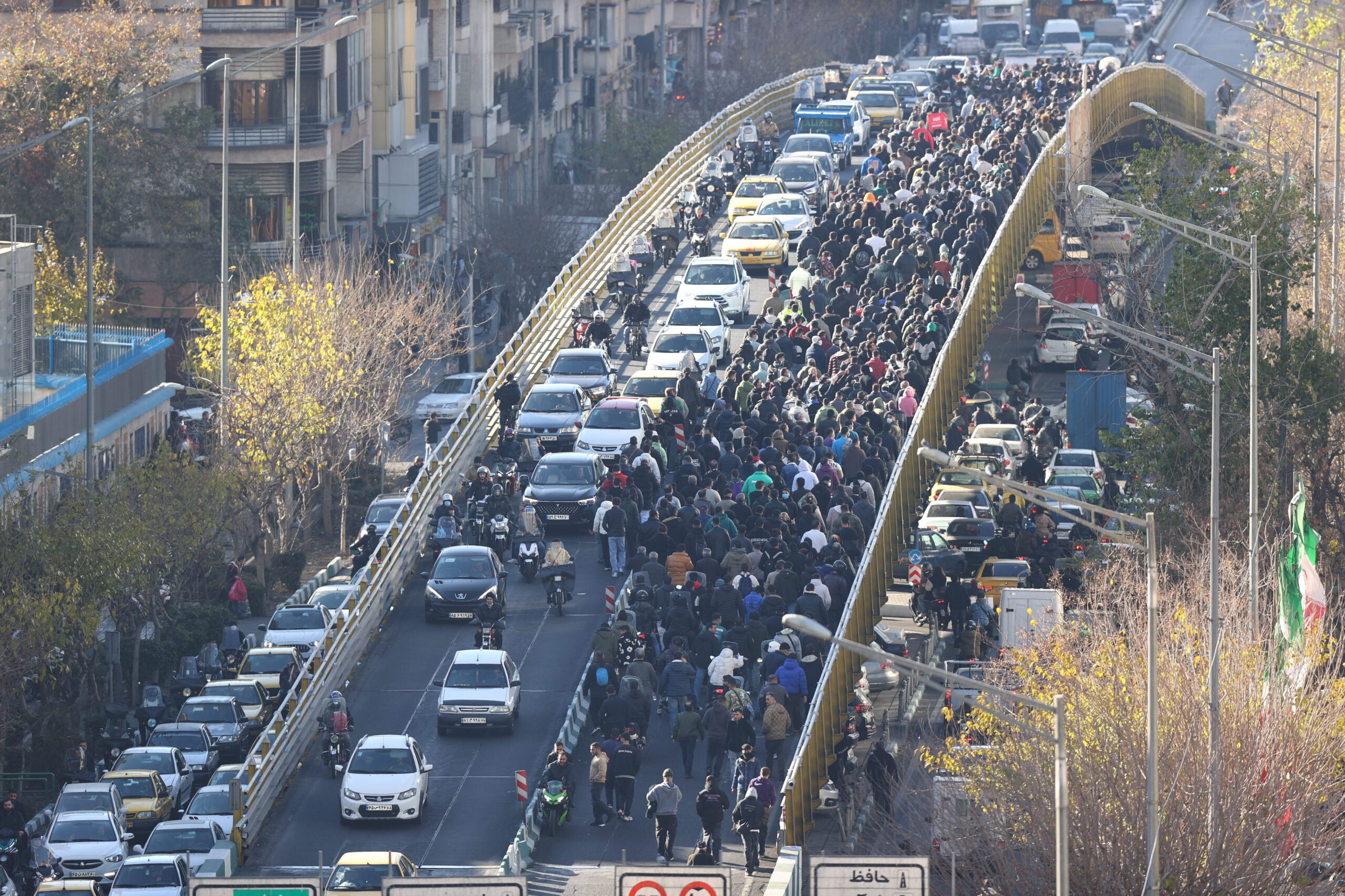
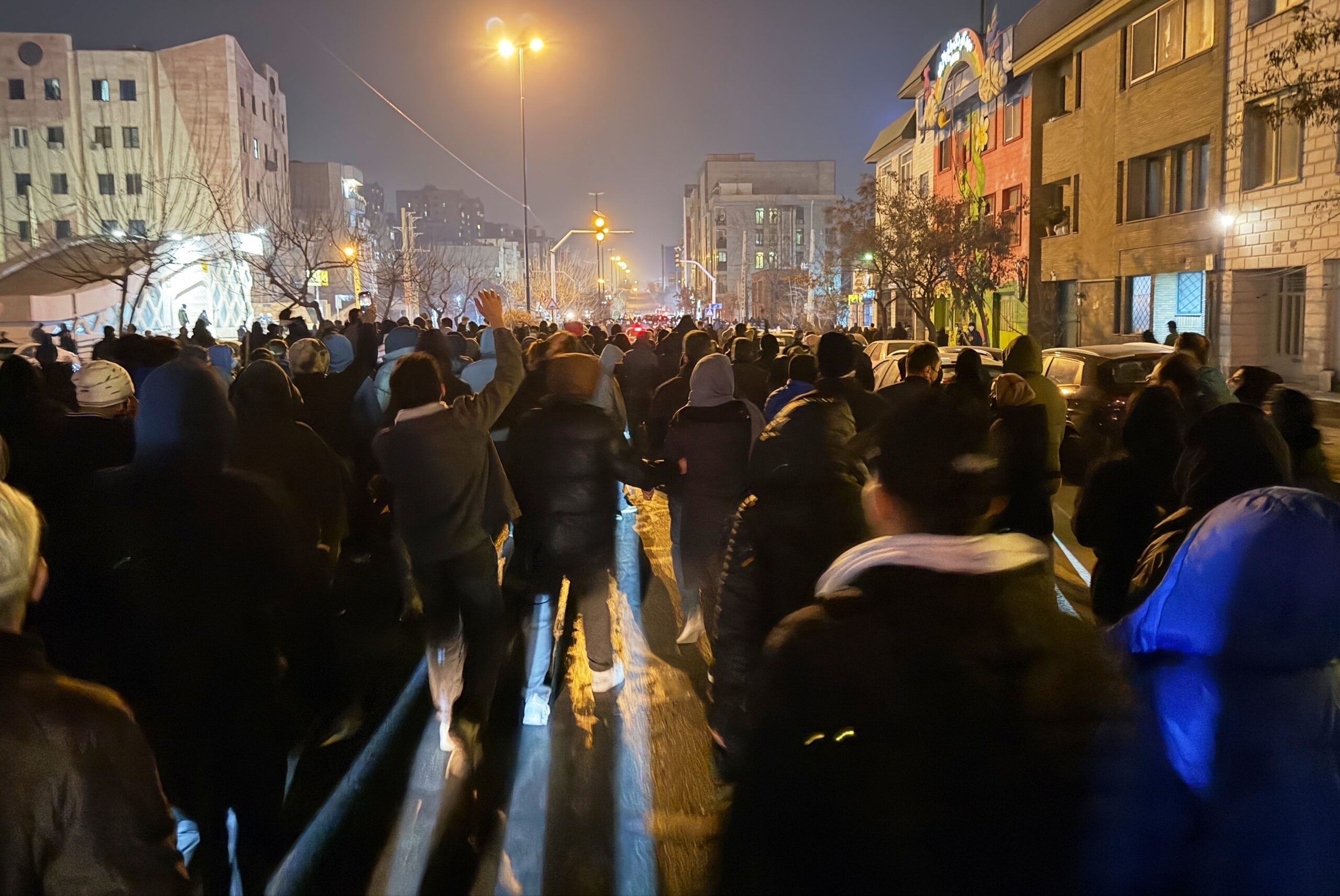
The regime’s military debacle in the conflict with Israel and the United States was followed by hyperinflation and a precipitous collapse of the Iranian rial against the dollar. These shocks triggered protests in December 2025 in Tehran’s Grand Bazaar, which rapidly spread to the bazaars of other cities and, crucially, to Iran’s most underprivileged strata as well as its increasingly impoverished middle class. This convergence – bringing together the traditionally loyal and wealthy merchants, the poor, and the middle class – was an unprecedented challenge for the Islamic Republic.
Khamenei, aging and increasingly detached from day-to-day decision making due to the risk of assassination by Israel, came to be widely perceived as personally responsible for the regime’s failures. As a result, he grew ever more isolated. In his place, an informal leadership council emerged, resembling the one ruling Iran during Khomeini’s incapacitation, composed of the president, speaker of parliament, and head of the judiciary, alongside representatives of the IRGC and army.
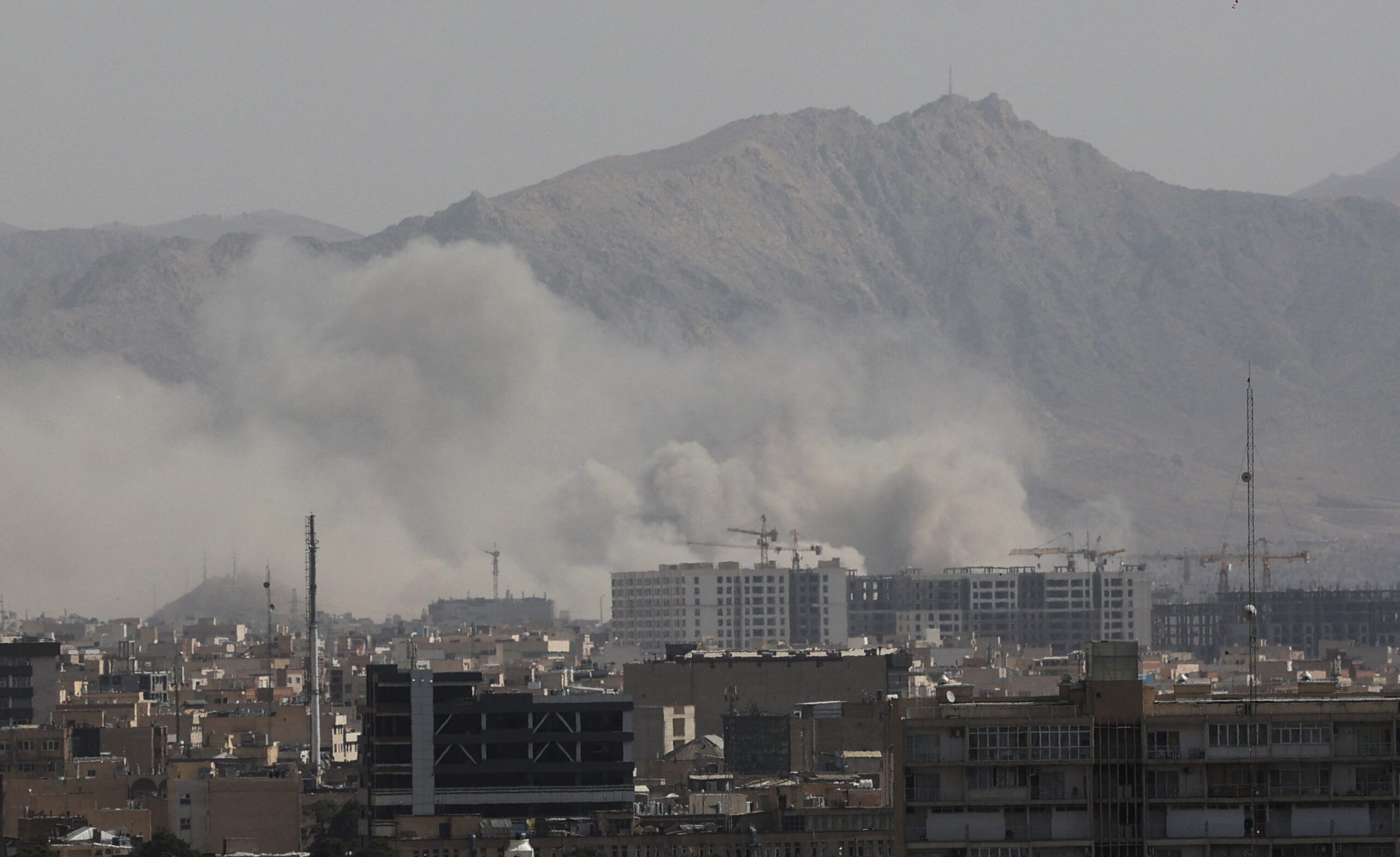
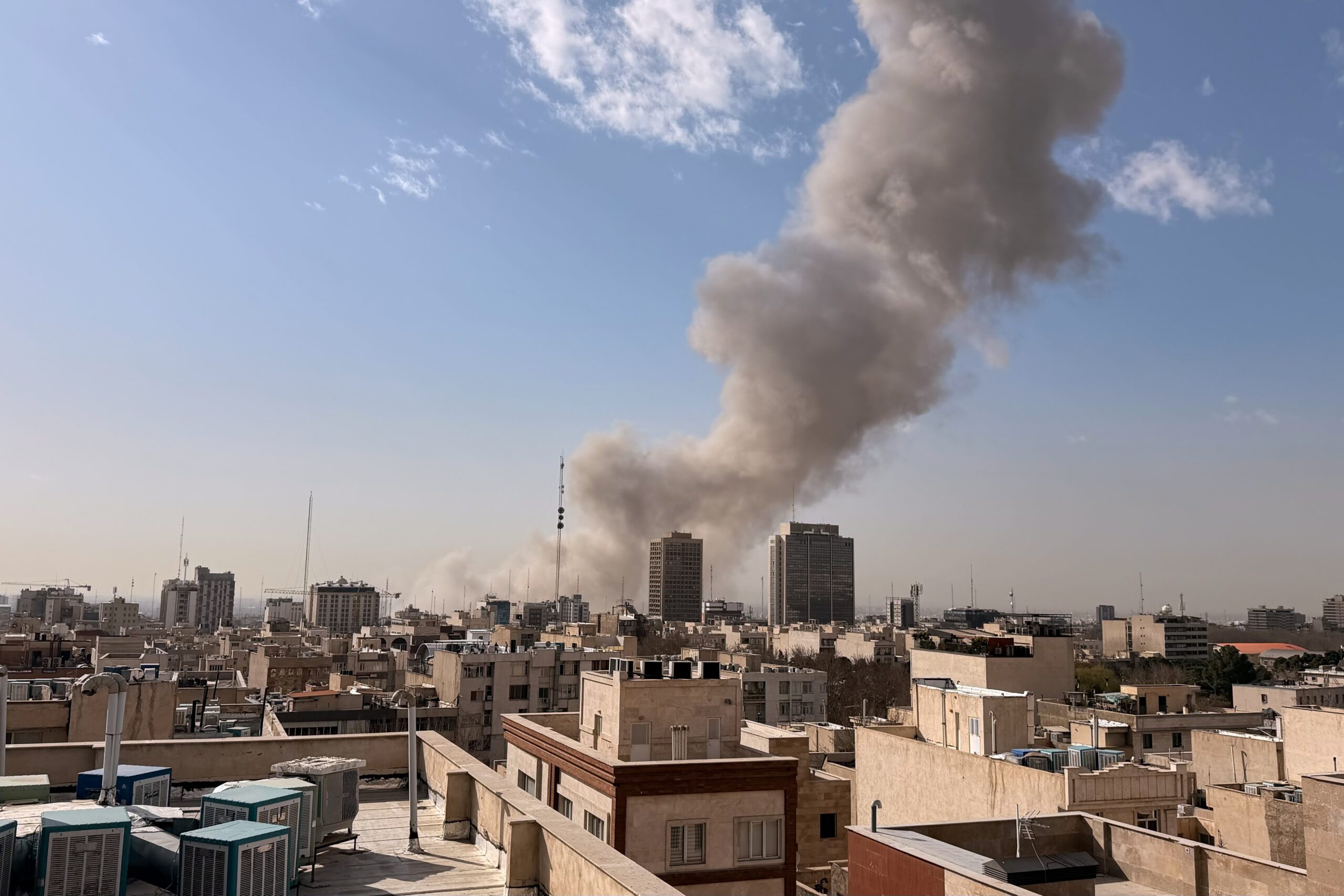
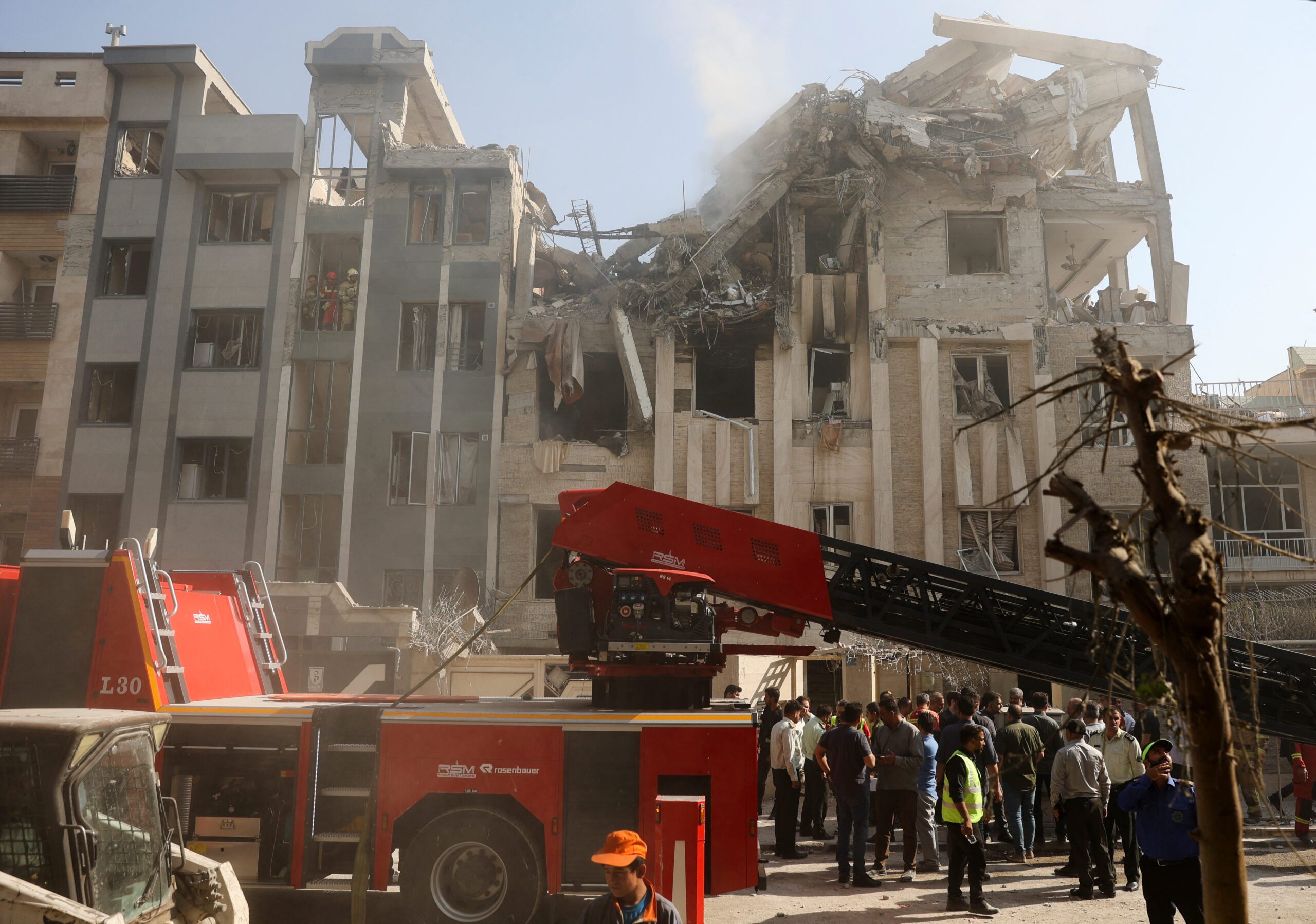
Despite new rounds of negotiations, the leadership council was not capable of reaching an agreement with the United States, which paved the path to the February 28, joint Israeli and U.S. bombardments of Iran, including the office of the leader killing Khamenei.
It remains uncertain whether this collective leadership can preserve the Islamic Republic itself, let alone Iran’s territorial integrity, in the face of mounting armed insurgencies among ethnic minority groups. Ultimately, Khamenei fell victim to his resistance to political, economic, and social reforms to bridge the gap between state and a rapidly changing society. He was also brought down by the very project designed to ensure the regime’s survival: the nuclear program, whose uranium enrichment capacity brought Iran to the threshold of nuclear weapons capability but also brought about Israeli and U.S. attacks. He is leaving behind a country in ruins, on the verge of civil war and potential disintegration.
The views represented herein are the author's or speaker's own and do not necessarily reflect the views of AGSI, its staff, or its board of directors.
Gulf Arab countries urged the United States not to strike Iran, but now that is happening, they are in danger of being sucked into a conflict they cannot control but that will likely reshape their present and future realities.
Iran is signaling that it will not absorb attacks passively. But whether this strategy ensures the regime’s survival, seals its fate, or accelerates a broader catastrophe will shape the region for years to come.
Though the Iranian regime is facing increasing pressure from protesters and armed insurgent groups, it is not yet doomed – but without a deal with the United States, the regime is likely headed for a slow collapse.
Iran is signaling that it will not absorb attacks passively. But whether this strategy ensures the regime’s survival, seals its fate, or accelerates a broader catastrophe will shape the region for years to come.
The erosion of the regime’s legitimacy across broad segments of society, combined with the breadth of the 2025-26 protest coalition, raises the possibility that a new confrontation could trigger renewed anti-regime mobilization.
Though the Iranian regime is facing increasing pressure from protesters and armed insurgent groups, it is not yet doomed – but without a deal with the United States, the regime is likely headed for a slow collapse.
Saudi Arabia seeks a U.S. security umbrella strong enough to deter Iran but a diplomatic posture measured enough to avoid provoking Iran unnecessarily.
On January 8, AGSI hosted a virtual roundtable with its leadership and scholars as they look ahead and assess trends likely to shape the Gulf region and U.S. foreign policy during the coming year.