Oman is positioning itself as a future regional hub for space applications and innovation and a host, regulator, and service provider embedded within the global space economy.
The 2026 Middle East Space Conference, held January 26-28 in Muscat, offered a timely window into Oman’s emerging role in the regional and international space ecosystem. The forum brought together government officials, space agencies, industry leaders, researchers, and investors from across the Middle East and beyond. It concluded with a series of agreements aimed at expanding cooperation, investment, and capacity building. Key among them were Oman’s accession to the Artemis Accords, a U.S.-organized set of multilateral space exploration principles, and new partnerships in satellite services and space education, underscoring Muscat’s intention to position itself as a credible, commercially oriented space actor.
Speaking at the conference, Saoud Al Shoaili, head of Oman’s National Space Program said that “over the past three years, the space sector in the Sultanate of Oman has moved from the establishment phase to the market-building phase … with the number of companies increasing from 11 in 2023 to 25 by the end of 2025.” Investment in Oman’s space sector reportedly grew by 200%between January 2023 and December 2025, driven by both domestic and international interest.
What Is Motivating Oman’s Space Ambitions?
Oman outlined its space ambitions in its National Space Program, led by the Ministry of Transport, Communications and Information Technology. The 10-year strategy seeks to position the sultanate as a regional hub for space applications and innovation, with priorities spanning economic diversification, national security, environmental monitoring, capacity building, and international cooperation.
Oman has already begun translating this vision into concrete capabilities. In 2024, it launched OL-1, its first homegrown advanced optical satellite, developed by local company Oman Lens. Oman’s national satellite operator, Space Communication Technologies Company, has contracted with Airbus to develop OmanSat-1, a communications satellite intended to support broadband connectivity and secure government networks across Oman and the wider region.
(Image courtesy of Etlaq)
These initiatives are complemented by ecosystem-building efforts, such as the “Space Accelerators Programme,” launched in 2025 to support startups and increase private-sector participation. The program provides training in entrepreneurship, prototyping, and investment readiness. The National Capability Building Programme in Space Technology is another newly launched capacity-building program aimed at developing national expertise in satellite engineering and enhance local capabilities in space technologies, with participants receiving additional training in China.
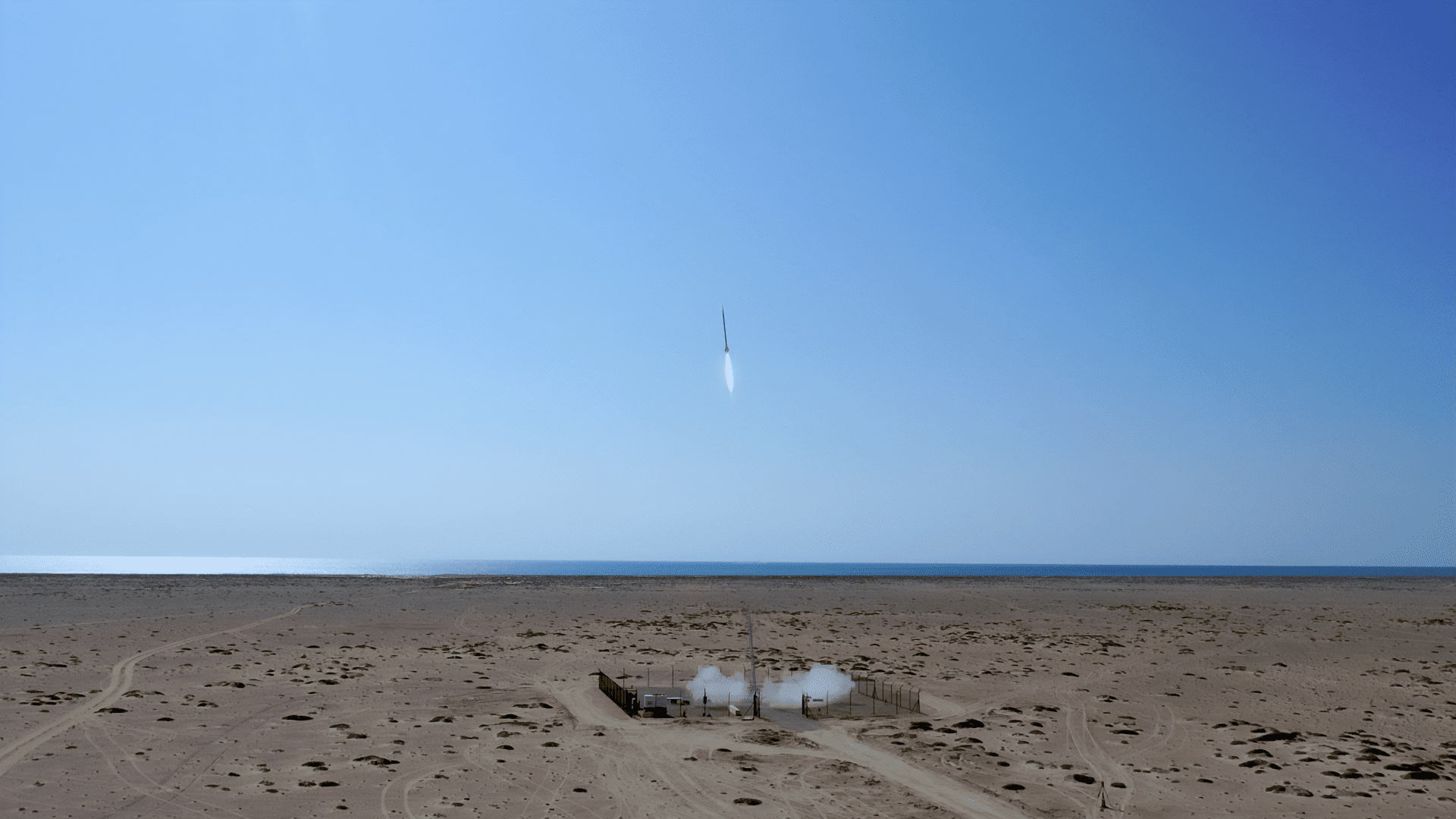
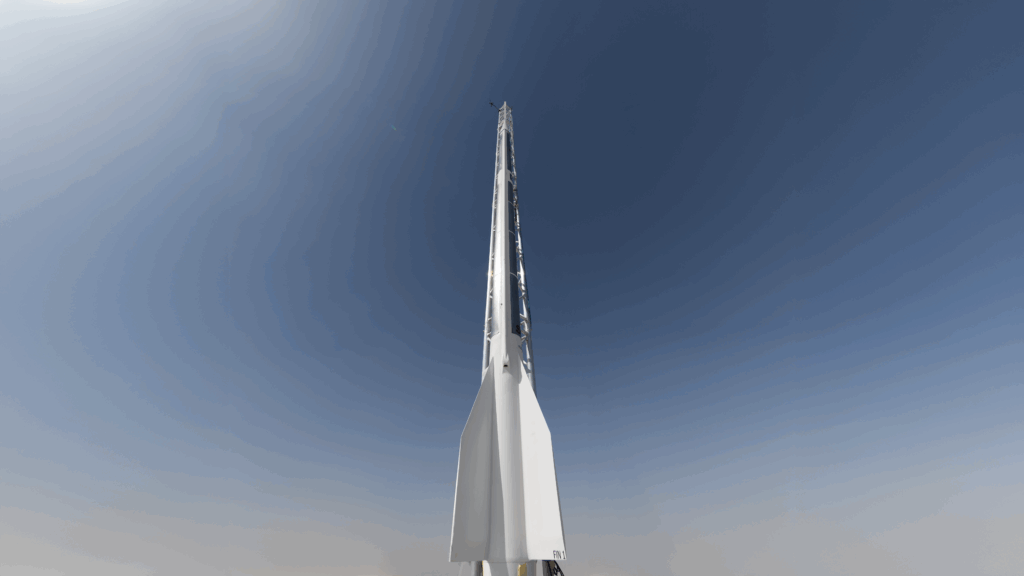
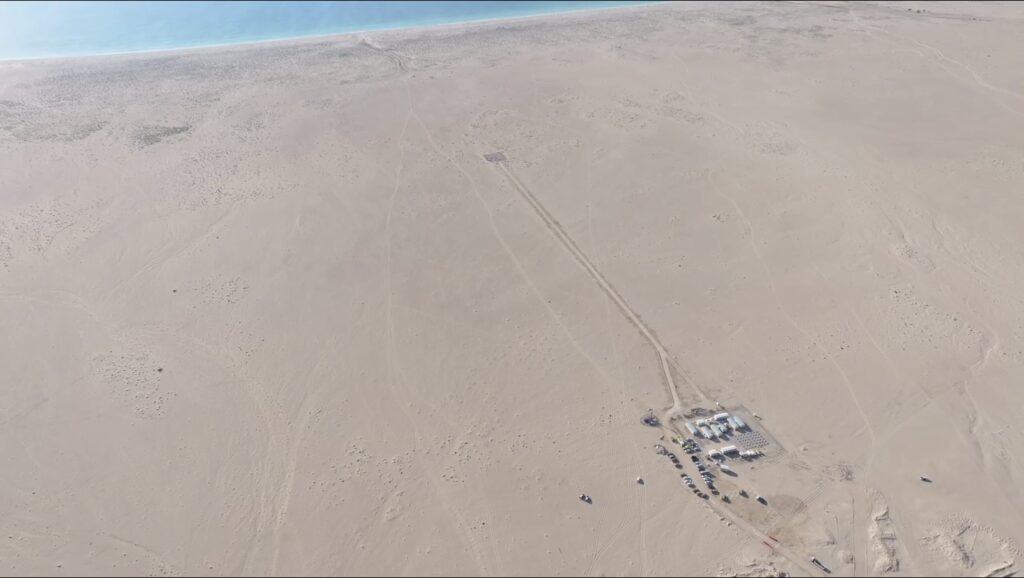
Oman is also building launch infrastructure through the Etlaq Spaceport project. The first commercial launch facility in the Middle East, Etlaq is strategically located near the Duqm Special Economic Zone and designed to serve as a regional hub for experimental and commercial spaceflight. Etlaq conducted Oman’s first suborbital mission, Duqm-1, on December 5, 2024, substantiating launch infrastructure, range safety systems, and local regulatory coordination. A series of additional experimental launches aim to build operational experience ahead of full commercial operations targeted around 2027.
Beyond satellites and launch ambitions, Oman’s space strategy places growing emphasis on downstream services where economic value is most readily captured. Investments in ground stations, data reception, and analytics capabilities are increasingly tied to national priorities, such as port management, maritime domain awareness, environmental monitoring, and logistics optimization. This focus reinforces Muscat’s view of space as an enabling layer for data-driven governance and commercial services, positioning Oman as a gateway for space-enabled applications.
(Image courtesy of Etlaq)
Oman’s Competitive Advantage
Oman’s outlook in the space sector rests on its core assets of geography, predictability, and political posture. In an era of geopolitical fragmentation, regulatory predictability and insulation from great power competition are competitive advantages.
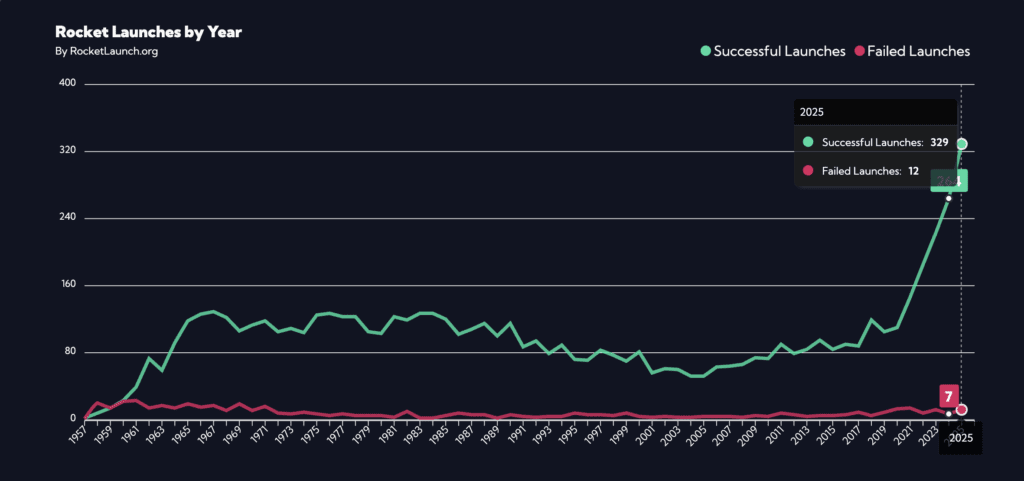
Geographically, Oman offers open Indian Ocean downrange corridors, a relatively low launch latitude, and ample physical space to integrate launch infrastructure with logistics and industrial facilities at Duqm. While spaceports can be built at higher latitudes, proximity to the equator offers performance advantages by leveraging the Earth’s rotational speed, and Oman’s Arabian Sea frontage provides a vast, sparsely populated downrange area suitable for launch operations. Globally, the demand for launch services is growing rapidly. There were 329 orbital launch attempts in 2025, and industry experts expect demand to continue increasing. Commercially owned satellites accounted for much of the increase in the total number of launches with most of these satellites owned by commercial entities. Yet more than half of the world’s active launch sites remain in the United States, Russia, and China, with none currently operating commercially in the Middle East or Africa. Oman’s long-standing reputation for political neutrality and diplomatic balance enhances its appeal as a host for commercial space activity.
(Image courtesy of Etlaq)
Additionally, Oman has adopted a light-touch, commercially oriented regulatory framework designed to attract private and foreign investors, which it sees as central to sector development. The regulatory approach emphasizes clear licensing and liability rules aligned with international space law, streamlined approval processes for launch and space-related activities, and minimal localization or ownership requirements in the sector’s early stages.
U.S.-Gulf Technology Cooperation
Oman’s space strategy fits within a broader evolution in U.S.-Gulf technology cooperation, which has increasingly emphasized commercially driven ecosystems over state-led megaprojects. Across sectors such as space, digital infrastructure, and advanced manufacturing, U.S. policy has prioritized private-sector leadership, regulatory interoperability, and supply chain diversification.
Within the Gulf, Oman offers a distinct complement to U.S. partnerships with the United Arab Emirates and Saudi Arabia. U.S.-UAE space cooperation has centered on high-visibility scientific missions and institutional capacity building, while Saudi Arabia is building one of the fastest-growing space industries in the Middle East, forming a strategic pillar of Saudi Arabia’s Vision 2030 economic diversification plan. Oman’s strategy is more restrained, positioning itself as a host, regulator, and service provider embedded within the global space economy. This differentiation may limit Oman’s visibility, but it enhances sustainability.
U.S. export controls also play a decisive role in shaping U.S.-Oman space sector cooperation, channeling collaboration toward civil, nonmilitary activities while limiting deeper technical integration. Regulations under the International Traffic in Arms Regulations and Export Administration Regulations mean that the transfer of satellite hardware, sensitive subsystems, and hands-on technical expertise requires licensing and compliance, often slowing or deterring hardware-focused partnerships. As a result, cooperation is most viable in lower-risk areas, such as Earth-observation data, climate and maritime monitoring, downstream applications, space governance, and capacity-building initiatives. For Oman, these constraints have reinforced its strategic emphasis on space services, regulation, and applications.
The views represented herein are the author's or speaker's own and do not necessarily reflect the views of AGSI, its staff, or its board of directors.
Emirati leaders hope the UAE Space Agency can speed up the journey to carbon neutrality and position the country as a hub of climate technology and research.
Given Saudi Arabia’s economic might and Oman’s specialized knowledge, cooperation – rather than competition – in the economic zone space may serve both countries’ interests.
Undersea cables are necessary for the rapid movement of information that the Gulf’s AI ambitions require, but they are uniquely vulnerable to disruption and sabotage.
On January 8, AGSI hosted a virtual roundtable with its leadership and scholars as they look ahead and assess trends likely to shape the Gulf region and U.S. foreign policy during the coming year.
On January 9, AGSIW hosted a virtual roundtable with its leadership and scholars as they looked ahead and assessed trends likely to shape the Gulf region and U.S. foreign policy during the coming year.
AGSIW hosted a virtual private roundtable with its leadership and scholars as they looked ahead to assess trends likely to shape the Gulf region during the coming year.