Militarized: National Security Decision Making in Iran
Former Iranian Foreign Minister Mohammad Javad Zarif’s new book highlights the Islamic Revolutionary Guard Corps' dominance in national security decision making.
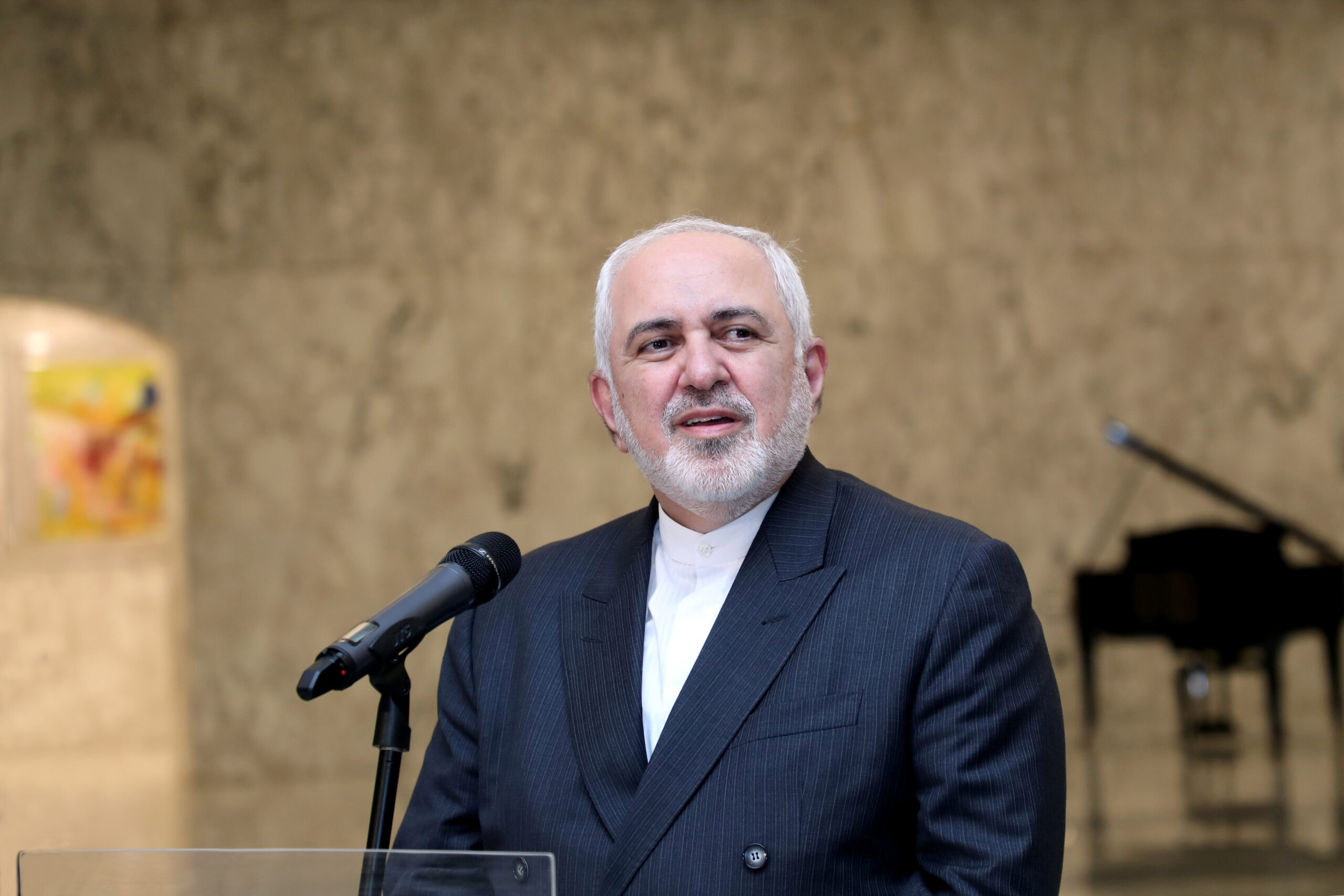
Iran's then foreign minister, Mohammad Javad Zarif, speaks at the presidential palace in Baabda, Lebanon, August 14, 2020. (Dalati Nohra/Handout via REUTERS)
The Supreme National Security Council, Iran’s central national security decision-making body, remains one of the most secretive organizations in the Islamic Republic. Its proceedings are not public, and insights into its operations are mostly limited to references in the journals of former President Akbar Hashemi Rafsanjani and scattered accounts from Iranian officials. Therefore, former Foreign Minister Mohammad Javad Zarif’s book “The Audacity of Resilience,” published in Tehran in March, is a revelation. The book illuminates the SNSC process, documents interagency rivalry among Iran’s government bureaucracies, and highlights the Islamic Revolutionary Guard Corps’ dominance in national security decision making.
In the book, Zarif, who served as minister of foreign affairs in President Hassan Rouhani’s Cabinet from August 2013 to August 2021, notes that the weekly Cabinet meetings, presided over by the president, mostly address domestic issues, particularly the economy. This limits the foreign minister’s role to that of a passive listener. During Zarif’s tenure, the exception was the Cabinet’s review of current affairs, during which Zarif briefed the president and his colleagues on nuclear negotiations and other pressing foreign policy issues.
Zarif argues that national security decisions are made in the SNSC. Established by the 1989 amendment to the Constitution of the Islamic Republic, the SNSC determines “the defense and national security policies within the framework of general policies by the leader,” coordinates “activities in the areas relating to politics, intelligence, social, cultural and economic fields in regard to general defense and security policies,” and exploits the country’s resources “for facing internal and external threats.”
The SNSC is composed of the heads of the executive, legislative, and judicial branches of government; the chief of staff of the armed forces; the head of the Plan and Budget Organization; two representatives appointed by the supreme leader (one of whom has traditionally been the SNSC secretary); the ministers of foreign affairs, interior, and intelligence as well as any cabinet minister whose portfolio is subjected to debate in the council; and the chief commanders of the IRGC and army. The decisions of the SNSC are effective “after confirmation by the leader.”
This composition, Zarif argues, is intended to prevent any single bureaucracy, such as a branch of the armed forces, from dominating the SNSC at the expense of others. However, Zarif claims that representatives of the armed forces dominate the SNSC discussions and have greater influence over policy than other members. He further discloses that the SNSC Secretariat often colludes with the armed forces representatives and keeps the Foreign Ministry in the dark, with “many key and vital decisions concerning foreign policy made by a small group within the secretariat, without the knowledge of the foreign minister.”
Zarif concedes that interagency rivalry between the Foreign Ministry and other institutions involved in foreign policy is natural and not different from what occurs in the United States. However, he argues that Rouhani’s decision to put him in charge of nuclear negotiations exacerbated this rivalry: The “SNSC Secretariat perceived it as an insult,” Zarif notes, claiming that then-SNSC Secretary Admiral Ali Shamkhani used every opportunity to sabotage the Foreign Ministry and humiliate Zarif.
According to Zarif, Shamkhani fought the Foreign Ministry and Zarif by proxy through Alireza Akbari, who had served under Shamkhani as deputy defense minister in the 1990s. Akbari constantly accused Zarif of being a sellout who made excessive concessions to the United States in nuclear negotiations. Although Zarif claims he felt no joy when Akbari was executed in January 2023 on charges of espionage for Britain’s Secret Intelligence Service, Zarif refers to the execution four times in the book, suggesting the former foreign minister’s satisfaction over Akbari’s demise.
Shamkhani allegedly also used other means to humiliate Zarif. In February 2019, the SNSC Secretariat did not inform the Foreign Ministry of a visit by Syrian President Bashar al-Assad to Tehran. Zarif’s absence in the photos was a severe blow to his prestige, leading him to offer his resignation to Rouhani, who did not accept it. Subsequently, then-Quds Force Commander Major General Qassim Suleimani visited Zarif to blame “lack of coordination” for the incident. Zarif, however, placed blame on his nemesis Shamkhani, who according to Zarif hoped to discredit him.
Zarif’s ordeal continued after the January 3, 2020 assassination of Suleimani. Zarif recalls being told that the regime was “in no hurry to retaliate, and the most effective method, a method constantly deployed by Lebanese Hezbollah, is to force the counterpart to remain in a permanent state of alert.” However, on January 8, 2020, at 4:30 am, Zarif received a message from his deputy, Abbas Araghchi, about an IRGC missile attack against Ain al-Asad air base in Iraq. According to Zarif, the SNSC Secretariat had woken Araghchi at 3:00 am, tasking him with conveying a message to the United States through the Swiss ambassador to Tehran. Araghchi managed to wake the Swiss ambassador, but the IRGC had also informed the United States through Iraqi Prime Minister Adel Abdul-Mahdi a few hours earlier. According to Zarif, neither Rouhani nor he himself was aware of the decision to attack the base. While the Iraqi prime minister and U.S. president knew, the Iranian president and foreign minister were kept in the dark.
Zarif was dealt another humiliating blow that day when the IRGC mistakenly and tragically shot down Ukraine International Airlines Flight 752. The Foreign Ministry learned of the disaster through social media. Despite the governments of Canada and Ukraine arguing that the plane was shot down with a missile, the SNSC Secretariat and IRGC claimed the plane crashed due to technical problems onboard the plane. Zarif and the Foreign Ministry conveyed this message to the world seemingly in good faith. On January 10, 2020, the SNSC convened, and the SNSC Secretariat and IRGC once again insisted the plane had crashed due to technical issues. When Zarif protested and the meeting ended without a conclusion, Shamkhani and Major General Mohammad Bagheri, chief of staff of the armed forces, allegedly “left the room to hold a separate meeting to reach a decision without the presence of other SNSC members, meaning the minister of foreign affairs.” Later that afternoon, the SNSC Secretariat finally admitted that the IRGC had mistakenly shot down the civilian airliner. Zarif claimes he never received an official report explaining the disaster.
Zarif ends his discussion of decision-making dynamics in the SNSC stressing the spirit of the constitution, which, according to his interpretation, is against the dominance of the armed forces in national security decision making. There is, however, little prospect of the spirit of the constitution trumping the realities on the ground or in the backrooms of the SNSC: To judge by Zarif’s account, national security decision making in Iran is fully militarized.
The views represented herein are the author's or speaker's own and do not necessarily reflect the views of AGSI, its staff, or its board of directors.
As SNSC secretary, Rear Admiral Ali Akbar Ahmadian will doubtlessly try to put his experiences and writings to good use, but on all counts, he is likely to side with his comrades in the IRGC.
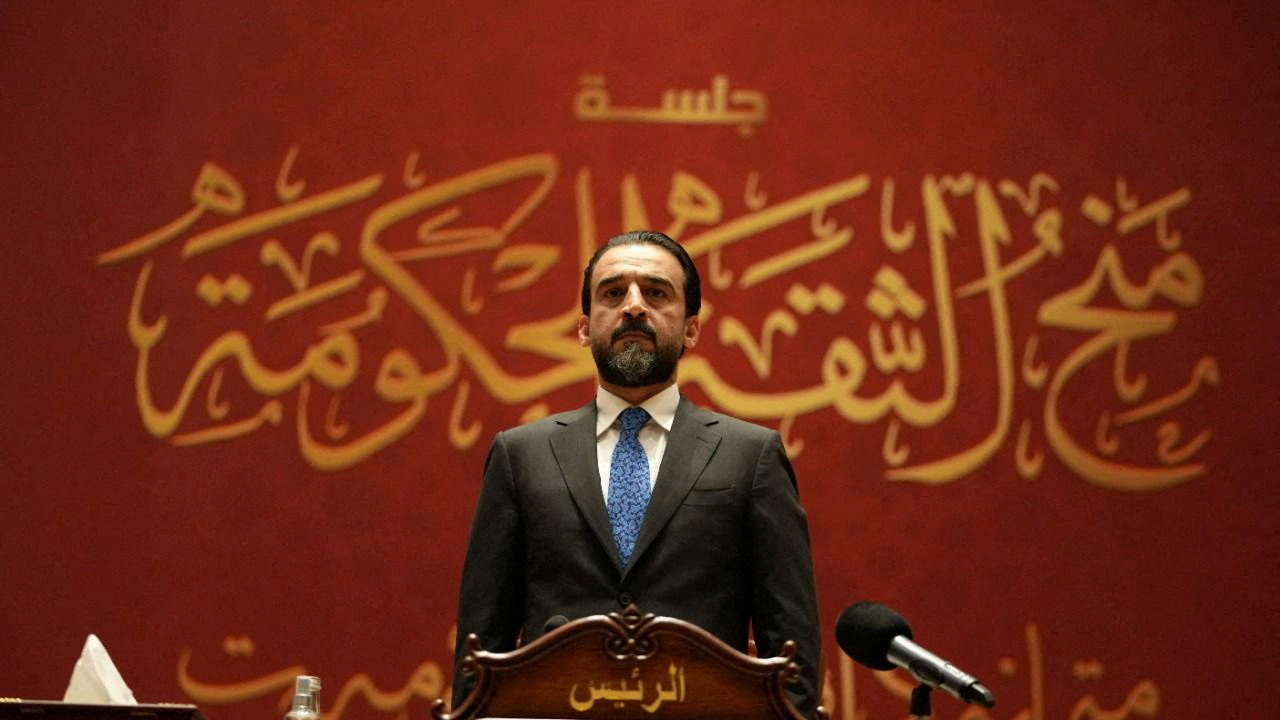
Mohammed al-Halbousi's ousting as speaker of parliament opens the door for Sunni adversaries to rise to power and could help consolidate the influence of Shia political movements in Iraq.
After U.S.-Israeli strikes killed Supreme Leader Ayatollah Ali Khamenei on February 28, Iran’s collective leadership has concluded that the best defense is a good offense.
Wartime pressure has temporarily aligned the leadership’s overriding interest in regime survival, even as its members continue to differ over the costs, methods, and ultimate objectives of the war.
While there is historical precedent for collective leadership in Iran, today’s leadership includes representatives of the IRGC and regular military – a reflection of the IRGC’s expanding role and the necessities of governing under wartime conditions.