Iraq’s Post-Election Impasse: Sovereignty, Power, and the Impact of External Vetoes
The government-formation crisis is a test of whether Iraq can assert genuine sovereignty in a system still shaped by foreign influence, factional vetoes, and constitutional loopholes.
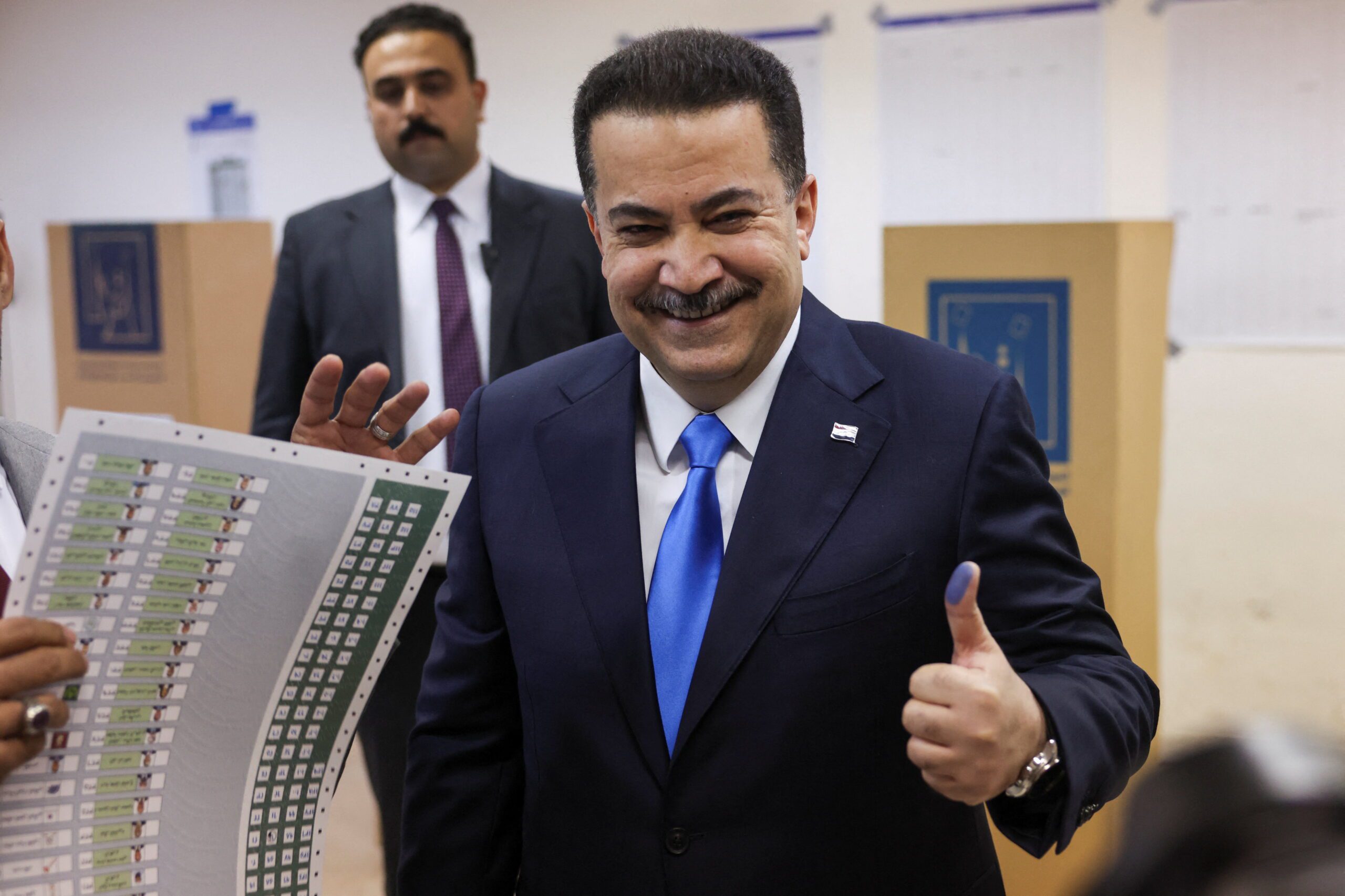
Iraqi Prime Minister Mohammed al-Sudani shows his ink-stained finger after voting at a polling station in the Green Zone during parliamentary elections, in Baghdad, Iraq, November 11, 2025. (REUTERS/Ahmed Saad)
Iraq’s November 11, 2025 general elections were expected to usher in a new phase to enhance the recently accomplished political stability after several turbulent years. Instead, they have produced one of the most consequential government-formation crises since 2003, exposing the fragility of Iraq’s sovereignty, internal contradictions of its political leadership, and enduring weight of foreign intervention in Iraqi decision making.
Prime Minister Mohammed al-Sudani’s Reconstruction and Development Coalition emerged from the elections with the largest number of seats, a result widely interpreted as an endorsement of his pragmatic governing style, tangible success in reconstruction, and relative success in balancing competing domestic and external pressures. Yet electoral victory alone does not translate into political continuity in Iraq’s post-2003 system. Iraqis do not elect the top leaders directly; they elect the legislators, whose voting on consequential political and legislative business is subject to the will of their respective political leaders. Parliamentary arithmetic, constitutional rules, and factional bargaining matter more than popular mandates.
Despite Sudani’s electoral victory, the Coordination Framework, an assortment of Shia political coalitions, consolidated itself as the largest bloc in the newly elected Council of Representatives. Under the Iraqi Constitution, that status grants the Coordination Framework the right to nominate the next prime minister. Exercising this prerogative, the Coordination Frameworkdenied the incumbent prime minister, Sudani, a second term, underscoring once again that Iraq’s premiership is determined less by voter preference than by elite consensus within Shia politics – a consensus that is carefully formed after extensive consultation with Iraqi ethnosectarian leaders and prominent regional and international actors whose national interests intersect with Iraq’s domestic and foreign policies.
What followed, however, was unexpected. Rather than resist or withdraw quietly, Sudani executed a bold political maneuver: He withdrew his candidacy and endorsed former Prime Minister Nuri al-Maliki as the Coordination Framework’s candidate. In doing so, Sudani effectively turned the tables on the very bloc that had sidelined him. His endorsement placed the Coordination Framework in an awkward position: Rejecting Maliki would risk fracturing the alliance, while accepting him would revive a deeply polarizing figure whose legacy remains controversial inside and outside Iraq. Sudani further pledged full cooperation with Maliki should the latter lead the government, a move that effectively consolidated Maliki’s position and raised the political costs of resistance to his candidacy. The voices of dissent, a minority within the Coordination Framework, must choose to join the majority or lose the chance to play a significant executive role in the coming four years.
Maliki’s potential return immediately triggered regional and international reactions. Iran was quick to endorse his candidacy, a move that carried symbolic weight far beyond diplomatic signaling. For Maliki’s critics – both Iraqi and international – Iran’s support reinforced the long-standing perception that he represents Tehran’s preferred strongman in Baghdad. Even for Iraqis who do not oppose Iranian influence outright, the optics were damaging: The narrative of Maliki as an “Iranian choice” resurfaced with force, complicating efforts to frame his candidacy as a purely Iraqi decision.
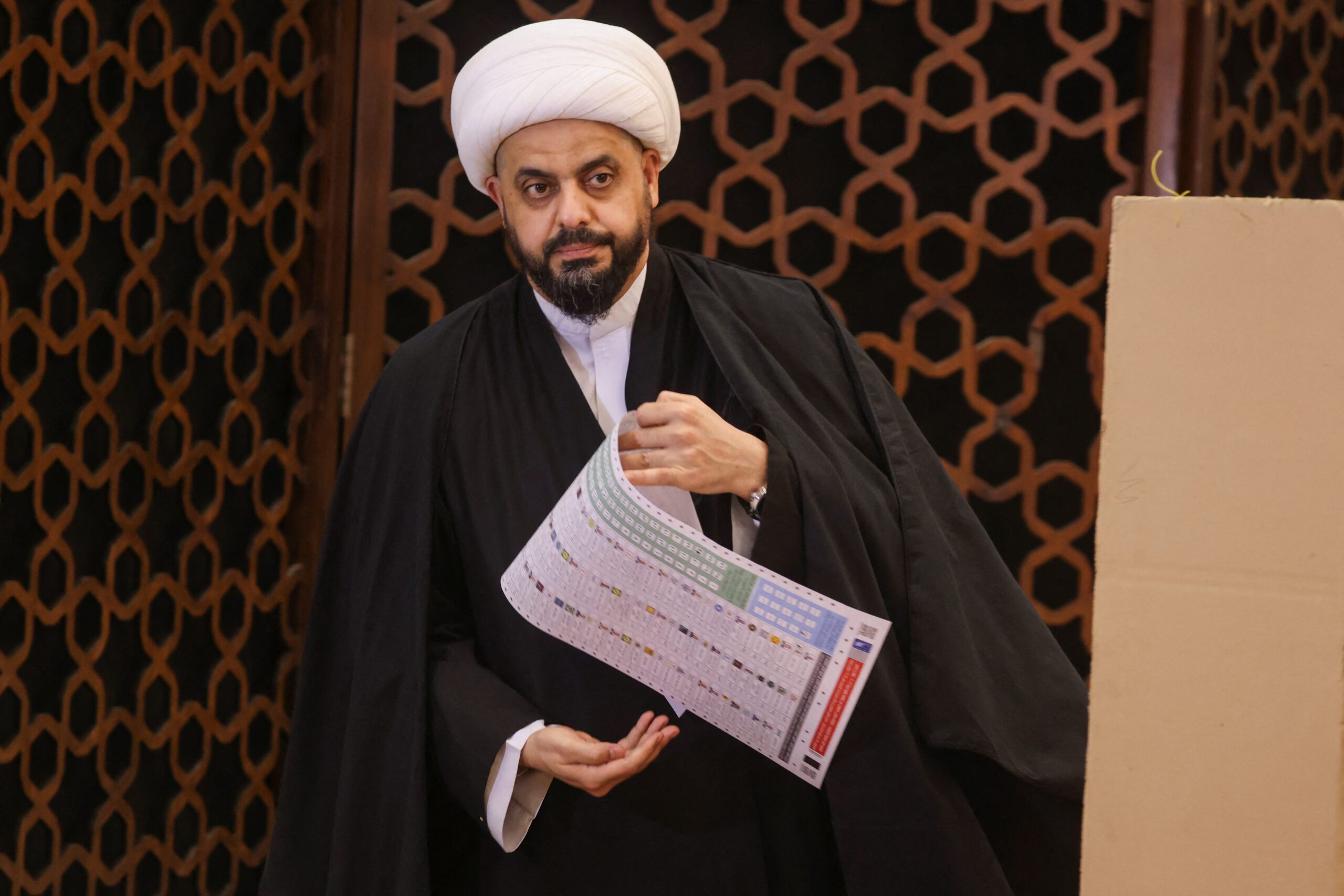
Internal opposition soon followed. Two prominent Shia leaders within the Coordination Framework – Qais Khazali and Ammar al-Hakim – voiced objections to Maliki’s nomination. Their resistance reflected both ideological concerns and, perhaps, political calculations, as Maliki’s dominance threatens to marginalize rival Shia leaders within any future government. Opposition also emerged from outside the Shia camp. Former Council of Representatives Speaker Mohammed Halbousi, leader of the largest Sunni bloc whose candidate for speaker was already elected, openly rejected the prospect of Maliki’s return, signaling that Sunni cooperation with a Maliki-led government would be far from guaranteed.
The Kurdish response, by contrast, was favorable. With their candidate for the Iraqi presidency yet to be identified and elected, no major Kurdish faction publicly objected to Maliki’s candidacy. In fact, the prominent Kurdish leader Masoud Barzani welcomed his nomination, viewing the situation through a strategic lens. Barzani likely calculated that accommodating Maliki could strengthen the Kurdistan Democratic Party’s bid to secure the Iraqi presidency – a post traditionally held by its rival, the Patriotic Union of Kurdistan. In this sense, Kurdish pragmatism – and calculation –once again prevailed, as Erbil focused on maximizing institutional gains rather than shaping Baghdad’s leadership.
The most dramatic intervention came from Washington – and it came late. Throughout most of the government-formation process, the administration of President Donald J. Trump refrained from taking a public position, seemingly respecting Iraq’s claim that forming a government is a sovereign, internal matter. That restraint ended abruptly when Trump issued a public warning on social media, stating that, if Maliki were appointed prime minister, “the United States of America will no longer help Iraq and, if we are not there to help, Iraq has ZERO chance of Success, Prosperity, or Freedom.”
The timing of the message proved as consequential as its content. By the time the warning was issued, the Coordination Framework had already announced Maliki as its official candidate. What might have been leverage early in the process instead became a blunt veto delivered at the eleventh hour, throwing Iraq’s political class into an impossible dilemma. The Coordination Framework now faces a lose-lose choice. Proceeding with Maliki risks severe repercussions from the United States, potentially affecting economic assistance, security cooperation, and Iraq’s broader international standing. Backing down, however, would undermine the Coordination Framework’s claim to sovereignty and reinforce the perception that Iraq’s governments are shaped by external pressure – whether from Washington or Tehran. Either path damages the Coordination Framework’s credibility and deepens public cynicism about the Iraqi political process.
More broadly, Iraq itself stands to lose regardless of the outcome. A government formed in defiance of the United States risks isolation and instability. A government reshaped under direct, public U.S. pressure risks being dismissed as a puppet regime, trapped in the zero-sum rivalry between Washington and Tehran. In both scenarios, Iraqi agency is diminished.
At present, the Coordination Framework has little room to maneuver. The only viable strategy that preserves a semblance of dignity is delay. Constitutionally, this can be achieved by postponing the election of a president, a process that requires a two-thirds quorum in parliament. Without a president, the formal process of appointing a prime minister and forming a cabinet cannot move forward. The last government formation took an entire year from the general election to the confirmation of Sudani’s government. Such delay would not resolve the crisis, but it would buy time; and time, in this context, is political currency. A prolonged government-formation process could open space for quiet negotiations between Baghdad and Washington, potentially producing a compromise blueprint that avoids a direct confrontation. It might also allow internal dynamics within the Coordination Framework to pivot from its current position, presenting an alternative consensus candidate or a recalibrated political arrangement.
Yet delay carries its own risks. Iraq has lived through prolonged political paralysis in the past, and the costs are well known: stalled reforms, eroding public trust, growing social frustration, and strong potential for security risks. Furthermore, each additional month without the formation of a government risks reinforcing the perception that Iraq’s political leadership is struggling to provide effective governance and sustained direction. Iraqi society has demonstrated notable patience over the past two decades, accepting persistent shortcomings in governance while continuing to engage constructively in the democratic process. Citizens have participated consistently in elections and made significant sacrifices, including mobilizing to defend the political system against the threat posed by the Islamic State group. In return, public expectations remain modest, centered on achieving a dignified standard of living and the consistent provision of essential services.
Ultimately, the current crisis is about more than Maliki’s return. It is a test of whether Iraq can assert genuine sovereignty in a system still shaped by foreign influence, factional vetoes, and constitutional loopholes. For the Coordination Framework, Iraq’s political elite, and Iraq itself, the choices made in the coming weeks will carry consequences far beyond the formation of the next government.
The views represented herein are the author's or speaker's own and do not necessarily reflect the views of AGSI, its staff, or its board of directors.
The durability of recent peace gestures, energy deals, and revenue-sharing agreements will hinge on political consensus and restraint, both within Kurdistan and across Iraq’s fractured national landscape.
Baghdad is weaponizing economic levers to punish the Kurdistan region for signing energy pacts with U.S. firms and for aligning with President Trump’s commercial diplomacy.
The victory of pro-Iranian groups in Iraq’s provincial elections could exacerbate internal political tensions and raise concerns about regional stability.
The U.S.-Israeli attack on Iran has exposed Iraq’s structural fragilities: territorial permeability, economic monoculture, energy dependence, and politically mediated sovereignty.
On January 8, AGSI hosted a virtual roundtable with its leadership and scholars as they look ahead and assess trends likely to shape the Gulf region and U.S. foreign policy during the coming year.