Iraq’s at the Epicenter of the Regional Fallout of Confrontation With Iran
The U.S.-Israeli attack on Iran has exposed Iraq’s structural fragilities: territorial permeability, economic monoculture, energy dependence, and politically mediated sovereignty.
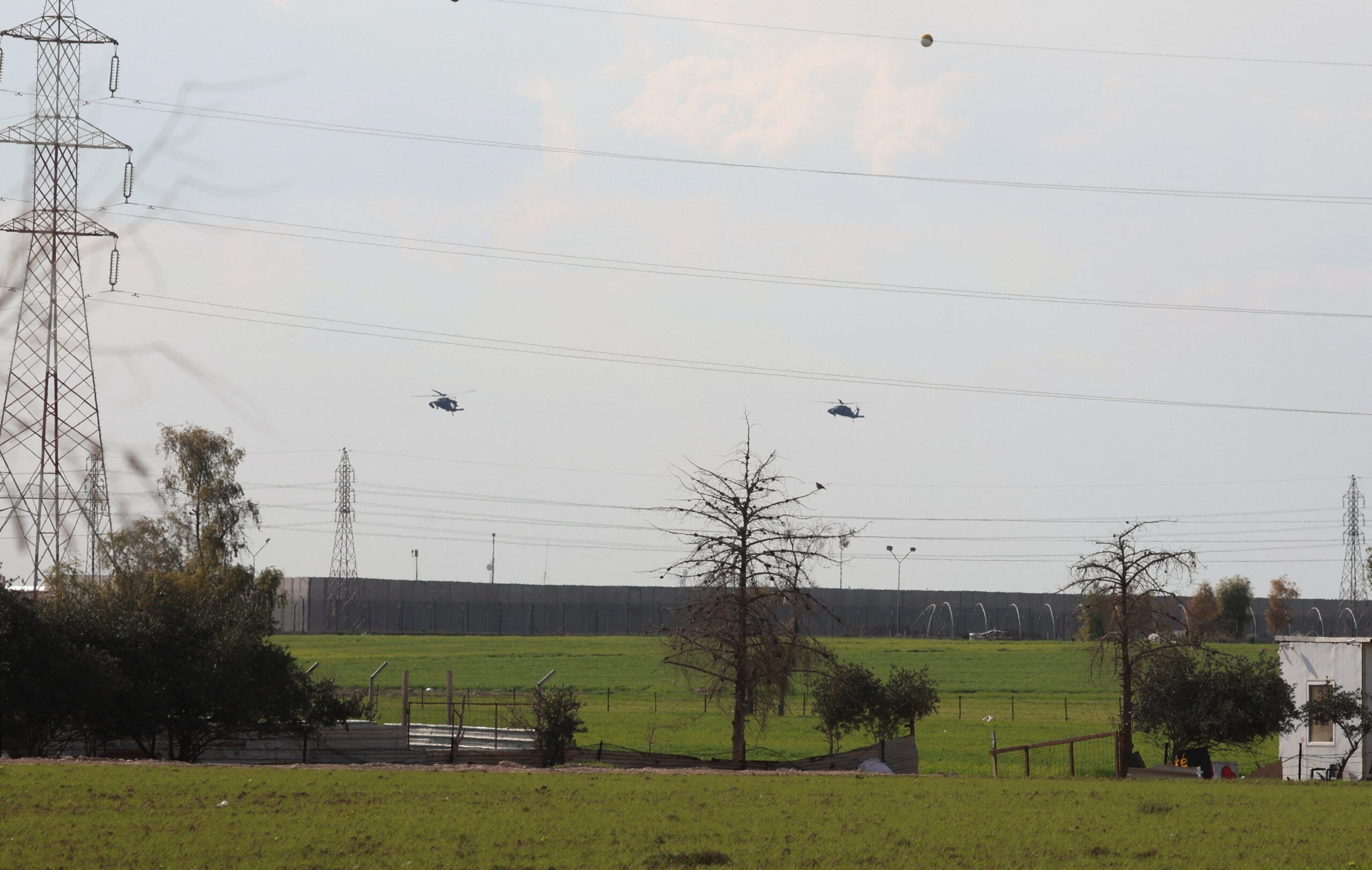
U.S. helicopters fly over Erbil International Airport in Erbil, Iraq, March 1. (REUTERS/Khalid al-Mousily)
The U.S.-Israeli attack on Iran represents more than a bilateral military escalation; it is a systemic shock to an already fragile regional order. Its repercussions are rapidly radiating across the Gulf and Iraq, drawing in neighboring states not as formal belligerents but as structurally exposed stakeholders. At least seven Arab countries – Saudi Arabia, Kuwait, Qatar, the United Arab Emirates, Bahrain, Jordan, and Iraq – are already entangled in its strategic, economic, or security spillovers. Among them, Iraq is uniquely vulnerable because its internal fragility intersects directly with the fault lines of the confrontation.
Iraq’s exposure is rooted in structural weakness rather than immediate military imbalance alone. After decades of war, sanctions, regime change, insurgency, and counterterrorism campaigns, the Iraqi state remains in a phase of incomplete consolidation. Although over recent years there have been relative improvements in democratization, security, and macroeconomic stability, these gains rest on unfirm foundations: oil dependency, elite-level political bargains, and a delicate equilibrium among competing domestic and external actors. The present escalation threatens each of these pillars simultaneously.
Militarily, Iraq’s geography places it at the center of the confrontation. The country hosts U.S. forces while simultaneously maintaining deep political, economic, and security ties with Iran. This dual alignment transforms Iraqi territory into strategic space contested by others. The reported attacks near Baghdad “two hours after the Israeli attack on Iran began,” followed by Iranian attacks on an Iraqi base hosting U.S. troops in Iraq’s Kurdistan region, illustrate how Iraq functions as an indirect theater of deterrence signaling. Neither Washington nor Tehran seeks war with Baghdad, yet they both view Iraqi territory as operationally relevant. This dynamic erodes Iraqi sovereignty regardless of official intentions.
The Iraqi constitutional framework complicates matters further. Iraq’s Constitution mandates peaceful conflict resolution and prohibits interference in the internal affairs of neighboring states. In theory, this provision provides a legal basis for neutrality, but, in practice, the Iraqi government lacks the coercive and technological capacity to fully control its airspace or prevent powerful actors – state or nonstate – from operating within its borders or using its airspace. The gap between constitutional principles and enforcement capability exposes the limits of state authority. Iraq is not choosing alignment so much as struggling to assert control.
Economically, the risks are even more acute. Iraq’s fiscal model is overwhelmingly rentier, with most of the state revenue derived from oil exports transiting the Strait of Hormuz. Any prolonged disruption to this chokepoint would immediately constrain budgetary liquidity and risk a major political and social crisis. Given that public sector salaries and transfers sustain a large share of Iraqi households, a revenue shock would quickly translate into social stress. Unlike wealthier Gulf states, Iraq lacks substantial sovereign buffers to absorb extended export interruptions. Furthermore, energy interdependence with Iran adds another layer of vulnerability, because Iraq relies heavily on imported Iranian gas to fuel electricity generation. If the conflict damages Iran’s energy infrastructure, Iraq would face immediate power shortages. In a country where electricity supply is already politically sensitive – particularly during peak summer demand – blackouts could trigger protests and potentially undermine the government’s legitimacy. Thus, a conflict ostensibly centered on Iran could destabilize Iraq’s domestic order through energy externalities alone.
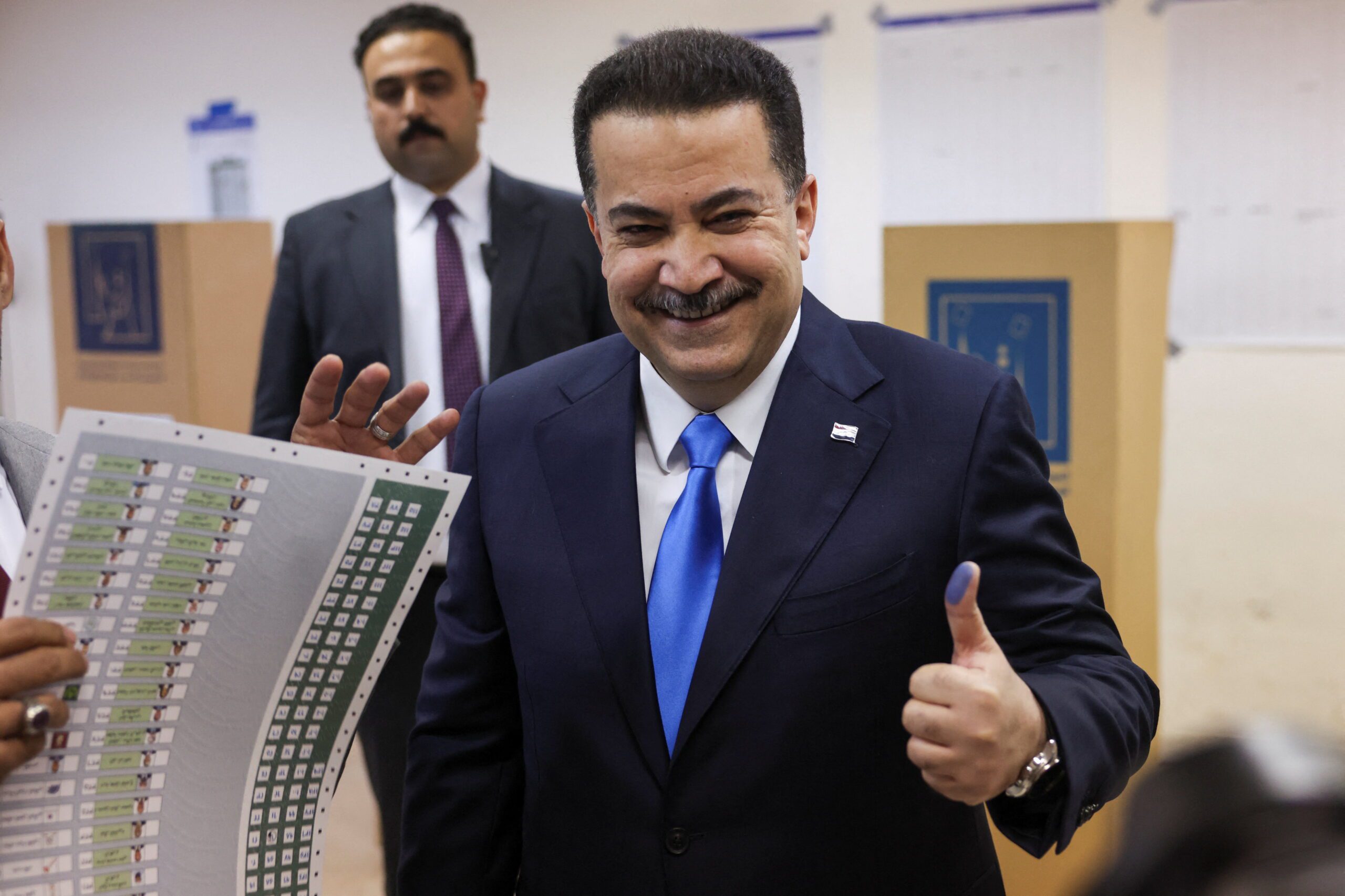
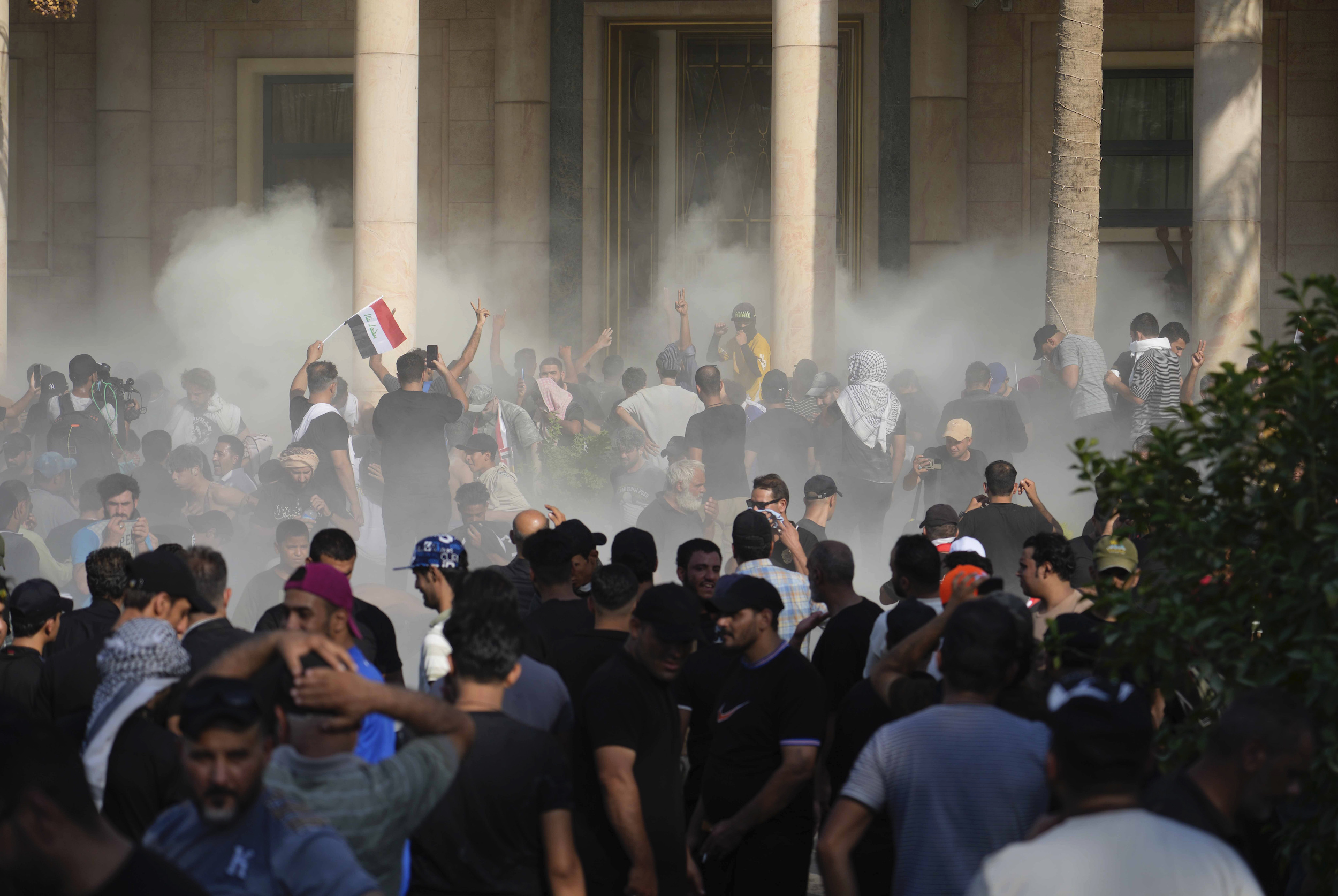
The timing of this crisis compounds its impact, as Iraq is currently navigating a contentious government formation process plagued by profound factional fragmentation and the absence of a broad national consensus. External involvement has been unusually explicit. President Donald J. Trump publicly endorsed efforts to influence Iraqi political arrangements, while the activities of the U.S. Embassy in Baghdad have been widely interpreted as assertive engagement in domestic affairs. Simultaneously, Iran maintains deep networks of influence across Iraqi political parties and armed groups. The result is a sovereignty dilemma: Iraq’s political field is penetrated by both adversaries in the regional confrontation.
This dual penetration constrains Baghdad’s strategic autonomy: Aligning decisively with Washington risks provoking backlash from domestic Iran-aligned actors, while tilting toward Tehran threatens crippling economic and diplomatic repercussions from the United States. Attempting strict neutrality, meanwhile, may be operationally unfeasible given Iraq’s limited control over its own strategic environment. The government is therefore caught in what might be termed a “compressed sovereignty” condition: formally independent yet substantively constrained.
The broader analytical question is whether Iraq can transform vulnerability into diplomatic leverage. Historically, states positioned between rival powers have occasionally leveraged their geography to mediate or extract concessions. But such a strategy requires internal cohesion and credible state capacity – Iraq currently lacks both at sufficient levels, not to mention the uncompromising nature of leadership on both sides of the current conflict. Without a unified political elite and a consolidated security apparatus, it is more likely to be on the receiving end of external shocks than to shape their trajectory.
The U.S.-Israeli attack on Iran has exposed Iraq’s structural fragilities: territorial permeability, economic monoculture, energy dependence, and politically mediated sovereignty. The danger is not simply immediate military spillover but systemic destabilization. If export routes are disrupted, energy supplies curtailed, and political paralysis prolonged, Iraq’s recent stabilization could unravel. The conflict may not be of Iraq’s making, yet its consequences could decisively shape the country’s next chapter.
The views represented herein are the author's or speaker's own and do not necessarily reflect the views of AGSI, its staff, or its board of directors.
Gulf Arab countries urged the United States not to strike Iran, but now that is happening, they are in danger of being sucked into a conflict they cannot control but that will likely reshape their present and future realities.
Iran is signaling that it will not absorb attacks passively. But whether this strategy ensures the regime’s survival, seals its fate, or accelerates a broader catastrophe will shape the region for years to come.
There was a growing war risk premium in the oil markets tied to escalating regional tensions; the shift from shadow confrontation to direct military action changes the calculus.
The government-formation crisis is a test of whether Iraq can assert genuine sovereignty in a system still shaped by foreign influence, factional vetoes, and constitutional loopholes.
On January 8, AGSI hosted a virtual roundtable with its leadership and scholars as they look ahead and assess trends likely to shape the Gulf region and U.S. foreign policy during the coming year.
On June 29, AGSIW hosted a discussion of Geneive Abdo's recent paper examining cooperation between influential Iraqi clerics and civil society activists.