Iran’s Missile Program Delivers Both Triumph and Tragedy
The Iranian friendly fire incident that killed 19 Iranian sailors on May 10 points to the inconsistencies of the regime’s leadership and makes one of its sources of pride into a liability.
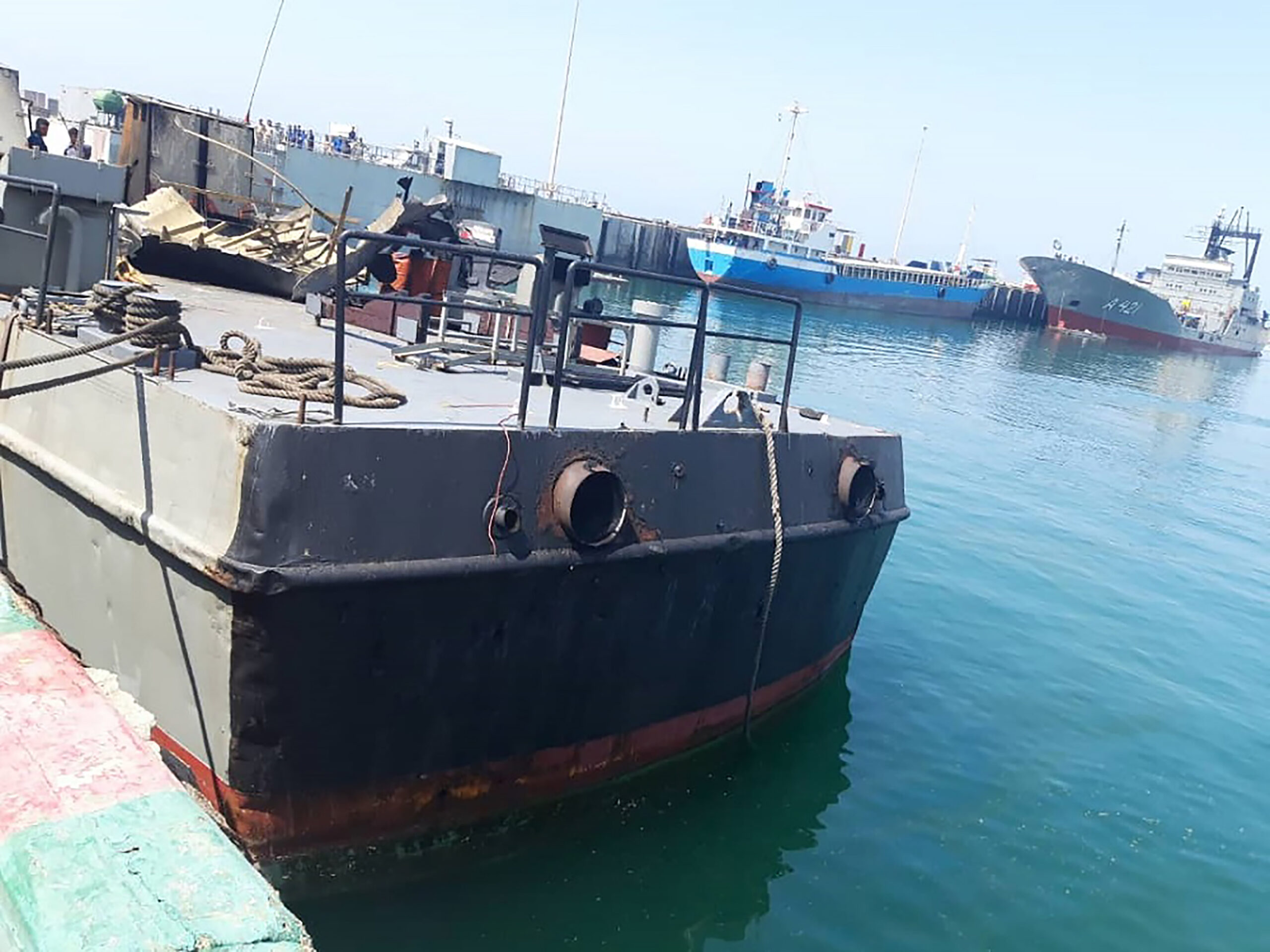
The Konarak support vessel which was struck during a training exercise in the Gulf of Oman, is docked in an unidentified naval base in Iran, May 11. (Iranian Army via AP)
Fluctuating between triumph and tragedy, erratic is perhaps the most apt word to describe the recent use of Iran’s missile systems by the Islamic Republic’s armed forces. But how does this erratic performance impact public perception of the Iranian military, and more generally, of the regime in Tehran? For now, there is an equal measure of triumph and tragedy, but that balance may change and further erode the prestige of the armed forces and undermine the authority of the regime.
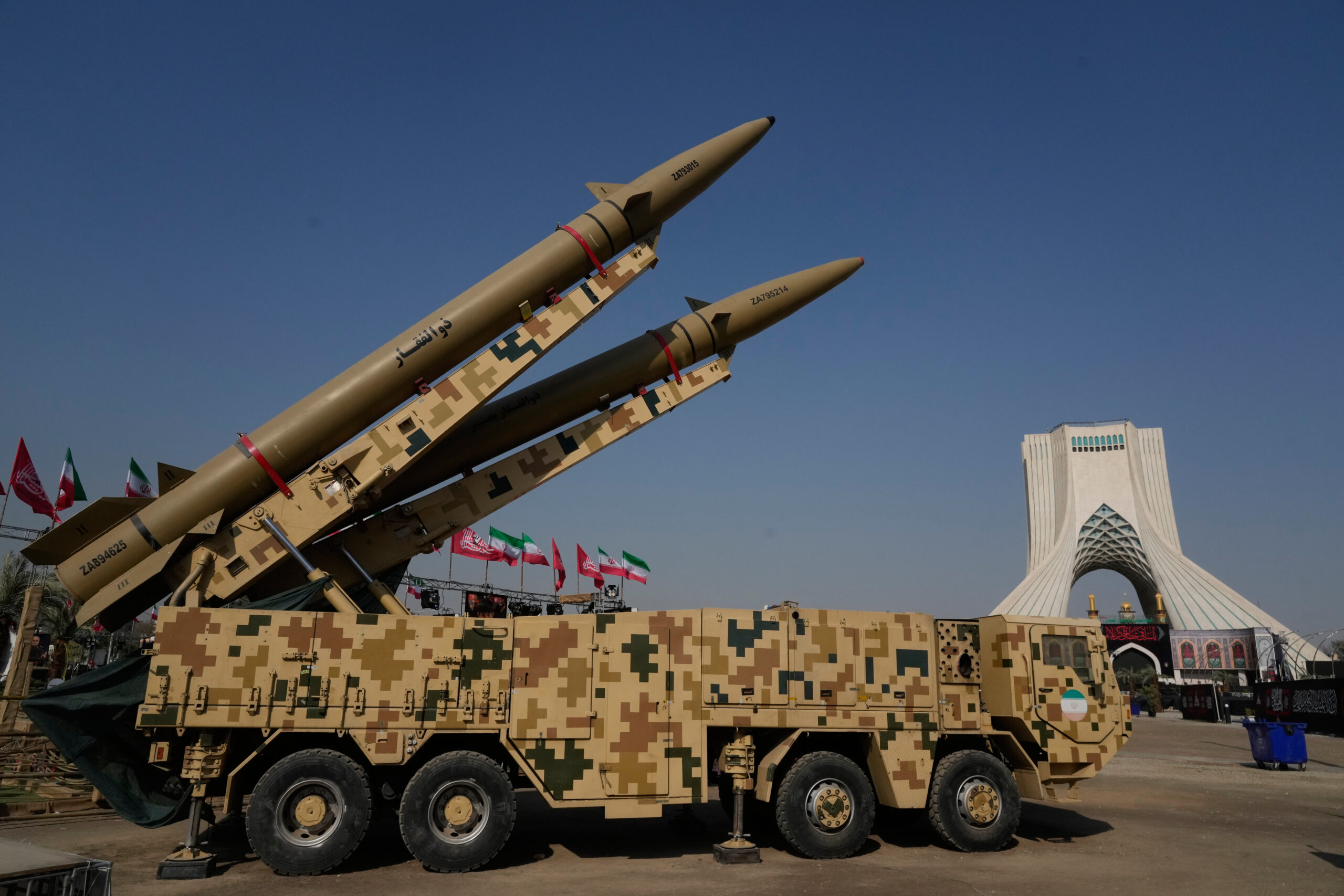
According to the U.S. Defense Intelligence Agency, Iran has the largest missile force in the Middle East. This is hardly surprising. While experiencing an international arms embargo during the war with Iraq from 1980-88 and lacking a modern air force, Iran began investing heavily in developing indigenous domestic ballistic and cruise missile capabilities. Today, Iran has embraced missiles as the primary component of its strategic deterrence, and the Islamic Revolutionary Guard Corps, as well as Iran’s regular military, takes great pride in developing and possessing these missiles. Therefore, success or failure of the missiles’ performance has a direct impact on the public perception of both the IRGC and Iran’s regular military.
The efficacy of Iran’s cruise missiles and aerial drones was demonstrated on September 14, 2019, with precision attacks against the state-owned Saudi Aramco oil processing facility in Abqaiq and the oil field at Khurais in eastern Saudi Arabia. Houthi rebels in Yemen claimed responsibility for the successful operation, but there was never any doubt that the IRGC was the real perpetrator. Alternately, the January 8 ballistic missile attack against two Iraqi military bases hosting U.S. forces, for which the IRGC took formal responsibility, was hardly precise. There were no American fatalities, which may either reflect Iran’s intention to symbolically retaliate for the January 3 killing of Major General Qassim Suleimani without further escalating the crisis or simply reveal the inaccuracy of Iran’s ballistic missiles.
Real tragedy occurred in the late hours of January 8 when the IRGC Air Defense Force, anticipating a U.S. attack against Iran, mistakenly shot down Ukraine International Airlines Flight 752, killing 167 passengers and nine crew members. Initially, the Islamic Republic’s aviation authorities denied a missile hit the airplane, but Western intelligence agencies revealed the aircraft was shot down by a Tor-M1 surface-to-air missile launched by Iran. President Hassan Rouhani apologized for the human error, and Brigadier General Amir-Ali Hajizadeh, head of the IRGC’s Aerospace Force, accepted personal responsibility on January 11. Meanwhile, the regime’s initial denials, lies, and deception provoked mass protests for five consecutive days as middle and upper-middle class Tehranis took to the streets.
As the IRGC launched the military satellite Noor (Light) into orbit on April 22, Hajizadeh rose from the ashes of the civilian airliner tragedy to triumph. Access to outer space is “not a choice, but a necessity,” Hajizadeh said in his first comments. Major-General Hossein Salami, IRGC chief commander, congratulated Supreme Leader Ayatollah Ali Khamenei and said, “the successful launch further elevates new aspects of Iran’s defense capabilities.” The IRGC propaganda machinery even managed to take advantage of Washington’s condemnation of the missile launch: U.S. officials, who fear long-range ballistic missile technology used to put satellites into orbit can also be employed to launch nuclear warheads, argued the missile launch violated U.N. Security Council Resolution 2231. IRGC propaganda, in turn, depicted the missile launch as an act of defiance and appealed to Iranian nationalism. The successful launch generated some excitement and pride in the Persian-language blogosphere, but in contrast with angry protests after the downing of the Ukrainian airliner, there were no celebratory public gatherings.
On May 10, the Islamic Republic armed forces’ performance again led to tragedy. Navy logistical support vessel Konarak, which was putting targets in the water as part of a naval exercise in the Gulf of Oman, was hit by missiles from the frigate Jamaran. Nineteen Iranian sailors were killed, and 15 others were injured in the accident. While Iranian bloggers critical of the Islamic Republic portrayed the incident as yet another example of the incompetence of the regime, government-censored Iranian media struggled to find a way of spinning the story to lessen the regime’s embarrassment. And the incident is a major embarrassment for a regime whose political and military leaders often threaten to close the Strait of Hormuz to international shipping.
It is not known if the latest incident will spark another wave of anti-regime protests, but it stands in stark contrast to the image of competence and mastery of technology in which the IRGC and the regular military take great pride. The loss of the Konarak and 19 sailors to friendly fire clearly is one of those mishaps that turn a principal source of pride for the regime into a liability.
The views represented herein are the author's or speaker's own and do not necessarily reflect the views of AGSI, its staff, or its board of directors.
Strategic relations with China, domestic political considerations, and religious taboos all prevented an earlier and more effective response by the Iranian government toward the country's coronavirus crisis.
The supreme leader’s engineering of Iran's parliamentary elections may help the regime to manage the multiple crises it is facing. But there will be consequences for narrowing the circle of the ruling elites and restricting the path for political participation for Iranian citizens.
After U.S.-Israeli strikes killed Supreme Leader Ayatollah Ali Khamenei on February 28, Iran’s collective leadership has concluded that the best defense is a good offense.
Wartime pressure has temporarily aligned the leadership’s overriding interest in regime survival, even as its members continue to differ over the costs, methods, and ultimate objectives of the war.
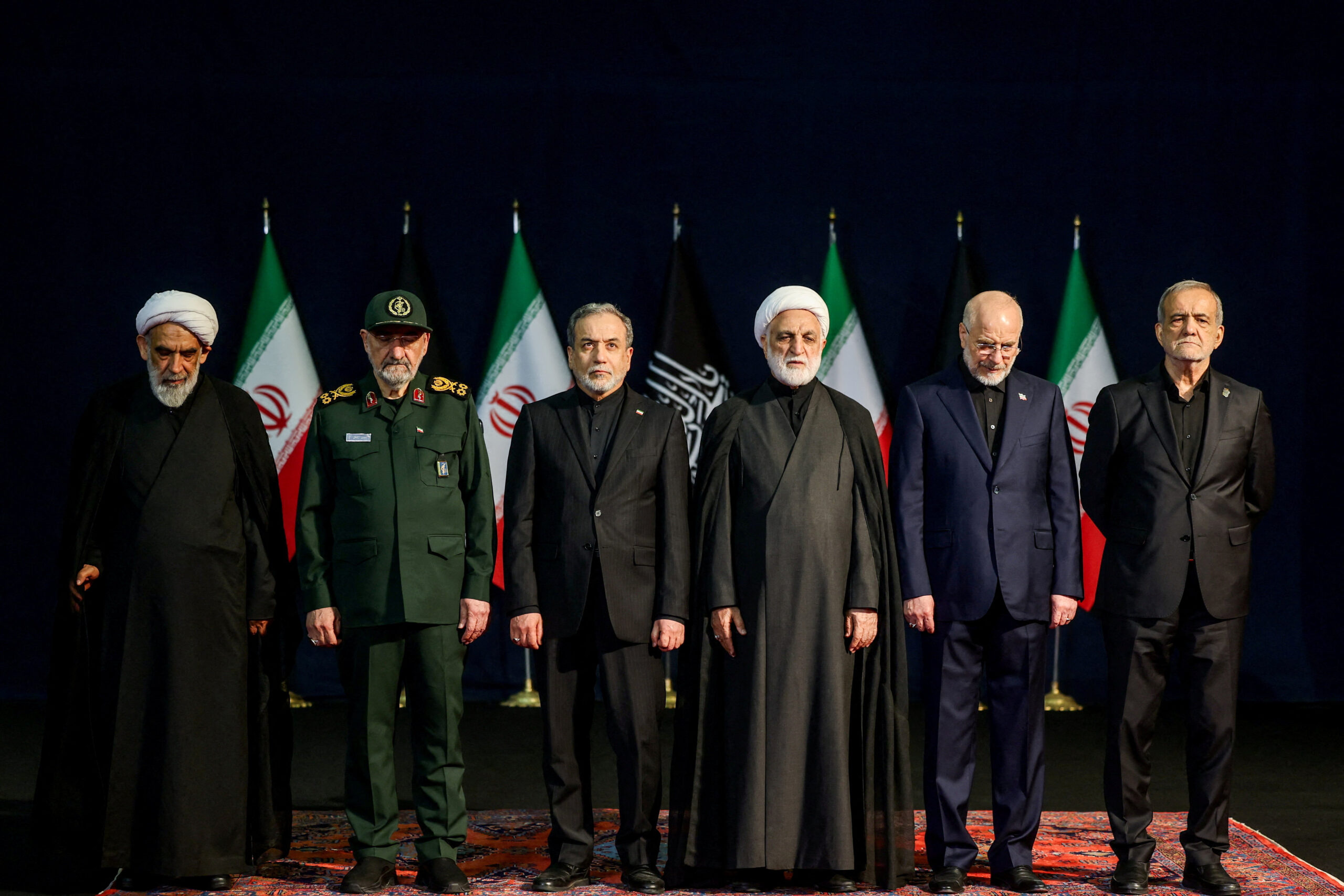
While there is historical precedent for collective leadership in Iran, today’s leadership includes representatives of the IRGC and regular military – a reflection of the IRGC’s expanding role and the necessities of governing under wartime conditions.