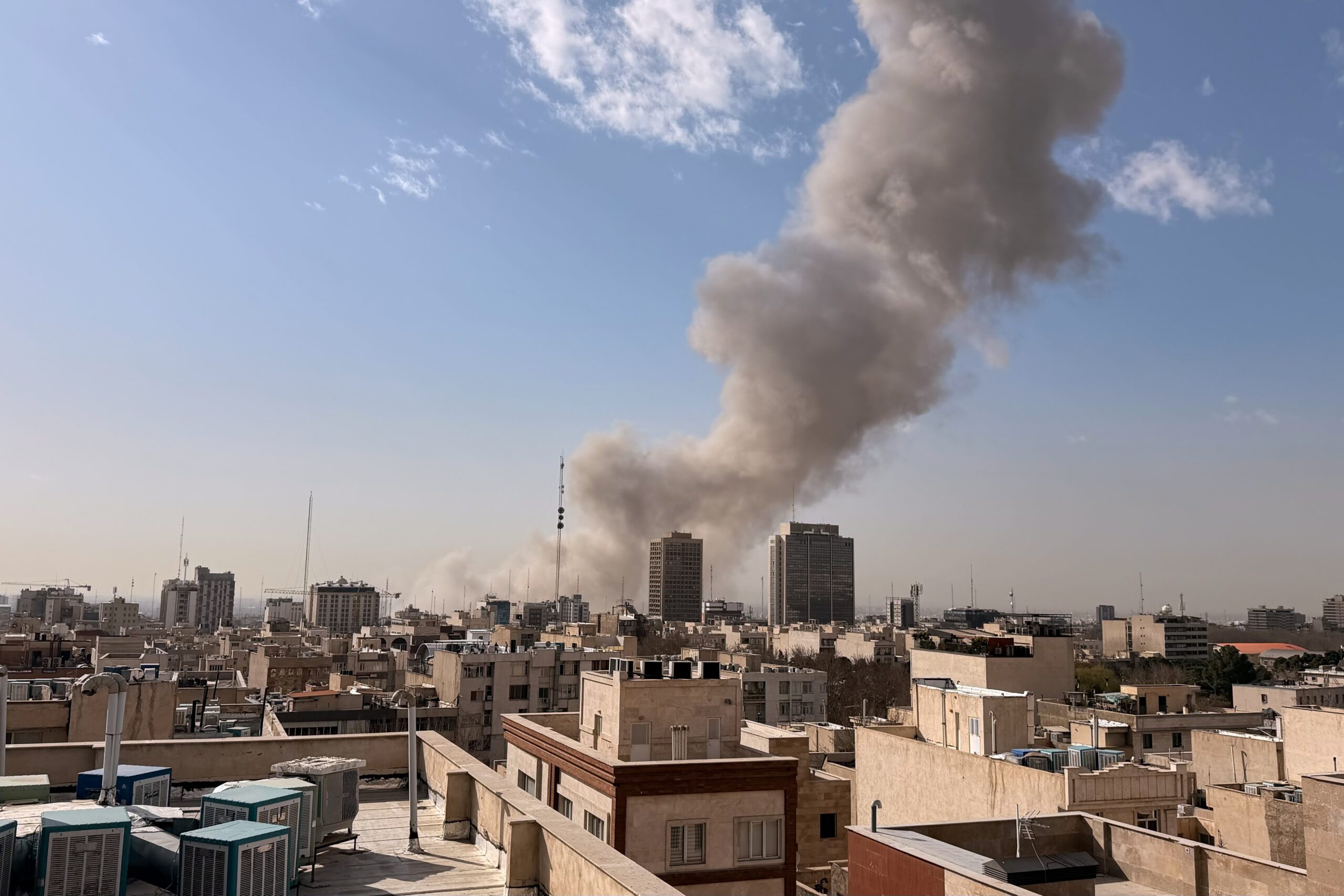
Iran survived the June conflict with Israel and appears likely to withstand the ensuing protracted low intensity conflict. Yet the regime is increasingly facing demands for accountability, not only from opposition-aligned Iranians but also from its own loyalists. Both camps demand answers: Why did the regime fail to deter the Israeli attack? Why was it unprepared, as evidenced by the loss of senior military commanders and the strikes on Iran’s air defenses launched from within its own territory?
Reluctant to let such questions surface on tightly controlled Islamic Republic of Iran Broadcasting, the regime has allowed a growing number of elite voices to air grievances on YouTube. This has given rise to a plethora of regime-tolerated channels openly debating public policy, a gradualist measure that may do little to solve the underlying problems but serves as a safety valve for an increasingly angry public demanding accountability.
August 3: In a two-part interview on the TamamRokh YouTube channel, Mehdi Kharatian, an Islamic Revolutionary Guard Corps strategist with close ties to the regime’s security forces, delivered a scathing critique of Iran’s security establishment:
In the first part, Kharatian said: “We lived in a hyperreality bubble of our own making until Israel attacked, with the aim of regime change and the fragmentation of the Iranian state … The system was on the verge of collapse, hanging by a hair, yet there are still those who say, ‘God be praised, it all ended well’ and want to return to business as usual. We will not accept this. There must be accountability, there must be demotions, and we must change course … A week before the war, someone at a high-level executive meeting told us: ‘I guarantee you there will be no war.’ I cannot forget or forgive this because people, our own comrades included, were killed … This cannot be like the aftermath of the fall of the Assad regime, when some sought to downplay its importance. Today is the day of reckoning for those people … When they surrendered Syria’s soil and airspace, they forced Iran into an impasse … The same people blocked a critical investigation into the assassinations of Ismail Haniyeh in Tehran and Sheikh Hassan Nasrallah in Lebanon. Now I hear them claiming, ‘Israel will not attack Iran again.’ Shameless! Our military and political systems were strategically surprised. They expected Israeli strikes similar to those on April 19, 2024 or October 26, 2024, limited attacks on nuclear installations. Instead, what we saw was the targeted assassination of top commanders and total Israeli control over Iranian airspace … Why were they surprised? Had they not seen Haniyeh’s assassination? Did they not see Nasrallah’s? When a system is strategically surprised again and again, it means it is incompetent, infiltrated, or both. How many times can a system be surprised? This points to fundamental flaws.”
In the second part, Kharatian continued: “You may recall that after Nasrallah’s assassination an important former commander told people that ‘Israel will not wage direct war against Iran. Israel cannot do anything.’ On another occasion, he said, ‘Our response to Israel will be proportional to Israel’s attack.’ This was after the October 26, 2024 Israeli strikes on Iran’s air defenses, strikes that, in retrospect, were the pilot operation for the June 13 attack against Iran … Those who downplayed the importance of the collapse of the Assad regime told us to take solace in the improvement of relations with Saudi Arabia and the United Arab Emirates … The Saudis and the Emiratis, who were instrumental in overthrowing the Assad regime! What did we get? What is the tangible gain from improvement of our relations with the Saudis and the Emiratis? Now, if Mohammed bin Salman was an actor in his own right, we might have achieved something, but the United States is also involved … Separately, it appears as if parts of our government are involved in excessive diplomacy, believing diplomacy safeguards Iran against war … They thought when Mr. Donald Trump said he wanted to negotiate with Iran war was not an option the United States would pursue… There are truly people who think there is such a thing as a ‘peace button’ that you can press, and there will be peace! In other words, there are those who think they can show up to the negotiations with the United States and surrender Iran’s nuclear program, after which there will be peace and sanctions relief … But Mr. Steven Witkoff says this is not enough. They also demand that we give up the region, and there are those in Iran who argue we should give up Hezbollah, the Houthis, and the like. My answer is this: Fine! But is Trump … someone demonstrably incapable of reaching grand bargains with anyone, including Russia, and someone constantly changing his position on tariffs, even with U.S. allies, really someone with whom you want to make a comprehensive agreement?! President Barack Obama’s policy toward Iran only changed for the better when he realized that Iran, undeniably, is a force in the Middle East. Those who secured our regional strength made diplomacy possible with Obama. The Joint Comprehensive Plan of Action, and the fact that the United States recognized Iran’s right to uranium enrichment, was due to Iran’s strength in the region … Now there are some who want to surrender all our assets!”
The views represented herein are the author's or speaker's own and do not necessarily reflect the views of AGSI, its staff, or its board of directors.
Washington can work with its Gulf partners to tie Tehran to a deal that moves Iran from a militant focus to an economic revival and integration within its neighborhood.
Iran may still call itself an Islamic Republic. In practice, however, it increasingly resembles a state in which the military governs from behind clerical robes.
Ayatollah Ali Khamenei was killed in his office in Tehran at age 86, leaving behind a country in ruins and on the verge of civil war and potential disintegration.
Iran is signaling that it will not absorb attacks passively. But whether this strategy ensures the regime’s survival, seals its fate, or accelerates a broader catastrophe will shape the region for years to come.
The erosion of the regime’s legitimacy across broad segments of society, combined with the breadth of the 2025-26 protest coalition, raises the possibility that a new confrontation could trigger renewed anti-regime mobilization.
On January 8, AGSI hosted a virtual roundtable with its leadership and scholars as they look ahead and assess trends likely to shape the Gulf region and U.S. foreign policy during the coming year.