Blood in the Water: Speculation on Gulf Currency Pegs Misses First Victims of Downturn
Hedge fund sharks and currency speculators are circling the Gulf states right now, in search of market opportunities in the wake of the deteriorating fiscal balances of oil rich governments.
Hedge fund sharks and currency speculators are circling the Gulf states right now, in search of market opportunities in the wake of the deteriorating fiscal balances of oil rich governments. Hedge funds PointState Capital and Knighthead, according to Bloomberg, are among those currently shorting the Saudi currency in the expectation that the Saudi monetary authority, SAMA, will be unable to defend the value of the riyal against the U.S. dollar. Saudi Arabia has a currency peg, or a fixed price at which the Saudi government (through its central bank) guarantees the exchange of 3.75 riyals to the U.S. dollar, a rate held constant since 1986. All of the Gulf Cooperation Council states use a form of restricted monetary policy, either in a currency peg, or a currency basket. (Kuwait uses the basket mechanism and ties the price of its currency to several other currencies and the price of oil.)
In order to defend the exchange value of its currency, the Saudi government must maintain a supply of dollars, which it receives through the export of oil priced and paid for in dollars in international markets. As the export revenue in dollars has declined, so has the Saudi monetary authority’s supply of foreign reserve. But by betting on the rise of the riyal, in effect that it will take more riyals to equal one dollar, speculators are buying “forwards” or commitments to buy or sell a currency at a certain price in the future. If the value changes significantly from what they have in contract, speculators stand to make considerable profits. They lose only the difference in their contract price versus the future price, making currency speculation a rather safe way to invest a small amount of money at very large potential gains. PointState used a similar method to bet that oil prices would fall in 2014, netting the firm over $1 billion in profit.
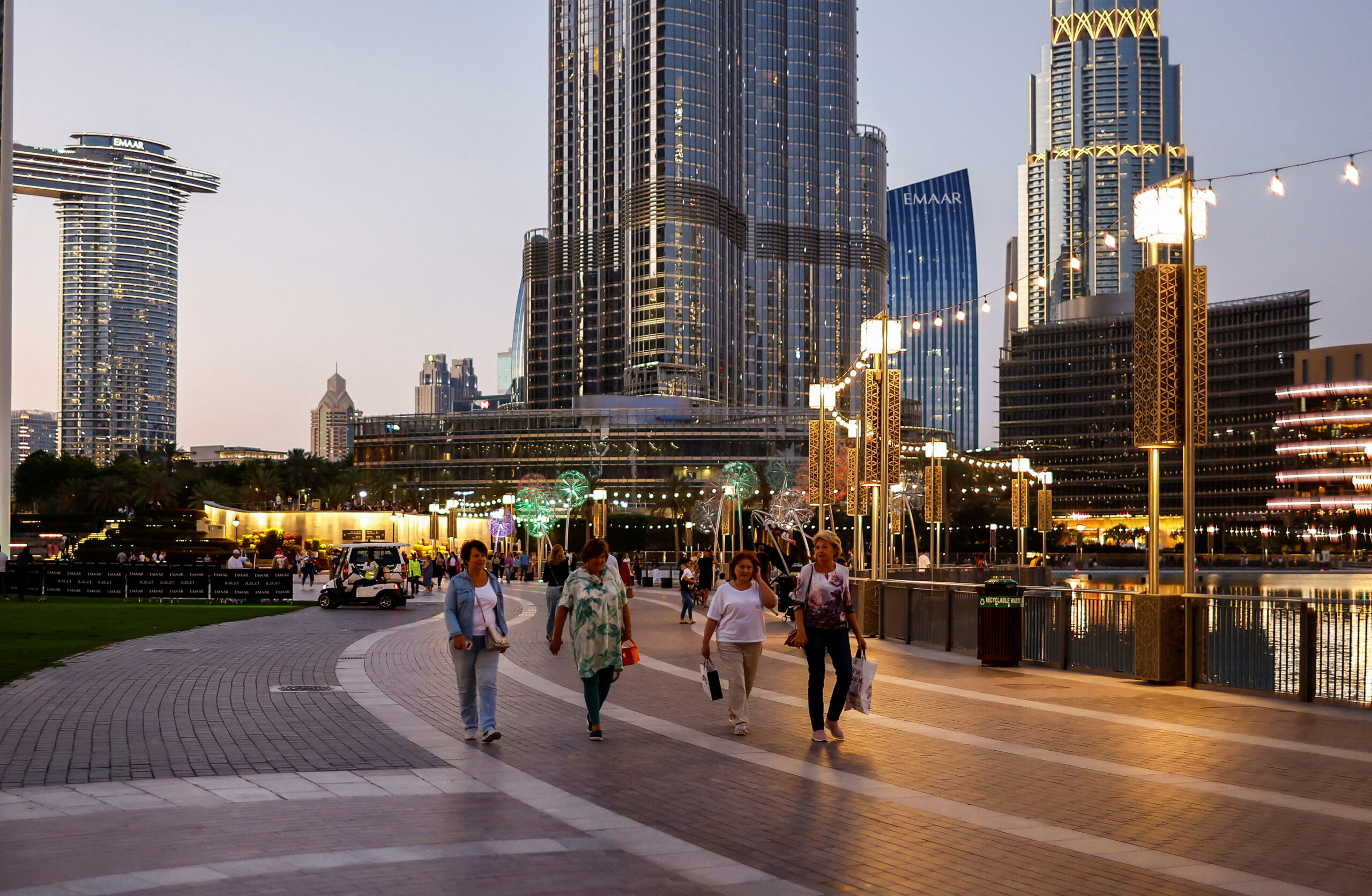
The scrutiny of GCC states’ monetary policy is warranted given the steep decline in fiscal revenue they face, but the real victims of the oil slump could be different. After all, the GCC states are not poor, indebted countries. They have significant reserve assets (especially Saudi Arabia, Kuwait, the United Arab Emirates, and Qatar) and they have very low debt to gross domestic product ratios compared to most wealthy Western (or OECD) economies. The potential victims are in the domestic economies, from local banks to small and medium size enterprises, to those businesses most closely connected to the energy sector, and those contractors servicing infrastructure growth. In March, Emirates NBD’s tracking of the Dubai economy recorded the first contraction in the non-oil private sector activity in six years. Of course, a general slowdown in economic activity will reverberate through the Gulf.
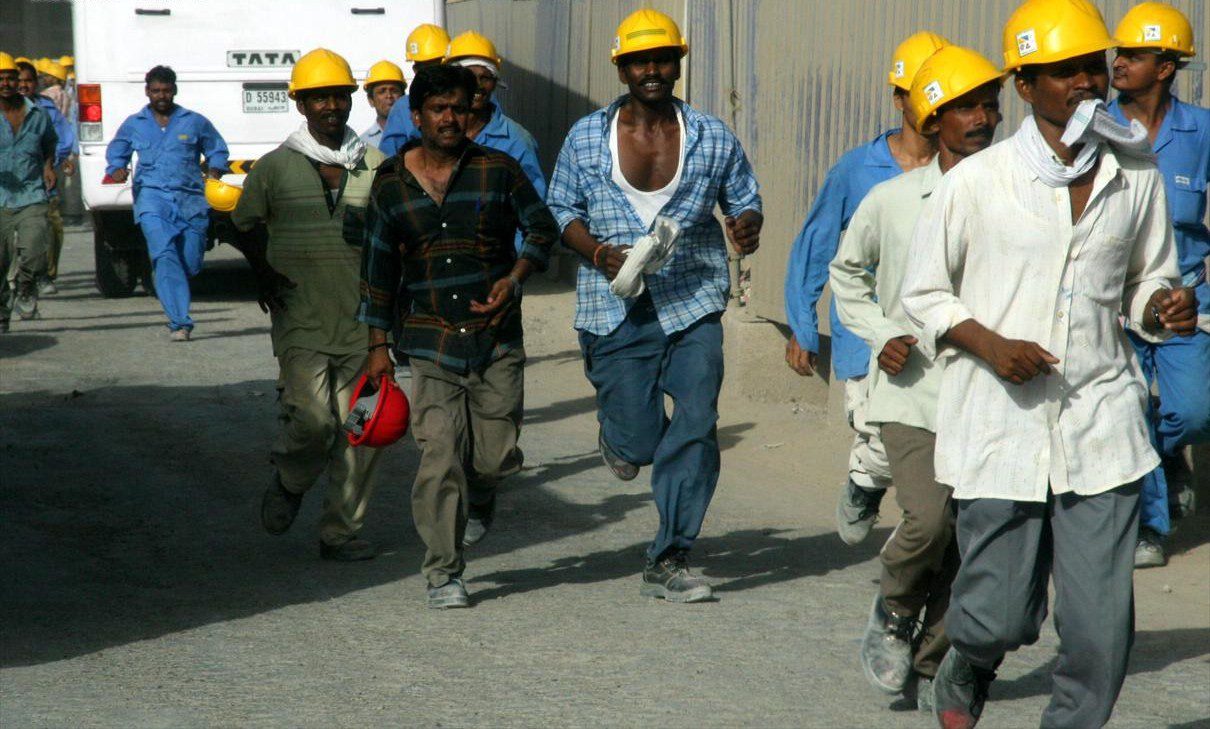
The oil boom of the last decade was successful in generating income for Gulf states, but also stimulating domestic economies, largely through the subsidized price of fuels. Oil consumption in the Middle East accounted for 30 percent of growth in world oil demand between 2004 and 2014. As oil prices increased in this period, revenue went to Gulf governments, which spent heavily on infrastructure and social services. The boom enabled a Gulf economic model that blossomed in population growth (largely expatriate) and per capita income. The population of Saudi Arabia increased from 10 million in 1980 to 28 million in 2010; in the UAE, the population increased from 1 million in 1980 to over 8 million in 2010. Saudi Arabia’s income per capita more than tripled from $7,000 in 1990 to $25,000 in 2013. GCC states’ economies grew at a compound average rate of 5.8 percent per year between 2000 and 2012. The financial services industry also bloomed, with wealthy individuals in the Gulf holding as much in assets as regional sovereign wealth funds, according to the consultancy firm Ernst & Young. In a downturn, the victims will be labor markets and the local financial sector.
EY GCC Wealth and Asset Management Report 2015
There is heightened pressure on domestic banks to serve as lenders to Gulf governments. Saudi Arabia has asked its local banks to provide the government with as much as $10 billion in loans, instead of going to international capital markets. Saudi Arabia’s credit rating, like Bahrain and Oman, was recently downgraded by Standard & Poor’s, making international loans more expensive. The GCC states can certainly access capital when they want to, they just might have to pay a bit more. Saudi Arabia is approaching international banks now. Qatar borrowed $5.5 billion in January; Oman borrowed $1 billion in the first quarter of 2016. (Bahrain currently is the only GCC state with a less than investment grade credit rating.) The Saudi government has more leverage with local banks and there are suggestions that the government might insist local banks that wish to serve as arrangers or advisors on the international tender must first extend credit of their own.
Local banks have profited from the government deposits over time, but they are also expected to provide credit for state-related infrastructure projects and contractors. Local banks are also affected by the economic downturn, particularly in their level of deposits. They face a risk of nonperforming loans, particularly from oil services firms and those contractors that now face delays or cancellations of projects throughout the GCC. There is talk of capital flight from the Gulf, as high net worth individuals and large corporates look for safe havens for savings and investments if they assess that growth will be low in the GCC in the coming year. Of course, labor markets will be the first to absorb a downturn in job losses.
While a devaluation or exit from the currency regimes of the Gulf are unlikely, the greater risk is the absence of structural reforms to labor markets and economic growth models that rely heavily on state deposits and state investments to function. The Gulf states have achieved a decade of tremendous growth and now have the luxury of reform with access to international capital, per capita income levels that are wealthy by global standards, and infrastructure that can support healthy, if somewhat smaller, domestic economies.
The views represented herein are the author's or speaker's own and do not necessarily reflect the views of AGSI, its staff, or its board of directors.
When the Saudi crown prince meets President Trump in Washington, the main topics of discussion are likely to be commercial deals, a defense pact, a Saudi civilian nuclear program, and normalization with Israel.
Continuous innovation, efficient institutional coordination, and further international collaboration will be critical to ensuring the kingdom’s water security remains robust in the face of evolving challenges.
AGSI explains what Israel’s sudden and massive attack on Iran is likely to mean for Gulf Arab states, Iran, the United States, and global and regional economies.
The conflict in Yemen has exacted a disastrous toll on the country. This paper considers the outside forces in the conflict, seeking to elucidate who they are, what the nature is of their involvement, and what their converging and conflicting interests mean for reconstruction.
This post is part of an AGSIW series on Saudi Vision 2030, a sweeping set of programs and reforms adopted by the Saudi government to be implemented by 2030. Saudi Arabia did one thing right this week. It is seeing some positive news in the return on investment in its outwardly placed capital in new technology....