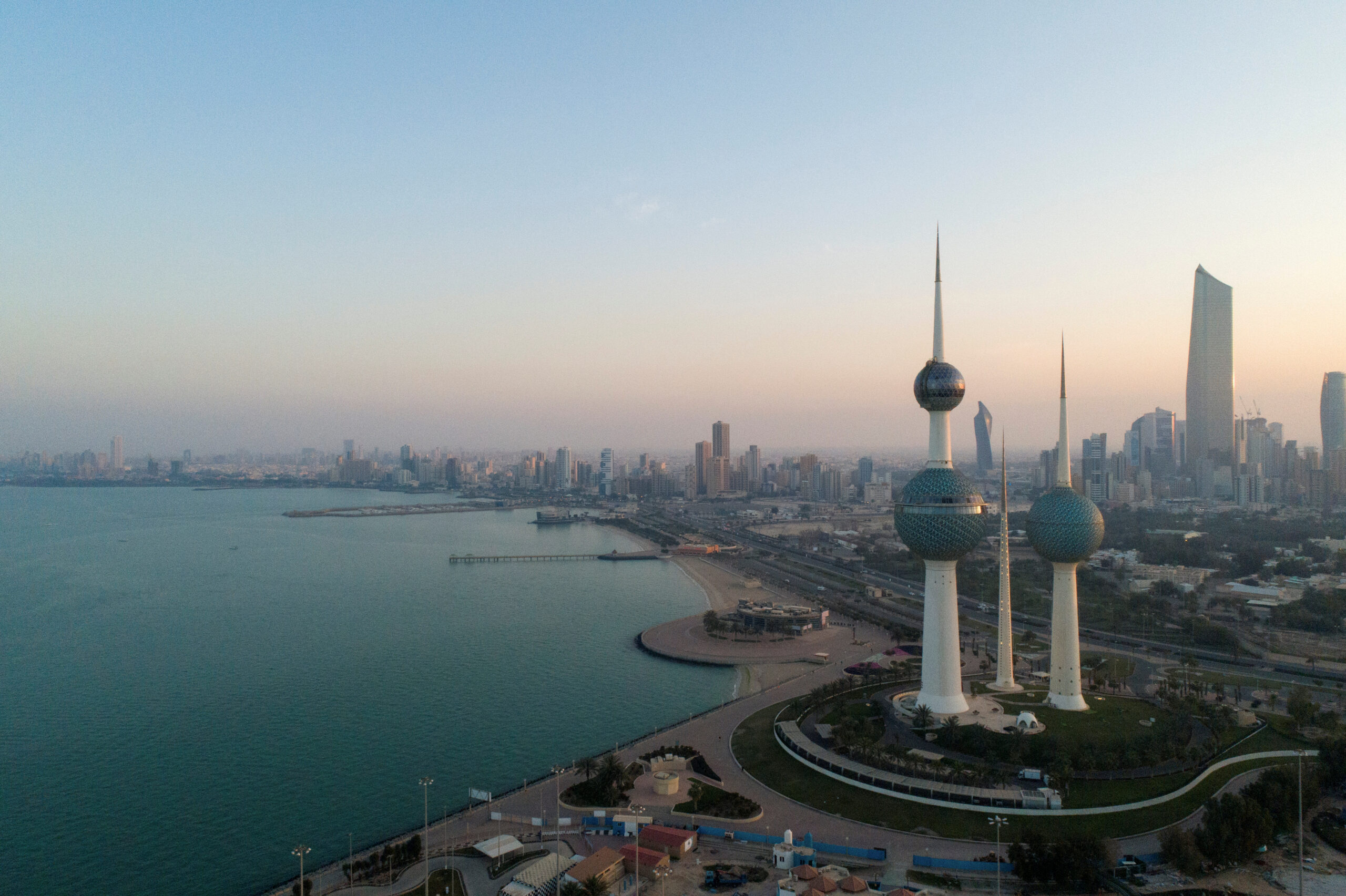
An aerial view shows Kuwait City, Kuwait, March 16, 2020. (REUTERS/Stephanie McGehee)
Since mid-July, Iran has repeatedly struck power stations and desalination plants across Kuwait. On July 21, the Ministry of Electricity, Water, and Renewable Energy reported fires at several sites on the fourth consecutive day of attacks. The strikes were retaliation for U.S. bombing of Iranian territory, and Bahrain, Qatar, and Jordan were hit as well. But the concentration on Kuwait – specifically the plants that generate both electricity and drinking water – points to something beyond tit-for-tat exchange. On July 16, a spokesman for Iran’s Khatam al-Anbiya Central Headquarters warned that if Washington carried out its threats against Iranian infrastructure, all infrastructure across the region would be destroyed in turn. Six days later, Iran’s chief negotiator, Mohammad-Bagher Qalibaf, said: “If our security is not ensured, no infrastructure will be safe.” The target set has widened from U.S. bases to the utilities that serve the populations hosting them. Hitting the systems that keep a population supplied with water and power is a threshold Iran now appears willing to cross.
The distinction matters strategically. Striking military sites imposes costs on a state’s armed forces; striking the water and power a population depends on imposes costs on its capacity to govern and sustain daily life. It is coercion aimed at the social contract rather than the order of battle, calibrated to generate domestic pressure on a government to seek de-escalation.
The Gulf’s Most Exposed Member
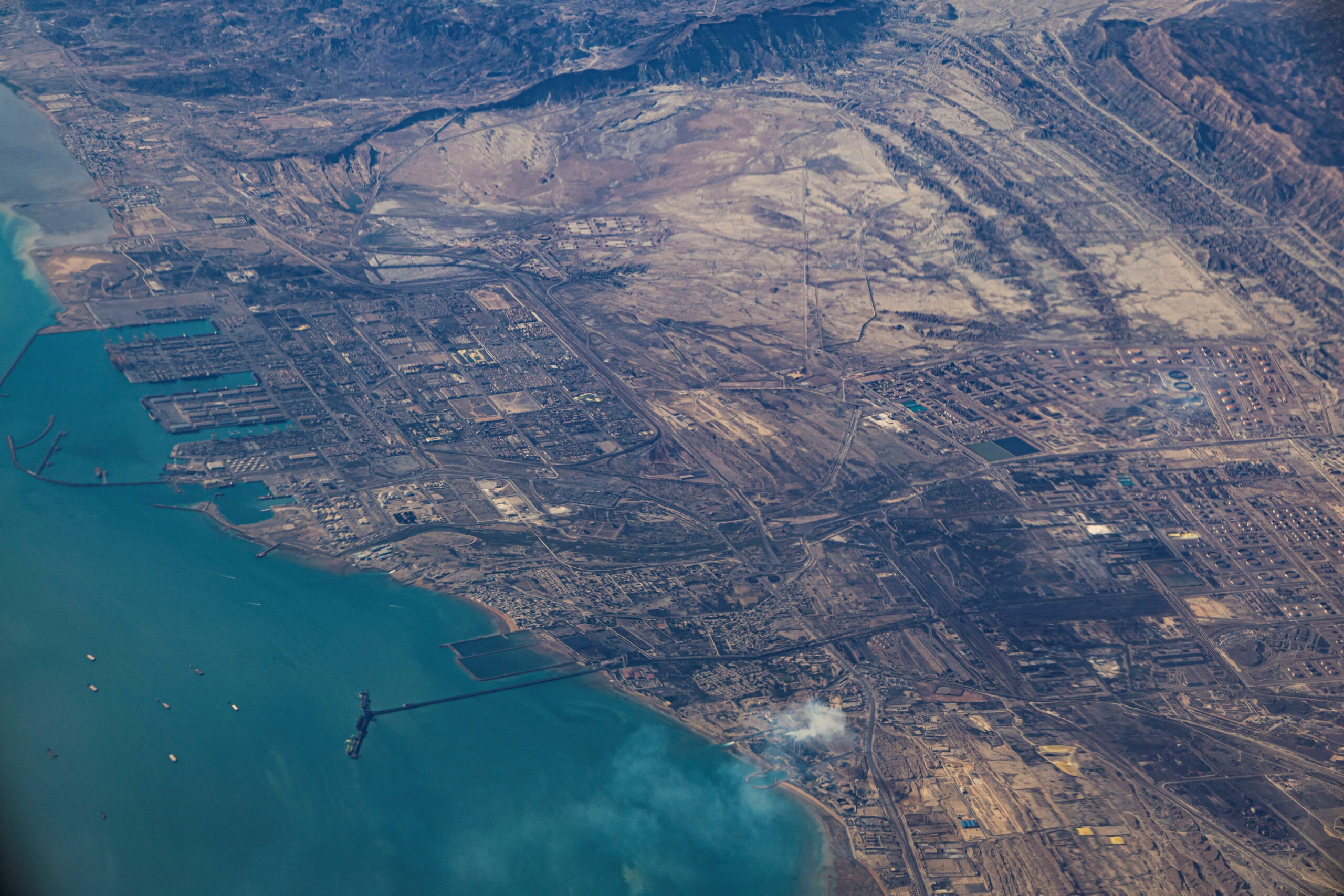
Kuwait sits at the very head of theGulf,in its northwestern corner. Kuwait Cityliesless than 90 kilometers (55 miles) from Iran’s nearest border, leaving its interceptor batteries as little as 45 seconds to react. The southern-shore Gulf Cooperation Council capitals in Qatar, Bahrain, the United Arab Emirates, and Saudi Arabia draw some protection from distance; Kuwait has none. Short-range missiles and slow drones arrive with little warning, compressing the time available to intercept them. The emirate’s salience is heightened by the U.S. presence on its soil: Ali al-Salem Air Base and Camp Arifjan have been pillars of U.S. operations in the region since the 1991 Operation Desert Storm, and the Islamic Revolutionary Guard Corps has publicly claimed strikes on Ali al-Salem, telling Kuwaitis its quarrel is with the U.S. military rather than with them. For Tehran, Kuwait is at once the nearest target, the one with the least warning time to defend itself, and the most strategically advantageous place to apply pressure.
A State That Manufactures Its Water
What makes that pressure bite is Kuwait’s near-total reliance on desalination. The country has no perennial rivers and only meager, brackish groundwater; close to 90% of its drinking water is produced from seawater. On the United Nations’ water-stress indicator, which measures freshwater withdrawals against renewable resources, Kuwait ranks worst in the world – consuming, by one estimate, some 34 times more water than its natural resources renew, against a per capita renewable supply of roughly 5 cubic meters (176 cubic feet) a year. There is no reserve to fall back on. Disable the desalination plants and taps run dry within days, a far more immediate form of coercion than damaging an oil terminal or an arms depot. It is an awkward dependency for an energy exporter: Kuwait’s wealth comes out of the ground, but its water has to be engineered.
One Strike, Two Utilities
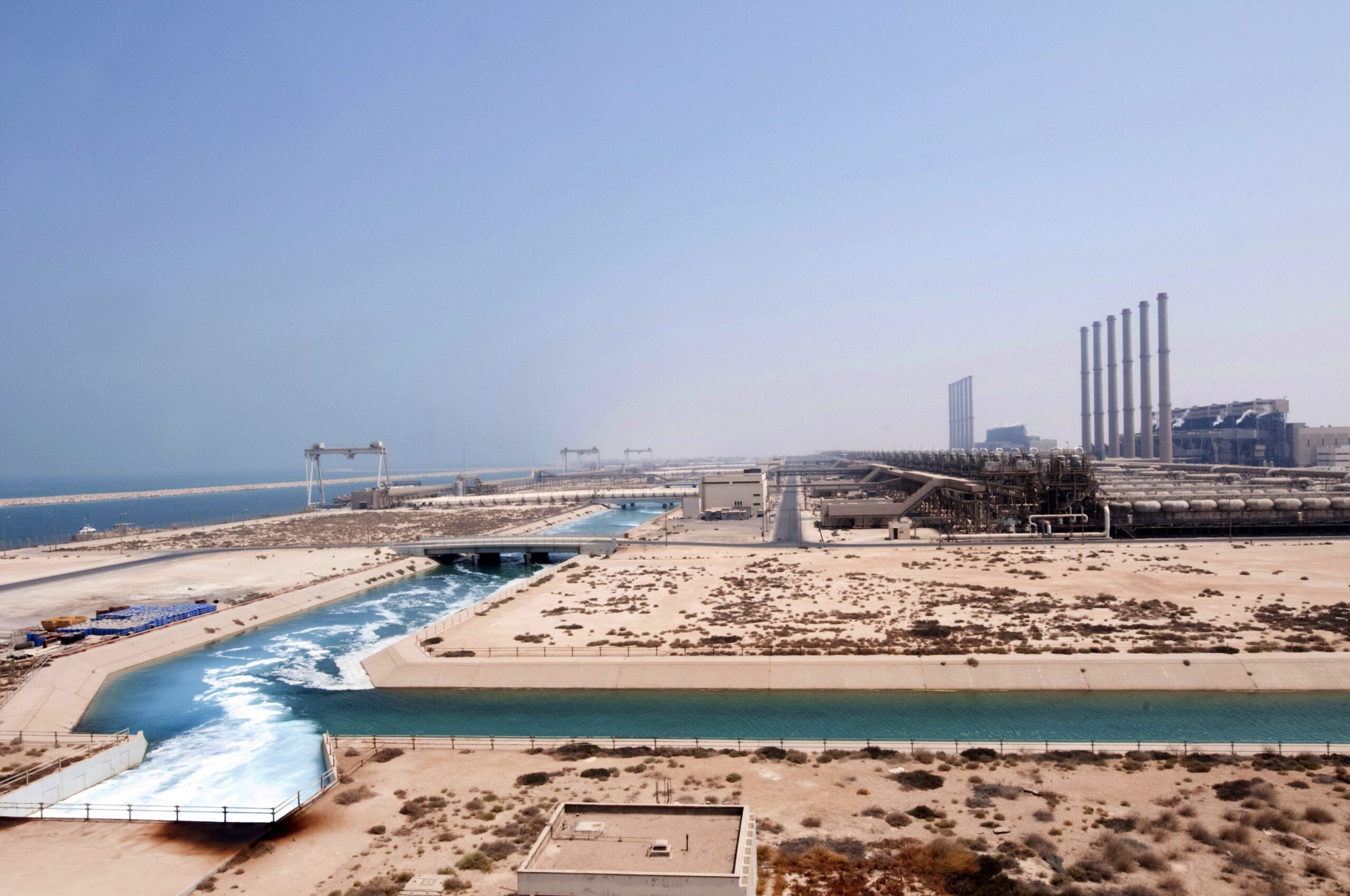
Desalination has to happen at the coast, and Kuwait’s major plants – Shuwaikh, Shuaiba, Doha, and the newer Al-Zour complexes – stand along a shoreline oriented squarely toward Iran. Al-Zour North Phase 1, the country’s first privately built integrated plant, delivers about 1,500 megawatts of power and 486 million liters of water per day – a tenth of national generating capacity and a fifth of desalination capacity – and a Phase 2 and 3 expansion contracted in 2025 will add at least 2,700 megawatts and 545 million liters when it comes online later this decade. Almost all these sites are cogeneration facilities: They produce electricity and water together, with the desalination units fed off the power station’s cooling loop. That configuration is efficient in peacetime and dangerous under fire, because a single hit on the generating side can take both outputs down at once. Iran does not have to locate and destroy separate water and power targets: Kuwait has already combined them.
Timed to the Heat
Kuwaiti summers are among the hottest in the world, routinely above 110 degrees Fahrenheit, with mid-July highs this year in the low 100s. Both outputs peakin exactly this window.
Household water use runs 15% to 25% above the annual average from June through September, while air conditioning – nearer a survival need than a comfort – accounts for roughly two-thirds of residential electricity demand and an even larger share of the summer peak. The grid is close to saturation before any warhead lands. Even in ordinary years, Kuwait struggles to meet July load: In the summer of 2024, the Ministry of Electricity, Water and Renewable Energy scheduled rolling outages for the first time, blaming plants’ inability to meet demand in the heat. Striking in the summer maximizes disruption, and the government has already asked citizens to conserve electricity, with residents switching off air conditioning to keep the system running.
A Familiar Pattern
Kuwait and Iran are old and intimate neighbors – centuries of Gulf trade and migration left a substantial share of Kuwaitis with Persian ancestry, Shia and Sunni alike – yet the relationship has frayed repeatedly. During the Iran-Iraq War, Kuwait bankrolled Baghdad, and Iran answered by attacking Kuwaiti tankers; the emirate’s appeal for protection led Washington to reflag its vessels under the U.S. flag in 1987, pulling the U.S. Navy into open confrontation with Iran. The takeaway then holds now: Squeezing Kuwait’s critical infrastructure is a way to indirectly pressure and draw in a larger adversary. Ties warmed after Iran condemned Iraq’s 1990 invasion, and Kuwait subsequently played the GCC’s mediator, keeping lines to Tehran open longer than Riyadh or Abu Dhabi did. Suspicion nonetheless persisted: The 2015 “Abdali” arms-cache case, linked to Hezbollah and the IRGC, ended with Kuwait expelling Iranian diplomats and closing Iran’s cultural mission in 2017. This history of alternating engagement and rupture helps explain why Kuwait’s electricity ministry has described the strikes as “criminal aggression” while the government stops short of the sharper posture some neighbors have adopted. The emirate has long balanced a diplomatic role that depends on speaking to all sides against a domestic composition – a sizable Shia minority and a wider population with cross-Gulf ties – that gives it a strong interest in not letting a state-to-state conflict harden into a sectarian one. Sustained attacks on the country’s water and electricity test that balance in a way earlier crises did not.
A Preview for the GCC
Kuwait is an extreme case but not an outlier. The Middle East holds only about 2% of the world’s renewable freshwater, yet the Gulf produces close to 40% of the world’s desalinated water; Bahrain, Kuwait, Oman, and Qatar all rank among the most water-stressed states on Earth, and projections point to regionwide acute scarcity by mid-century. Iran has already demonstrated that the logic runs in both directions – U.S. strikes reportedly disabled a desalination plant in Iran’s Hormozgan province, cutting water to some 20 villages. Every Gulf capital now has cause to treat its desalination fleet as a first-order security asset, though the GCC secretariat has already described Iranian attacks on civilian infrastructure as “war crimes.”
Implications
The immediate lesson for Gulf governments is that the efficiencies engineered into their utilities – large, coastal, integrated complexes – double as concentrated points of failure. Hardening the most critical nodes, holding deeper strategic water reserves, spreading capacity across smaller and more dispersed reverse-osmosis units, and relying on GCC power interconnection to cover local outages would all lower the return on any single strike. Each carries a cost: Dispersal sacrifices the economies of scale that made large cogeneration plants attractive, and meaningful storage in a country that consumes water almost as fast as it produces it is expensive to build. Those trade-offs, long deferred, are now security questions rather than budgeting ones.
For Washington, the reflagging precedent is a reminder that threats to Kuwait’s basic services – not only its bases – can draw the United States into escalation, and shielding civilian infrastructure will enter the calculation as Tehran widens its target set. Legal and humanitarian exposure will grow the longer the targeting of water systems continues.
In a region compelled to manufacture the water it cannot find, and where heat and demand keep rising, desalination is simultaneously the Gulf’s defining engineering feat and its most exposed dependency. Kuwait is simply where that exposure is greatest and where its consequences are being tested first.
The views represented herein are the author's or speaker's own and do not necessarily reflect the views of AGSI, its staff, or its board of directors.
The true economic and societal impact of the conflict may not be driven by headline events alone but by the gradual erosion of the systems that underpin daily life.
Iran’s threats involving undersea internet cables and digital infrastructure in the Strait of Hormuz have transformed the crisis from an energy chokepoint into a hybrid risk for Gulf Arab economies.
Qatar's first World Cup point, earned through a goalkeeper of Palestinian descent, reveals how the emirate has turned a tiny citizenry, migration, and naturalization into an instrument of statecraft and where that instrument meets its limits.
Cricket has become a key part of the United Arab Emirates’ multipolar approach to sports investment, where franchise ownership, player markets, and transnational capital converge to support economic diversification and power projection.
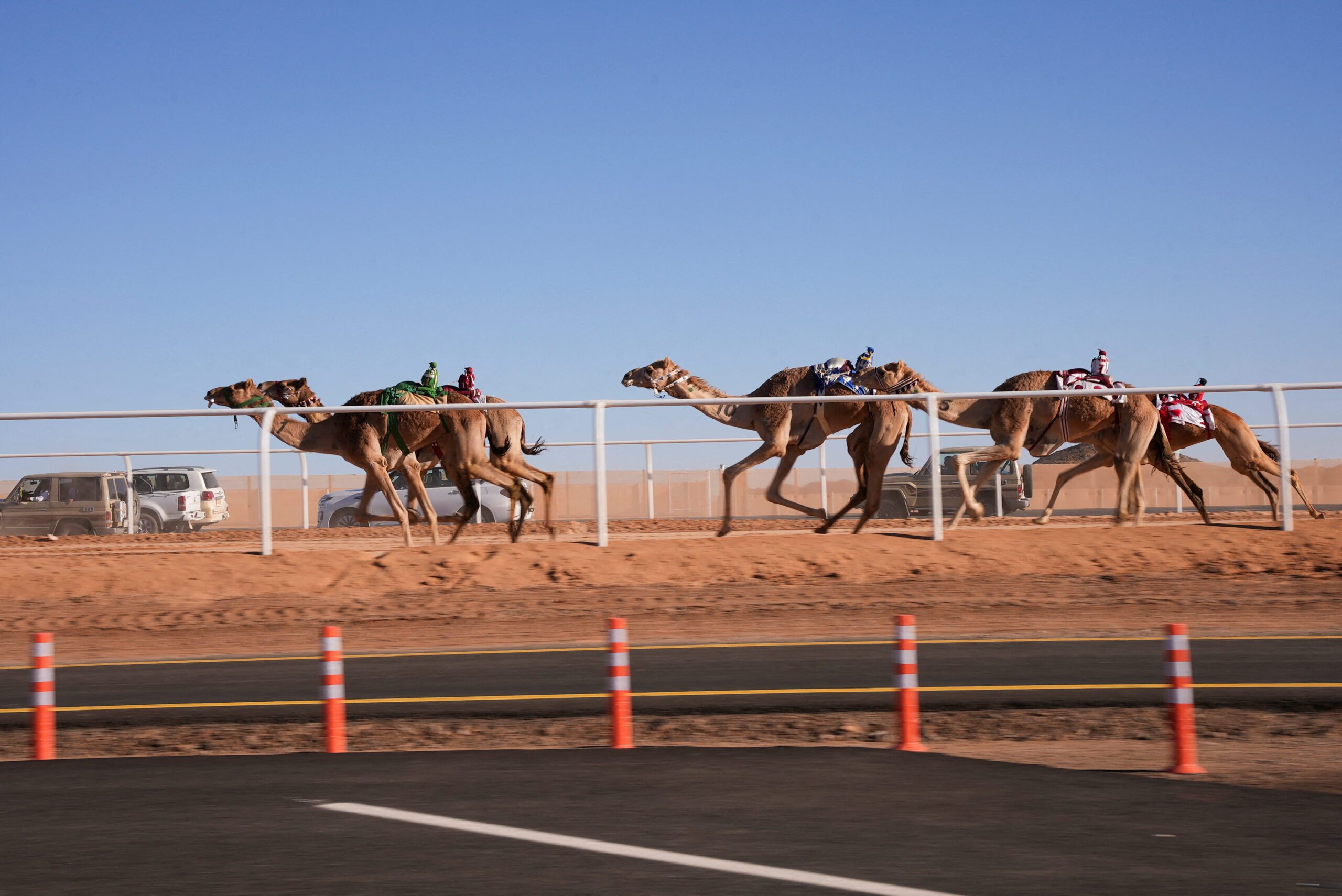
As Saudi Arabia seeks to reposition itself as a leading regional and global actor, its embrace of camel diplomacy reflects a sophisticated recalibration of tradition for modern ends.