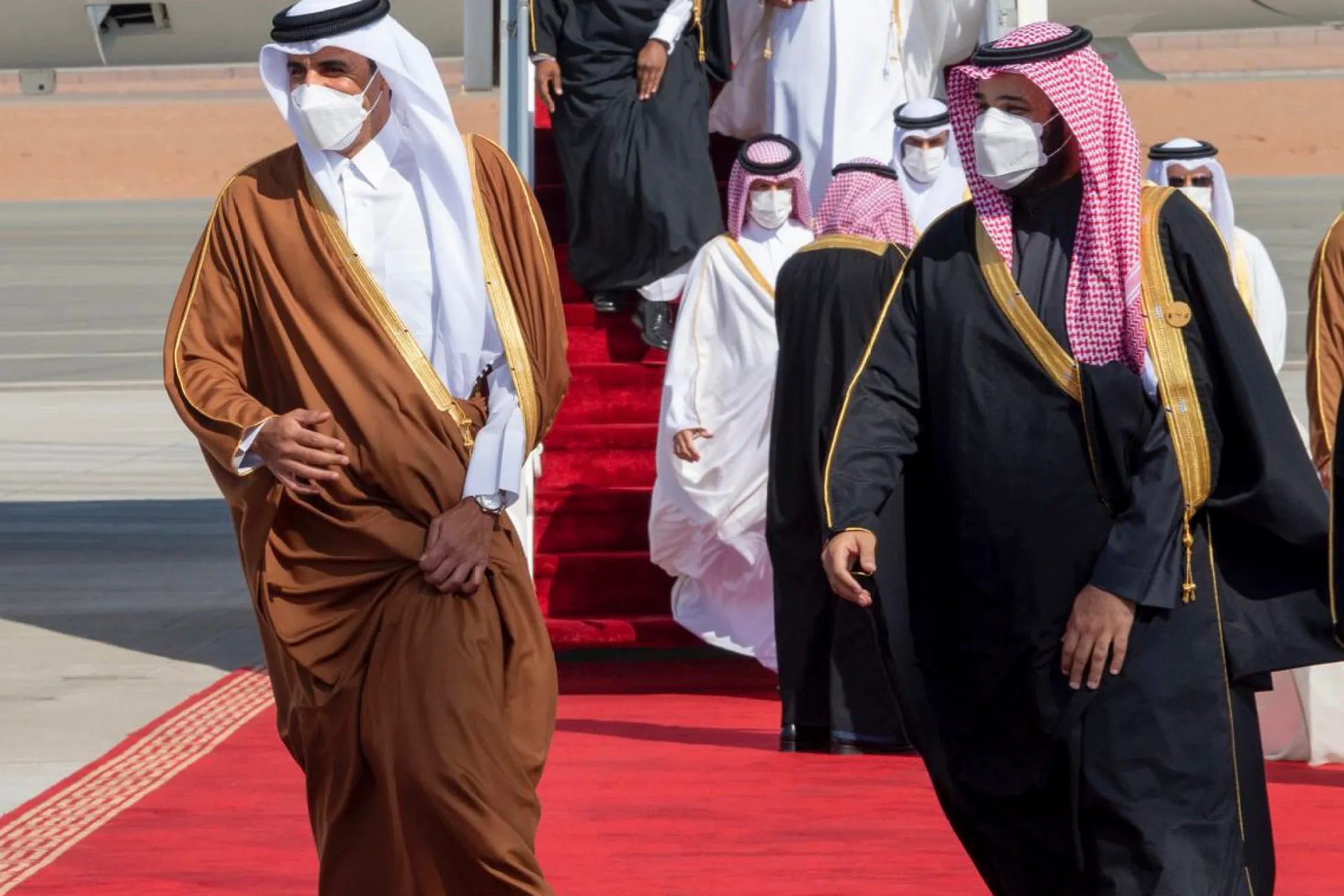
Saudi Crown Prince Mohammed bin Salman, right, welcomes Qatari Emir Tamim bin Hamad al-Thani upon his arrival to attend the Gulf Cooperation Council's summit in Al Ula, Saudi Arabia, Jan. 5, 2021. (Saudi Royal Court via AP)
After years of fruitless pressure from Washington and several false starts, a major reconciliation within the Gulf Cooperation Council at its 41st summit marks the de facto end of the boycott of Qatar by Saudi Arabia, the United Arab Emirates, Bahrain, and Egypt. An agreement was signed at the January 5 summit in Saudi Arabia, whereby Saudi Arabia will reopen its land border with Qatar and overflight routes for Qatar Airways, relieving the most significant practical aspects of the boycott. Bahrain and the UAE will take similar measures. Qatar agreed to withdraw numerous formal complaints and international lawsuits against its neighbors and presumably take additional publicly unspecified steps to ease Saudi and other Gulf Arab concerns about its policies. And both sides committed to stopping the “media war” between them, though how far that will go remains to be seen.
However, many of the underlying causes of the standoff may not have been fully resolved. And as the recent boycott, which began in June 2017, was preceded by an earlier confrontation over Qatar’s policies in 2013-14, another confrontation in coming years remains distinctly possible.
The dispute is ending now due to a combination of pressure from the outgoing administration of President Donald J. Trump and incoming administration of President-elect Joseph R. Biden Jr. in Washington, rising tensions with Iran, and diminishing returns from the boycott itself. The reconciliation originates from Kuwaiti-mediated and Washington-supported understandings that are largely bilateral and instead almost led to a more limited rapprochement between Saudi Arabia and Qatar. An expected announcement about such a bilateral agreement in early December 2020 never materialized, apparently because there were last-minute renewed hopes that the UAE would be persuaded to join a broader Gulf Arab reconciliation.
When it became clear that the UAE had dropped its opposition to measures to end the boycott, the January GCC summit was moved to Al Ula, a major Saudi pre-Islamic archaeological and historical cultural heritage site being promoted for tourism and as a symbol of national identity rather than religious authority. That move indicated that Riyadh expected to announce an agreement in the context of the summit and wanted to take ownership of and promote the rapprochement.
The agreement is being heralded as a major breakthrough by all sides in the GCC. Turki Al-Sheikh, a senior advisor to Saudi Crown Prince Mohammed bin Salman, tweeted imagery promoting Gulf Arab unity. UAE Minister of State for Foreign Affairs Anwar Gargash welcomed the restoration of Gulf unity in the interests of regional security and stability. For Qatar, the agreement is a huge breakthrough, as in the long run Doha must have working relations with its Gulf Arab neighbors, and it seems to have been greeted with joy and even relief.
Democrats and Republicans in Washington will also welcome this development. The Trump administration, which has been pressing for an end to the boycott for years without any progress, made engineering such a rapprochement between Washington’s Gulf Arab allies an end-of-term foreign policy priority. The administration will point to this development as another Middle East policy accomplishment for the outgoing president, especially since Trump’s son-in-law and Middle East envoy Jared Kushner participated in the signing ceremony in Saudi Arabia.
More importantly, the Biden administration made it clear behind closed doors that it did not wish to inherit this complication, and it appears this is one of several efforts by Riyadh to improve relations with Biden before he takes office. Reports indicate that concerns about relations with Biden and the Democrats motivated Saudi Arabia to move forward even without UAE cooperation in early December. But Riyadh was then able to secure a broader GCC settlement given that the UAE ultimately preferred that to a bilateral Qatari-Saudi deal that Abu Dhabi could not prevent.
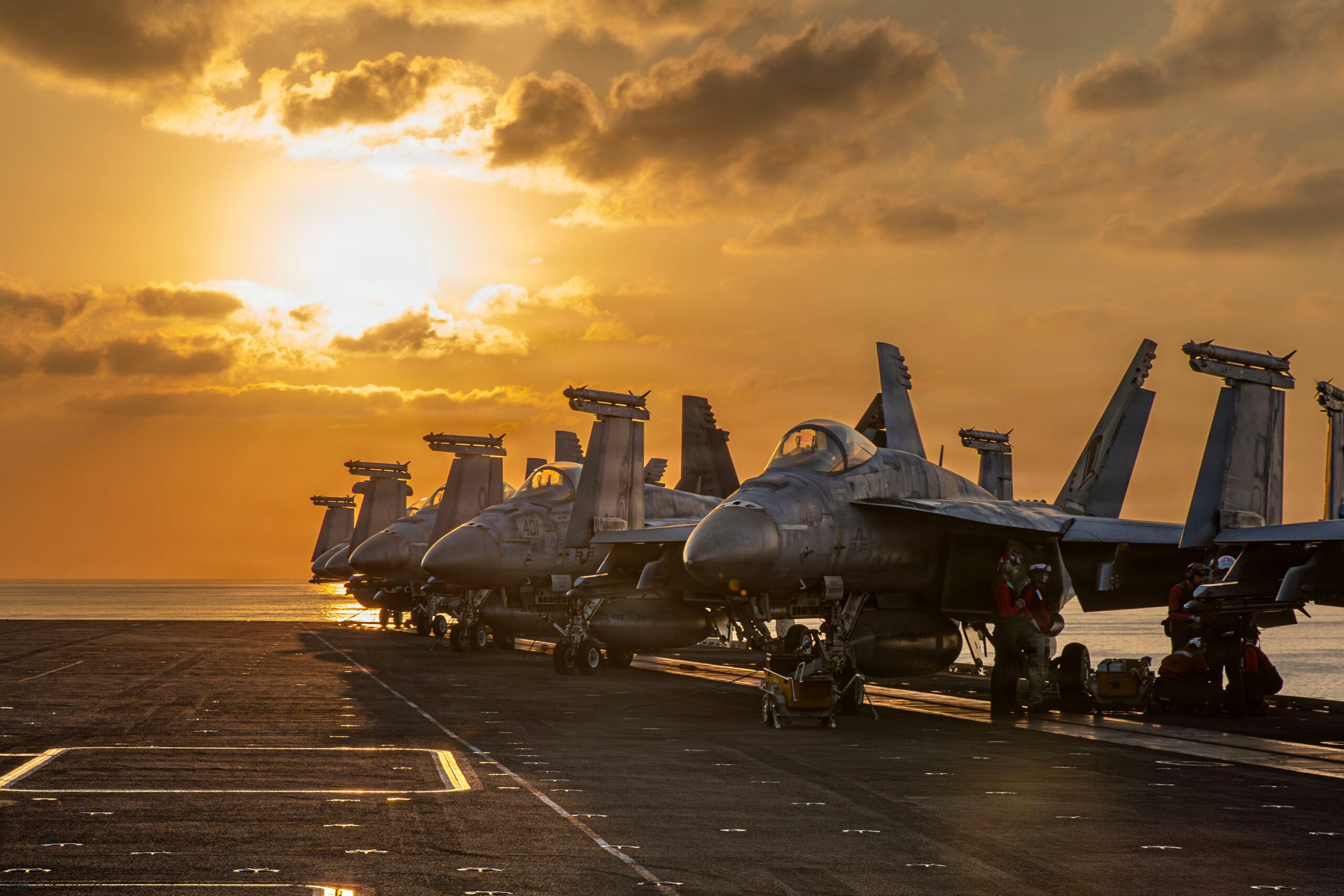
Also prompting the reconciliation is the rapid rise of tensions between the United States and its Middle Eastern allies and Iran and its proxies, particularly in Iraq and Yemen. Concerns about potential clashes have intensified surrounding the first anniversary of the drone strike that killed Iranian military leader Qassim Suleimani and Iraqi militia leader Abu Mahdi al-Muhandis and a spike in saber rattling in the last days of the Trump administration, with its efforts to lock in sanctions and discourage diplomatic initiatives with Tehran by the Biden administration. The United States recently bolstered its naval and other forces, particularly its refueling capability, in the waters near Iran, following a series of rocket attacks by Iran’s proxy militia groups on U.S. targets in Iraq. And, Iran again disrupted maritime security by seizing a South Korean oil tanker near the Strait of Hormuz.
Saudi Arabia and other Gulf Arab countries, therefore, have an interest in strengthening relations with Washington as tensions with Tehran rise and, of course, bolstering their own cooperation in the process. Given the U.S. insistence on the need to end the boycott, those two goals are virtually interchangeable. In addition, by reopening Saudi overflight routes for Qatar Airways, the agreement will deny Iran $100 million annually that Qatar has been compelled to pay Tehran for the right to use its airspace instead. And Doha will now be less constrained by the need to maintain Iranian goodwill, given that its air access will no longer be dependent on Iran, though the two countries still share a gas field, which provides substantial income for Qatar.
Finally, for Saudi Arabia, the boycott had long ago begun to reach the point of diminishing returns. Whatever Riyadh might have been seeking to gain through the boycott had already been accomplished within its first year or could not be achieved by the boycott at all. Any point Saudi Arabia was trying to make either had been made or was not going to be made. Continuing the boycott was probably more a matter of disinterest by Saudi Arabia than a pointed, purposive policy.
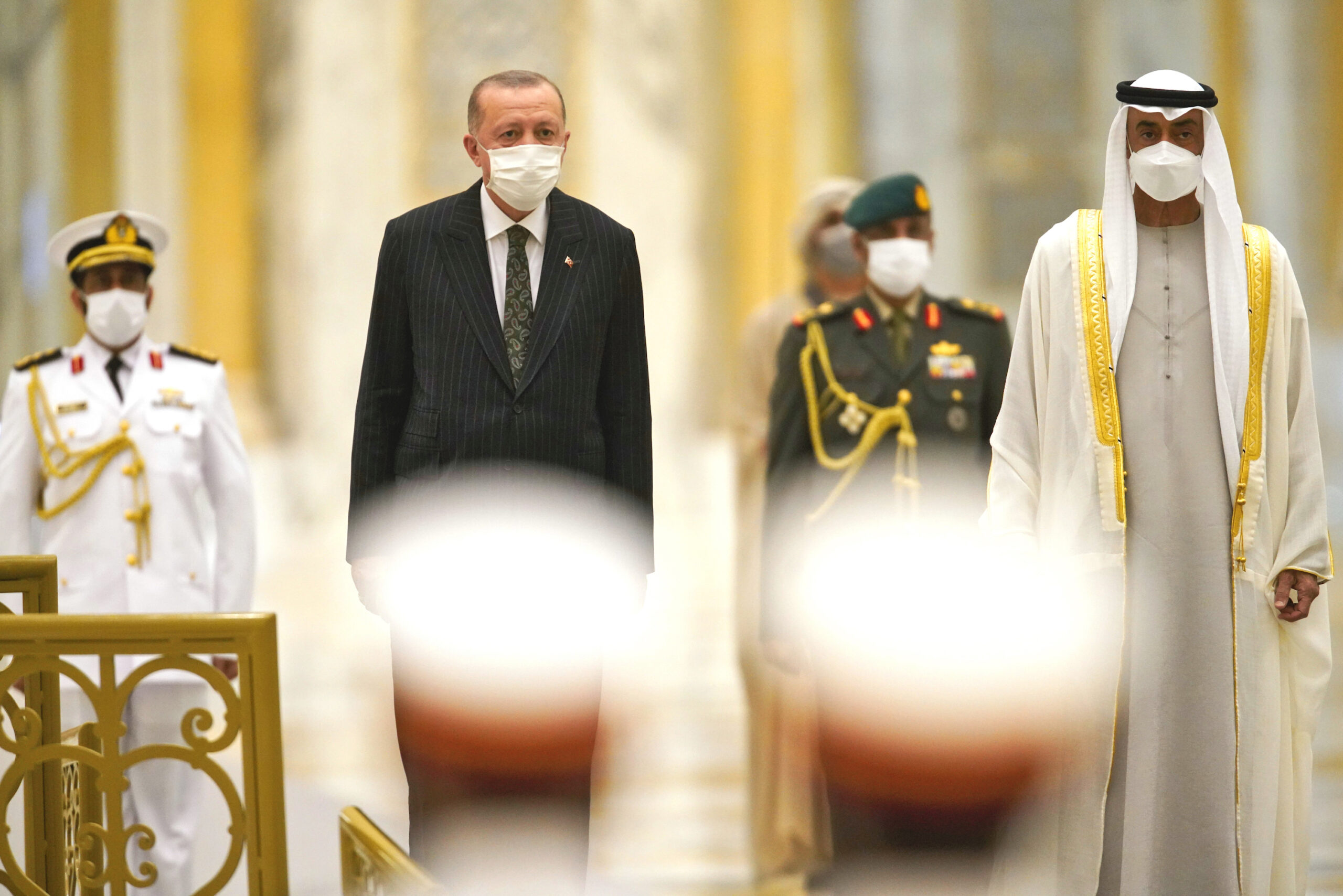
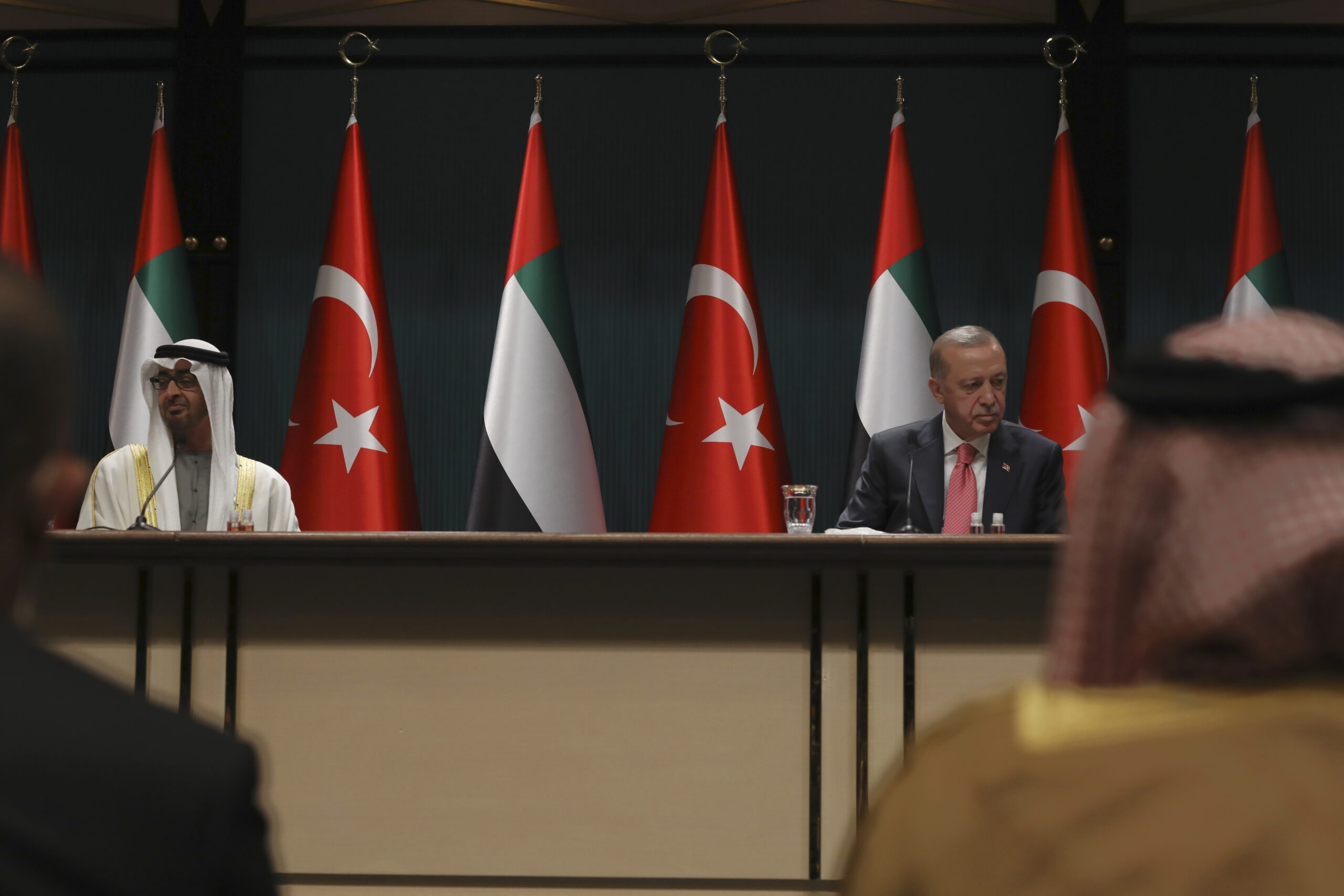
For the UAE, by contrast, the deep-seated ideological conflict with Qatar (and its senior partner Turkey) over the legitimacy and viability of Sunni Islamist groups, such as the Muslim Brotherhood, in contemporary Arab politics remains entirely unresolved. Left on its own, the UAE probably would have continued the boycott until Qatar agreed to truly reshape its foreign policy with regard to Islamism. But with Saudi Arabia poised to make an agreement with Qatar, the UAE seemingly decided it was preferable to maintain a unified position with Saudi Arabia than persist with the boycott, which is primarily based on the closure of the Qatari border with Saudi Arabia and Saudi airspace. Nonetheless, it may be telling that the UAE is being represented by Mohammed bin Rashid al-Maktoum, the Emirati vice president and ruler of Dubai, rather than the crown prince of Abu Dhabi and de facto ruler of the UAE, Mohammed bin Zayed al-Nahyan, which may be seen as expressing Emirati reservations about the scope and prospects of the rapprochement.
Even though Saudi Arabia has pressed ahead despite UAE reservations, Emirati concerns that the underlying causes of this and the 2013-14 confrontation remain effectively unresolved appear well founded. Both confrontations occurred because aspects of Qatari foreign policy – its support for Islamist and other populist Arab political movements, close alliance with Turkey, increased sympathy for Iran (some of which can be traced to the effects of the boycott itself), and support for opposition groups and figures from, and within, neighboring Gulf Arab countries – are seen as incompatible with the essential national interests of Qatar’s larger neighbors.
There will no doubt be some changes to Qatari policies in response to the end of the boycott, but they will certainly fall far short of the initial 13 demands. And they will probably fall short of expectations embodied in the six-point plan, which was essentially a repetition of the 2014 agreement, that was issued a few weeks after the 13-point declaration. Not only will Al Jazeera not be shuttered; how much, if any, of its editorial tone will change is entirely unclear. There is no reason to think Doha will distance itself from Ankara. And Saudi Arabia, in particular, will be paying close attention to Qatar’s relationship with opposition figures and groups from Saudi Arabia and other Gulf and Arab countries.
For Qatar, these policies are an expression of its sovereign independence. And surviving the boycott, with a little help from its friends, and compelling its larger neighbors to come to what look like quite favorable terms from a Qatari perspective, could fuel a misguided sense of vindication. In turn, that could lead to a continued refusal to take the interests of its larger neighbors into consideration, relying on its partnership with Washington and close alliance with Turkey instead. If so, there is a strong potential for a repetition of the experience following the 2014 agreement, when Saudi Arabia and the UAE believed Qatar acted very cautiously for several months but within a year again seemed to be undermining their interests on a range of fronts.
The 2014 experience was a key factor in generating the anger that led to the 2017 boycott. But this dispute produced unprecedented levels of bitterness, feeling very personal to many citizens and leaving deep scars of anger, betrayal, and alienation that will not be easily overcome. This agreement, too, could collapse under the weight of the continued disagreements between Qatar and its larger neighbors, and another Gulf Arab confrontation could emerge before too long. That wouldn’t be in anybody’s interests, however, so the new agreement is a welcome opportunity to resolve these disagreements with less public rancor and strategic disruption.
The views represented herein are the author's or speaker's own and do not necessarily reflect the views of AGSI, its staff, or its board of directors.
The recent thaw in relations seems to be a positive step for these former regional adversaries toward deepening ties, but unresolved political conflicts may continue to fester.
The Trump administration has positioned the United States at a crossroads between a new regime of containment against Iran or a historic drawdown of U.S. influence in the Gulf and broader Middle East.
Riyadh and Abu Dhabi urged President Trump not to attack Iran, but now that the war is into its second month, leaving the current situation in place would be an unthinkable fiasco for them.
Though they were unsuccessful in preventing the current conflict, and, as expected, have been dragged into the U.S.-Israeli confrontation with Iran, Gulf Arab countries remain crucial to hopes for limiting the war and bringing it to a quick resolution.
After decades of tolerating Hezbollah’s warmaking independence, the current crisis has compelled Lebanese leaders to ban its military activities; this project will do much to determine the reach Iran can maintain in the Arab world.