Presidential Election in Iran: Curb Your Enthusiasm
The Guardian Council has again presented the Iranian public with presidential candidates who lack a political program, a social base, and the ability to mobilize voters.
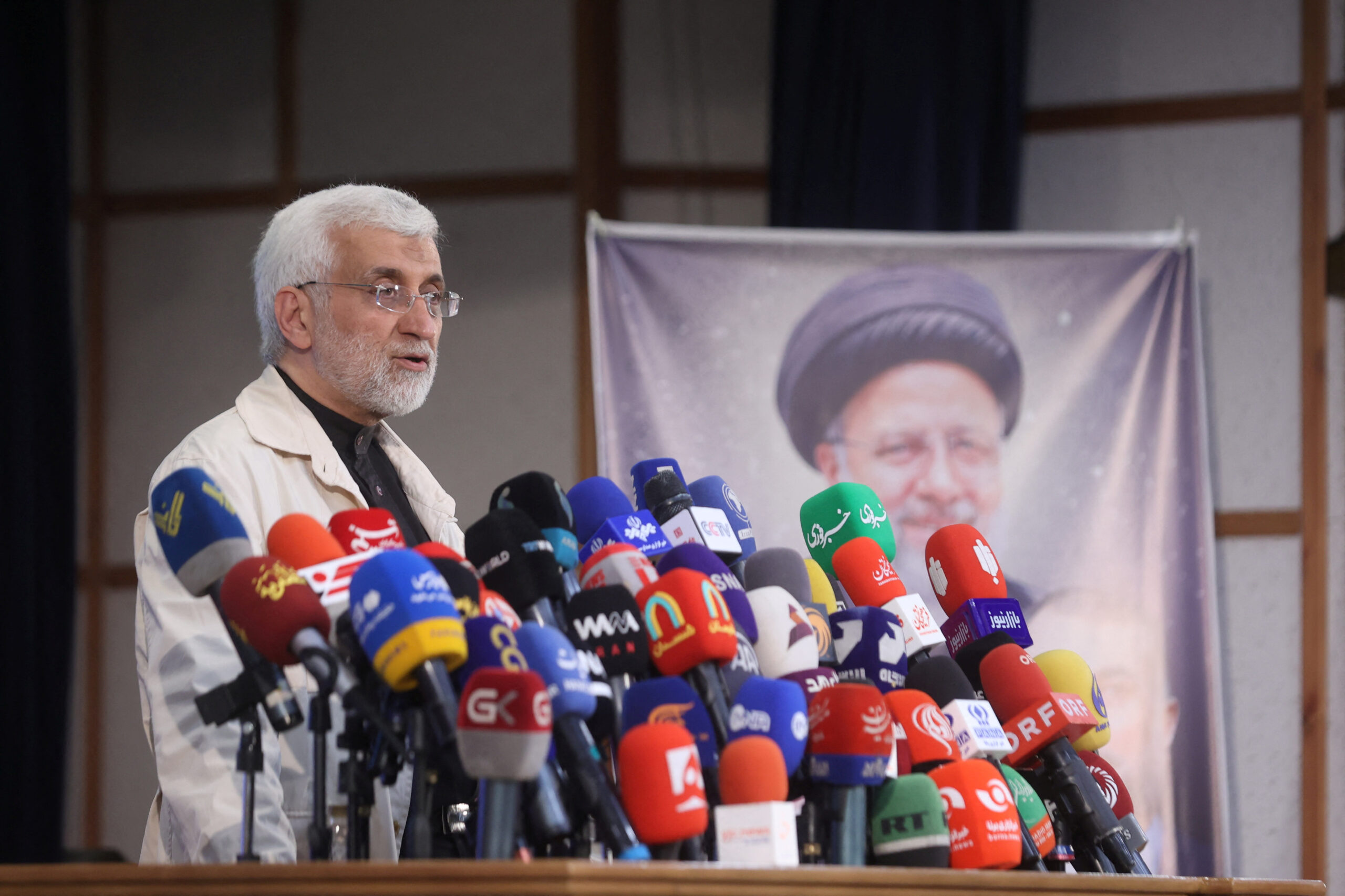
'Saeed Jalili, a former chief nuclear negotiator, speaks at a press conference after registering as a candidate for Iran’s presidential election, in Tehran, Iran, May 30. (Majid Asgaripour/WANA)'
The Islamic Republic of Iran’s candidate-vetting Guardian Council has done it again: It has presented the Iranian public with presidential candidates who lack a political program, a social base, and the ability to mobilize voters. This strategy aims to repress voter participation in the election and thereby improve the odds of the election of Supreme Leader Ayatollah Ali Khamenei’s preferred candidate, Saeed Jalili. Jalili, like late former President Ebrahim Raisi, would be likely to follow Khamenei’s orders and could be scapegoated for the regime’s deficiencies. However, Parliamentary Speaker Mohammad-Bagher Qalibaf is expected to put up a fight, much to Khamenei’s displeasure. Meanwhile, the question of succession after Khamenei remains unresolved.
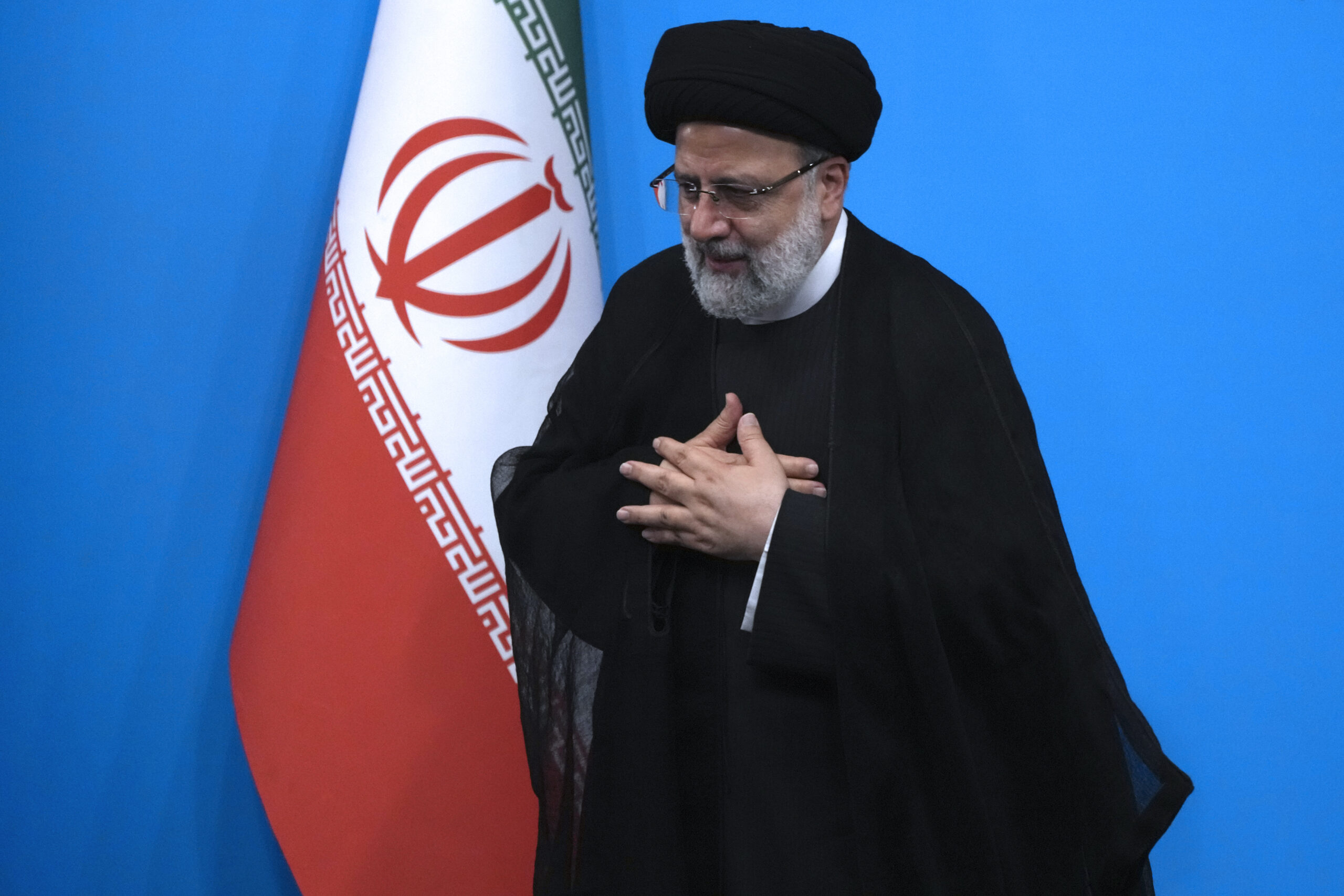
After years of difficult presidents, Khamenei had finally found an obedient bureaucrat in Ebrahim Raisi only for his presidency to be cut short by a helicopter accident in May. None of Raisi’s predecessors had obeyed Khamenei as faithfully: Akbar Hashemi Rafsanjani looked down on Khamenei, and pursued an independent policy with little regard to the opinions of his old seminary comrade, whom he lent money to pay for a public bathhouse. Reformist Mohammad Khatami outshone the supreme leader in popularity. Mahmoud Ahmadinejad mobilized the poor against rich clerics and claimed a direct relationship with the Mahdi, undermining the role of Shia clerics, in particular Khamenei. Hassan Rouhani’s subtle machinations against Khamenei were no secret, leaving the supreme leader yearning for an obedient servant, a role Raisi briefly fulfilled until crashing in the mountains of Iran’s Azerbaijan province.
Now, the Guardian Council is engineering another presidential election, hoping for a new Raisi to prevail. Among the 80 people, including four women, who filed candidacies for president, the Guardian Council qualified only six candidates.
Jalili, who lost a leg in the 1980-88 war against Iraq, has been blamed for international sanctions being imposed on Iran during his tenure as nuclear negotiator due to his inflexibility in nuclear talks. If voters boycott the elections, feeling they have no real choice, as the case was in the 2021 presidential election in which only 48% of the electorate cast their votes, Jalili is likely to be elected with 30% of the vote. These voters would be die-hard regime supporters who vote for anyone perceived as Khamenei’s favorite, be it Raisi, Jalili, or anyone else. This is Khamenei’s ideal scenario.
However, Jalili faces competition from Qalibaf, an Islamic Revolutionary Guard Corps veteran and political pragmatist. He is a bon vivant constantly involved in corruption cases and appeals to a public that appreciates the pursuit of earthly pleasures over revolutionary ideology. The Guardian Council has also allowed the reformist and respected surgeon Masoud Pezeshkian to run. An ethnic Azeri who served capably in Khatami’s Cabinet, Pezeshkian is likely to split Qalibaf’s votes, particularly among the Azeris.
The remaining candidates, Tehran Mayor Alireza Zakani, parliamentarian Amir-Hossein Ghazizadeh Hashemi, and cleric and former Intelligence Ministry External Espionage Director Mostafa Pourmohammadi, are likely to withdraw in favor of Jalili.
The Guardian Council’s disqualification of prominent candidates is telling: Ahmadinejad was disqualified as expected as was former Vice President Eshaq Jahangiri, representing the Rafsanjani/Rouhani technocratic elites. Ali Larijani, seeing his family’s political fortunes decline, tried to run but was disqualified again, demonstrating that obedience alone does not secure a place at Khamenei’s court. The mysterious IRGC officer Vahid Haghanian, often seen next to Khamenei in photos, was also disqualified.
What may be expected from a Jalili or, less likely, Qalibaf presidency?
Jalili would likely continue Raisi’s policies but engage more in foreign policy to the regime’s detriment. As in the past, his insecurity is likely to force him to take inflexible positions in negotiations, avoiding concessions without Khamenei’s written authorization, which he is unlikely to receive. Khamenei, after all, has a habit of blaming presidents for his own miscalculations. Domestically, Jalili may increase friction between the state and society by empowering repressive elements like the morality police.
Qalibaf, more self-confident, could potentially bring authority to the presidency. He might try to revive a nuclear agreement with the United States, provided President Joseph R. Biden Jr. is reelected. Skilled in the art of greasing palms, Qalibaf could secure IRGC support for negotiations and persuade the Supreme National Security Council to follow his line, potentially presenting Khamenei with a fait accompli. Khamenei, not wanting to be blamed for Iran’s diplomatic isolation and economic hardships, would likely have to cooperate with Qalibaf, which is why the supreme leader would indirectly support Jalili’s campaign.
Khamenei’s presidential headache, however, is minor compared to the issue of succession for the role of supreme leader. Raisi was the IRGC’s and possibly Khamenei’s preferred candidate. His presidency was meant to familiarize him with government work and at the same time familiarize the public with him. Among the six presidential candidates, only one cleric, Pourmohammadi, could potentially succeed Khamenei, but he is unlikely to win. Khamenei must now find a suitable successor and gradually make him a public figure worthy of leading the Islamic Republic.
The views represented herein are the author's or speaker's own and do not necessarily reflect the views of AGSI, its staff, or its board of directors.
Regardless of who becomes Iran’s next president or who succeeds Khamenei as head of state, there is little prospect for significant change in Iran's foreign and security policy.
Does a voter boycott matter in a country that is not a democracy, and is there a correlation between lack of electoral participation and political violence?
Forty-five years after the revolution and establishment of the Islamic Republic, the regime in Tehran is not only widely distrusted but has also sown the seeds of distrust among Iranians.
After U.S.-Israeli strikes killed Supreme Leader Ayatollah Ali Khamenei on February 28, Iran’s collective leadership has concluded that the best defense is a good offense.
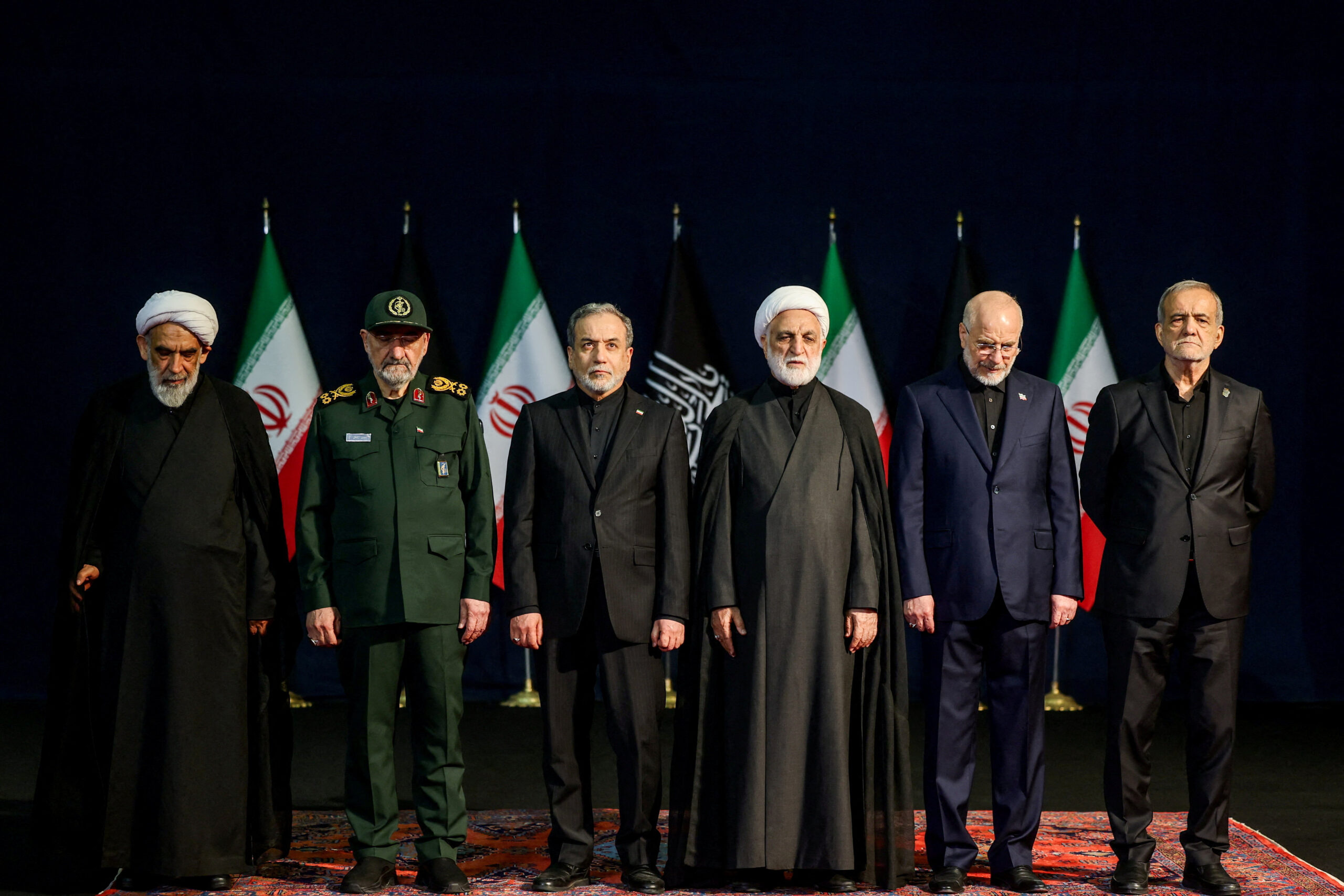
Wartime pressure has temporarily aligned the leadership’s overriding interest in regime survival, even as its members continue to differ over the costs, methods, and ultimate objectives of the war.
While there is historical precedent for collective leadership in Iran, today’s leadership includes representatives of the IRGC and regular military – a reflection of the IRGC’s expanding role and the necessities of governing under wartime conditions.