Protests are likely to continue flaring up in Iran as a function of the regime’s attempt at modernizing the country while denying personal and political freedoms to the children of modernization.
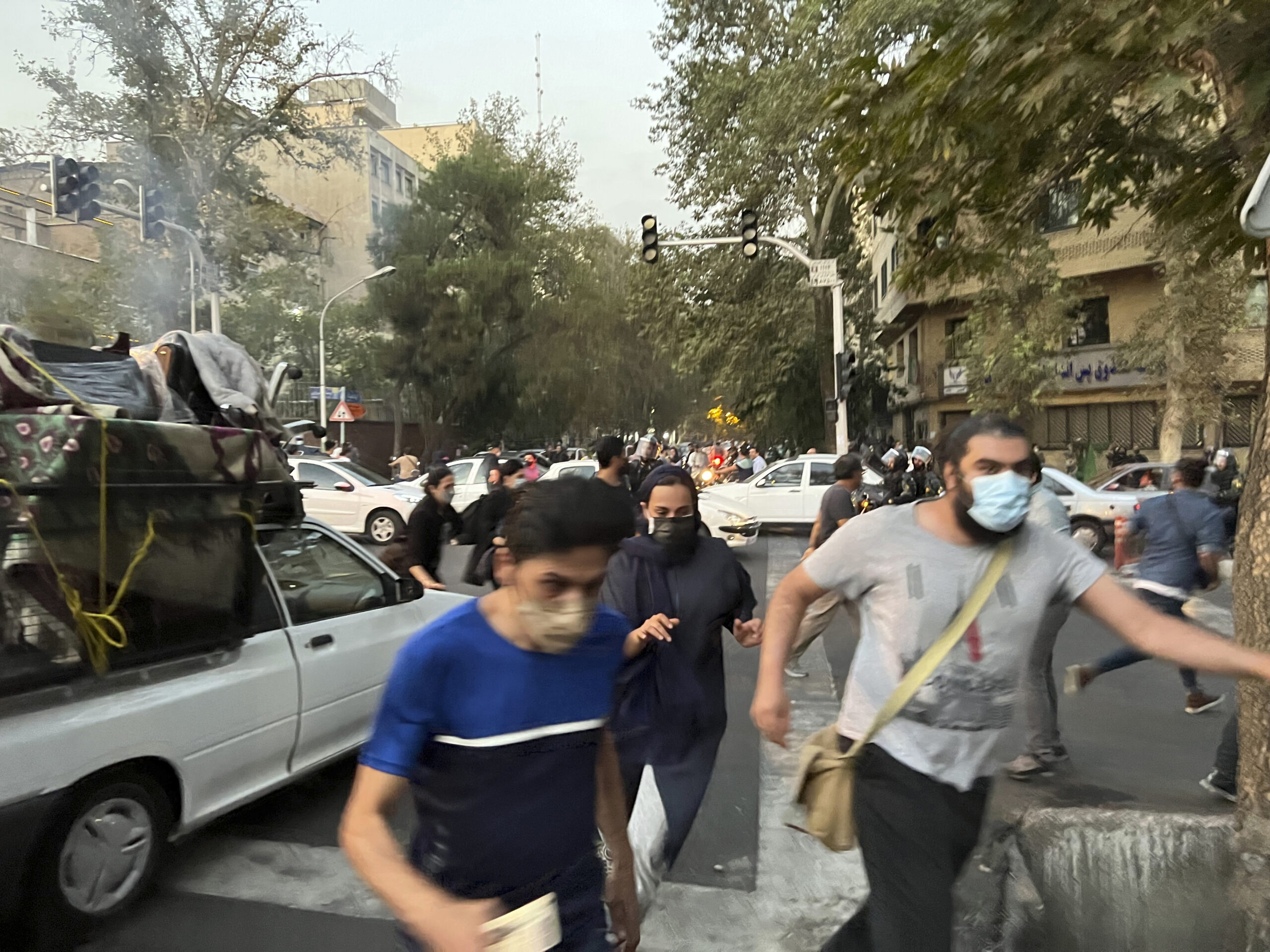
People run away from anti-riot police during a protest over the death of a young woman, Mahsa Amini, who had been detained for violating the country's conservative dress code, in downtown Tehran, Iran, September 10. (AP Photo)
Since the suspicious death of 22-year-old Mahsa Amini in custody of the morality police on September 16, Iran has experienced a new round of countrywide anti-government protests and civil unrest. As with previous protests, the regime appears to have contained the unrest, and there is no immediate prospect for collapse of the Islamic Republic. However, the protests are likely to flare up again as a function of the regime’s attempt at modernizing the country while denying personal and political freedoms to the children of modernization: the educated urban middle class. Still worse, from the regime’s perspective, the underprivileged may join the middle class, since they no longer are as socially conservative as in the past and because of their economic grievances, which they share with the middle class. The regime has hitherto managed to play the middle class and the underprivileged against each other and suppress both. Should the middle class and the underprivileged join forces in the future, they will constitute a formidable challenge to a regime that provides neither bread nor freedom.
Contrary to the core belief of Iran’s secular opposition, the Islamic Republic is a modernizing force not dissimilar to the regime of Shah Mohammad Reza Pahlavi, which collapsed in the face of the revolution in 1979. The case of Amini provides a lesson regarding Iran’s modernization under the Islamic Republic and the regime’s woes with the result of modernization.
A native of socioeconomically underdeveloped Saqqez in Iran’s Kurdistan province, Amini completed primary and secondary education, passed the university entrance exam, and was admitted to the Orumiyeh branch of the Islamic Azad University, established in 1982. Had she survived to attend class, 60% of her classmates would have been female. She would have downloaded some of the curriculum from the internet, and as most other city dwellers in Iran, kept in touch with friends by mobile phone and social media.
Yet the regime, which provides Iranian women with access to primary, secondary, and higher education, along with access to the internet, restricted as it may be, simultaneously limits their personal freedoms by controlling their dress by enforcing a hijab mandate, and even lectures them on how many children to give birth to, disregarding the suffering of the middle class under the sanctions regime. The regime also denies political freedoms to women, who according to the Guardian Council’s interpretation of the constitution, cannot run for president, and whose range of political choice at elections is limited to candidates vetted by the Guardian Council – a privation they share with Iranian men.
Iran’s underprivileged are not faring much better under the Islamic Republic. While Grand Ayatollah Ruhollah Khomeini, founder of the Islamic Republic, praised the socially conservative and economically underprivileged “shanty-town dwellers” as a pillar of the revolution, the Islamic Republic increasingly perceives the underprivileged as irreligious and as a security threat.
According to a recent report published by the Headquarters for the Promotion of Virtue and the Prevention of Vice, societal values are changing fast across all income strata in Iran, and the societal divide on social values appears to be generational rather than based on social class. While 35.8% of respondents to the poll believe women can be good Muslims and not wear a hijab, 48.2% of respondents under 30 years old hold that belief. Additionally, 50.3% of those same young respondents oppose compulsory hijab, and 46.6% of them agree that women have the right not to abide by the hijab rules. A separate poll conducted by the Islamic Republic of Iran Broadcasting quoted by the report shows a general decrease in public support for the hijab over the last 10 years. In other words, younger underprivileged Iranians may no longer show religious zeal and identify more with middle-class women who haven’t fully covered their hair with a hijab rather than seeing them as decadent. This cross-social-class trend, evident in a short-hand way through attitudes toward the hijab, opens the path for underprivileged youth potentially to join the struggle of the middle class for personal freedoms.
The regime also perceives economic privations of the underprivileged as a threat. Brigadier General Hossein Nejat, who serves as second in command of the Sarallah headquarters of the Islamic Revolutionary Guard Corps, which is in charge of the security of Tehran, discussing anti-regime protests said on December 26, 2019: “The West’s regime change model has changed in the course of the past forty years … The new model is social movements based on the underprivileged, illiterate suburb dwellers,” whose minds were “polluted in cyberspace.”
With the impoverished middle class, thanks to the U.S.-imposed sanctions regime, increasingly understanding the privations of the underprivileged, and the underprivileged less socially conservative and more tolerant of middle-class women’s struggle for personal freedoms, there is some prospect for the two classes joining forces to challenge the Islamic Republic. This has yet to happen, but the prospects are bleak for a regime that provides neither bread nor freedom.
The views represented herein are the author's or speaker's own and do not necessarily reflect the views of AGSI, its staff, or its board of directors.
Are domestic protests over economic conditions likely to increase Iran’s willingness to come to a final agreement with the United States to restore the JCPOA?
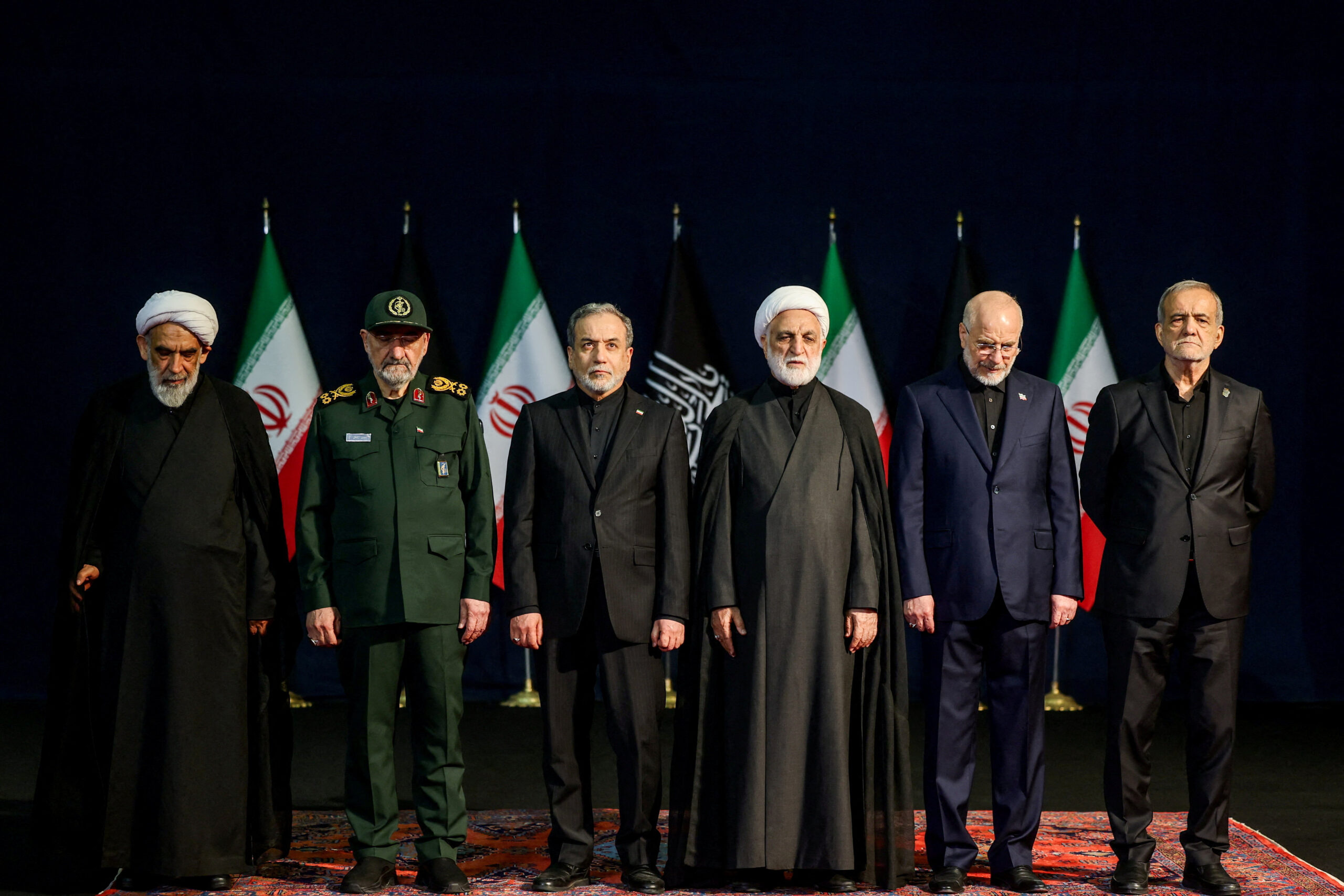
After U.S.-Israeli strikes killed Supreme Leader Ayatollah Ali Khamenei on February 28, Iran’s collective leadership has concluded that the best defense is a good offense.
Wartime pressure has temporarily aligned the leadership’s overriding interest in regime survival, even as its members continue to differ over the costs, methods, and ultimate objectives of the war.
While there is historical precedent for collective leadership in Iran, today’s leadership includes representatives of the IRGC and regular military – a reflection of the IRGC’s expanding role and the necessities of governing under wartime conditions.