Does a voter boycott matter in a country that is not a democracy, and is there a correlation between lack of electoral participation and political violence?
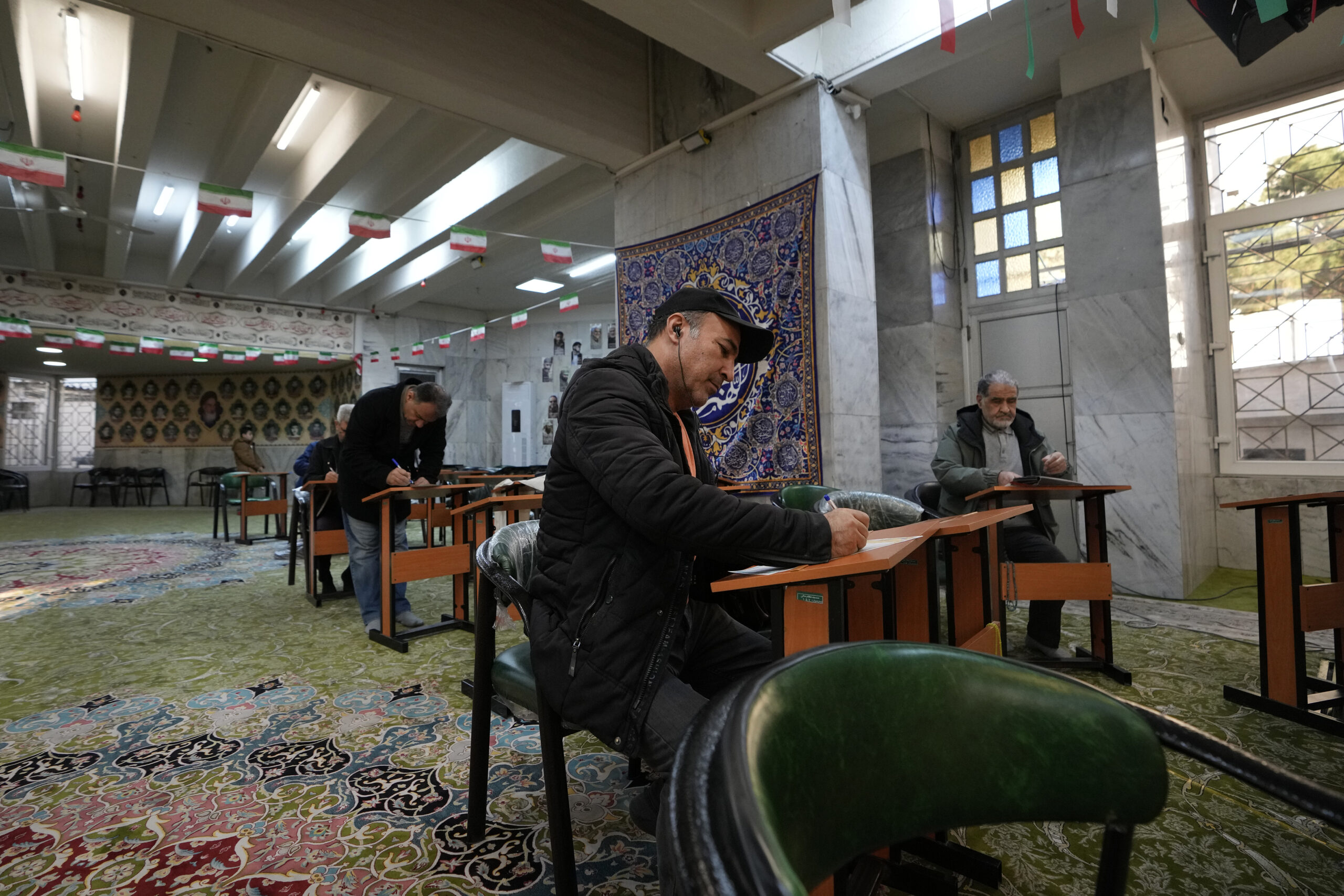
Voters fill out their ballots during the parliamentary and Assembly of Experts elections at a polling station in Tehran, Iran, March 1. (AP Photo/Vahid Salemi)
In the aftermath of the March 1 elections for the Parliament and Assembly of Experts, the Iranian government bureaucracy and semiofficial news agencies are gradually and reluctantly acknowledging the troubling news: The elections recorded the lowest voter turnout since the 1979 revolution and the establishment of the Islamic Republic. This outcome is an apparent embarrassment for a political system that has consistently argued that the act of voting, regardless of the candidate, signifies the Iranian public’s renewed allegiance to the regime and Supreme Leader Ayatollah Ali Khamenei. However, beyond the embarrassment, does a voter boycott matter in a country that is not a democracy? Looking at electoral data along with a provincial breakdown of fatalities during Iran’s 2022-23 protests suggests there may be repercussions of Iranian voters abstaining from the ballot.
Since its inception, the Islamic Republic has derived its legitimacy from three main sources: religion, elections, and performance, particularly in its role as a provider of services and resources. Over the years, the strength of all three sources has declined, and the results of the latest elections follow the same trend: a diminishing popular legitimacy.
On March 4, Interior Minister Ahmad Vahidi, while praising “the glorious vote,” admitted that the voter turnout was 41%. Vahidi further disclosed that 8% of the cast votes were either blank, illegible, or “bearing the name of an individual not on the ballot,” and thus voided. If Hamid Reza Taraqi, a well-connected former parliamentarian, is to be believed, that individual is former President Mahmoud Ahmadinejad, who allegedly received 2.7 million votes. Vahidi remained silent on the subject of voter turnout in the capital Tehran, and the Interior Ministry’s official web portal also has yet to provide detailed information about electoral participation in the provinces.
The official Islamic Republic News Agency confirmed the 41% countrywide participation rate, but the news agency’s numbers from the voter turnout in Iran’s 31 provinces don’t add up. In line with Vahidi, IRNA has not provided information about the voter turnout in Tehran. However, even in the unlikely case that the voter turnout in Tehran was 0%, the countrywide voter turnout would have been 44.89%, not 41%. If IRNA’s count excluded Tehran province altogether, the average countrywide voter turnout would have been 46.38%. These numbers simply do not add up.
Despite the inexplicable statistics, according to the Islamic Republic’s official figures, participation in parliamentary elections in Iran has been declining since 2016. A recent survey by the Ministry of Culture and Islamic Guidance revealed that 63.4% of respondents reported having “very limited” or “limited” trust in the Parliament. This figure aligns with the 41% countrywide participation rate. As for the causes of distrust, one need not look further than the Guardian Council’s filtering of candidates, which leaves voters with no real choice.
Voter Turnout in Iranian Parliamentary Elections, 1980-2024
A review of the voter turnout in individual provinces shows a remarkable uniformity in declining participation, but there are a few outliers: Excluding Tehran, whose results are not known yet, Kohgiluyeh and Boyer-Ahmad province marked the highest voter participation in the elections with 64.27%, followed by South Khorasan province with 63.8%. These two provinces also happen to be the second- and third-least populous provinces, which suggests that the smaller the population of a province, the higher voter turnout. In the other end of the spectrum, excluding Tehran, Alborz province, with a total population of 2.3 million, had the lowest voter turnout in the country with just 28.4%, followed by Kurdistan province with a population of 1.6 million and 30.54% voter turnout.
Considering electoral data along with a provincial breakdown of fatalities during Iran’s 2022-23 protests provides suggestive evidence into the costs incurred by the regime for alienating the electorate.
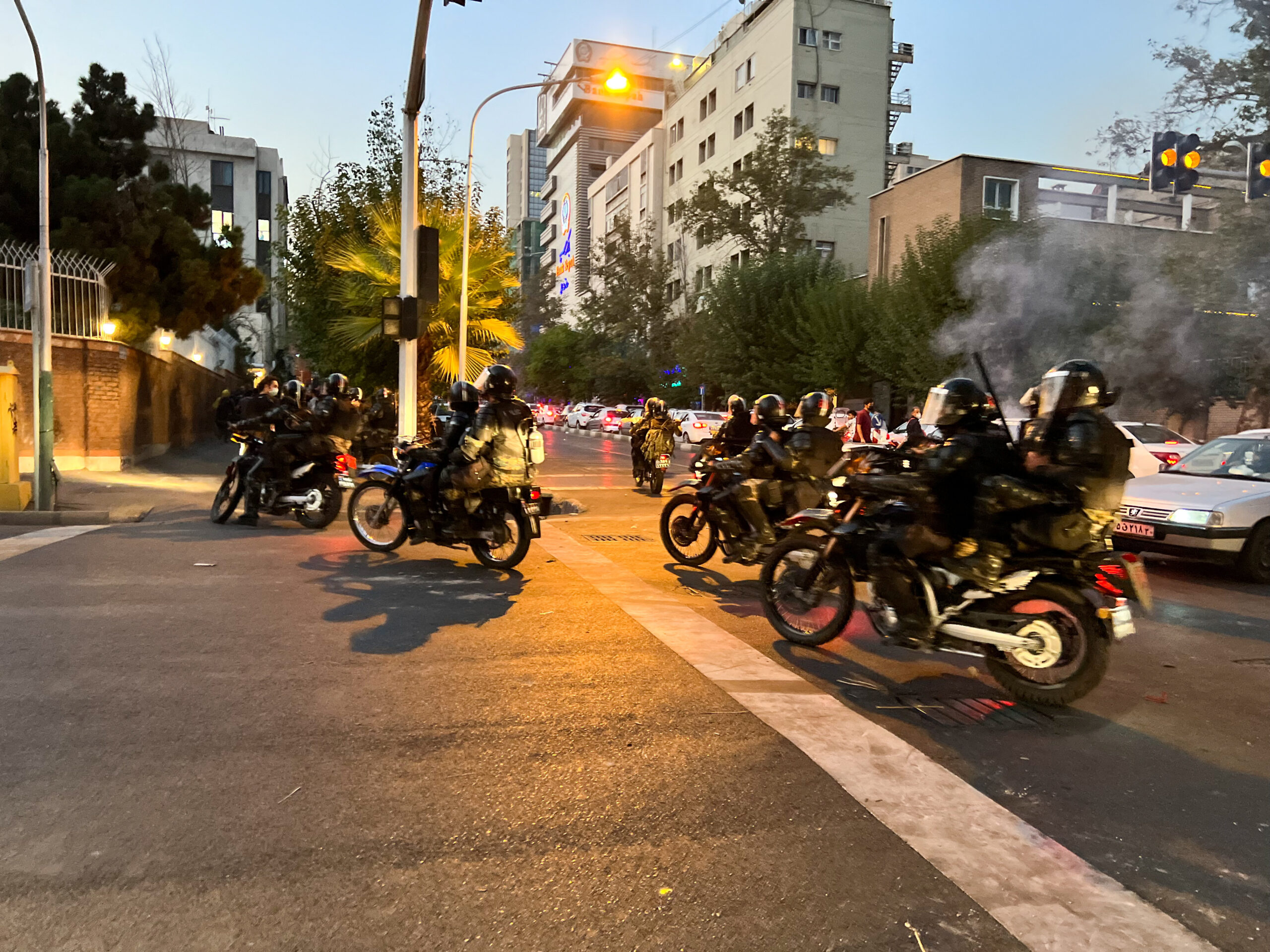
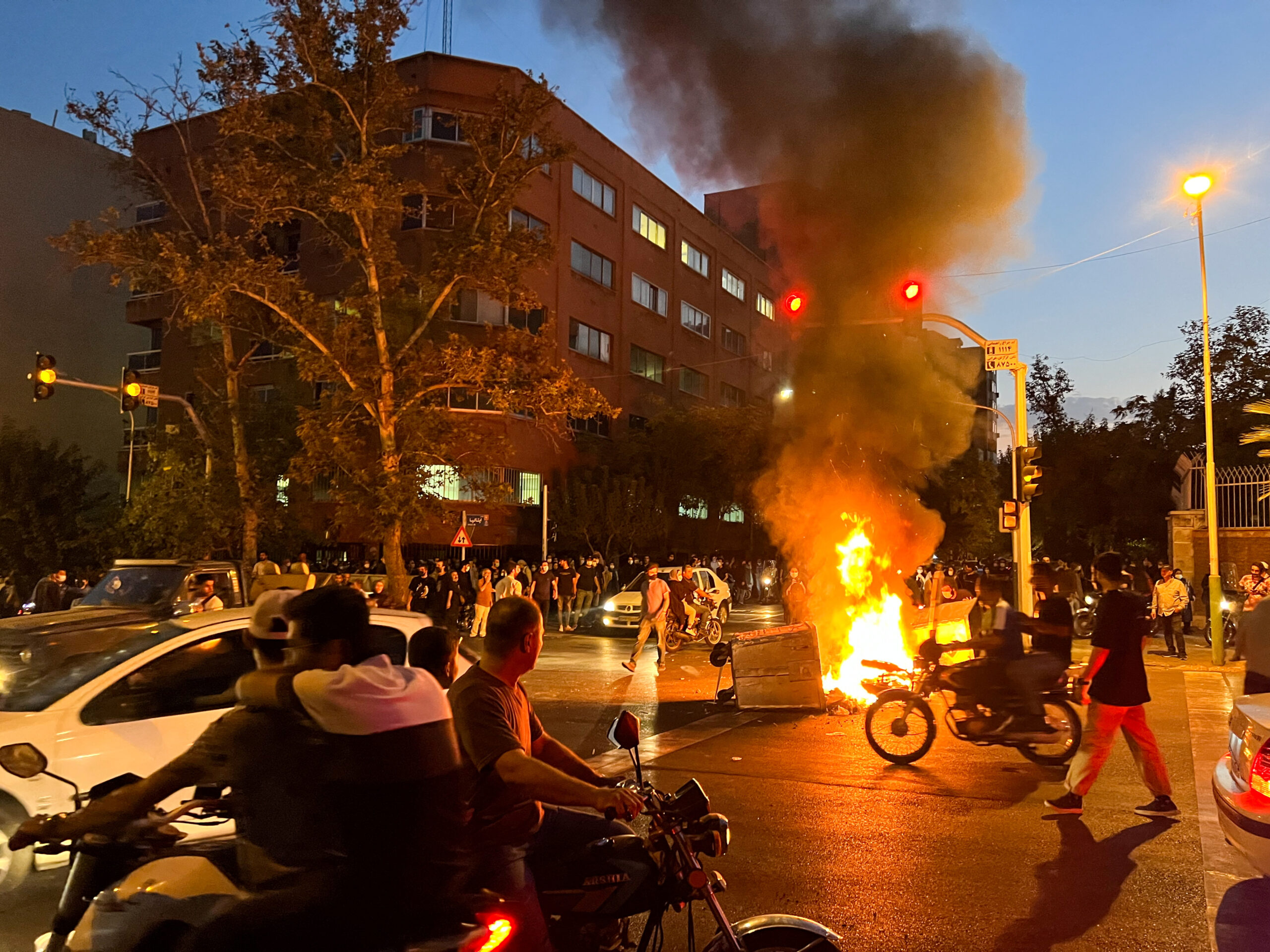
The 2022-23 protests, with 592 protesters and 73 government personnel killed, marked the highest number of fatalities in major protests in Iran since June 1981, exceeding the total fatalities in all previous protests combined. The lethal violence was concentrated in specific provinces: 154 protesters lost their lives in Iran’s Kurdistan province and Kurdish cities in West Azerbaijan and Kermanshah provinces. Additionally, 131 protesters were killed in Sistan and Baluchistan province. Consequently, nearly half of protester fatalities (285) occurred among Iran’s Kurdish or Baluchi minorities. The armed forces also appear to have suffered disproportionately in these provinces, with 33, or 45%, of the government personnel killed losing their lives in these same provinces and cities.
Theoretically, Kurdish and Baluch voters ought to have stayed away from the ballot, but the numbers are inconclusive: While the 28.4% voter turnout in Kurdistan and 37.3% participation rate in Kermanshah provinces do indicate a correlation between political violence and a lack of political participation, in West Azerbaijan province, another region with a significant ethnically Kurdish population, the voter turnout was 46.3%, surpassing the national average. Similarly, Sistan va Baluchistan province, with a majority ethnic Baluch population, exhibited a slightly higher-than-average voter participation at 43%.
Although not evidence of the citizenry expressing its political demands through the barrel of a gun rather than the ballot, the results of the latest elections in Iran should serve as a warning to the Islamic Republic. Even in nondemocracies, elections and elected officials mediate between the state and society, shaping the social contract. By alienating voters through so-called election engineering, the regime risks further erosion in political participation.
The views represented herein are the author's or speaker's own and do not necessarily reflect the views of AGSI, its staff, or its board of directors.
The answer to this question can, in part, be found in the institutionalized nature of the Islamic Republic as well as the regime’s externalization of the crisis, ruthlessness, and pragmatism.
Forty-five years after the revolution and establishment of the Islamic Republic, the regime in Tehran is not only widely distrusted but has also sown the seeds of distrust among Iranians.
After U.S.-Israeli strikes killed Supreme Leader Ayatollah Ali Khamenei on February 28, Iran’s collective leadership has concluded that the best defense is a good offense.
Wartime pressure has temporarily aligned the leadership’s overriding interest in regime survival, even as its members continue to differ over the costs, methods, and ultimate objectives of the war.