The Saudi Fiscal Deficit in 2025 Was Larger Than Expected
The 2025 budget deficit was larger than expected. The 2026 deficit is also likely to exceed the budget target, but higher oil prices may help contain any overrun.

The Saudi Ministry of Finance has published updated fiscal numbers for 2025. The new data shows a considerably larger fiscal deficit than previously thought. The 2025 deficit is now pegged at 277 billion riyals ($74 billion; 6% of gross domestic product) compared to an estimate of 245 billion riyals ($65 billion; 5.3% of GDP) at the time of publication of the 2026 budget statement in December 2025. The 2025 deficit was initially estimated at 101 billion riyals ($27 billion; 2.3% of GDP) in the 2025 budget statement.
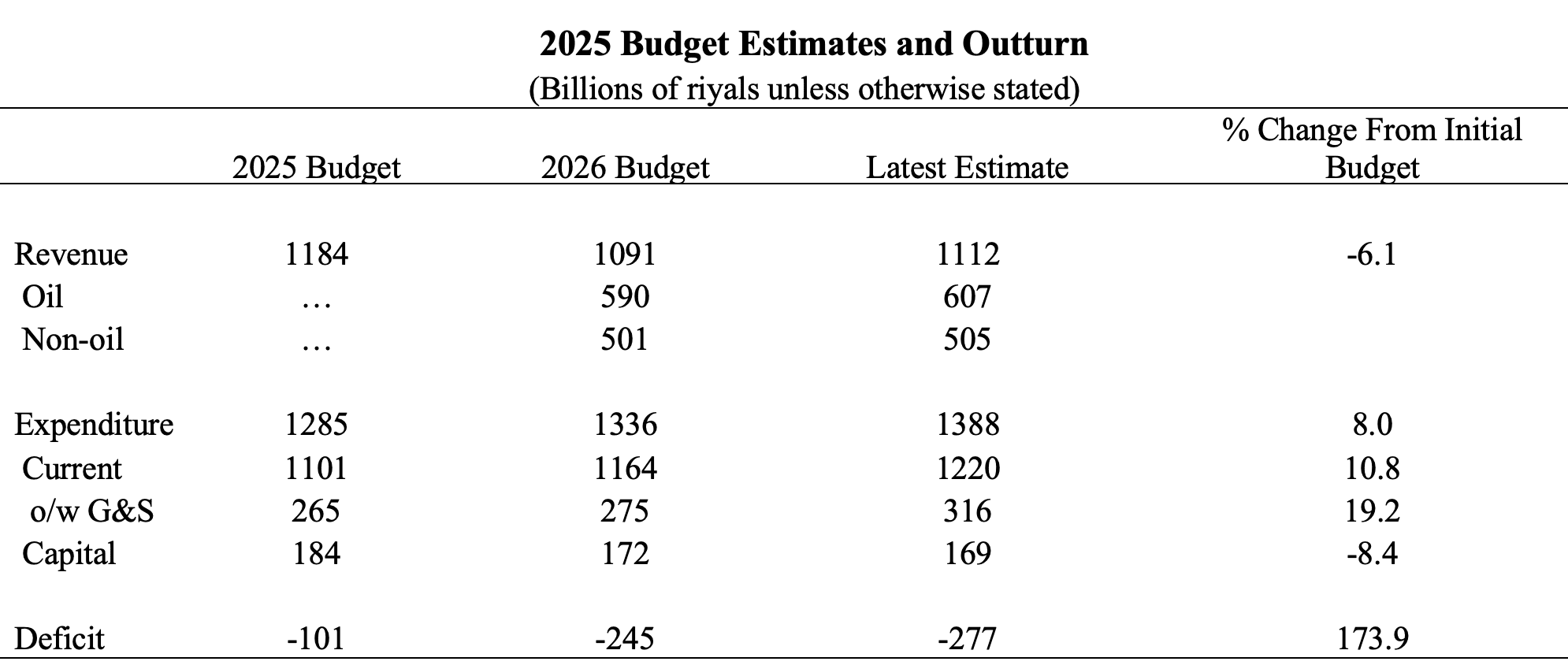
(Source: Ministry of Finance) Notes: No estimate for oil and non-oil revenue is given in the budget document. G&S is goods and services.
The increase in the estimated size of the 2025 deficit since December reflects much higher spending that more than offset higher oil revenue. The extra spending was almost entirely accounted for by the “goods and services” category. Unfortunately, the specifics of this spending and the reasons it was so substantially underestimated in the previous projections are not available.
Implications for 2026
The 2026 fiscal deficit is budgeted at 165 billion riyals ($44 billion; 3.3% of GDP). The lower deficit relative to 2025 is due to expectations of higher revenue and lower expenditure. The spending overrun in 2025 will make the 2026 target more difficult to achieve – a spending reduction of 5.4% relative to the revised 2025 outcome will now be needed. On revenue, oil prices have risen since the turn of the year with the ratcheting up of tensions between the United States and Iran. Brent crude is currently trading around $72 per barrel. While the government does not declare the oil price it assumes in the budget, it is estimated that the 2026 budget is based on an oil price of around $72/bbl. While considerable uncertainty surrounds the future direction of oil prices, the revenue projections in the budget will look quite reasonable if oil prices are sustained around current levels.
More broadly, the recent upward revision to 2025 expenditure highlights the difficulty the government has in containing spending close to budget levels. The spending overrun in 2025 was 8% and over the past four years it has averaged over 13%. This indicates that there is still considerable scope for strengthening expenditure planning and control systems as fiscal reforms move forward.
The views represented herein are the author's or speaker's own and do not necessarily reflect the views of AGSI, its staff, or its board of directors.
Related
Putting the 2026 Saudi Budget Under the Microscope
The Saudi government projects that the budget deficit will narrow during 2026-28, but this will depend on a rebound in oil prices and tight control of spending.
Saudi Economic Spotlight
Nov 19, 2025
The Saudi Trade and Investment Commitment to the United States in Perspective
The $1 trillion Saudi trade and investment commitment to the United States will be extremely difficult to achieve given the size of the Saudi economy and its current financial situation.
Saudi Economic Spotlight
Jul 1, 2025
The IMF Comments on the Saudi Economy and Policy Framework
The International Monetary Fund continues to endorse the direction of economic reform in Saudi Arabia but notes that risks from oil price uncertainty and strong credit growth will need to be carefully managed to keep the economy on a strong growth trajectory.
Putting the 2026 Saudi Budget Under the Microscope
The Saudi government projects that the budget deficit will narrow during 2026-28, but this will depend on a rebound in oil prices and tight control of spending.
Nov 19, 2025
The Saudi Trade and Investment Commitment to the United States in Perspective
The $1 trillion Saudi trade and investment commitment to the United States will be extremely difficult to achieve given the size of the Saudi economy and its current financial situation.
Jul 1, 2025
The IMF Comments on the Saudi Economy and Policy Framework
The International Monetary Fund continues to endorse the direction of economic reform in Saudi Arabia but notes that risks from oil price uncertainty and strong credit growth will need to be carefully managed to keep the economy on a strong growth trajectory.
Analysis
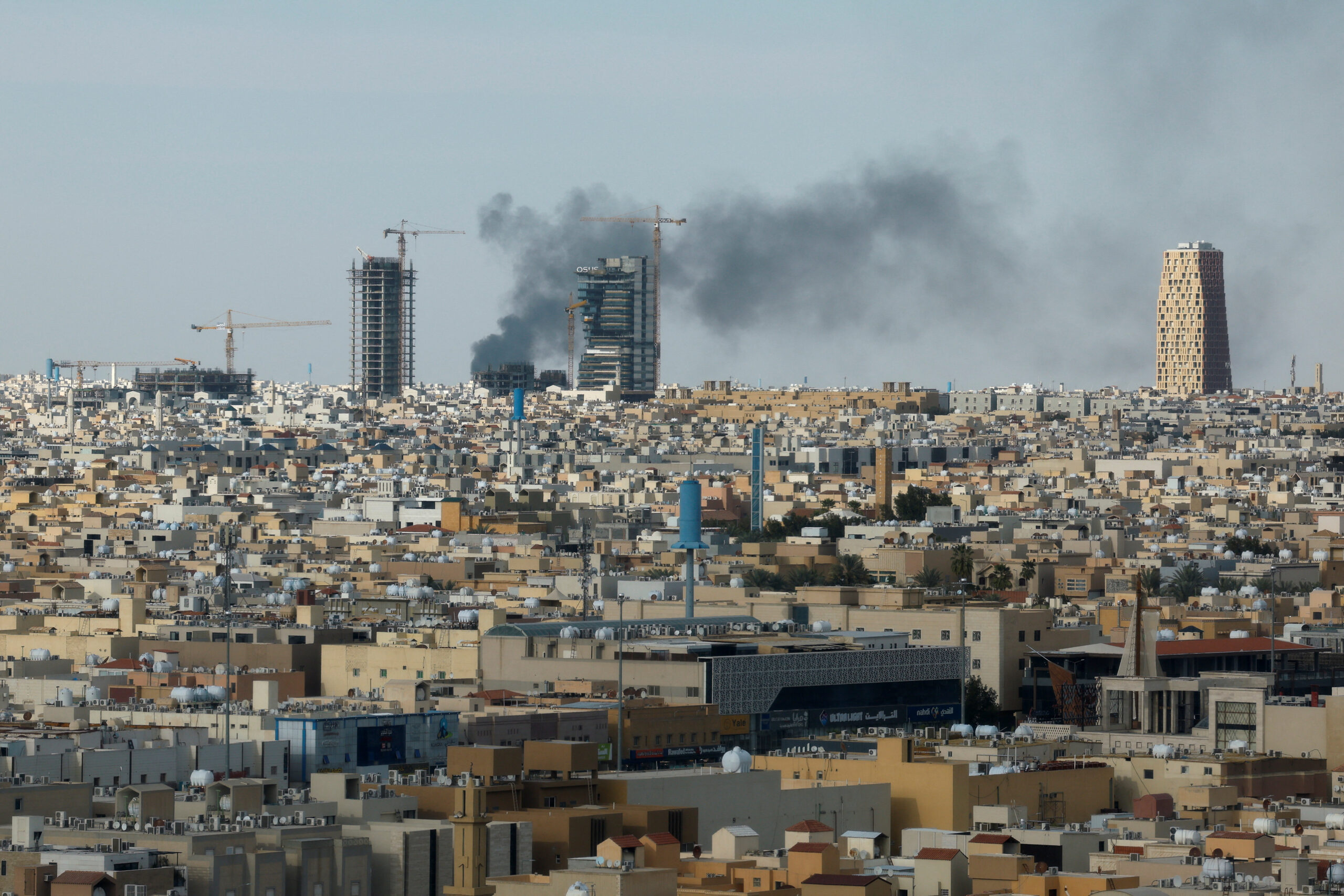
Iran War Hits Business Conditions in Saudi Arabia and the Gulf
March readings of the purchasing managers’ index showed a substantial deterioration in business conditions in Saudi Arabia and the rest of the Gulf.
Apr 2, 2026
Saudi Equities Outperform Global Markets
Saudi equity prices have risen since the start of the Iran conflict, outperforming many regional and global markets. Whether this continues will depend on how and when the conflict ends.

Not All Oil Is Created Equal
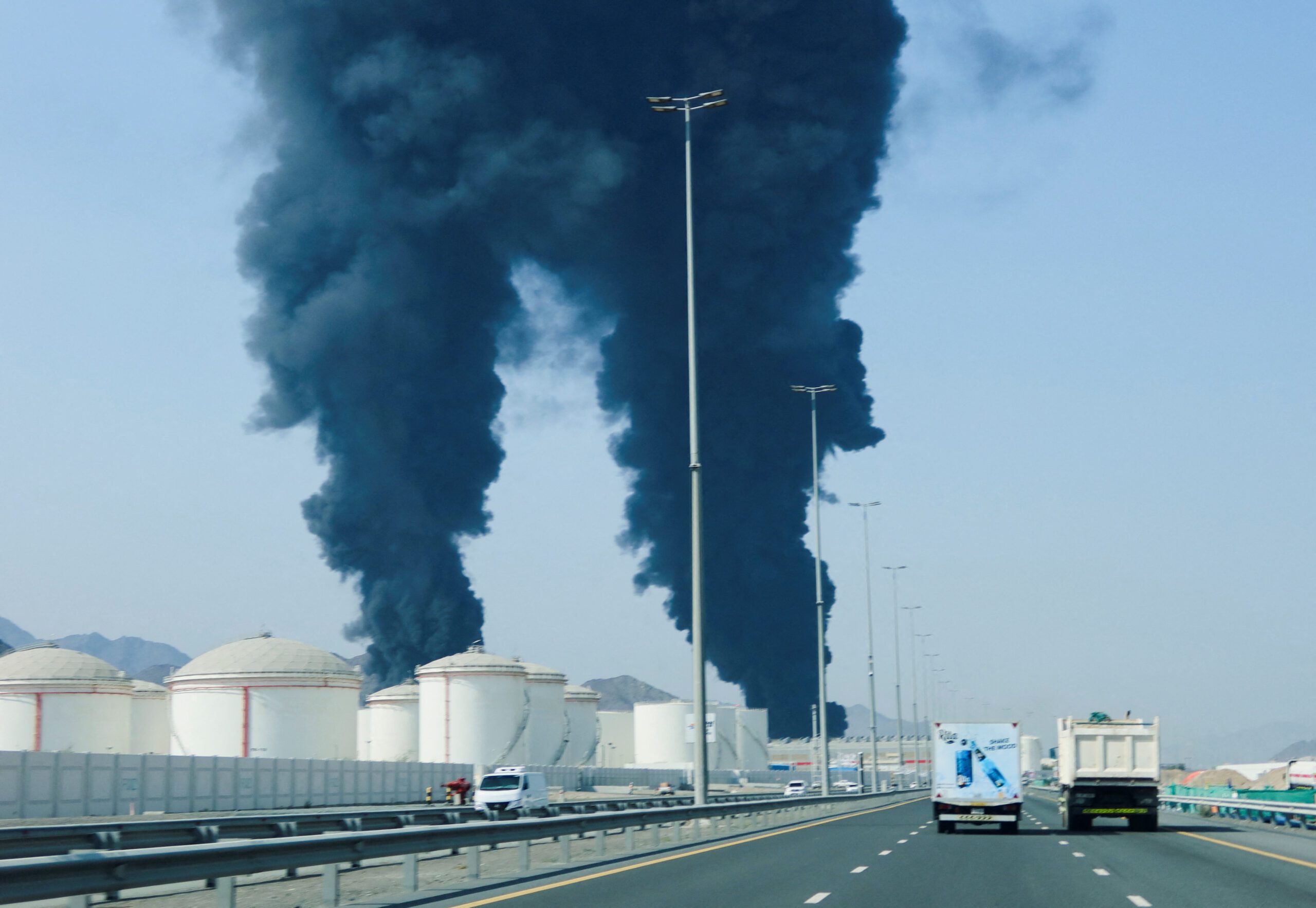
The conflict with Iran has curtailed the supply of oil from the Gulf, pushing up the price of the medium and heavier grades it usually exports relative to lighter grades.
The Economic Impact of the Iran Conflict on the Gulf
The Gulf is being significantly affected by the conflict with Iran, but the size of the economic hit varies among countries.

Events
Mar 11, 2026
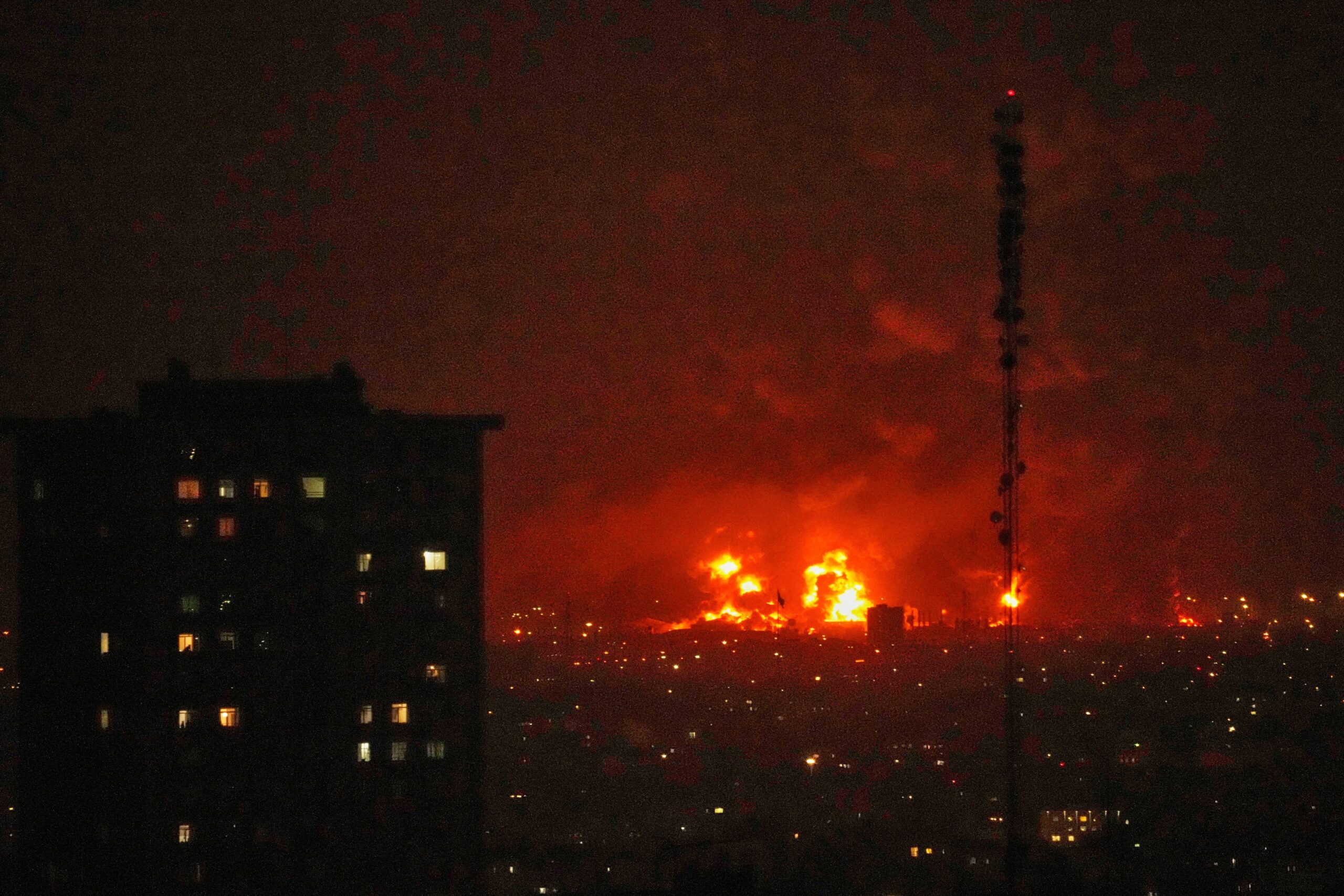
Shockwaves From Iran: Implications for Energy Markets and the Global Economy
On March 11, AGSI hosted a discussion on global energy and economic market volatility.
Speakers




Jan 8, 2026
Outlook 2026: Prospects and Priorities for U.S.-Gulf Relations in the Year Ahead
On January 8, AGSI hosted a virtual roundtable with its leadership and scholars as they look ahead and assess trends likely to shape the Gulf region and U.S. foreign policy during the coming year.
Speakers





Dec 15, 2025
Looking to 2026: Economic Prospects and Policy Challenges in the GCC
On December 15, AGSI hosted a discussion on the future of Gulf economies.
Speakers


Sep 4, 2025
Saudi Arabia: Sustaining Strong Growth Amid Global Economic Uncertainty
On September 4, AGSI hosted a discussion on the International Monetary Fund’s 2025 Article IV report on Saudi Arabia.
Speakers