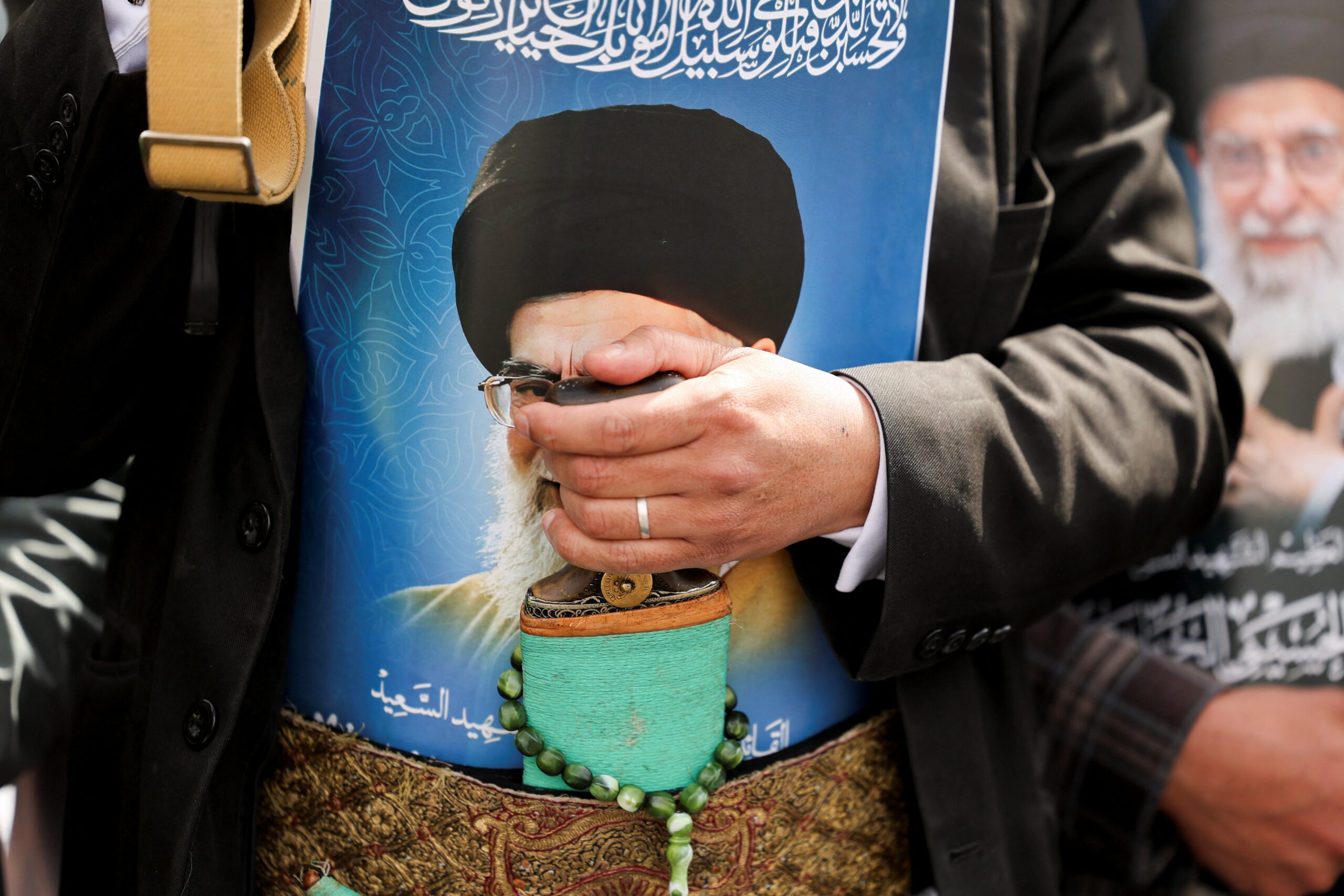
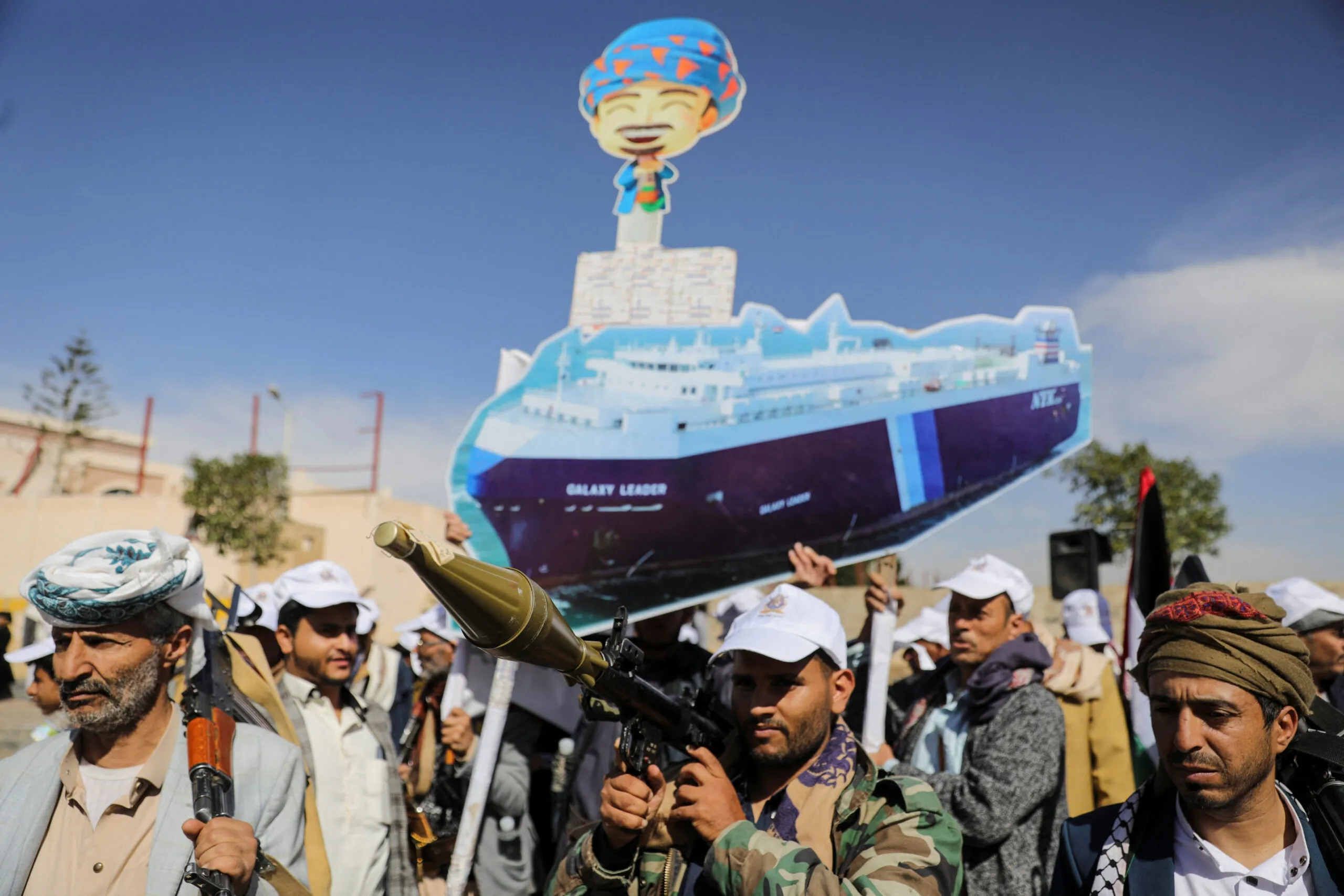
A man with a poster featuring a picture of the late Iranian Supreme Leader Ayatollah Ali Khamenei tucked in his garment joins a demonstration with Houthi supporters in Sanaa, Yemen, March 6. (REUTERS/Khaled Abdullah)
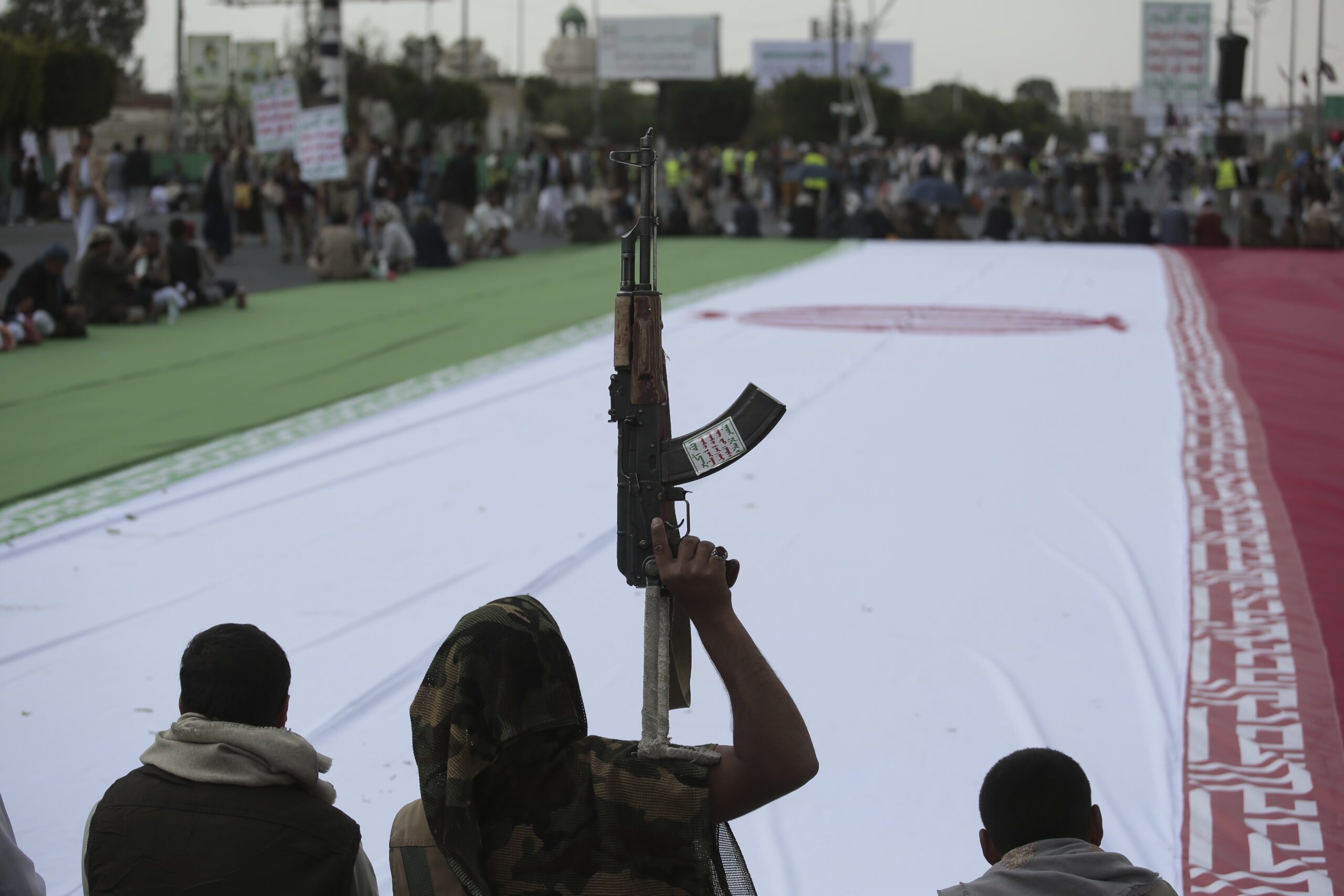
Perhaps one of the most surprising things to emerge from the first week of the war in Iran is the absence and relative silence of one of the key members of Iran’s “axis of resistance.” The Houthis, much as they did during Israel’s 12-day war on Iran in June 2025, have stayed on the sideline.
In 2025, this made more sense. The initial Israeli onslaught, which was followed by U.S. strikes on Iranian nuclear sites, took the Iranian regime by surprise. Key members of the Islamic Revolutionary Guard Corps were killed, leading to command-and-control issues. Iran’s response was slow and disjointed. In Yemen, with communications likely impacted by the death of IRGC commanders, the Houthis watched and waited, ultimately firing a few missiles at Israel, but otherwise stayed silent. A few weeks later, when the war was over, the Houthis took belated action, sinking two tanker ships in the Red Sea, as if to show the group still had the military capacity to strike at commercial shipping.
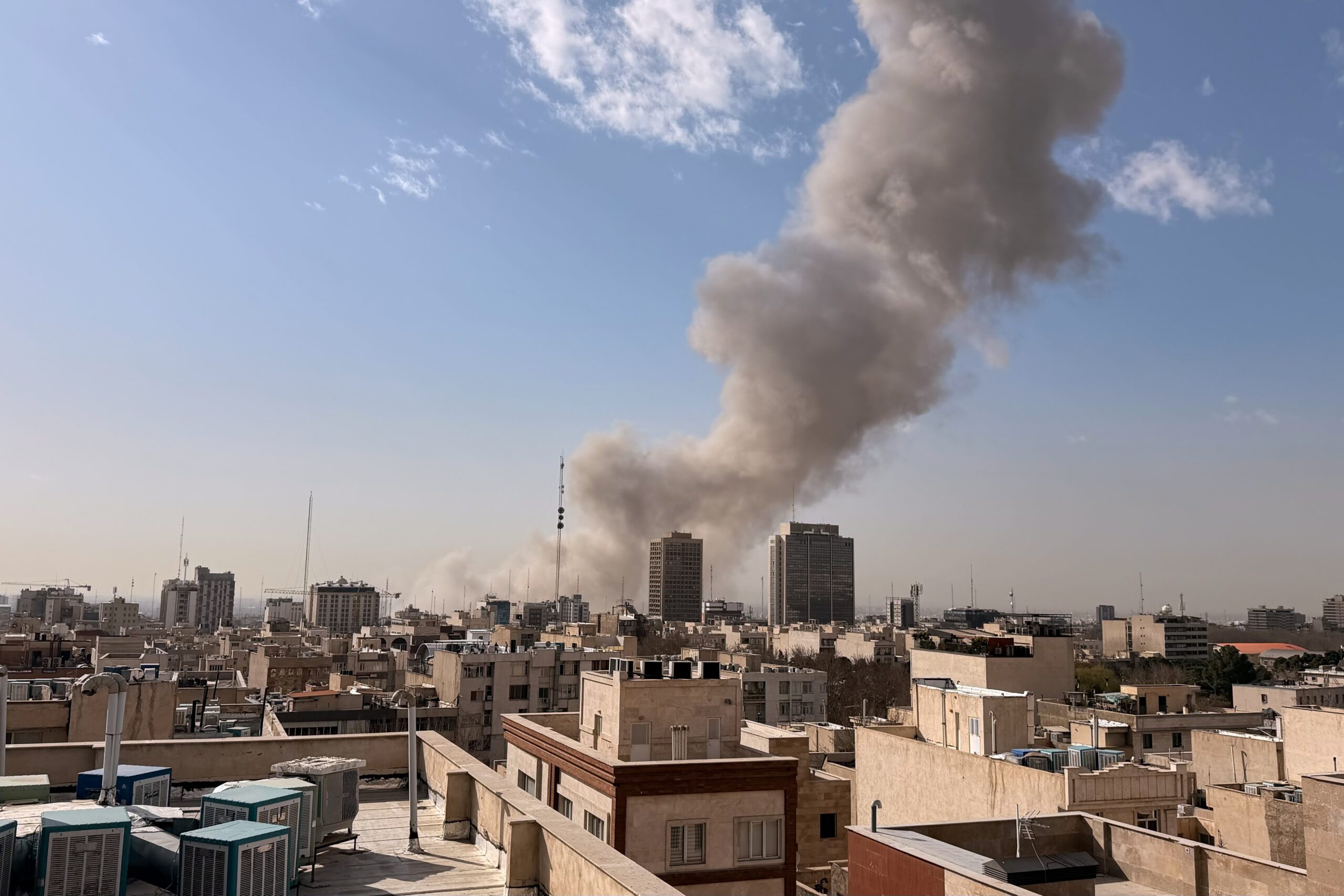
The current war on Iran is different. This time Iran was ready, launching retaliatory strikes almost immediately. Unlike in 2025, when the United States had more limited military objectives of destroying or degrading Iran’s nuclear program, this time the conflict is more open ended with the administration of President Donald J. Trump openly contemplating regime change. For Iran, then, this is an existential conflict. It will need every tool in its arsenal to attempt to outlast the United States and survive in some, likely diminished, form. Its proxy network, although much weaker now than three years ago, remains a key component of Iranian defenses.
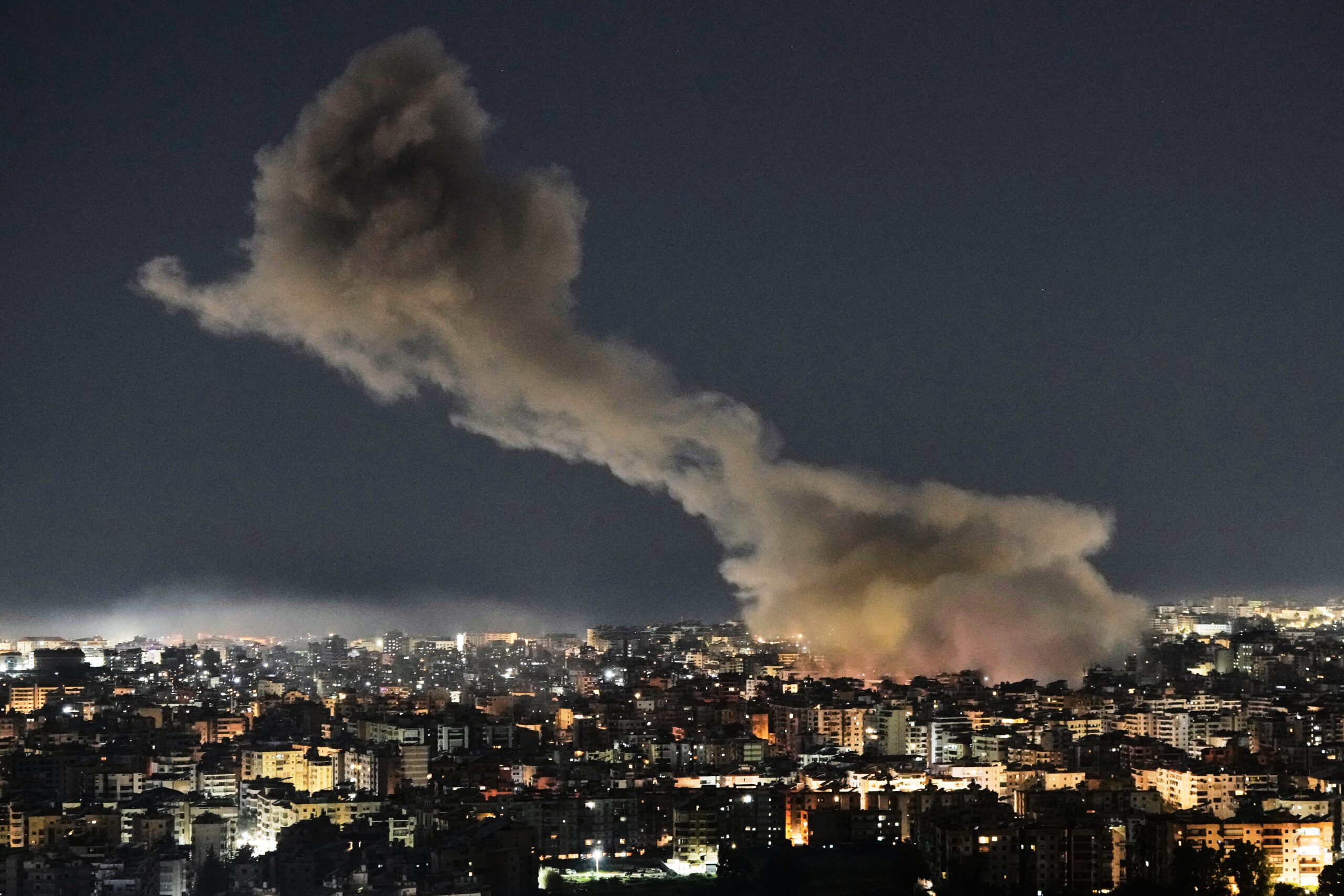
On March 2, Hezbollah opened another front in the war, firing rockets and drones at Israel. The group is, in many ways, a shell of its former self, after an Israeli pager attack that decimated the group’s leadership in October 2024 and a sustained campaign targeting its commanders, weapons depots, and military infrastructure. Yet despite its weakened state, Hezbollah entered the conflict, putting its existence at stake to aid Iran in its ongoing war.
The Houthis, at least so far, have not made the same decision. On the surface it would seem that if Iran’s strategy is to attempt to outlast the United States by expanding and dragging out the conflict, opening a third front in Yemen would be to its advantage. The United States and Israel would be forced to burn through more munitions, Saudi Arabia and the United Arab Emirates would likely need more interceptors and air defense systems, and broadening the conflict would likely play into domestic U.S. concerns over being dragged into another open-ended conflict in the Middle East. That the Houthis have not done this raises several questions. The most important of which is: Why? Are the Houthis unable, unwilling, or simply biding their time?
Unable
Much like in June 2025, the “unable” explanation for Houthi inaction revolves around the 1,100 strikes the United States carried out during Operation Rough Rider. The destruction of Houthi munitions combined with several interdictions of Iranian weapons shipments over the past year may have rendered the Houthis effectively unable to contribute militarily to the current conflict.
Hezbollah, however, suffered greater losses than the Houthis, and it was still capable of joining the conflict. The Houthis may be weaker than they were in 2024 and early 2025, but they still have the military capacity, as evidenced by sinking two ships in the summer of 2025, to carry out strikes. This seems the least likely of the three scenarios.
Unwilling
There are two major reasons the Houthis may be unwilling to join Iran in its fight against the United States and Israel. The first is military and the second is political. First, on the military front, the Houthis may look at the recent history of U.S. and Israeli strikes in Yemen and decide quite simply that they can’t win and that any effort to help Iran will result in unacceptable losses. The Houthis may also be worried that, if the United States and Israel begin carrying out airstrikes in Yemen, this could open up the way for a ground offensive from the south from the anti-Houthi coalition, which could ultimately put Houthi rule in danger.
The Houthis likely consider this a greater possibility now than they did in the past. In December 2025, the UAE announced a complete withdrawal from Yemen following a failed takeover by the Southern Transitional Council, a UAE-backed group, and subsequent Saudi airstrikes. The result is that the anti-Houthi forces on the ground in Southern Yemen are now under the umbrella of a single actor: Saudi Arabia. This unity of leadership presents a greater threat to the Houthis, which have long thrived by playing their rivals off against one another.
On the political front, the Houthis may be worried that backing Iran is not the same as backing and carrying out strikes on behalf of the Palestinians. The Palestine cause is broadly popular in Yemen, cutting across political groups and demographics. The same is not true for Iran. While the Houthis could count on some popular support for earlier strikes, which they portrayed as in defense of Palestinians, they likely can’t count on the same level of support for strikes on behalf of Iran.
Both parts of the unwilling explanation suggest a Houthi group that is weaker and more fragile than it often appears from the outside. The Houthis, in short, may be unwilling to support Iran militarily because to do so may put Houthi existence at risk.
Not Yet
The third possible explanation for Houthi inaction through over a week of war is that the group is simply biding its time and waiting to strike. Although this explanation made sense in the summer of 2025, it makes less sense now. Iran appears to be burning through large portions of its ballistic missile stockpiles, and if the conflict is truly existential for the Iranian regime then it is likely to need Houthi help before it is too late.
The one possible caveat to that is that Iran may be holding the Houthis in reserve, hoping to use them as a supporting force later in the war in an attempt to draw out the conflict and outlast the United States. This is possible but not particularly probable, as it assumes that Iran can hold out long enough for Houthi firepower to make a difference. It also assumes that spreading out the axis of resistance will create a greater dilemma for the United States and Israel than being forced to deal with its members all at once. But, of course, this is exactly what has allowed Israel to reach this point of dominance. It dealt with Hamas first, then attacked Hezbollah, followed by Iran, and then it will likely turn to the Houthis.
If, however, the war does not go as planned for the United States and Israel, the Houthis may see an opportunity to inject themselves into the conflict. But this will be because the Houthis see an advantage for themselves domestically.
Otherwise, the Houthis likely have a small window of opportunity in which to join Iran in its fight. If they don’t – if the Houthis make the decision that they are simply unwilling to aid Iran in its hour of need – they may find themselves even more isolated in the future: weak and without a patron. For the Houthis, at least for the moment, there are no good options.
The views represented herein are the author's or speaker's own and do not necessarily reflect the views of AGSI, its staff, or its board of directors.
After decades of tolerating Hezbollah’s warmaking independence, the current crisis has compelled Lebanese leaders to ban its military activities; this project will do much to determine the reach Iran can maintain in the Arab world.
Iran is signaling that it will not absorb attacks passively. But whether this strategy ensures the regime’s survival, seals its fate, or accelerates a broader catastrophe will shape the region for years to come.
The Southern Transitional Council is betting that if the South can be united under its leadership it can cordon the South off from the Houthis in the North, utilize oil and gas revenue, and create a stable and functioning state.
By attacking the Houthis’ support system, the United States can use indirect means to accomplish what it couldn’t through direct military intervention.