Should the Islamic Republic utilize the March 1 elections to end effective enforcement of the hijab law, it will remove a source of constant friction between state and society in Iran, but the regime will also lose an instrument of intimidating the urban middle class.
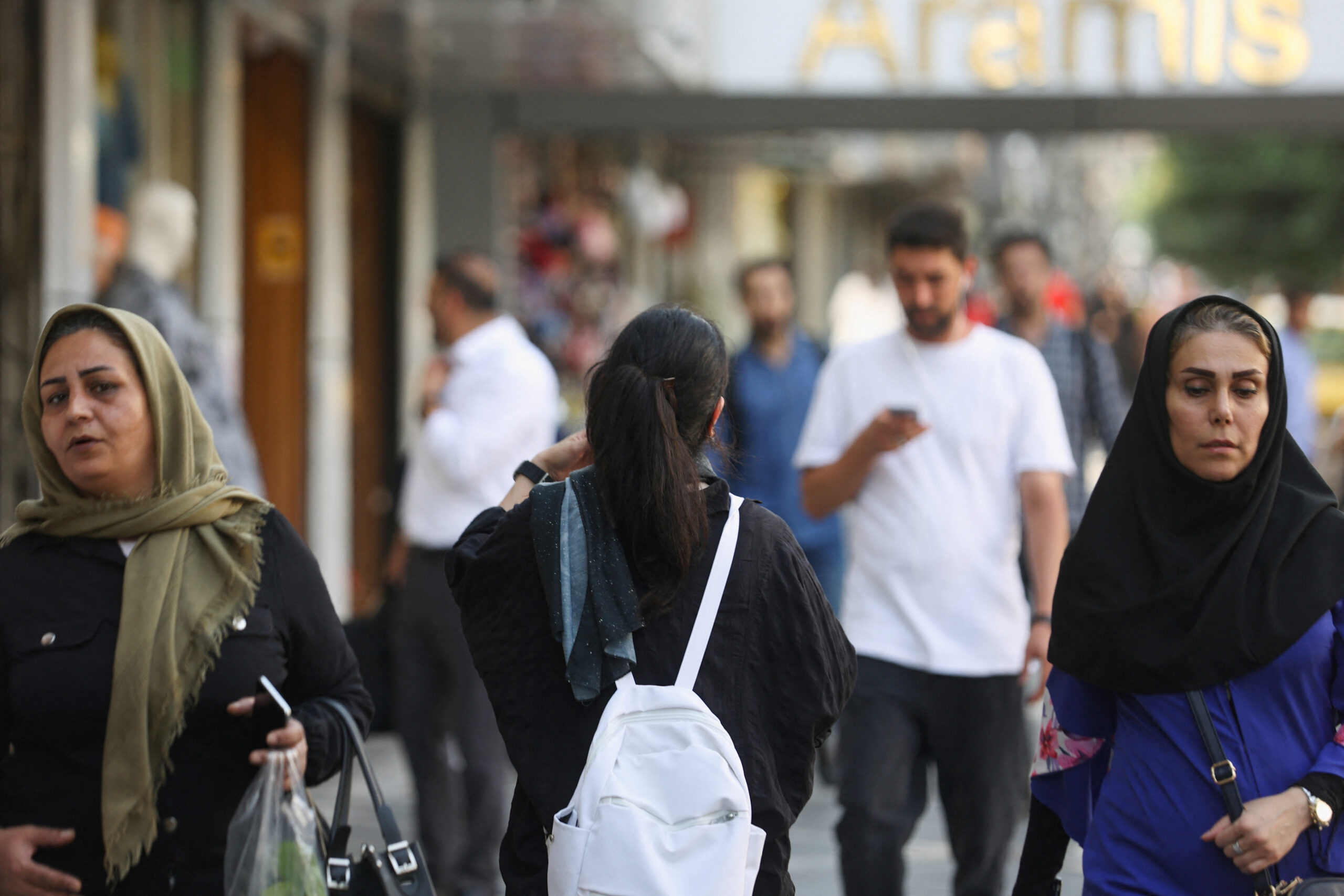
An Iranian woman walks on a street during the revival of the morality police, in Tehran, Iran, July 16, 2023. (Majid Asgaripour/West Asia News Agency via REUTERS)
As Iran prepares for the March 1 elections for the Parliament and Assembly of Experts, Supreme Leader Ayatollah Ali Khamenei fears a voter boycott, which would further weaken the regime’s sagging popular legitimacy. In the face of this threat, executive branch representatives are engaged in an effort to persuade voter segments alienated by the regime to vote. One such segment is women who oppose the mandatory hijab law. They are now being courted by the regime to cast their votes – with or without wearing the hijab.
It is yet to be seen whether officials in charge of voting centers will allow women without the hijab to cast their votes on election day, but public statements by regime officials, the Guardian Council’s stalling of a bill that would strengthen punishments against violators of the hijab legislation, and evidence of lax enforcement of the hijab law in Tehran are all signs of the gradual end of the mandatory hijab in Iran. By slowly moving away from the enforcement of the mandatory hijab, the regime will lose an effective tool to intimidate the urban middle class and will also face further demands from women activists. But the regime will also eradicate a source of constant friction between the state and society.
The history of the mandatory hijab under the Islamic Republic can be traced back to March 7, 1979, only a month after the victory of the revolution, when Iran’s head of state, Grand Ayatollah Ruhollah Khomeini, declared: “Sin is not allowed in Islamic Cabinet ministries. Women should not appear naked in the ministries. Women are allowed, but with a hijab. There is no obstacle to them working but only if they wear the hijab as prescribed by Islamic law.” The next day, 15,000 Iranian women celebrating International Women’s Day gathered in front of the prime minister’s office in Tehran in protest against the mandatory hijab. That protest and other gatherings of women in Tehran and elsewhere were attacked by pro-regime mobs.
Khomeini issued a public statement claiming the mobs were “deviants and opponents of the revolution” and declared any rogue action against women without the hijab as haram, or religiously forbidden. Yet on June 27, 1980, while addressing relatives of slain members of the Islamic Revolutionary Guard Corps, Khomeini criticized then-President Abolhassan Banisadr for not “removing vestiges of he who rebelled against God,” referencing Shah Mohammad Reza Pahlavi, “from government offices.” There was no direct reference to the hijab in Khomeini’s speech, and he appears to have been more upset with the continued use of official papers with the Pahlavi regime’s letterhead, luxurious furniture in government offices, and bureaucratic red tape facing families of IRGC members. Nevertheless, as of July 5, 1980, Iranian women who did not, at a minimum, wear a manteau (a loose gown) and headscarf covering their hair were prohibited from entering government offices. Khomeini and the Cabinet’s directives or circulars concerning the hijab, however, were not codified until the Parliament’s passing of the Islamic Penal Code July 12, 1983, which promulgated a punishment of “up to 74 lashes for women appearing without Islamic hijab in public.” The May 22, 1996 revision of the law replaced physical punishment with incarceration and fines.
In demanding the mandatory hijab, Khomeini may have believed he was doing the work of God, but the regime must soon have realized the practical political utility of the law and its enforcement in intimidating the oppositional urban middle class. The now-defunct neighborhood Revolutionary Committees, IRGC and Basij militia patrols, and, in recent years, the Law Enforcement Forces and its Headquarters for the Promotion of Virtue and the Prevention of Vice, also known as the morality police, were successively tasked with enforcing the hijab law. The often arbitrary enforcement of the law and the mere presence of its enforcers on the street served as a reminder of the power of the state to oppositional-minded urbanites.
This all changed with the suspicious death of 22-year-old Mahsa Amini in the custody of the morality police September 16, 2022. Instead of terrorizing the people into submission, the killing provoked teenage women and, soon after, young men to take to the streets in protest against the regime. At first, the regime was indulgent of the teenage rebels in Tehran, but since Amini was an ethnic Kurd, the protests in her native Kurdistan province soon developed an ethnic dimension, which also spread to ethnic protests and armed clashes between the government and protesters in Iran’s southeastern Sistan and Baluchistan province. In the end, the regime prevailed, but the protests were a debacle for the Islamic Republic. With 592 protesters, half of whom were either Kurds or Baluchis, and 73 government personnel killed, the protests claimed more lives than all previous protests combined. Various government agencies reacted differently to the crisis.
In his first public comments on the hijab protests, Khamenei blamed the United States, Israel, the outlawed Mujahedeen-e Khalq organization, separatists, descendants of Pahlavi, and even sons and daughters of former SAVAK agents, Iran’s pre-revolution intelligence service. The IRGC and its mouthpieces, on the other hand, in a move of tactical scapegoating, blamed Mohammad-Saleh Hashemi Golpayegani, the director of the Headquarters for the Promotion of Virtue and the Prevention of Vice, who they accused of provoking countrywide protests through overzealous enforcement of the hijab law. The Parliament followed Khamenei’s line and in September 2023 submitted the bill “Support of the Culture of Chastity and Hijab” to the Guardian Council for consideration. The bill would impose further punishments on “those in violation of the law” and individuals and businesses “enabling violation of the law.”
The Guardian Council, which assesses the constitutionality of legislation in Iran, has since stalled the bill, which suggests the regime cannot reach a consensus and Khamenei himself is perhaps oscillating between his initial harsh reaction against the protesters and fears that approving the legislation could provoke a new round of protests. The Guardian Council even appears to be actively sabotaging the bill. When Hadi Tahan-Nazif, the Guardian Council’s spokesperson, was asked January 15 if women without a hijab can vote in the upcoming elections, he answered: “There is no law that deprives anyone of the right to vote.” His answer is technically correct, but it violates Iran’s existing penal code, which prohibits women from appearing in public without a hijab, and undermines the bill currently under the Guardian Council’s consideration.
President Ebrahim Raisi’s government and the executive branch also appear to be headed in the same direction as the Guardian Council. On February 13, Shiraz Governor Lotfallah Shibani said, “Nobody will prevent an Iranian citizen from voting, regardless of hijab. Executive, security, or other branch elements are only authorized to give a verbal warning, but there is no obstacle to voting.”
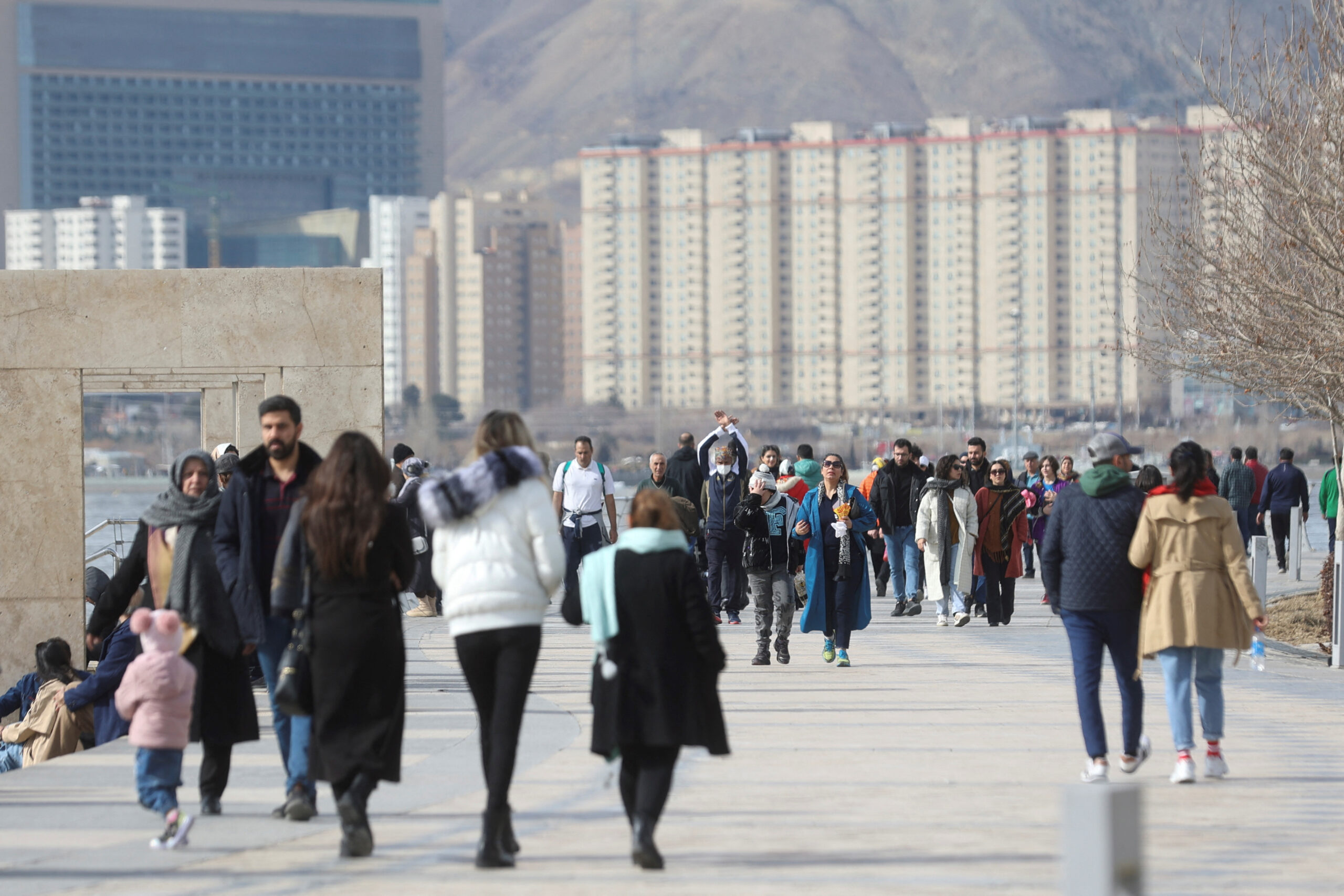
Beyond statements by officials, there is some evidence of lax enforcement of the hijab law at the street level. The Travel All Nation YouTube channel, which has posted videos from Tehran’s streets since 2022 – not concerned with the hijab issue but in a desire to show everyday life in different neighborhoods – shows the preponderance of unveiled women in the capital. Even before Amini’s death, but particularly since her killing and the ensuing protests, the videos document a significant number of unveiled women, in luxury shopping mall restaurants and affluent Tehran neighborhoods, who do not seem disturbed by the presence of police officers. Unveiled women are also visible in videos of working-class neighborhoods and the suburbs, but not in significant numbers, as those areas tend to be more socially conservative.
It remains to be seen whether officials in charge of voting centers will allow women without hijabs to vote on election day, but if they do, it will amount to de facto, if not de jure, phasing out of the mandatory hijab in Iran. This would likely have two contradictory implications for the regime.
On the one hand, the regime would find it more difficult to use the hijab as a pretext to harass the urban middle class and would also likely face further demands from women’s rights activists and others. In reaction to the Guardian Council spokesperson’s promise that women without a hijab can vote, women’s rights activist Nahid Khodakarami asked: “Can women without a hijab also run for Parliament? … The Guardian Council is disqualifying women as parliamentary candidates … just on the grounds that they wear a headscarf and not the long black chador.” Ali Mojtahedzadeh, a lawyer, asked how the regime could allow unveiled women to vote while continuing to shut down businesses that allow unveiled women. Will the regime continue to confiscate taxis from drivers who give rides to unveiled women or prevent unveiled women from entering public buildings and banks but allow them to show up at other public buildings to vote? Once the regime allows women to vote without a hijab, it will find it more difficult to defend and uphold current hijab enforcement practices.
On the other hand, a gradual move toward the hijab being optional would remove a source of constant friction between the state and society. Moreover, it would prevent the Iranian opposition abroad from using societal opposition to the hijab to mobilize against the regime.
Election day will lay bare the prevailing opinion within the regime and its ability, or lack thereof, to pragmatically solve its hijab problem.
The views represented herein are the author's or speaker's own and do not necessarily reflect the views of AGSI, its staff, or its board of directors.
Having failed to shape the society to its liking, can the Islamic Republic adapt to a society that is increasingly demanding separation between religion and state?
After U.S.-Israeli strikes killed Supreme Leader Ayatollah Ali Khamenei on February 28, Iran’s collective leadership has concluded that the best defense is a good offense.
Wartime pressure has temporarily aligned the leadership’s overriding interest in regime survival, even as its members continue to differ over the costs, methods, and ultimate objectives of the war.
While there is historical precedent for collective leadership in Iran, today’s leadership includes representatives of the IRGC and regular military – a reflection of the IRGC’s expanding role and the necessities of governing under wartime conditions.