Sep 24, 2025
Khamenei Nixes Negotiations With Washington
The September 24 edition of the Iran Media Review evaluates a speech by the supreme leader dismissing the possibility of negotiations with the United States.

In a prerecorded address broadcast on the eve of President Masoud Pezeshkian’s September 24 speech at the United Nations General Assembly, Iranian Supreme Leader Ayatollah Ali Khamenei dismissed the prospect of negotiations with the United States. His remarks appeared coordinated with Pezeshkian and Supreme National Security Council Secretary Ali Larijani, both of whom had issued similar signals in the hours preceding Khamenei’s address.
- September 23: In comments to Iranian media outlets before his departure to New York for the United Nations General Assembly, President Masoud Pezeshkian said, as reported by Islamic Revolutionary Guard Corps-affiliated Mashregh News:
- “You cannot talk with bullies.”
- September 23: On X, Supreme National Security Council Secretary Ali Larijani wrote:
- “Imposing a 500-kilometer limit on our missiles means stripping us of the ability to defend against Israel. What honorable Iranian would ever accept such a restriction?”
- September 23: The transcript of a prerecorded televised address given by Supreme Leader Ayatollah Ali Khamenei was posted on his website:
- Israel and the United States “bombed our nuclear installations in this and that location … but science cannot be destroyed by bombs. We have dozens of prominent and experienced scientists, hundreds of scholars, and thousands of graduates in nuclear-related fields. Despite constant pressure to halt our nuclear activities, we did not surrender, and we shall not surrender, neither on this issue nor on any other. We will not yield to pressure.”
- President Donald J. Trump “insists Iran must abandon enrichment altogether. Previously, others demanded that we refrain from high-grade enrichment or that we not stockpile enriched material inside Iran. We rejected those demands, and we will reject this one as well. They want us to surrender an achievement gained through relentless effort and great sacrifice. The honorable people of Iran will not accept such humiliation, they will, as we say, punch anyone who makes such demands in the mouth.”
- Turning to the issue of negotiations with the United States, Khamenei said: “There are differing views about negotiations with the United States. Some consider them beneficial and necessary; others view them as harmful; and yet others take a middle position. Let me share with the dear nation what I have seen, understood, and experienced through the years, and I urge our officials to reflect on it. For the present circumstances, negotiations with the U.S. government neither serve our national interests nor reduce harm; rather, they create harm. Indeed, some of these harms may be irreparable. The American side has already decided the outcome in advance. They declare they will only accept negotiations that end with Iran ceasing all nuclear activity and enrichment. This is not negotiation, it is dictation, an imposition of their will.”
- Vice President JD Vance “even stated that Iran must not possess missiles. Not only long-range but even medium- or short-range missiles. In other words, they want Iran defenseless, unable to retaliate against U.S. bases in Iraq or elsewhere if attacked. What possible benefit could such negotiations bring? This is bullying and an imposition of America’s will. Those who expect Iran to accept such conditions neither know the Iranian people nor understand the foundation of the Islamic Republic … Their threats are clear: ‘If you don’t negotiate, we will bomb you,’ and so on. Agreeing to negotiate under such threats means admitting fear, surrendering every time we are bullied. And once we give in, the threats will never end … Today it is uranium enrichment. Tomorrow it will be missiles. Later it will be our foreign relations, who we have relations with and who we should not have relations with … Step by step, we would be forced into retreat. No honorable nation negotiates under threat, and no wise politician approves of it … They may claim they will offer concessions in return, but these are lies.”
- “Ten years ago, we reached the Joint Comprehensive Plan of Action. We accepted limitations in the nuclear field, shutting down productive units, shipping low-enriched uranium abroad, reducing enrichment levels … They promised sanctions relief and closure of the nuclear file at the International Atomic Energy Agency within 10 years. At the time, I said 10 years is a lifetime, why accept such terms? But our officials conceded. Now the 10 years are past, and instead of normalization, we face even greater problems at the IAEA and the U. N. Security Council. We fulfilled our commitments; the other side did not. They broke their promises, even tore the agreement apart … Negotiating on such terms is nothing but surrender and the destruction of a nation’s honor. If we resist threats, the situation is what we see today. But if we yield, it will be far worse. We must learn from the past decade. The United States, I will not dwell on Europe now, is deceitful in every respect. The United States lies, they threaten military action, assassinate our prominent men, as they did our martyred commander, Qassim Suleimani. If they can, they bomb our nuclear centers. How can one negotiate with such a party and expect them to honor their commitments? In my opinion, negotiations with the United States on the nuclear issue, or on others, lead only to a dead end … For the current American president, negotiations are a political gain. He will boast: ‘I threatened Iran and forced it to the table.’ But for us, there is no benefit.”
- Khamenei concluded: “The way forward for Iran is through strength: strengthening our military, our science, our government, and every other pillar of national power.”
The views represented herein are the author's or speaker's own and do not necessarily reflect the views of AGSI, its staff, or its board of directors.
Related
Iran Media Review
Sep 23, 2025
Will Pezeshkian Meet Trump at the U.N. General Assembly?
The September 23 edition of the Iran Media Review analyzes Iranian commentary on the possibility of U.S.-Iranian negotiations during the U.N. General Assembly.
Iran Media Review
Sep 19, 2025
The Rafsanjani Formula: “Face-To-Face Negotiations With the U.S.”
The September 19 edition of the Iran Media Review considers an editorial by Mohsen Rafsanjani, son of the late president, calling for direct negotiations with the United States to preserve security.
Iran Media Review
Sep 16, 2025
Larijani Ascendant Amid Strategic Ambiguity
The September 16 edition of the Iran Media Review highlights discussion of SNSC Secretary Ali Larijani’s role in oversight of Iran’s nuclear portfolio.
Sep 23, 2025
Will Pezeshkian Meet Trump at the U.N. General Assembly?
The September 23 edition of the Iran Media Review analyzes Iranian commentary on the possibility of U.S.-Iranian negotiations during the U.N. General Assembly.
Sep 19, 2025
The Rafsanjani Formula: “Face-To-Face Negotiations With the U.S.”
The September 19 edition of the Iran Media Review considers an editorial by Mohsen Rafsanjani, son of the late president, calling for direct negotiations with the United States to preserve security.
Sep 16, 2025
Larijani Ascendant Amid Strategic Ambiguity
The September 16 edition of the Iran Media Review highlights discussion of SNSC Secretary Ali Larijani’s role in oversight of Iran’s nuclear portfolio.
Analysis
Under Mojtaba, the IRGC Will Reign Supreme
Iran may still call itself an Islamic Republic. In practice, however, it increasingly resembles a state in which the military governs from behind clerical robes.
Political Life and Legacy of Iran’s Ayatollah Khamenei
Ayatollah Ali Khamenei was killed in his office in Tehran at age 86, leaving behind a country in ruins and on the verge of civil war and potential disintegration.
Iranian Regime Fighting for Survival
Iran is signaling that it will not absorb attacks passively. But whether this strategy ensures the regime’s survival, seals its fate, or accelerates a broader catastrophe will shape the region for years to come.
Iran’s 2025-26 Protests in Perspective
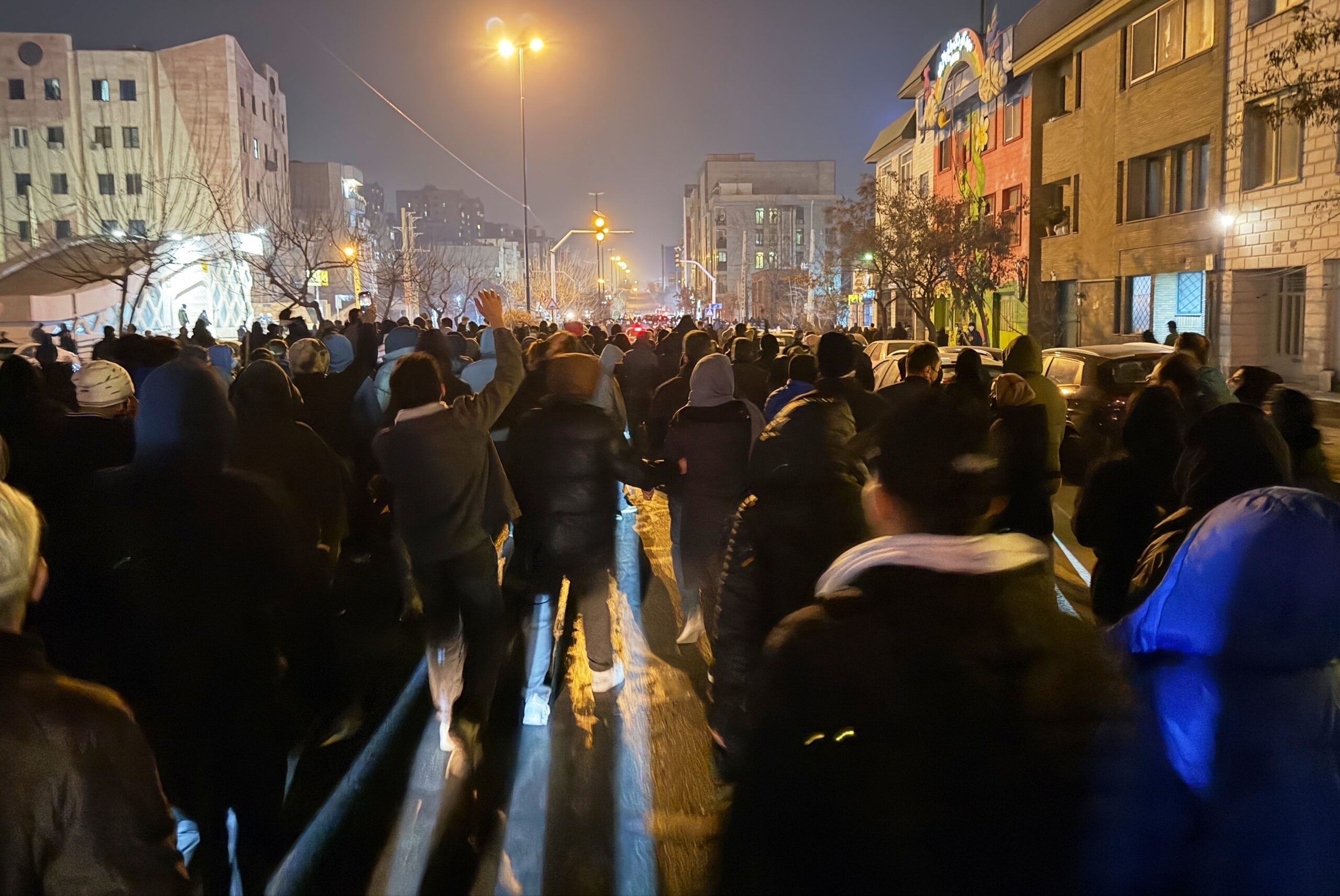
The erosion of the regime’s legitimacy across broad segments of society, combined with the breadth of the 2025-26 protest coalition, raises the possibility that a new confrontation could trigger renewed anti-regime mobilization.
Events
Mar 18, 2026
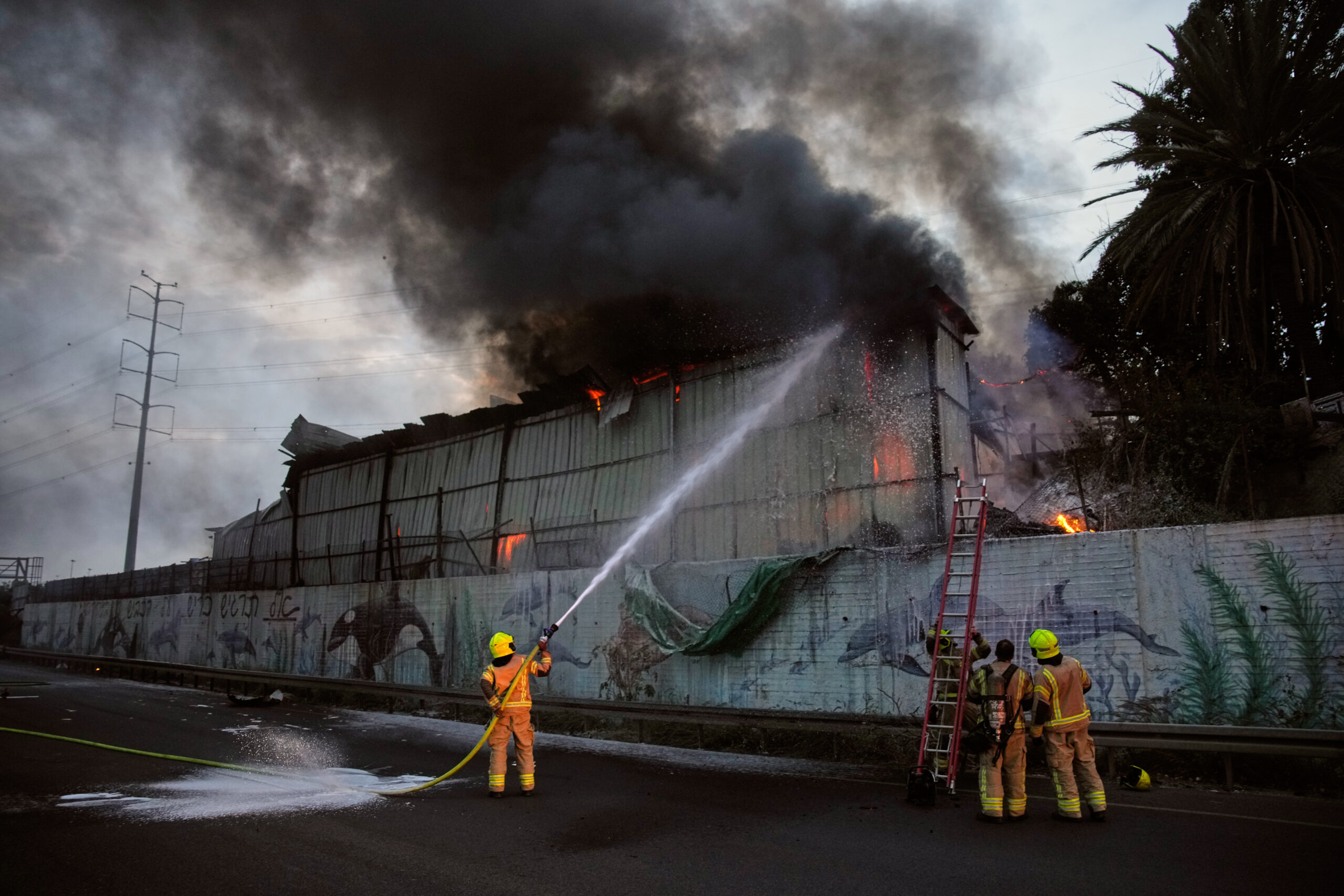
In Its Conflict With the United States and Israel, Does Escalation Favor Iran?
On March 18, AGSI hosted a discussion on the escalation of the Iran war.
Speakers

Mar 2, 2026
After the Shock: Implications of the U.S.–Israeli Strikes and Iran’s Leadership Transition
On March 2, AGSI hosted a discussion on the U.S.-Israeli strikes on Iran.
Speakers




Jan 8, 2026
Outlook 2026: Prospects and Priorities for U.S.-Gulf Relations in the Year Ahead
On January 8, AGSI hosted a virtual roundtable with its leadership and scholars as they look ahead and assess trends likely to shape the Gulf region and U.S. foreign policy during the coming year.
Speakers

Sep 16, 2025
Book Talk: Iran’s Grand Strategy: A Political History
On September 16, AGSI hosted a discussion on the roots of Iran's strategic outlook.
Speakers