Apr 29, 2025
Is Khamenei Ready for “Imam Hasan’s Peace”?
The April 29 edition of the Iran Media Review analyzes the political cohesion of Iranian elites in supporting negotiations with the United States.

With few exceptions, Iran’s ruling elites exhibit a high degree of cohesion and policy coordination regarding negotiations with the United States. Supreme Leader Ayatollah Ali Khamenei, drawing upon the historical analogy of Imam Hasan ibn Ali’s treaty with Muawiya, offered an implicit legitimization of diplomatic engagement with Washington. Concurrently, a media outlet aligned with the Islamic Revolutionary Guard Corps launched rhetorical attacks against a televised political satire program that, deviating from the regime’s official narrative, mocked the foreign minister of Saudi Arabia – a state with which Tehran is actively pursuing rapprochement. Meanwhile, Foreign Minister Abbas Araghchi, for the first time, publicly acknowledged the existence of “fundamental divergences at the level of overarching principles” between the United States and Iran, while nonetheless articulating cautious optimism regarding the trajectory of the negotiations. Even the suspicious April 26 explosion at Shahid Rajaee port that killed dozens of people and wounded hundreds, resembling the August 4, 2020 blast in Beirut, Lebanon, has hitherto failed to galvanize significant opposition to the diplomatic process.
- April 24: Supreme Leader Ayatollah Ali Khamenei started his latest public address commemorating the anniversary of the martyrdom of the sixth imam of the Shia with references to the “peace of Imam Hasan,” a peace treaty signed in August 661 between Hasan ibn Ali, the second imam of the Shia, and Muawiya, the governor of Syria who became the first Umayyad caliph. Khamenei’s official website reported him saying:
- “At the time of Imam Hasan al-Mojtaba’s peace with Muawiya, there were some who complained and protested. His Holiness would tell them: ‘This is just for a limited time … infidelity and hypocrisy are not meant to be permanent. In God’s wisdom, this is to be temporary.’”
- April 25: Centrist Asr-e Iran analyzed the address, taking aim at “zealots” who oppose diplomatic engagement with the United States:
- “The most perilous are those who, under the guise of revolutionary fervor, clandestinely serve foreign intelligence services, particularly Mossad. They exhibit a zealotry surpassing even that of true believers and actively seek to sabotage the negotiation process. Such individuals are, in fact, infiltrators.”
- April 22: The economic news outlet Eghtesad Online posted a satirical segment of comedian Mohsen Afshani, which first aired on Nasim Network, lampooning Saudi Foreign Minister Faisal bin Farhan.
- April 22: Following criticism from pro-regime outlets in favor of diplomatic engagement with Saudi Arabia, Nasim Network issued a formal apology for the video, as reported by Tabnak News Agency, which is close to former Islamic Revolutionary Guard Corps Chief Commander Mohsen Rezaei. Nasim Network pledged greater adherence to diplomatic sensitivities and regional policy considerations, particularly regarding relations with neighboring states.
- April 24: Despite the apology, IRGC-affiliated Mashregh News harshly criticized Afshani, labeling the broadcast an “act against national security.”
- April 26: After the third round of indirect negotiations between the United States and Iran, Foreign Minister Abbas Araghchi, speaking to Islamic Republic of Iran Broadcasting, in a video on the Supreme National Security Council-affiliated Nour News Agency website, expressed condolences to the families of the people killed in the Shahid Rajaee port incident. He continued:
- “I can say that the negotiations this round were markedly more substantive compared to previous sessions, as we gradually engaged in more granular and technical discussions. The participation of expert delegations proved highly beneficial. Several times, we submitted our viewpoints in writing. As you know, these negotiations are indirect. Technical discussions are in need of greater attention, and the positions were, for the most part, communicated in writing. They had questions that we responded to in writing. We too had questions, which we submitted in writing.”
- “Overall, the environment was characterized by seriousness and efficacy, as we moved beyond preliminary, general exchanges. But divergences persist at the level of broad principles and also in the details. Until the next round of the negotiations, we will engage in further investigations in Tehran and in Washington in an attempt to reduce those divergences. But it was evident that both sides demonstrated genuine commitment, fostering a cautiously optimistic atmosphere. Our optimism, however, is an extremely cautious optimism. We need to reach an understanding concerning some general issues, and next we need to discuss the details. As I said, we are hopeful but extremely cautiously hopeful.”
- “The next round of negotiations will, most likely, take place next Saturday. The details, locations, and the like will be disclosed by the host government, meaning Oman … The negotiations will take place at the present level, with my presence and the presence of Mr. Steven Witkoff along with the experts … As for the composition of the delegation, and the expertise needed, it depends on the subjects raised during the negotiations. This is elementary. Now that we are gradually leaving the generalities behind us, and discussing more detailed and more technical issues, more experts will be added to the delegation. Today, we had for the first time economists with us. Their presence was very beneficial. For the next meeting, I suspect representatives from the Iran Atomic Energy Organization will join, as we are getting closer to more technical nuclear discussions. As the talks advance, we will be inviting relevant experts to the negotiations.”
- “I can tell you this bluntly: The negotiations were exclusively focused on nuclear-related issues. No extraneous matters were introduced to the agenda. The fundamental framework guiding these discussions remains the nuclear file in exchange for sanctions relief, a principle consistently upheld throughout the three rounds of talks.”
- “When we refer to the atmosphere as ‘serious,’ we mean that both parties exhibited political will. However, political will alone is insufficient. Sometimes, the disagreements are so deep that you cannot reach a result. Will alone does not guarantee success. A successful outcome necessitates that the core interests of both sides are addressed. While some points of contention are profound and others more manageable, the overall trajectory of the negotiations has been positive. Compared to previous dialogues, we find ourselves in a more advantageous position. Accordingly, I am satisfied with the progress achieved thus far.”
- April 27: Commenting on the explosion at Shahid Rajaee port, Nour News Agency posted on X:
- “The flames of the port coincided with a sensitive moment in diplomacy. Coincidence or design? Neither the time, nor the scene of the incident, nor the behavior of the actors allows for hasty conclusions. The negotiation table is set, and patience before judgement is the best approach.”
- April 27: “Accident Or Sabotage?” hard-line Kayhan’s front page asked in its coverage of the explosion at Shahid Rajaee port.
- April 27: The Office of the Prosecutor General of Iran issued a warning, published by IRGC-affiliated Javan, against speculating about the issue in public, or “attending to issues that disturb the psychological balance in society.”
The views represented herein are the author's or speaker's own and do not necessarily reflect the views of AGSI, its staff, or its board of directors.
Related
Iran Media Review
Apr 25, 2025
Tehran Prepares for the Third Round of Talks
The April 25 edition of the Iran Media Review evaluates Iranian media reports indicating that U.S.-Iranian negotiations are progressing rapidly.
Iran Media Review
Apr 22, 2025
Foreign Minister Araghchi on Negotiations With the United States: “Momentum Is Building”
The April 22 edition of the Iran Media Review examines remarks made by top Iranian negotiators about the second round of U.S.-Iran talks.
Apr 25, 2025
Tehran Prepares for the Third Round of Talks
The April 25 edition of the Iran Media Review evaluates Iranian media reports indicating that U.S.-Iranian negotiations are progressing rapidly.
Apr 22, 2025
Foreign Minister Araghchi on Negotiations With the United States: “Momentum Is Building”
The April 22 edition of the Iran Media Review examines remarks made by top Iranian negotiators about the second round of U.S.-Iran talks.
Analysis
How Did the IRGC Seize Power in Iran?
The IRGC did not seize power in a single stroke. It accumulated it – patiently, methodically – until no counterweight remained.
Under Mojtaba, the IRGC Will Reign Supreme
Iran may still call itself an Islamic Republic. In practice, however, it increasingly resembles a state in which the military governs from behind clerical robes.
Political Life and Legacy of Iran’s Ayatollah Khamenei
Ayatollah Ali Khamenei was killed in his office in Tehran at age 86, leaving behind a country in ruins and on the verge of civil war and potential disintegration.
Iranian Regime Fighting for Survival
Iran is signaling that it will not absorb attacks passively. But whether this strategy ensures the regime’s survival, seals its fate, or accelerates a broader catastrophe will shape the region for years to come.
Events
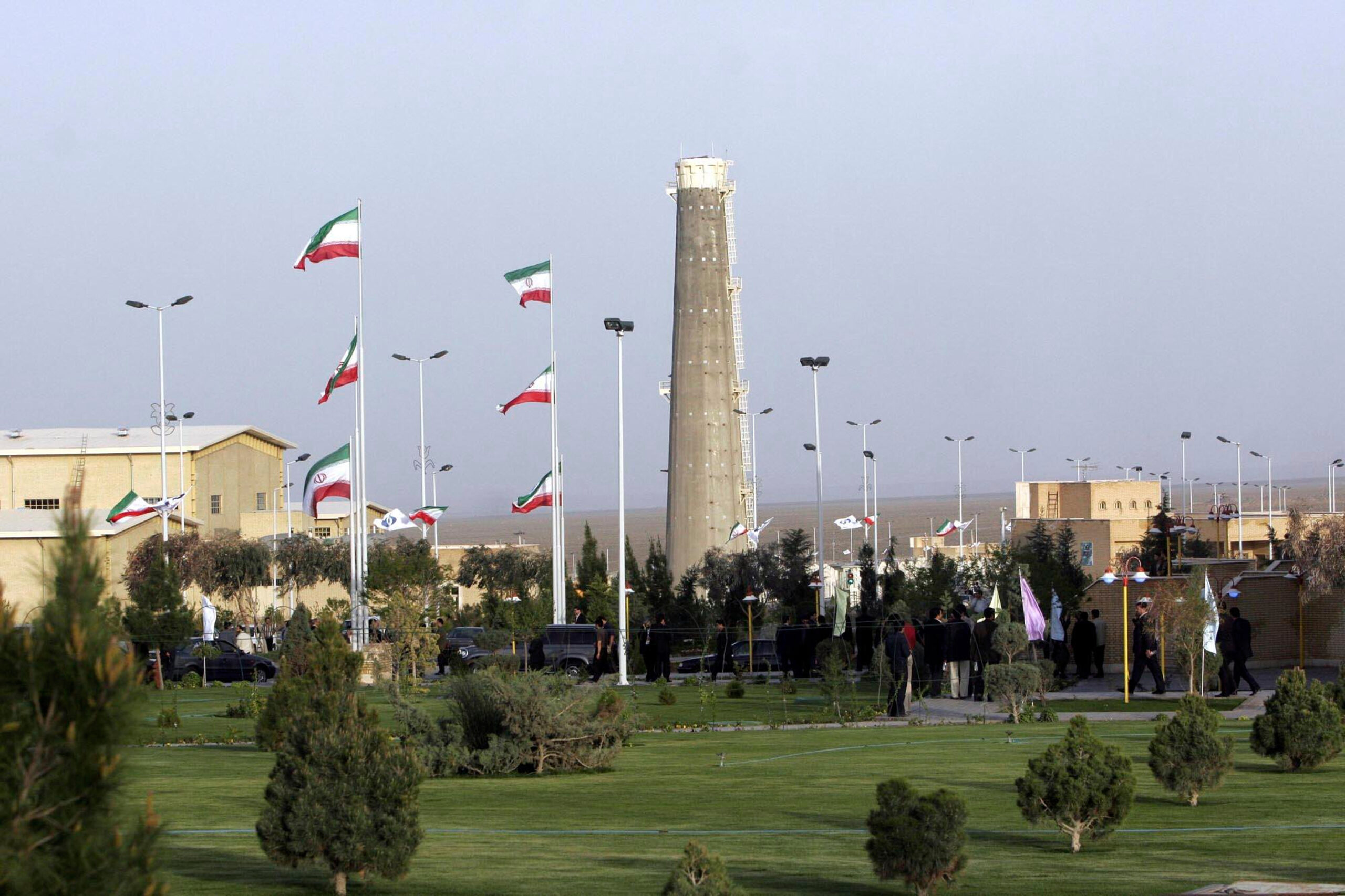
Book Talk: Iran and the Bomb: The United States, Iran and the Nuclear Question
On June 16, AGSI hosted a discussion on the evolution of Iran's nuclear program.
Speakers

Apr 21, 2026
Inside Iran’s Wartime Leadership: Power, Succession, and Regime Stability
On April 21, AGSI hosted a discussion on the evolution of Iran's leadership during the war.
Speakers

Mar 18, 2026
In Its Conflict With the United States and Israel, Does Escalation Favor Iran?
On March 18, AGSI hosted a discussion on the escalation of the Iran war.
Speakers
Mar 2, 2026
After the Shock: Implications of the U.S.–Israeli Strikes and Iran’s Leadership Transition
On March 2, AGSI hosted a discussion on the U.S.-Israeli strikes on Iran.
Speakers