Jun 9, 2026
Iran’s Elites Debate the Path Ahead
The June 9 edition of the Iran Media Review examines Iranian elites’ discourse about the future of conflict and negotiations with the United States.

Iranian elites are debating how to balance diplomacy, deterrence, and regional commitments in the aftermath of Israel’s latest military actions in Lebanon. While pragmatists advocate for a negotiated understanding with Washington that minimizes costs to Iran, hard-line and security-oriented voices argue that military pressure and diplomacy are complementary rather than contradictory tools. The debate increasingly centers on whether Tehran can pursue negotiations with the United States while maintaining the credibility of its deterrence posture and commitments to regional allies, particularly Lebanese Hezbollah.
- May 23: Mohsen Hashemi Rafsanjani, son of former President Ali Akbar Hashemi Rafsanjani, in an opinion piece in technocratic Kargozaran that was republished by centrist Asr-e Iran, wrote:
- “A camp composed of a large segment of Iran’s elite and the broader public supports neither war nor capitulation but instead seeks a rational agreement based on safeguarding national interests while imposing the lowest possible cost on the country.”
- “We need to examine what options might exist for Trump to extricate himself from the Iran challenge in a way that would also allow him to present it as a success.”
- “An Iranian acceptance of a temporary, time-bound suspension” of enrichment of uranium “could provide an opportunity for debris removal and an assessment of the condition of the nuclear facilities. Given the depth and characteristics of the underground structures, such work would require at least two years. Since two years also remain until the end of the Trump administration, this fixed-term suspension would effectively create an opportunity to evaluate the prospects for reconstruction and prepare for the facilities’ eventual restoration.”
- “If the closure of the Strait of Hormuz were to become prolonged, regional countries would inevitably seek alternative export routes. Even within this short period, three alternatives have already been discussed, including pipeline connections to the Red Sea, Jordan, Turkey, and Syria as well as the construction of a parallel canal through Emirati territory. Moreover, breaking Iran’s naval blockade would be costly.”
- June 6: Lebanon expert Mohammad-Ali Mohtadi, discussing the ongoing Israeli military campaign in Lebanon with reformist Shargh’s Abd al-Rahman Fath-Allahi, said:
- Israeli Prime Minister Benjamin “Netanyahu is trying, through these actions, to derail any potential agreement between Iran and the United States. It is clear that Netanyahu is in no way supportive of an understanding between Iran and the United States and has no desire to see these negotiations succeed.”
- June 6: In another article in Shargh, Abou Al-Qassem Delfi, Iran’s former ambassador to France, cautiously urged President Masoud Pezeshkian’s government to separate the Lebanon portfolio from negotiations with the United States:
- “Focusing solely on Hezbollah and linking all regional developments and negotiations with the United States to the situation in Lebanon risks limiting Iran’s foreign policy options and causing it to miss other strategic opportunities.”
- June 8: In an audio message to the nation disseminated by Islamic Revolutionary Guard Corps-affiliated Mashregh News, Parliamentary Speaker Mohammad-Bagher Qalibaf explained the logic behind Iran’s latest missile strike against Israel:
- “The Lebanon affair is a good example showing that the diplomatic arena, alongside the military arena, can force Israel and its adversaries to back down. Diplomacy does not hinder military operations, nor do military operations hinder diplomacy.”
- “At one point, by threatening an attack and suspending negotiations, we prevented an Israeli strike on Beirut. At another point, through military action, we demonstrated that we are not afraid of negotiations breaking down, and we are fully prepared. By the grace of God, the result is that they are compelled to retreat from their position regarding our rights, while we succeed in affirming our own rights.”
- “Now imagine if we had not been victorious in the military arena, or if we had failed to advance in the diplomatic arena, or if the military and diplomatic arenas had not properly coordinated and supported one another. In that case, our hands would have been tied when it came to supporting Lebanon and confronting the naval blockade.”
- “The choice is not between war and negotiation. Rather, we must fight when the time calls for fighting and negotiate when the time calls for negotiating. This is how we can defeat the enemy. This is what we mean when we say that negotiation is a continuation of struggle – it is the practical manifestation of that principle.”
- June 8: Supreme National Security Council mouthpiece Nour News Agency published an article on the logic behind Israel’s ongoing military operation in Lebanon:
- “First take: Israel undertook this action with the aim of disrupting the course of negotiations between Iran and the United States. There is also evidence to support this hypothesis.”
- “The second take is based on the existence of a division of labor between the United States and Israel. Under this view, Washington and Tel Aviv may differ over timing and methods, but they share a common objective: increasing pressure on Iran. The difference is that the United States views pressure as a means of extracting greater concessions in negotiations, whereas Israel sees pressure as a way to weaken – or even completely derail – the talks. In other words, Washington may still seek an agreement but one in which Iran enters the negotiations under greater pressure and from a weaker bargaining position. From this perspective, escalating tensions is not necessarily incompatible with diplomacy; rather, it can be understood as part of a strategy of coercive diplomacy.”
- “The third take is based on the assumption that the primary objective of the Israeli attack was to test Iran’s strategic calculus. In recent months, Tehran had repeatedly declared that Lebanon’s security and developments related to Hezbollah were inseparable from Iran’s own national security considerations. The attack on Beirut’s southern suburbs therefore served as a test of the credibility of that position. The planners of the attack sought to answer a key question: Would Iran refrain from a military response to protect the sensitive negotiations or would it be willing to bear the potential costs of retaliation? Iran’s missile response demonstrated that Tehran does not want the impression to take hold that it is prepared to retreat from its security red lines to preserve the negotiations. Rather, Iran sought to convey the message that diplomacy and deterrence are parallel tracks and that neither will be pursued at the expense of the other.”
- June 8: Tabnak News Agency, mouthpiece of Major General Mohsen Rezaei, senior military advisor to Supreme Leader Mojtaba Khamenei, published an analysis of the latest Iranian missile strike against Israel:
- “Iran’s response to Israel’s attack on southern Beirut establishes a new equation: If the red lines defined by Tehran – whether in the region or with respect to the “axis of resistance” – are crossed, Iran will undertake further military action against the source of any such move or provocation. In fact, this marks the first time Iran has responded militarily to an Israeli attack on the territory of a country other than Iran. Tehran had previously retaliated for Israeli attacks on Iranian soil. Under this new equation, however, an attack on its ally in Lebanon will also draw a direct Iranian response.”
The views represented herein are the author's or speaker's own and do not necessarily reflect the views of AGSI, its staff, or its board of directors.
Related
Iran Media Review
Jun 5, 2026
Iran’s Struggling Automative Industry
The June 5 edition of the Iran Media Review highlights an Iranian newspaper’s report on the issues facing Iran’s automative industry.
Iran Media Review
Jun 2, 2026
Tehran Warns: War in Lebanon Means No Peace With Iran
The June 2 edition of the Iran Media Review analyzes Iranian messaging about the importance of a cease-fire in Lebanon for U.S.-Iranian negotiations.
Iran Media Review
May 29, 2026
Iran’s State-Censored Media Downplays Latest Military Clashes
The May 29 edition of the Iran Media Review considers Iranian media coverage of the latest military clashes between the United States and Iran.
Jun 5, 2026
Iran’s Struggling Automative Industry
The June 5 edition of the Iran Media Review highlights an Iranian newspaper’s report on the issues facing Iran’s automative industry.
Jun 2, 2026
Tehran Warns: War in Lebanon Means No Peace With Iran
The June 2 edition of the Iran Media Review analyzes Iranian messaging about the importance of a cease-fire in Lebanon for U.S.-Iranian negotiations.
May 29, 2026
Iran’s State-Censored Media Downplays Latest Military Clashes
The May 29 edition of the Iran Media Review considers Iranian media coverage of the latest military clashes between the United States and Iran.
Analysis
The Committee of Six and Strategic Decision Making in Iran
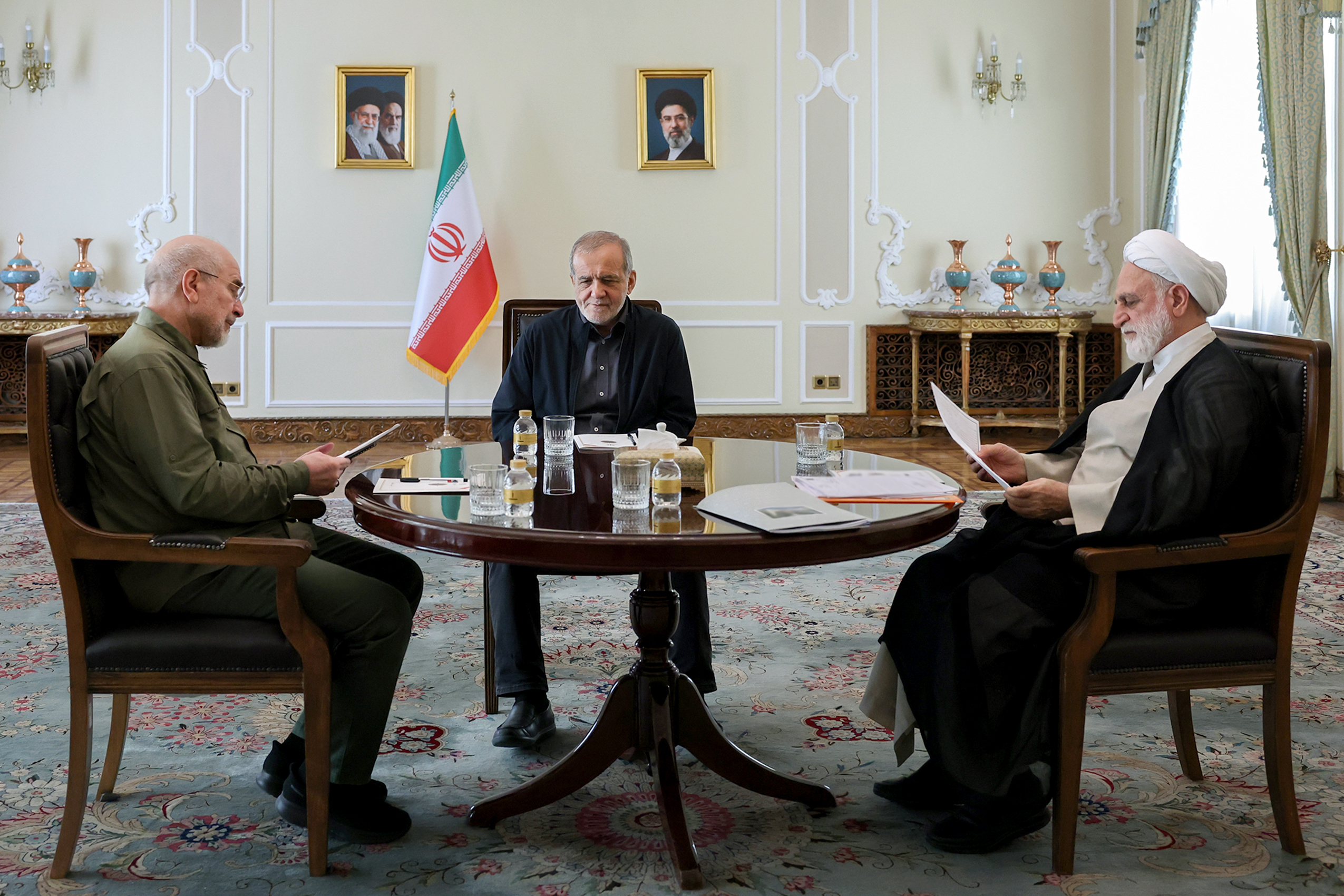
Remarks by Iran’s president offer a rare glimpse of how the Islamic Republic has adapted its decision making to the absence of its supreme leader.
Mohsen Rezaei at the Helm of Iran’s Supreme National Security Council
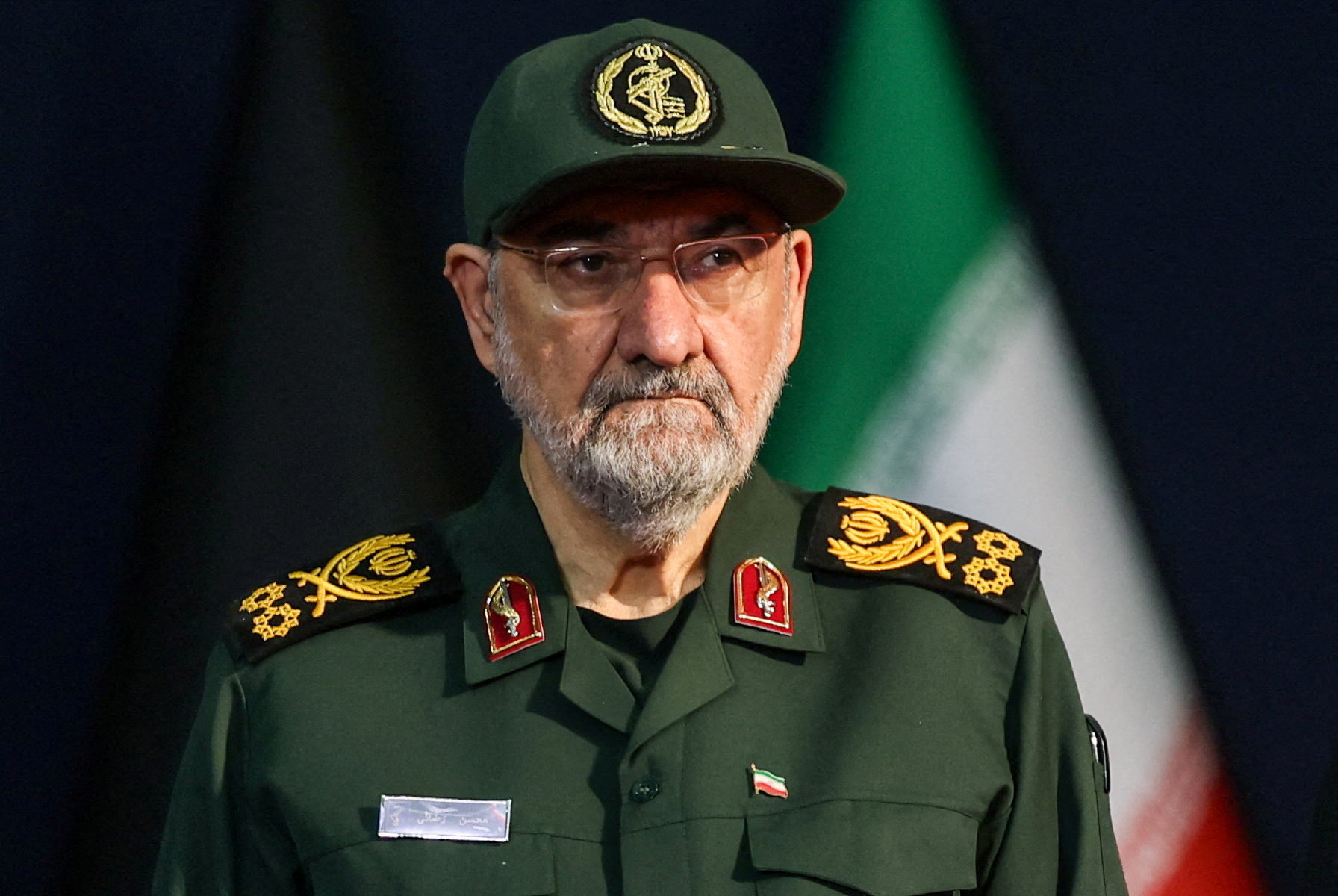
Under Rezaei, the SNSC could prove constructive or paralyze strategic decision making.
The Islamic Republic Returns to Offense
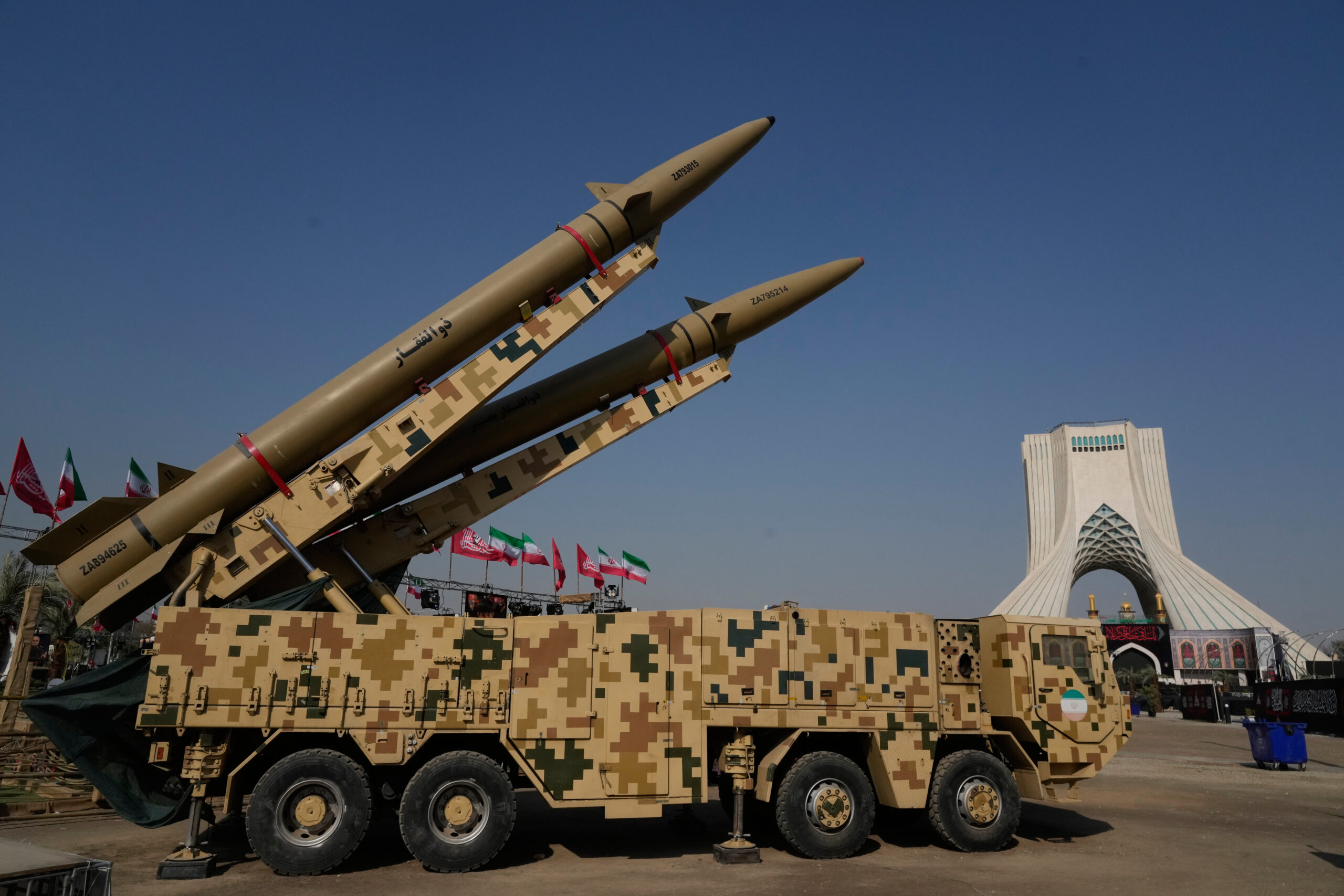
After U.S.-Israeli strikes killed Supreme Leader Ayatollah Ali Khamenei on February 28, Iran’s collective leadership has concluded that the best defense is a good offense.
Iran’s Collective Strategic Decision Making
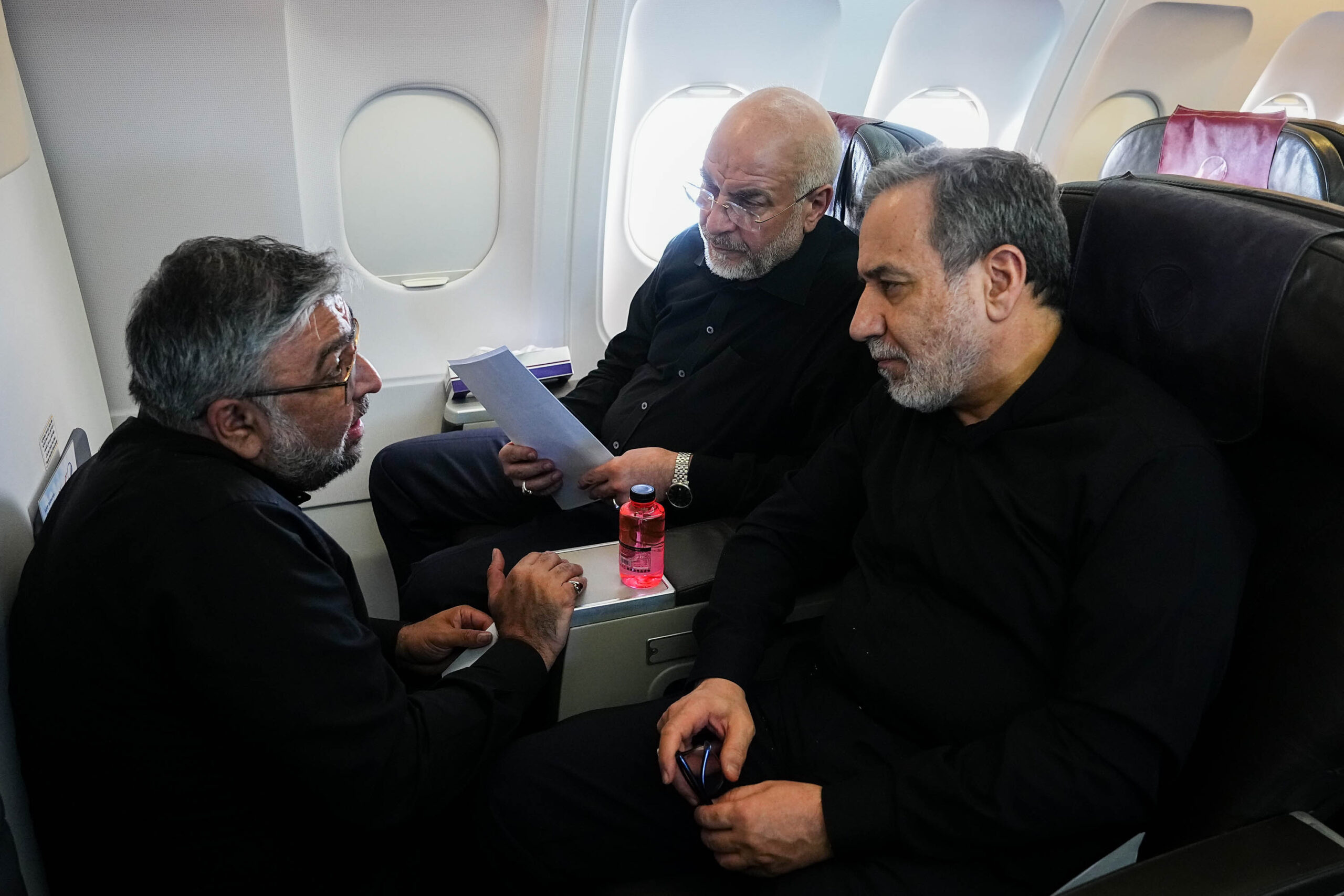
Wartime pressure has temporarily aligned the leadership’s overriding interest in regime survival, even as its members continue to differ over the costs, methods, and ultimate objectives of the war.
Events
Oct 6, 2026
Is the U.S.-Iran Stalemate a “New Normal” or the Prelude to Another Explosion?
On October 6, AGSI hosted a discussion on the U.S.-Iran stalemate and the prospects for a cease-fire.
Speakers



Book Talk: Iran and the Bomb: The United States, Iran and the Nuclear Question
On June 16, AGSI hosted a discussion on the evolution of Iran's nuclear program.
Speakers

Apr 21, 2026
Inside Iran’s Wartime Leadership: Power, Succession, and Regime Stability
On April 21, AGSI hosted a discussion on the evolution of Iran's leadership during the war.
Speakers

Mar 18, 2026
In Its Conflict With the United States and Israel, Does Escalation Favor Iran?
On March 18, AGSI hosted a discussion on the escalation of the Iran war.
Speakers