Beyond the End of The Line: Rethinking Saudi Arabia’s Urban Future
The announced curtailing of The Line megaproject is an inflection point that will continue to influence Saudi Arabia as it keeps building for the future.
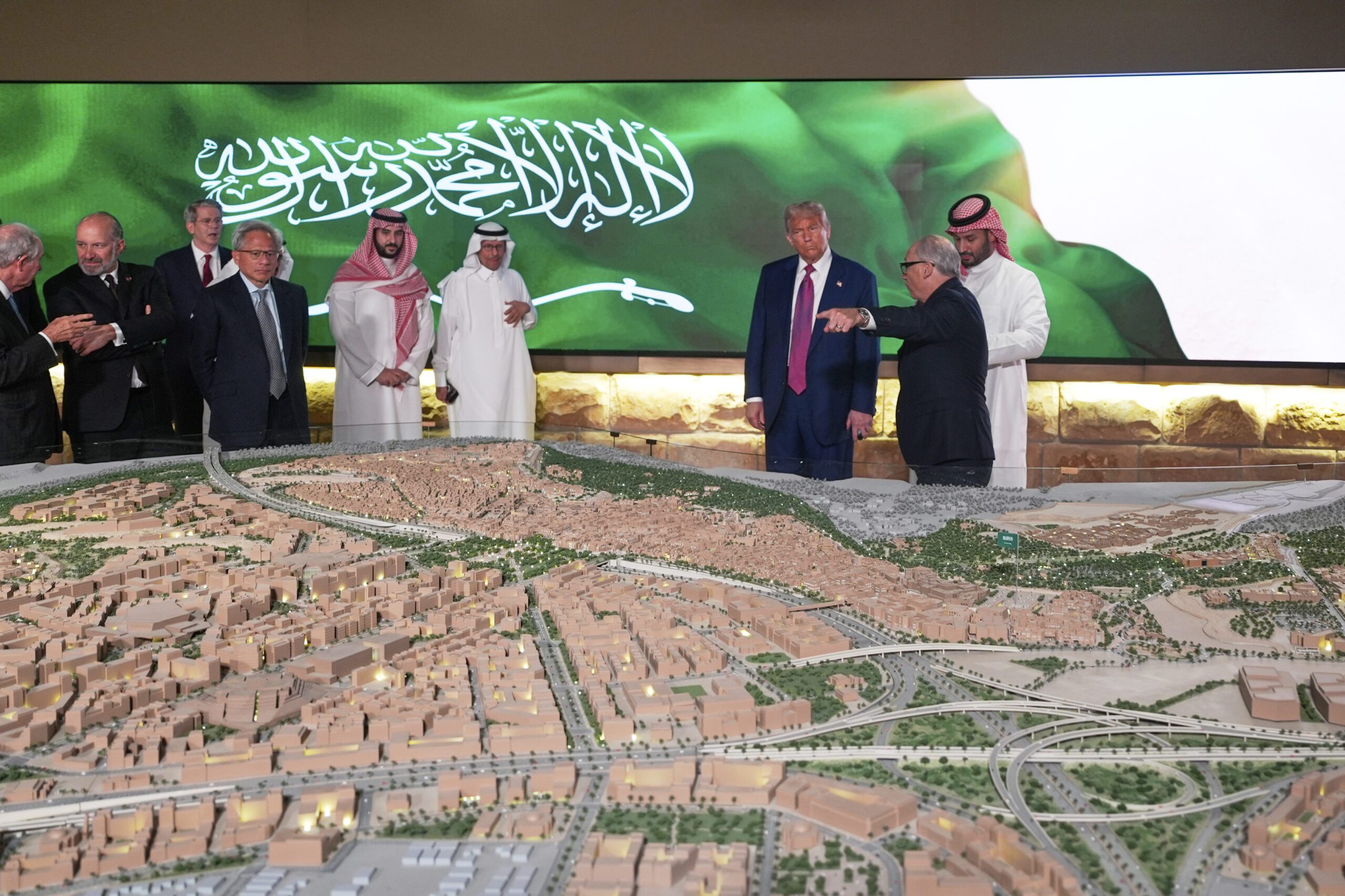
President Donald J. Trump and Saudi Crown Prince Mohammed bin Salman look at a model of a city under construction, May 13, in Riyadh, Saudi Arabia. (AP Photo/Alex Brandon)
When Saudi Arabia first unveiled The Line megaproject in early 2021, it held extraordinary promise – the vision of a city without cars, roads, or carbon emissions; a place where technology, landscape, and human life might coexist in perfect equilibrium. It was a bold and necessary provocation: a glimpse into a possible future for Saudi Arabia and, indeed, cities in countries everywhere. Much has changed since. What once stood as the purest expression of the kingdom’s ambition has, in recent months, been dramatically curtailed. Only a fraction of The Line may ever be built.
This apparent retreat has sparked predictable reactions. Critics see vindication for their skepticism, citing the project’s immense cost, technical improbabilities, and utopian detachment from reality. A recent Financial Times investigation detailing floating marinas, suspended stadiums, and the sheer impossibility of building a 105-mile mirrored city has reignited the charge of folly. Yet such judgments miss the deeper significance of The Line and what it began.
The Line was never merely a construction project; it was a statement of intent. Emerging from the earliest years of Saudi Vision 2030, it sought to announce that Saudi Arabia’s future would be measured not only in barrels of oil but in ideas. Its architectural audacity – the notion that 9 million people could live in a zero-carbon vertical corridor through the desert – was inseparable from a wider cultural awakening. It invited the world to see the kingdom not as a latecomer to modernity but as a laboratory for reimagining it.
There was, of course, a deliberate element of spectacle to command attention. It inserted Saudi Arabia into a global dialogue about the future of urban life – about density, sustainability, and the relationship between humans and their environment. It forced a discussion around whether a new model of urbanism could emerge from one of the world’s harshest climates, where conventional notions of mobility and comfort no longer applied.
Yet the tension between utopia and reality was present from the start. To live in The Line was to inhabit a diagram – a place of perfect geometry but uncertain humanity. Without streets, plazas, and other informal spaces where life unfolds, could it ever become a true city? Its mirrored surfaces promised a world of reflection but risked a world without depth. The city as machine, however efficient, could never replace the city as organism.
The project’s contraction may therefore arguably represent not failure but evolution. Grand visions rarely survive their first encounter with reality intact. Modernist architects developed masterplans for the capital of Brazil, Brasília; Chandigarh, the capital of the northern Indian state of Punjab; and even Dubai – the earliest masterplans for all these cities began as abstractions that had to yield to the pragmatic demands of daily life. Saudi Arabia is now undergoing a similar reckoning – not with its aspirations but with their scale. By paring back The Line, the kingdom may be rediscovering the human dimension of its own modernity.
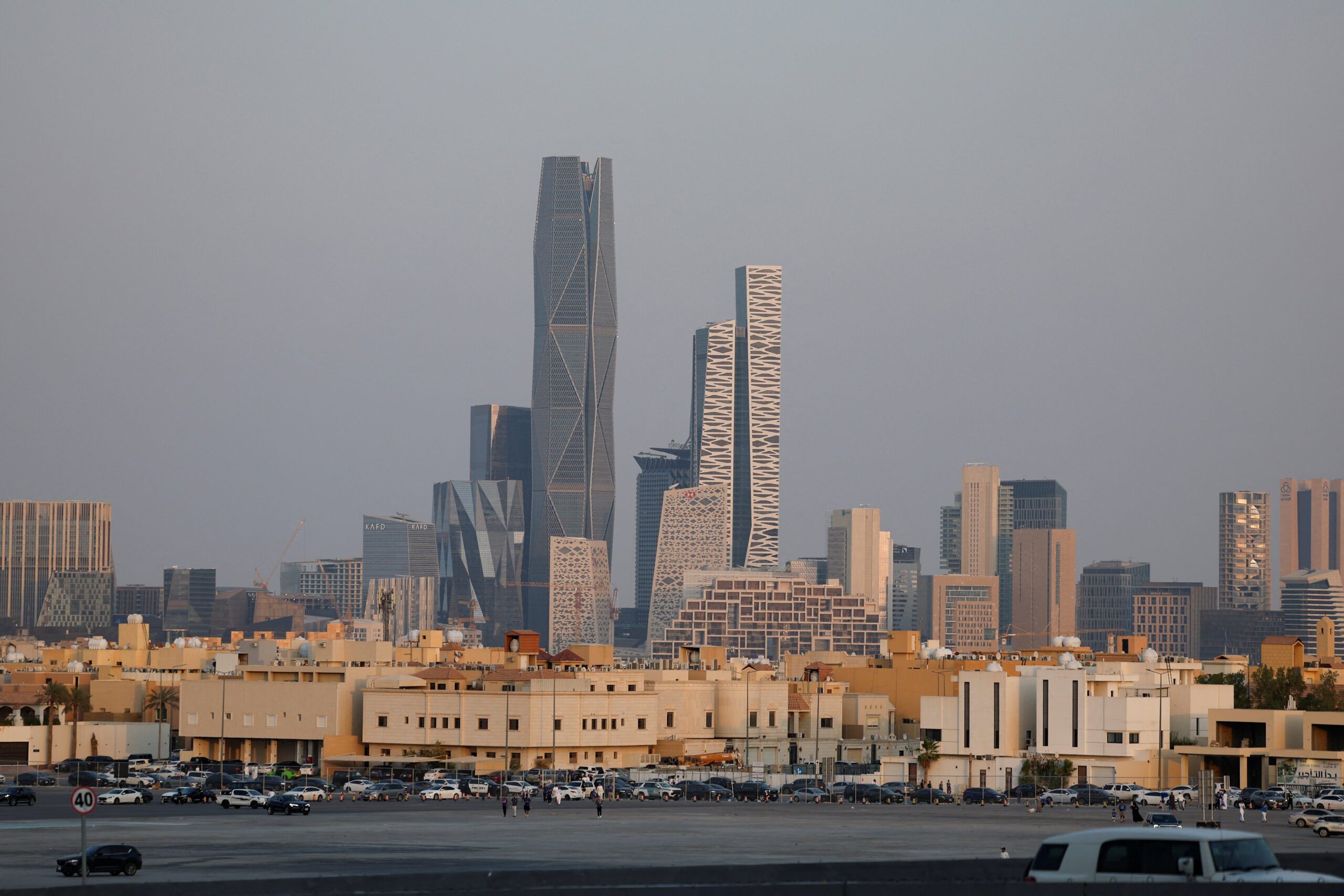
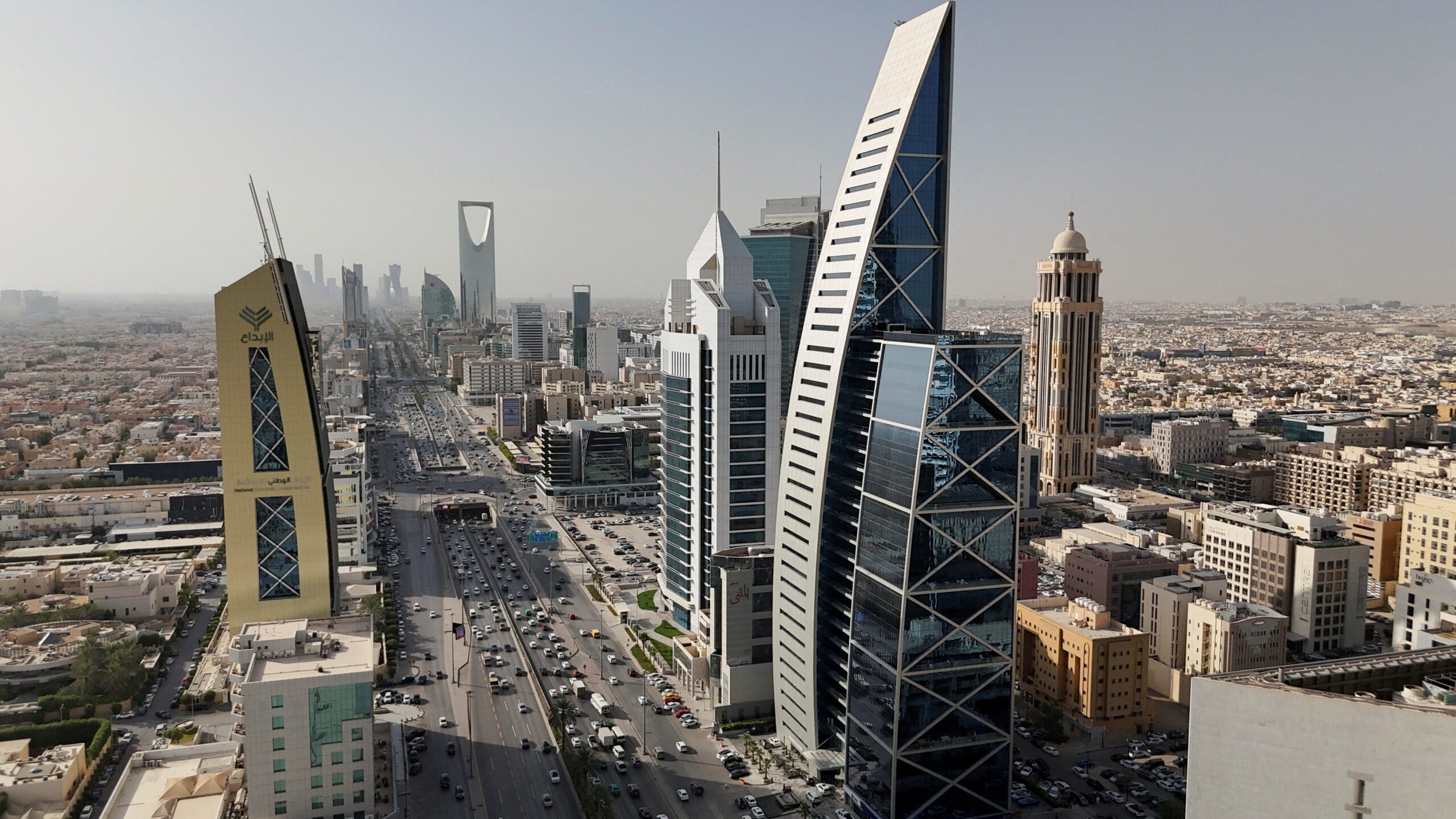
This shift reflects a larger maturation within Vision 2030. The early years were defined by monumental gestures – new cities, megaprojects, gigaplans. They were necessary to break the decades of inertia and announce that change was irreversible. But as the transformation takes root, the emphasis has begun to move toward livability, inclusion, and continuity. Across Riyadh, programs of “humanization” are introducing shaded walkways, public parks, and urban greenery. In Al-Ula and Diriyah heritage is being reinterpreted not as nostalgia but as a living urban fabric. These initiatives embody, in quieter form, the very ideals that The Line once dramatized: sustainability, integration, and the balance between progress and tradition.
Critics might still ask whether the vast sums invested in The Line – estimated at tens of billions of dollars – could have been better spent on social housing, education, or public infrastructure. It is a fair question, but it assumes that imagination and practicality are mutually exclusive. Ambition is itself a social resource. The energy that The Line unleashed – among architects, planners, and young Saudis who, for the first time, saw their country at the forefront of innovation – cannot be measured in financial return alone. The project demonstrated that Saudi Arabia was willing to experiment, take risks, and confront global challenges not with hesitation but with vision.
Indeed, some of The Line’s most important legacies are invisible: the research into renewable energy systems, modular construction, and digital design; the cross-pollination of ideas among local and international experts; and the cultivation of a generation of Saudi professionals who have now worked on one of the most complex urban experiments in history. These capacities will endure long after the last mirror panel is installed.
The more pressing question is what comes next. If The Line represented the kingdom’s leap into the future, its scaling back could signal a pivot toward grounded modernity – urbanism that is socially responsible, environmentally sensitive, and culturally resonant. The lesson is not to abandon boldness but to align it with the everyday realities of Saudi life: the need for affordable homes, equitable access, and cities that nurture community as much as they showcase innovation.
In this light, The Line was not a mistake but a constructive exaggeration – a provocation that stretched the boundaries of the possible so that the plausible might emerge. Every utopia performs this function. By imagining a world that cannot exist, it reveals what must change in the one that does. If the project helped shift the kingdom’s urban imagination from the static sprawl of the 20th century toward denser, more sustainable models, then its purpose has already been fulfilled.
Perhaps it is fitting that the story of The Line ends not with collapse but with reflection – on the meaning of ambition, limits of technology, and enduring power of dreams. Saudi Arabia’s transformation has never been linear; it moves by leaps and recalibrations, by trial and adaptation. What remains constant is the determination to redefine what an Arab city can be in the 21st century.
The mirrored wall across the desert may never stretch to the horizon, but its idea will continue to resonate – in Riyadh’s parks, Al-Ula’s restored landscapes, and the small-scale experiments that privilege people over spectacle. The end of The Line is, in that sense, not an ending at all. It is an inflection point – a moment when vision meets humility, and when the pursuit of the extraordinary begins to give shape to the possible. And as a Riyadh-based urban planning expert said about The Line: “I think as a thought experiment, great. But don’t build thought experiments.”
The views represented herein are the author's or speaker's own and do not necessarily reflect the views of AGSI, its staff, or its board of directors.
The development strategy behind Neom is coming into focus: Planners want the megaproject to reflect something greater than the sum of its parts while trying to tether lofty ambitions to reality with major global event commitments.
If the first phase of Vision 2030 was designed to capture imagination and reposition the kingdom globally, the next phase may focus on livability and affordability.
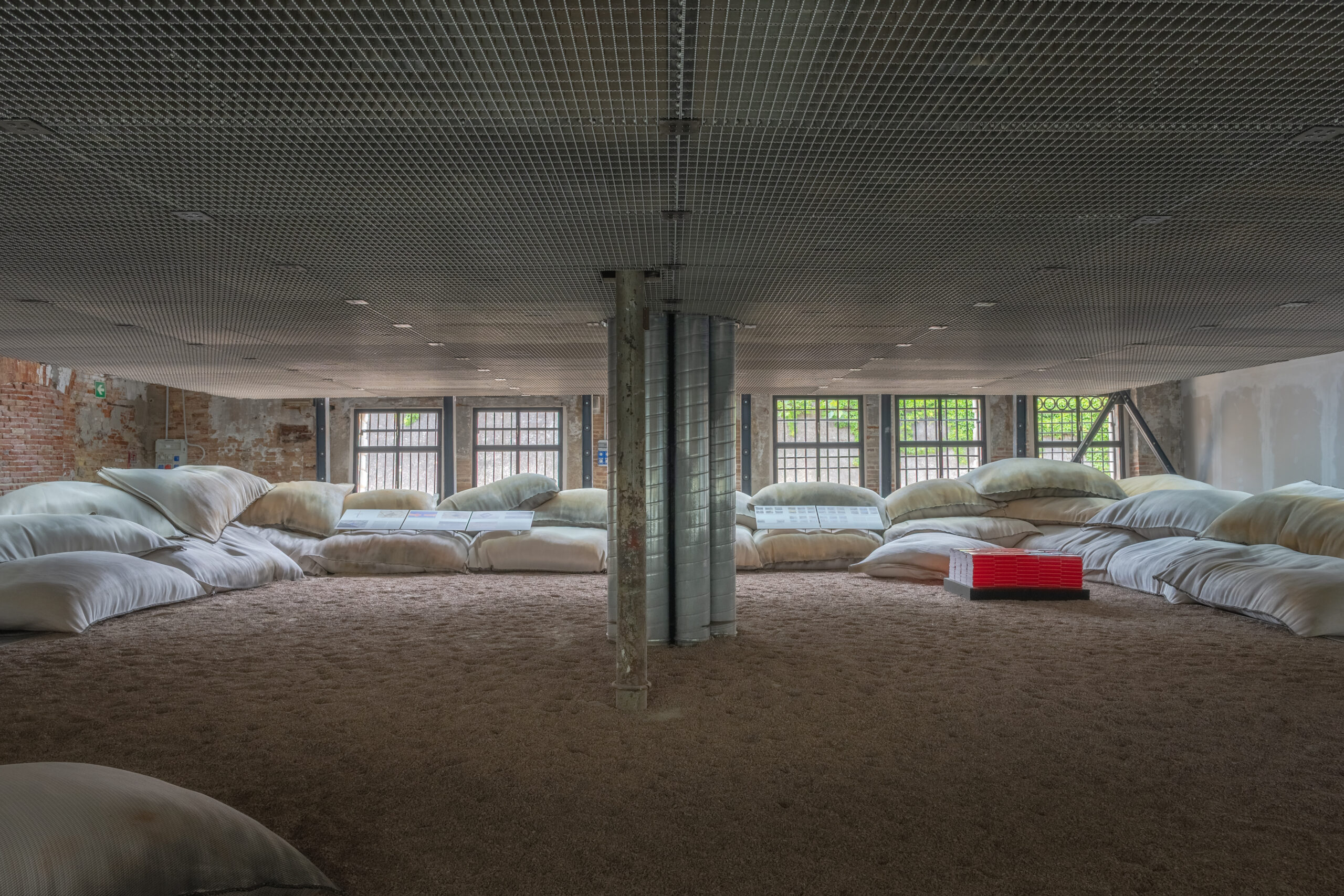
Bahrain’s pavilion at the 2025 Venice Biennale of Architecture is emblematic of how Gulf states are leveraging architecture to address – or at least narrate – pressing environmental and social questions.
This panel, part of the 2018 Gulf Arts and Culture Symposium, examined the proliferation of art districts in Gulf cities, covering the involvement of government agencies and the private sector in the development of art districts and consider urban and architectural strategies for integration of these districts within the city. The discussion considered regional case...