Qatar Energy: From U.S. LNG Competitor to Customer
Qatar Energy’s growing appetite for U.S. LNG suggests it is adopting elements of the “portfolio player” model, using a mix of sources to supply a global customer base.
Qatar Energy logo at the Qatar Energy headquarters in Doha, Qatar, October 12. (Photo by Jakub Porzycki/NurPhoto)
Qatar Energy is on a buying spree. The world’s largest liquefied natural gas seller signed two offtake deals in October with U.S. exporters, and more are on the way. Buying U.S. LNG provides an insurance policy against future disruptions to Strait of Hormuz shipping. More significantly, Qatar Energy is deepening its portfolio by adding gas volumes linked to Henry Hub (the benchmark U.S. natural gas price), leveraging its large tanker fleet and enabling it to sell U.S. cargoes to Europe and Asia in periods of elevated prices. This is a big change from Qatar Energy’s traditional model. The deals raise intriguing questions about its future expansion plans and influence over U.S. gas prices.
On October 22, Cheniere Energy announced a deal to sell 2 million tons per year each from its Sabine Pass and Corpus Christi liquefaction subsidiaries to Qatar Energy. The 4 million t/y sales and purchase agreements feature free-on-board terms – meaning that Qatar Energy will take ownership of the gas upon loading and manage its own shipping – with deliveries to begin “in the early 2030s and continue through the end of 2054.” Half of the contracted Sabine Pass volume is subject to a final investment decision, expected by 2027, for the first phase of a planned expansion project. With approximately 56 million t/y in capacity at its Sabine Pass and Corpus Christi facilities, Cheniere is the largest U.S. LNG exporter and holds the world’s second-largest liquefaction capacity after Qatar Energy.
One week later, Woodside Energy announced a 20-year, 3 million t/y agreement with Qatar Energy for its Louisiana LNG project. Woodside will supply the gas on a free-on-board basis “from the start-up of Louisiana LNG Train 2, increasing to 3 million t/y from the start-up of Train 3.” Louisiana LNG is a three-train project with capacity of 16.5 million t/y. The Australian company took final investment decision in April 2025 and plans to start production in 2029. Signing such a large offtake deal with Qatar Energy was important for Woodside, which still has substantial uncontracted capacity at the project.
Qatar Energy already had interests in U.S. LNG. The company holds a 70% equity stake in the three-train, 18.1 million t/y capacity Golden Pass LNG project, alongside ExxonMobil. Golden Pass took final investment decision in 2019 and faced significant construction delays but shipped its first cargo in April and aims to start production at its second and third trains in 2027. For the Qatari state gas company, Golden Pass was an early move to secure Atlantic Basin volumes. In 2022, Qatar Energy and ExxonMobil agreed to market their respective shares of equity volumes from Golden Pass, leaving Qatar Energy’s marketing subsidiary in charge of offtake, transport, and trade of 12.67 million t/y upon full capacity.
Qatar Energy is already the largest single buyer of U.S. LNG, thanks to its megadeals with Cheniere and Woodside, but more transactions are in the offing. Reports suggest it is negotiating with other U.S. LNG sellers for up to 6 million t/y in new offtake deals.
It’s Not About Replacing Lost Volumes
There are several dimensions to these U.S. LNG deals. They provide an insurance policy against future disruptions to Qatar Energy’s domestic production. But more important, the company is building an international portfolio, adding length in free-on-board cargoes with hub-linked pricing, and enhancing its capacity to seize arbitrage opportunities.
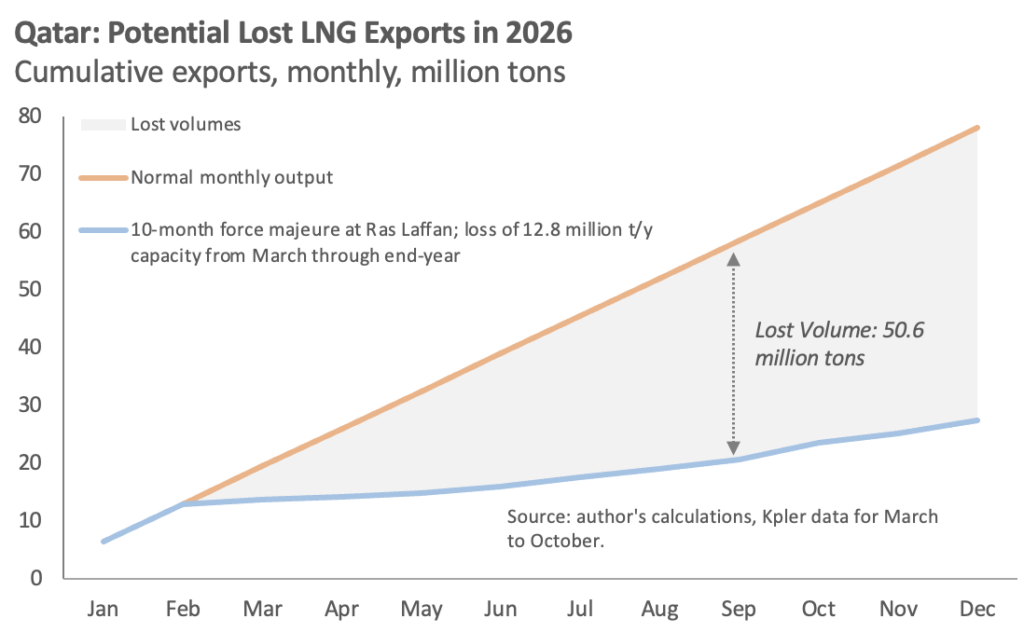
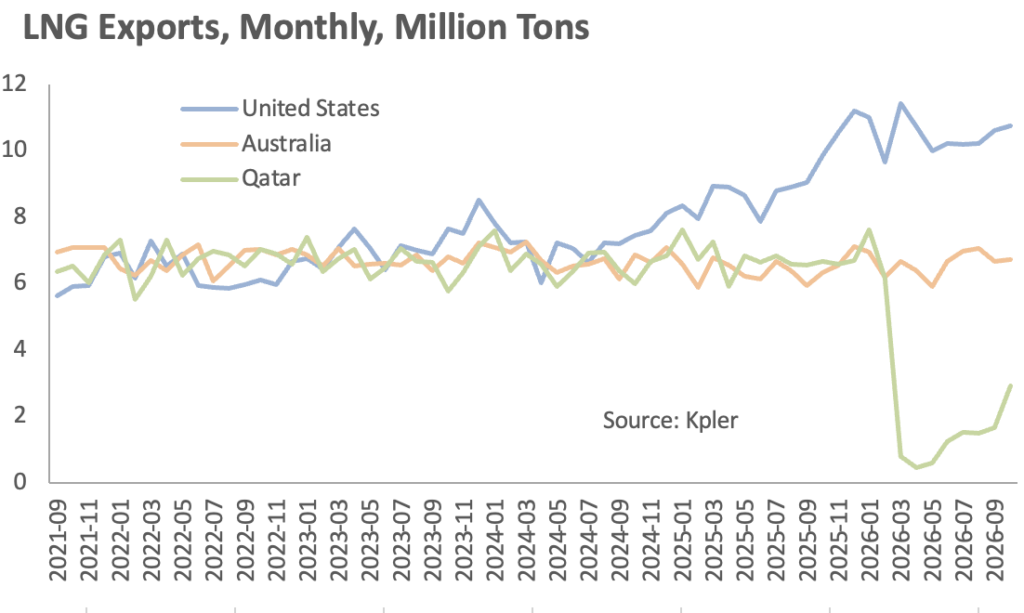
In an October Reuters interview, Qatar Energy CEO Saad Sherida Al Kaabi suggested the deals do not address current challenges. The company declared force majeure at Ras Laffan in early March, signaling inability to supply its term customers. Qatar may lose a stunning 50 million tons in export volumes in 2026. But the Cheniere and Woodside deals will not provide material gas volumes until the early 2030s. This indicates that Qatar Energy believes transit risks in the Gulf could persist for many years or at least warrant a serious contingency plan. Securing supply in other regions ameliorates longer-term risks.
Instead of simply replacing lost volumes, the company is ensuring that it can take advantage of future disruptions by building an ex-Qatar supply portfolio. Qatar Energy owns nearly 200 LNG tankers and operates a sizeable trading desk. Kaabi suggested that with “the arbitrage capability that we have, the volume, the number of ships,” Qatar Energy can shift cargoes to seek the highest return. Accessing free-on-board cargoes enhances flexibility, and Henry Hub-linked gas pricing in the United States adds a new commercial element. Kaabi said the company’s target for U.S. LNG is “much higher” than 7 million t/y.
This is a major shift in commercial strategy. Since the inception of Qatar’s LNG industry, it has held unique advantages: an enormous, low-cost supply base in the North Field, and a geographic location that enabled it to reach customers in the Pacific and Atlantic Basins (typically, Qatar sells about 80% of its LNG to Asia). Qatar Energy was the ultimate point-to-point LNG seller, building long-term relationships and using its scale and reputation for reliability to drive a hard bargain on commercial terms, especially in Northeast Asia. It typically insisted on destination restrictions (barring customers from reselling cargoes they did not need) and maintained a strong preference for long-term deals and oil-linked pricing.
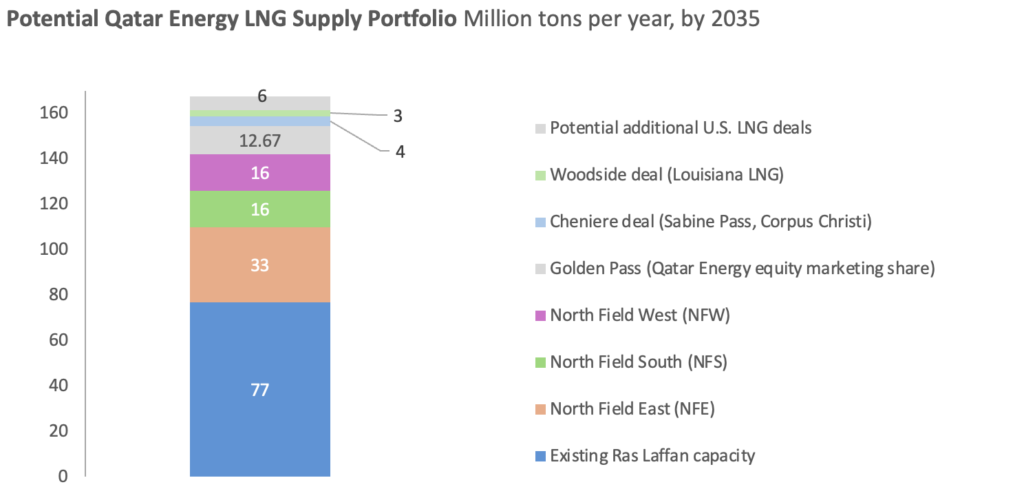
The rise of U.S. LNG, with its flexibility, hub-linked pricing, and variety of projects and sellers vying for customers, presented a new challenge. But Qatar remained confident, even as it announced a three-phase LNG capacity expansion to raise production capacity from 77 million t/y to 142 million t/y. The expansion creates a significant marketing challenge. Before the Iran war, Qatar Energy was on track to hold some 54 million t/y in uncontracted capacity by 2035, including its expansion trains and expiring contracts.
Notes: Damage to two Ras Laffan trains has removed 12.8 million t/y in capacity, likely until 2028 or later. Cheniere total assumes FID at Sabine Pass expansion. Potential U.S. LNG deals: estimate based on media reports.
The Cheniere and Woodside deals, and Qatar’s appetite for more U.S. LNG, suggest it is now moving toward a different model. The company is adopting elements of the “portfolio player” model offered by the supermajors and commodity trading houses, using a mix of sources to supply a global customer base. To be sure, exports from its own trains will remain the foundation of its LNG business. But Qatar Energy now seems determined to build a sizeable portfolio elsewhere.
Three Big Questions for the Global LNG Industry
These moves raise three significant, as yet unanswered, questions. First is how Qatar will manage the current market disruption. Damage to two of its trains has left 12.8 million t/y in capacity offline, and repairs will likely take another two years at minimum. And with the security situation in the Gulf still unresolved and force majeure continuing at Ras Laffan, the company’s term customers are scrambling for replacements elsewhere. The unprecedented outage this year has damaged Qatar Energy’s previously sterling reputation for reliability. It seems likely that customers in Northeast Asia, South Asia, and elsewhere will now have more leverage in commercial negotiations as they factor in transit and supply risks that previously seemed minimal.
The second question is how these choices affect Qatar’s domestic expansion plans. As noted, Qatar Energy already had substantial gas volumes to market, with its planned capacity additions as well as expiring contracts. The company expects to complete construction of its North Field East expansion by the end of 2026, enabling first production in 2027. It has awarded the key engineering and construction contracts for the later North Field South and North Field West projects. Yet adding even more volume to its portfolio suggests a sizeable challenge in placing all of these cargoes. Qatar Energy remains bullish about long-term gas demand in developing Asia, but perhaps it will need to make more investments in downstream infrastructure to help develop these markets.
A third question is whether U.S. policymakers will be wary of allowing Qatar Energy to control too large a share of U.S. LNG output. Between its Golden Pass volumes, the Cheniere and Woodside deals, and potential new supply agreements, Qatar Energy could hold at least 25 million t/y in U.S. LNG volumes by the early 2030s. Generally, U.S. LNG sales and purchase agreements allow buyers the option to cancel cargoes and pay fixed fees to liquefaction facility owners. Widespread cancellations occurred in 2020 with the coronavirus-related economic contraction and gas demand destruction. Qatar Energy now has, in theory, the ability to curtail contracts for U.S. LNG – on a scale large enough to alter natural gas prices in the United States. If its U.S. LNG portfolio grows even larger, policymakers may begin to consider some of these issues.
The views represented herein are the author's or speaker's own and do not necessarily reflect the views of AGSI, its staff, or its board of directors.
Gulf producers have raised billions of dollars by selling stakes in pipeline revenue while retaining ownership and operational control. But what happens when the pipelines stop working?
Gulf national oil companies are looking to increase stockpiles in Asia to meet customer needs, address their energy security concerns, and enable a nimbler response to unexpected market disruptions.
Gulf national oil companies are looking to increase stockpiles in Asia to meet customer needs, address their energy security concerns, and enable a nimbler response to unexpected market disruptions.
OPEC+ producers are increasing output in the face of a global economic downtown. This will be a major test for non-OPEC producers, but OPEC+ seems confident that time is on its side.
On July 8, AGSIW hosted a private briefing on the developing OPEC+ dispute and the repercussions for the future of the alliance as well as Saudi-UAE relations.