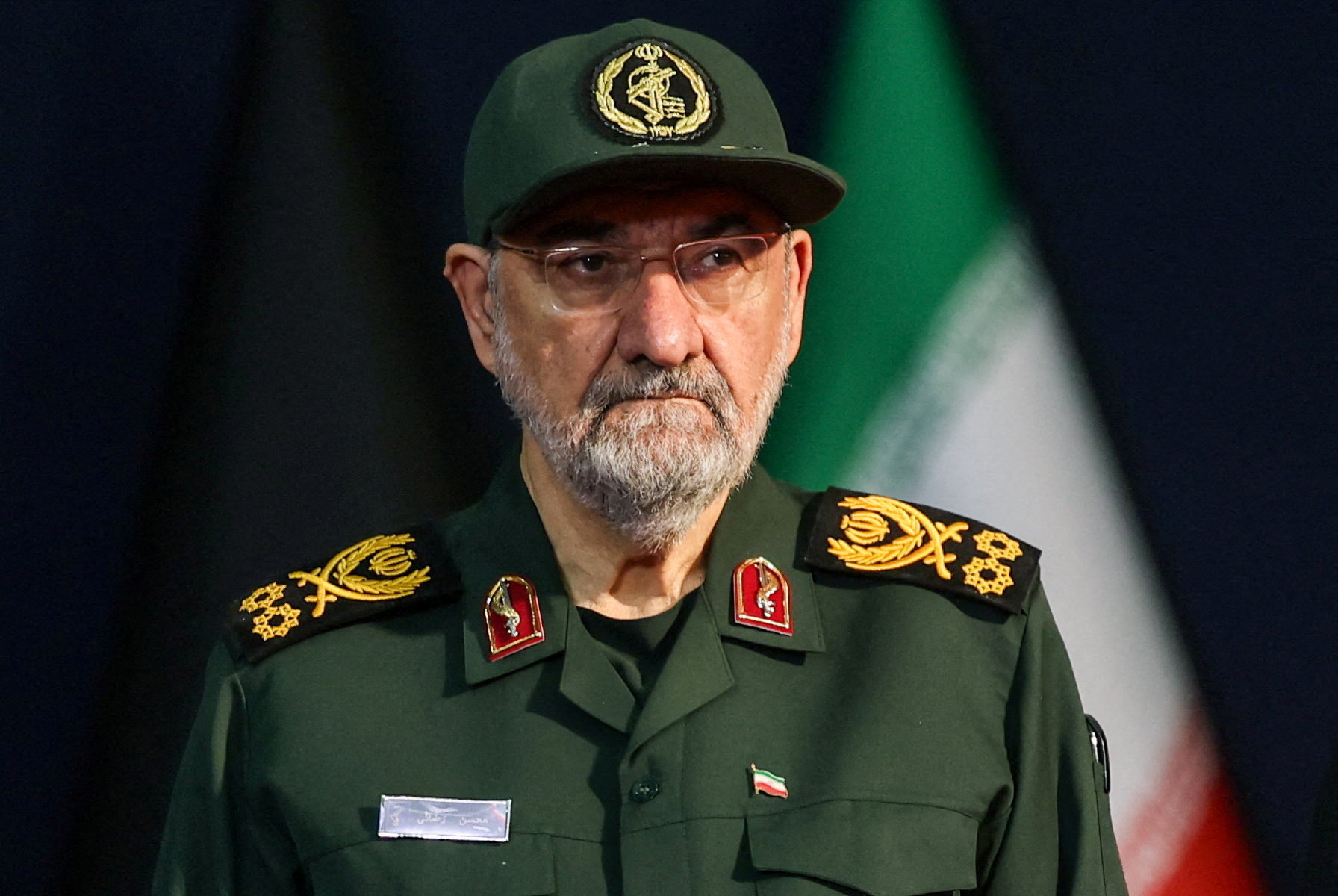
Then-advisor to Iran's supreme leader, Mohsen Rezaei attends a farewell ceremony for late-Supreme Leader Ayatollah Ali Khamenei at the Imam Khomeini Grand Mosalla in Tehran, Iran, July 3. (REUTERS/Mohammed Salem)
Major General Mohsen Rezaei’s designation as Supreme Leader Ayatollah Mojtaba Khamenei’s representative to the Supreme National Security Council on August 9, followed a day later by his appointment as the council’s secretary by President Masoud Pezeshkian, came as a surprise: His predecessor, Brigadier General Mohammad-Bagher Zolqadr, had held the secretary’s post only since March 24. Why the haste to give Rezaei the SNSC leadership role?
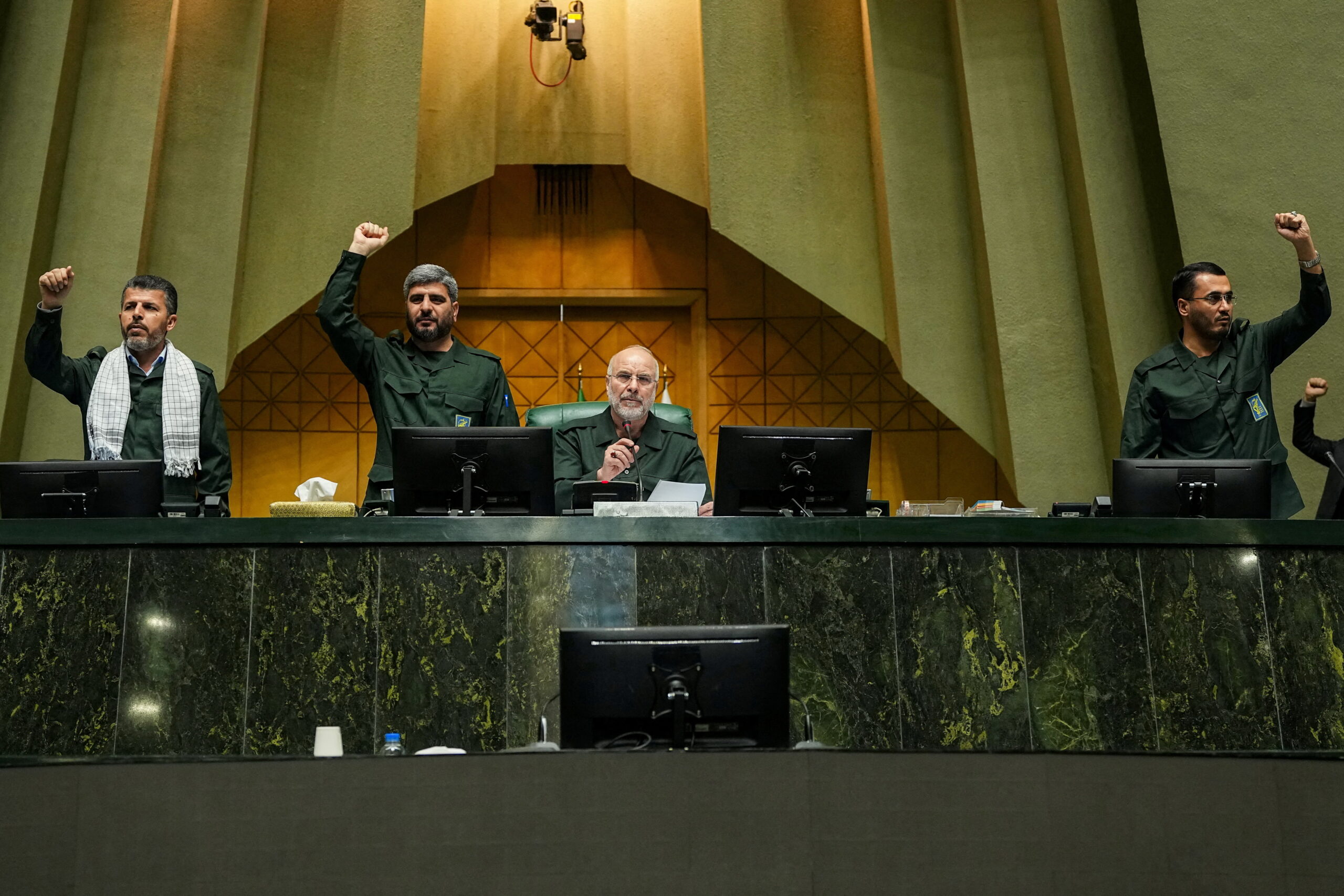
One plausible explanation emerging from Iran-based and international media coverage is that the change was intended to curb the influence of Parliamentary Speaker Mohammad-Bagher Qalibaf, to whom Zolqadr was perceived as close. During his unsuccessful 2005 presidential campaign, Qalibaf famously declared: “The country needs a Reza Khan,” making a reference to the Cossack Brigade officer who seized power in a 1921 coup and founded the Pahlavi dynasty in 1925. Qalibaf continued: “And I am a Hezbollahi Reza Khan.”
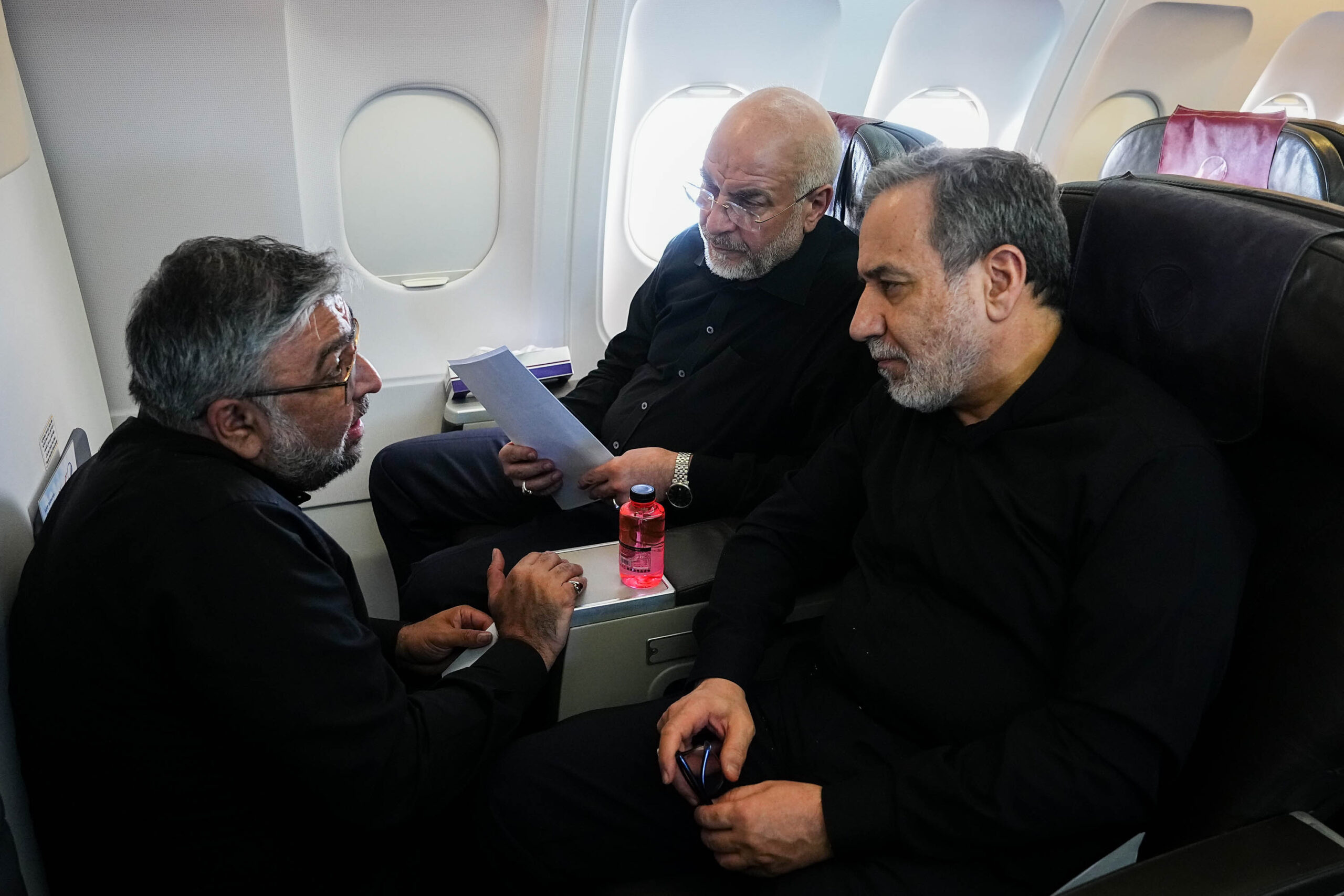
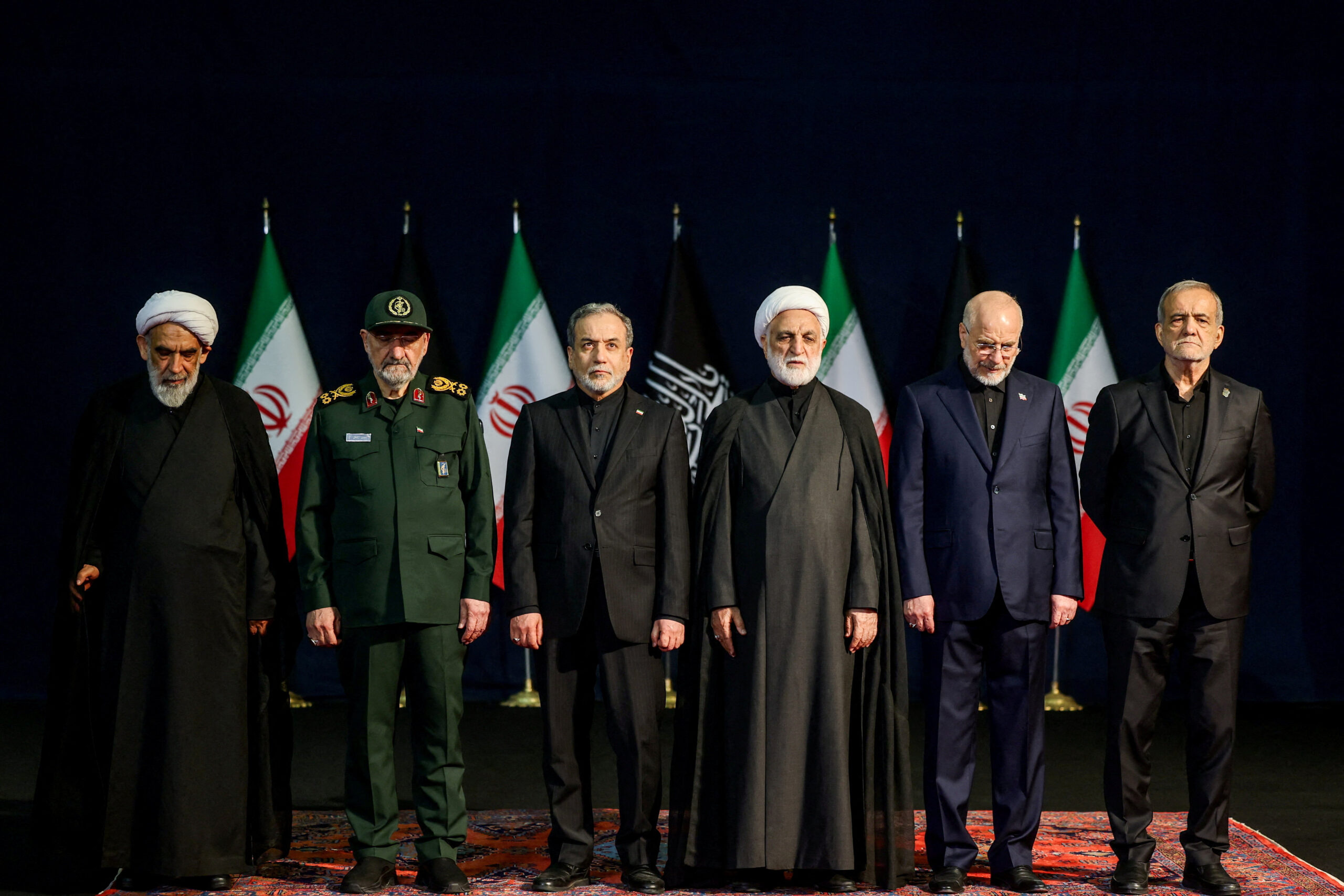
Rezaei’s appointment may thus reflect machinations of the Islamic Revolutionary Guard Corps Commander in Chief Major General Ahmad Vahidi to counterbalance the ambitious speaker. In Mojtaba Khamenei’s absence, Iran is governed by a de facto collective leadership comprising the president, parliamentary speaker, judiciary chief, and representatives of the IRGC and regular military. Vahidi may have persuaded his fellow members that Qalibaf’s unchecked ambitions posed a danger best contained by appointing a secretary whose military rank and stature surpassed those of the parliamentary speaker, an IRGC brigadier general. Yet Rezaei’s ego and political ambitions rival Qalibaf’s, potentially creating new problems for the regime.
These dynamics raise two fundamental questions: How has Rezaei’s appointment altered the balance of power within the SNSC and the regime’s broader collective leadership, and what are the implications for Iran’s collective strategic decision making?
As one of the IRGC’s cofounders and its longest-serving commander in chief (1981-97), Rezaei commands the respect of its old guard. His record, however, is tarnished by conduct bordering on insubordination toward the civilian leadership, as documented in the late Ayatollah Ali Akbar Hashemi Rafsanjani’s journals, and by military failures – notably the disastrous Operation Karbala-4 in December 1986, an offensive intended to pave the way for the capture of Basra. To younger IRGC commanders shaped by the Syrian civil war and the ongoing war with Israel and the United States, he may also appear a relic of the past rather than an inspiring leader equipped to meet today’s challenges. Worse still, his repeated electoral failures since entering civilian politics in 1997, compounded by his outlandish suggestion in 2015 that Iran could ease its economic woes by capturing at least 1,000 Americans in the event of a U.S. attack and demanding billions of dollars for each captive’s release, have reduced him to something of a comic figure.
Against this mixed backdrop, Rezaei has approached the secretary’s office with an expansive conception of his responsibilities. In a public letter of thanks following his appointment, he outlined a national program linking economic welfare to military strength. Such language is consistent with the regime’s priorities, but its breadth suggests ambitions extending beyond policy coordination, which is the main task of the secretary. Whether those ambitions translate into bureaucratic encroachment remains difficult to establish under wartime censorship.
The institutional setting matters. The present collective leadership arrangement draws on an earlier practice of senior officials governing collectively under an absent or inaccessible supreme leader’s authority. Statements issued in Mojtaba Khamenei’s name can legitimize their decisions without establishing how actively – if at all – he participates in making them. Rezaei’s appointment as the supreme leader’s representative therefore enhances his standing, but he remains subordinate to the collective leadership.
The SNSC is meant to provide the collective leadership with policy proposals and enforce policies adopted by it. Ideally, its secretary synthesizes competing bureaucratic proposals and coordinates implementation of approved policies. Yet, former Foreign Minister Mohammad Javad Zarif’s account of Admiral Ali Shamkhani’s tenure depicts a secretariat developing preferences of its own and cooperating with military representatives at the Foreign Ministry’s expense.
Under Rezaei, the SNSC could prove constructive or paralyze strategic decision making.
Rezaei’s seniority helps reconcile competing assessments and conflicting preferences of Iran’s government bureaucracy within the SNSC. He could also secure the old guard’s acceptance of compromises and lend political cover to decisions less established officials would hesitate to defend. But these benefits depend on Rezaei faithfully conveying the bureaucracy’s policy proposals to the collective leadership rather than imposing his own ideas on the SNSC. They also require him to accept the collective leadership’s authority and abide by its policy decisions, even when it rejects his advice.
The danger arises if he treats his seniority as a claim to personal supremacy. Military rank does not determine authority among the heads of government branches, and Qalibaf is unlikely to regard the former IRGC commander as his political superior. Pezeshkian, meanwhile, has reason to resist a secretary who uses national security coordination to encroach on executive responsibilities. Nor should Rezaei’s preferences automatically be equated with those of the IRGC, as his personal ambitions and outsized ego could produce friction with Vahidi and the IRGC.
There is already a limited indication of possible friction. In an August 28 interview, Pezeshkian offered a vague response when asked about Rezaei’s proposal to restructure Iranian diplomacy. This could suggest inadequate consultation, although it does not establish an open conflict. In the same interview, Pezeshkian described the supreme leader as accepting policies supported by three-quarters of SNSC members.
Rezaei’s capacity for obstruction could nevertheless exceed his voting strength. A secretary determined to reopen settled questions could delay implementation, contest negotiating instructions, or insist that concessions require renewed consultation. Should Qalibaf and Pezeshkian respond by bypassing him, rival channels could leave diplomats and military officials uncertain whose instructions prevail. In the worst case, his ego could turn the machinery intended to reconcile competing interests into an instrument of total paralysis in strategic decision making.
The absence of an accessible supreme leader makes such a dispute harder to resolve. Collective ownership can discourage individual members from disavowing agreed upon policies, but it also requires each participant to accept outcomes he dislikes. A Rezaei unwilling to do so could force the collective leadership to choose between accommodating him and removing the official seemingly appointed to restrain Qalibaf. Either course could disturb the balance his appointment was meant to preserve. Agreement on regime survival would not necessarily settle disagreements over who may negotiate its terms.
For now, however, Rezaei appears to be in line. His statements on the Strait of Hormuz, regional security, and the Nuclear Non-Proliferation Treaty do not by themselves demonstrate a separate strategic agenda. His October 3 pledge of SNSC support for the government’s economic management and his emphasis on serious negotiations also point toward public alignment with Pezeshkian. Bellicose rhetoric can serve an agreed upon negotiating position; it is insufficient evidence of rebellion against the collective leadership.
For U.S. negotiators, the practical test is whether an agreed upon Iranian position survives the transition from bargaining to implementation. Rezaei could help secure that continuity or make his personal assent an additional obstacle. The risk will become especially acute when negotiations require concessions for which rival officials can assign blame. For now, his ambitions appear contained within the collective arrangement. Whether his ego permits that arrangement to function when compromise becomes unavoidable remains an open question.
The views represented herein are the author's or speaker's own and do not necessarily reflect the views of AGSI, its staff, or its board of directors.
Wartime pressure has temporarily aligned the leadership’s overriding interest in regime survival, even as its members continue to differ over the costs, methods, and ultimate objectives of the war.
While there is historical precedent for collective leadership in Iran, today’s leadership includes representatives of the IRGC and regular military – a reflection of the IRGC’s expanding role and the necessities of governing under wartime conditions.
After U.S.-Israeli strikes killed Supreme Leader Ayatollah Ali Khamenei on February 28, Iran’s collective leadership has concluded that the best defense is a good offense.
Wartime pressure has temporarily aligned the leadership’s overriding interest in regime survival, even as its members continue to differ over the costs, methods, and ultimate objectives of the war.
While there is historical precedent for collective leadership in Iran, today’s leadership includes representatives of the IRGC and regular military – a reflection of the IRGC’s expanding role and the necessities of governing under wartime conditions.