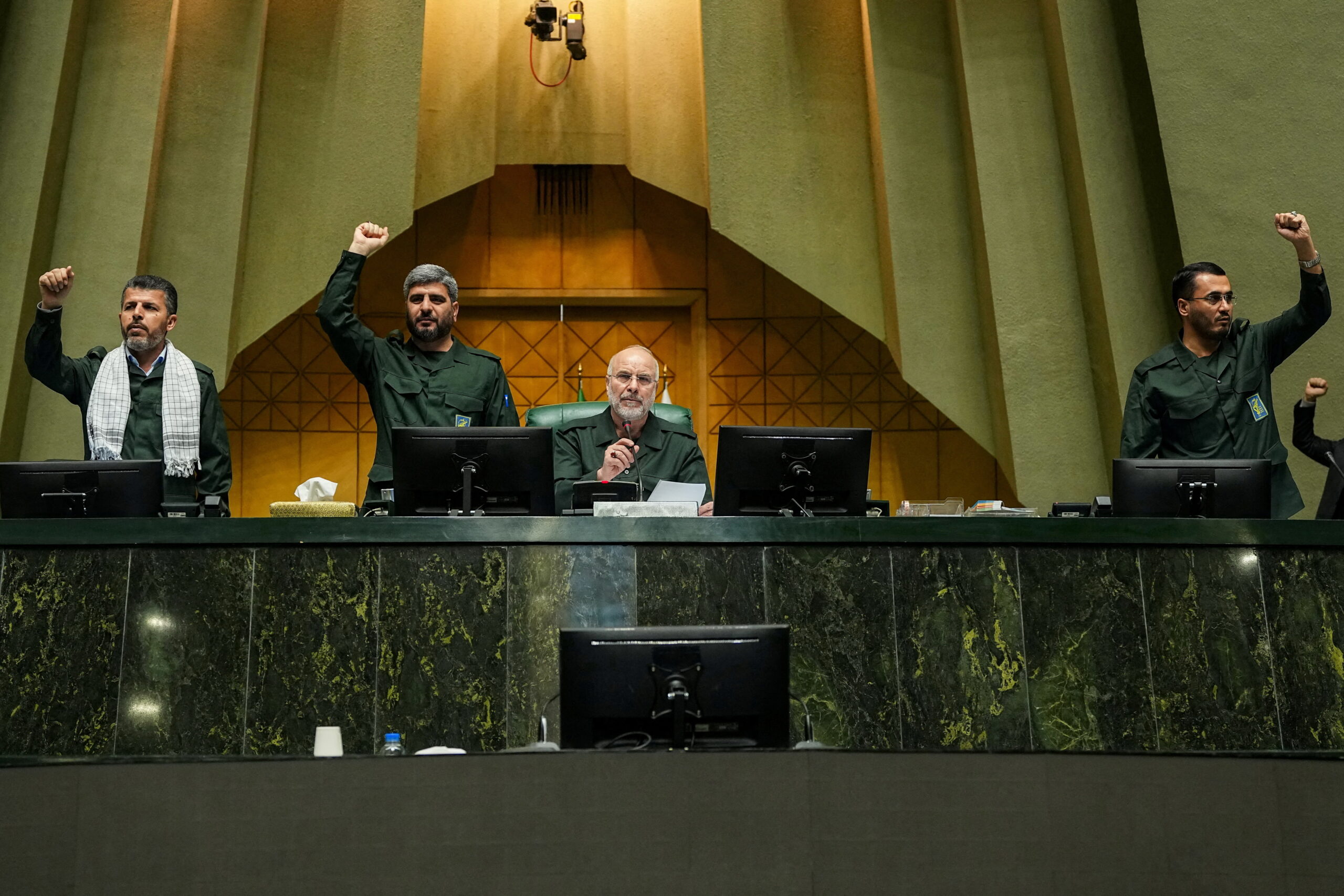
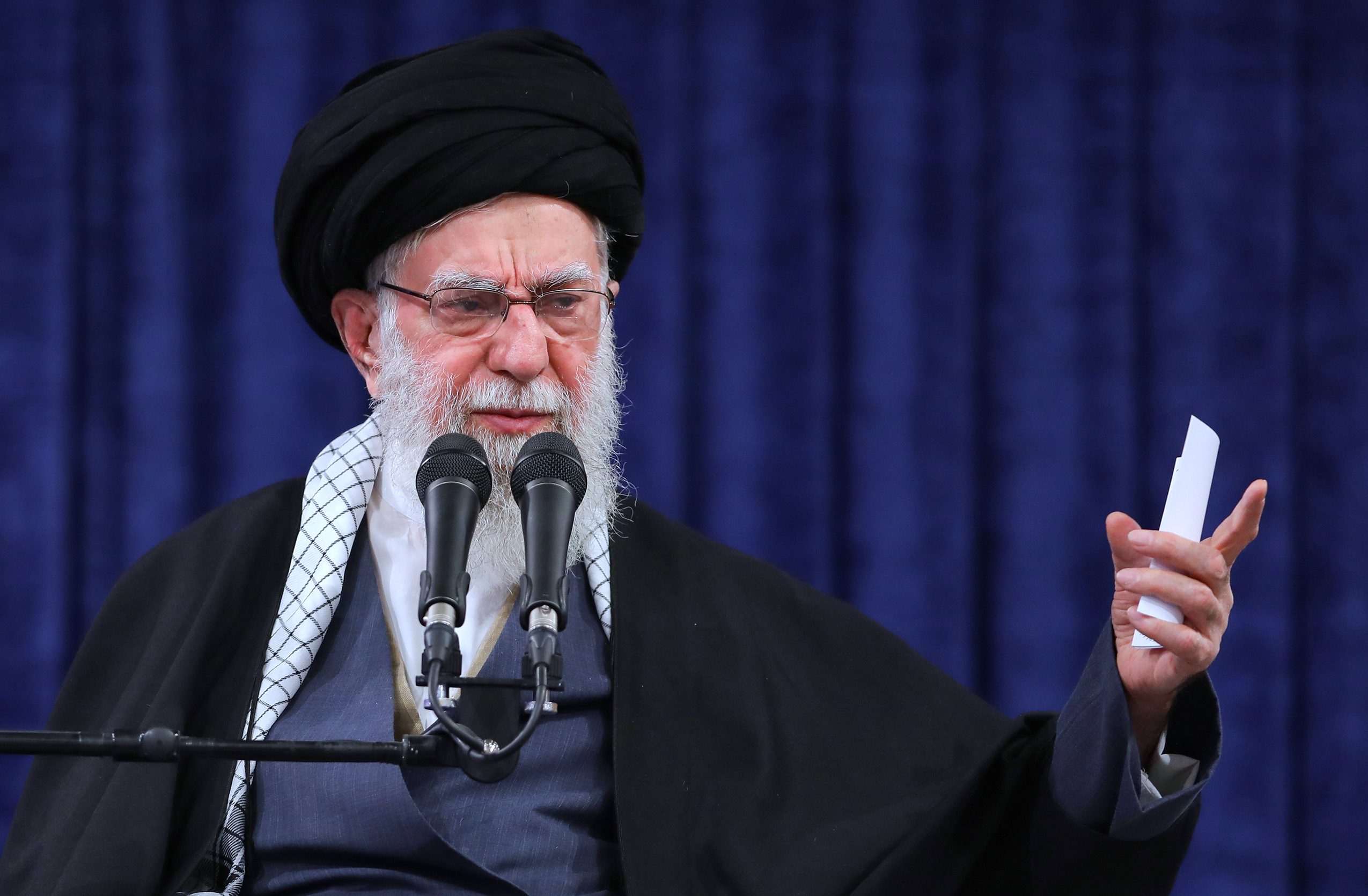
Iranian Parliamentary Speaker Brigadier General Mohammad-Bagher Qalibaf looks on as members of Parliament chant in support of the Islamic Revolutionary Guard Corps in Tehran, Iran, February 1. (Hamed Malekpour/Islamic consultative assembly news agency/WANA/Handout via REUTERS)
Israel’s February 28 assassination of Ayatollah Ali Khamenei, Iran’s supreme leader since 1989, did more than decapitate the Islamic Republic; it laid bare a transformation long underway. What has emerged in its wake is not a reconstituted republic but a military order led by the Islamic Revolutionary Guard Corps. In this order, Supreme Leader Ayatollah Mojtaba Khamenei, who has been in hiding, occupies the summit as a ceremonial figurehead, civilian officials serve as expendable custodians of a system they no longer direct, and Parliamentary Speaker Brigadier General Mohammad-Bagher Qalibaf has emerged as the man on horseback. He is of course a former IRGC senior commander with an impressive pedigree in that service; his ascent is not the harbinger of a new regime but the apotheosis of IRGC control of the state.
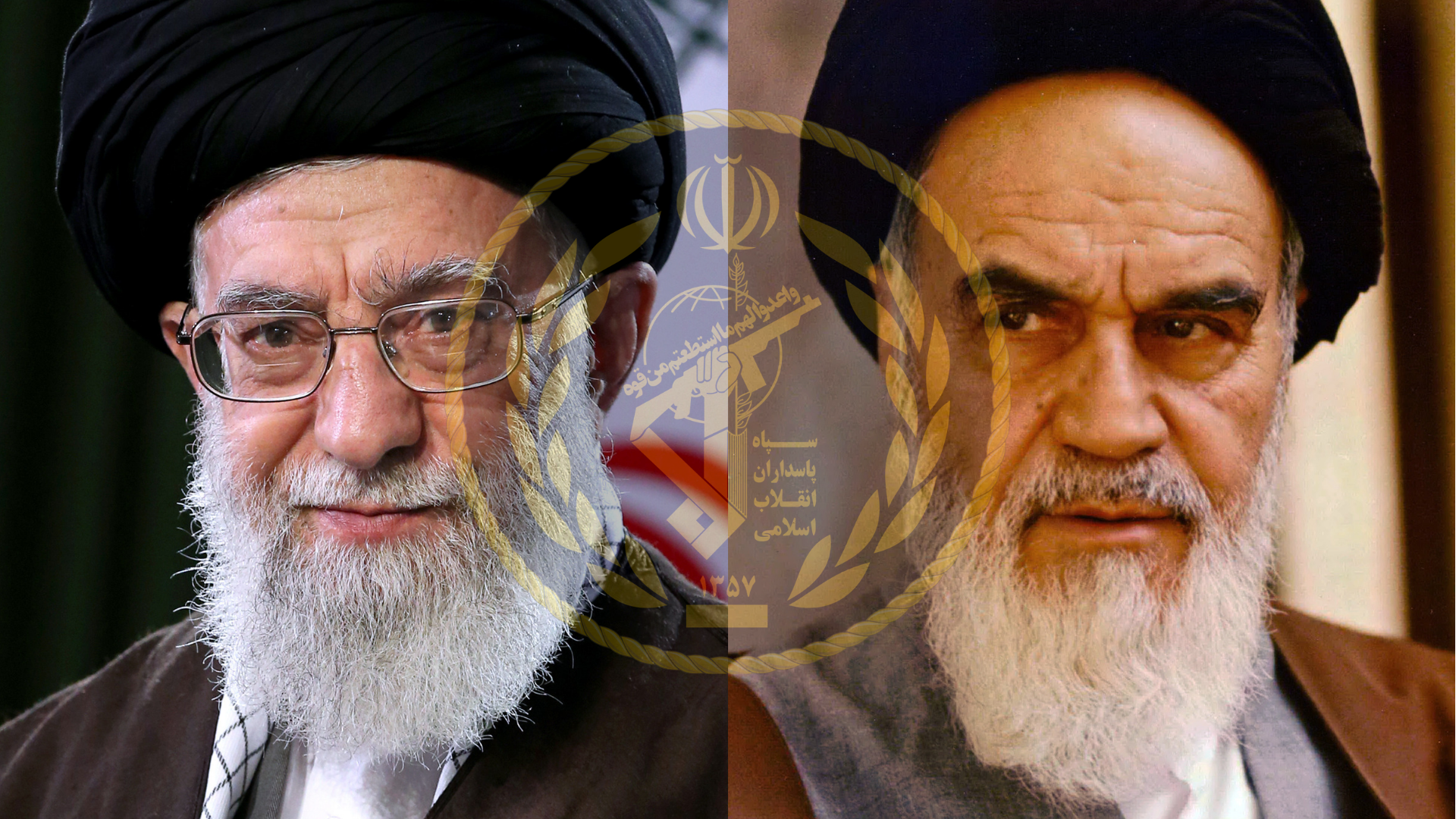
Yet this moment is less a rupture than a culmination. The seeds of the republic’s unmaking were sown in 1979, when revolutionary militias, armed with weapons looted from police stations and garrisons, rose to defend Grand Ayatollah Ruhollah Khomeini and his clerical allies against a potential coup by remnants of the Imperial Army. Consolidated into the IRGC, these forces were constitutionally charged not merely with defending Iran’s borders but with “safeguarding the revolution and its achievements,” a mandate that would come to justify intervention in politics itself.
From the outset, the IRGC acted accordingly. It suppressed Khomeini’s former allies, now rivals in the struggle for power, such as the outlawed Mujahedeen-e Khalq organization, and crushed separatist movements in Iran’s periphery during the 1980 civil war. Hardened in the crucible of the Iran-Iraq War (1980-88), it emerged as a formidable military institution. Yet in Tehran, power remained elsewhere. Parliamentary Speaker Ali Akbar Hashemi Rafsanjani, effectively commander-in-chief due to Khomeini’s advanced age and incapacitation, together with his deputy Hassan Rouhani and President Ali Khamenei, who was the chief patron of the regular military at the time, kept the IRGC under civilian control.
That balance did not endure. In 1989, Khamenei struck what can only be described as a Faustian bargain with the IRGC. In the final phase of Khomeini’s life, Rafsanjani and Khamenei had sought to normalize the post Iran-Iraq War state by dismantling revolutionary institutions, including plans to merge the Committees of the Islamic Revolution with the regular police force and the IRGC and Basij militia into the regular military. While the former merger materialized, the latter did not. Once elevated to supreme leader, thanks largely to Rafsanjani’s political machinations, Khamenei recalculated. Fearing dependence on the very man who had secured his rise, he vetoed the merger and preserved the IRGC as an independent force. In doing so, he made it his Praetorian Guard.
The IRGC’s loyalty came at a price. Throughout the 1990s, as Rafsanjani, in his capacity as president (1989-97), pursued economic liberalization inspired by Deng Xiaoping’s reforms in China, Khamenei ensured that resources flowed to the IRGC by awarding postwar reconstruction to its Corps of Engineers, later renamed Khatam al-Anbia Construction Headquarters. With Khamenei’s blessing, the IRGC developed vast economic holdings, accumulating capital beyond civilian oversight. What began as patronage evolved into autonomy. By strengthening the IRGC, Khamenei simultaneously entrenched his rule and weakened the state he governed.
When Mohammad Khatami became president in 1997 promising political liberalization, Khamenei – fearing he might become the Islamic Republic’s Mikhail Gorbachev, a well-meaning reformer whose policies unraveled the Soviet Union – actively encouraged the IRGC and its auxiliaries to obstruct reform and discipline dissent. This gave rise to what became known as the “pressure groups,” thugs who in coordination with the IRGC and the Basij attacked pro-Khatami activists and stifled political reforms. In doing so, Khamenei created the precedence for direct IRGC intervention in politics.
The pattern repeated under Mahmoud Ahmadinejad, whose rise to power in 2005 owed much to IRGC backing. His presidency fused populism with militarization, while the IRGC expanded its influence at home and abroad, particularly through its Quds Force. Even when Ahmadinejad proved unruly and was ostracized by Khamenei and the regime establishment, the broader trajectory remained unchanged: The IRGC’s reach widened as civilian authority narrowed.
External pressures reinforced this dynamic. The U.S. invasion of Iraq in 2003 and subsequent regional turmoil provided the IRGC both justification and opportunity to expand its role as defender of the regime beyond Iran’s borders. At home, repeated waves of protest, from the Green Movement’s protest rallies that began in 2009, further entrenched its position as guarantor of internal order. Each crisis deepened reliance; each reliance enlarged its power.
Efforts at recalibration proved fleeting. Hassan Rouhani’s presidency raised hopes of detente abroad and moderation at home, culminating in the 2015 Joint Comprehensive Plan of Action nuclear agreement, from which the IRGC’s economic empire stood to benefit – hence the organization’s acceptance of a freeze on Iran’s nuclear program. Yet the deal’s collapse following the U.S. withdrawal in 2018 discredited engagement with the United States and vindicated the IRGC’s skepticism. The IRGC, already embedded across the political economy and security apparatus, thereafter faced fewer constraints than ever.
By the final years of Khamenei’s rule, the hybrid system he presided over had hollowed out. Independent political figures were marginalized, elections were “engineered” by the Guardian Council, and institutions subordinated. Presidents came and went, but authority no longer flowed through the formal architecture of the state. It resided instead in networks aligned with the IRGC, sustained by coercion, capital, and ideology.
The shocks of 2024-25 accelerated this trajectory. The erosion of Iran’s regional deterrence – inviting Israeli and U.S. strikes – combined with mounting economic crisis and widening social unrest to expose the regime’s fragility. As Khamenei aged and withdrew from day-to-day governance, decision making gravitated toward a narrow circle comprised of President Masoud Pezeshkian, Parliamentary Speaker Qalibaf (a veteran of the IRGC), Judiciary Chief Gholam-Hossein Mohseni Ejei, one representative from the IRGC (either former IRGC Chief Commander Major General Mohsen Rezaei or current Chief Commander Brigadier General Ahmad Vahidi), and one representative from the regular military, yet to be identified. Among these men, wartime contingencies gave the IRGC decisive weight in strategic decision making.
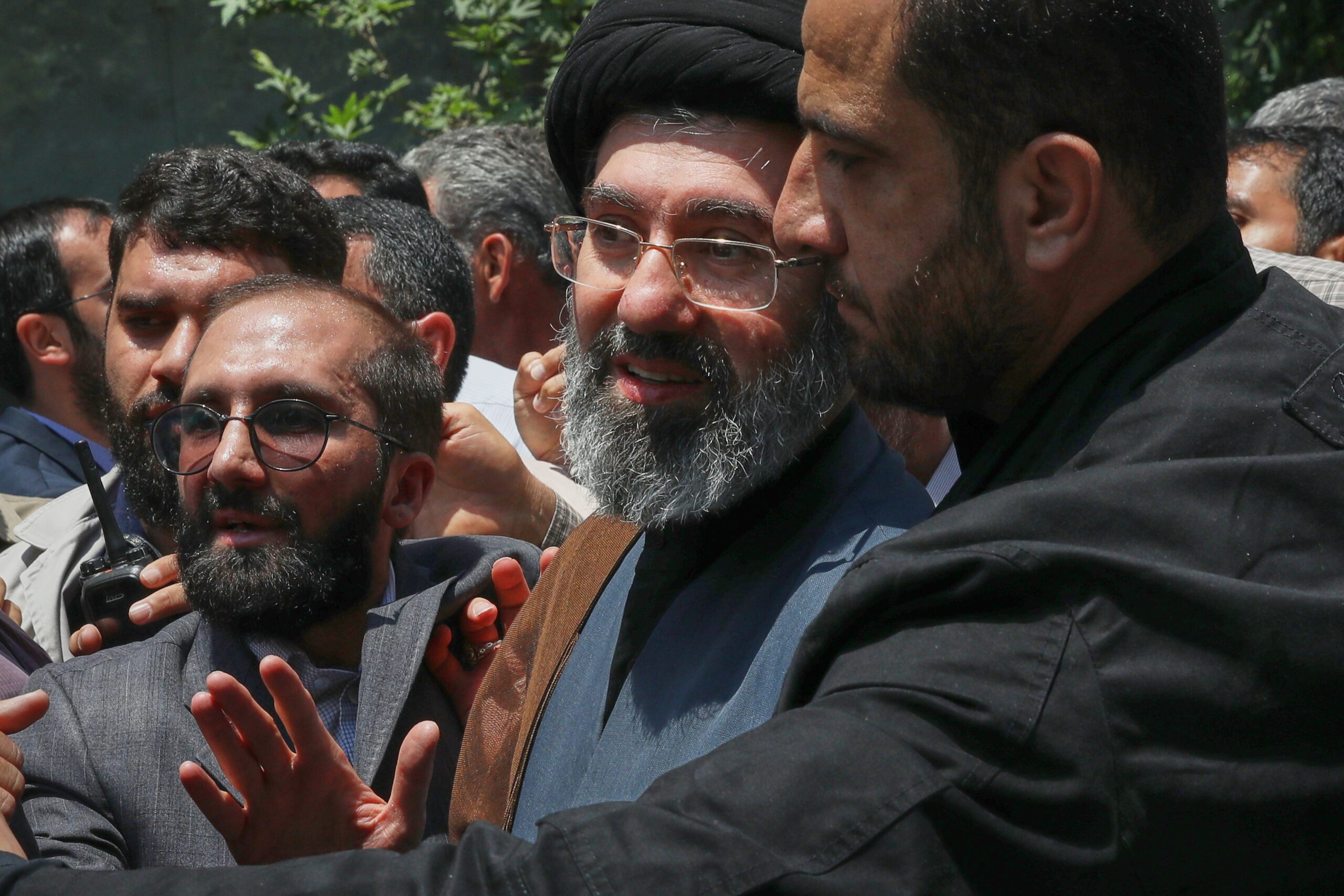
When the Israeli-U.S. strikes killed Khamenei, the transition was swift. The republic did not reform; it morphed from a theocracy into a military-dominated regime. Power consolidated around the IRGC and its political allies, chief among them the strategically minded Qalibaf, with Mojtaba Khamenei, whose health and well-being remain uncertain, installed as a symbolic heir to preserve continuity without authority.
In the Islamic Republic, reliance on the IRGC became habit; habit became structure. The IRGC did not seize power in a single stroke. And its current apex authority is by no means a mere product of the current war. The IRGC accumulated this power over decades – patiently, methodically – until no counterweight remained. Civilian institutions withered, autonomy eroded, and once Israel and the United States assassinated Khamenei, the balance tipped decisively. Khamenei’s death did not inaugurate this order. It confirmed it.
The political dynamics during the transitions in Iran in 1979 and 1989 reveal a number of similar features that will play into who will succeed Supreme Leader Ayatollah Ali Khamenei; what is new now is the role the IRGC is playing in the factional power struggle.
Iran may still call itself an Islamic Republic. In practice, however, it increasingly resembles a state in which the military governs from behind clerical robes.
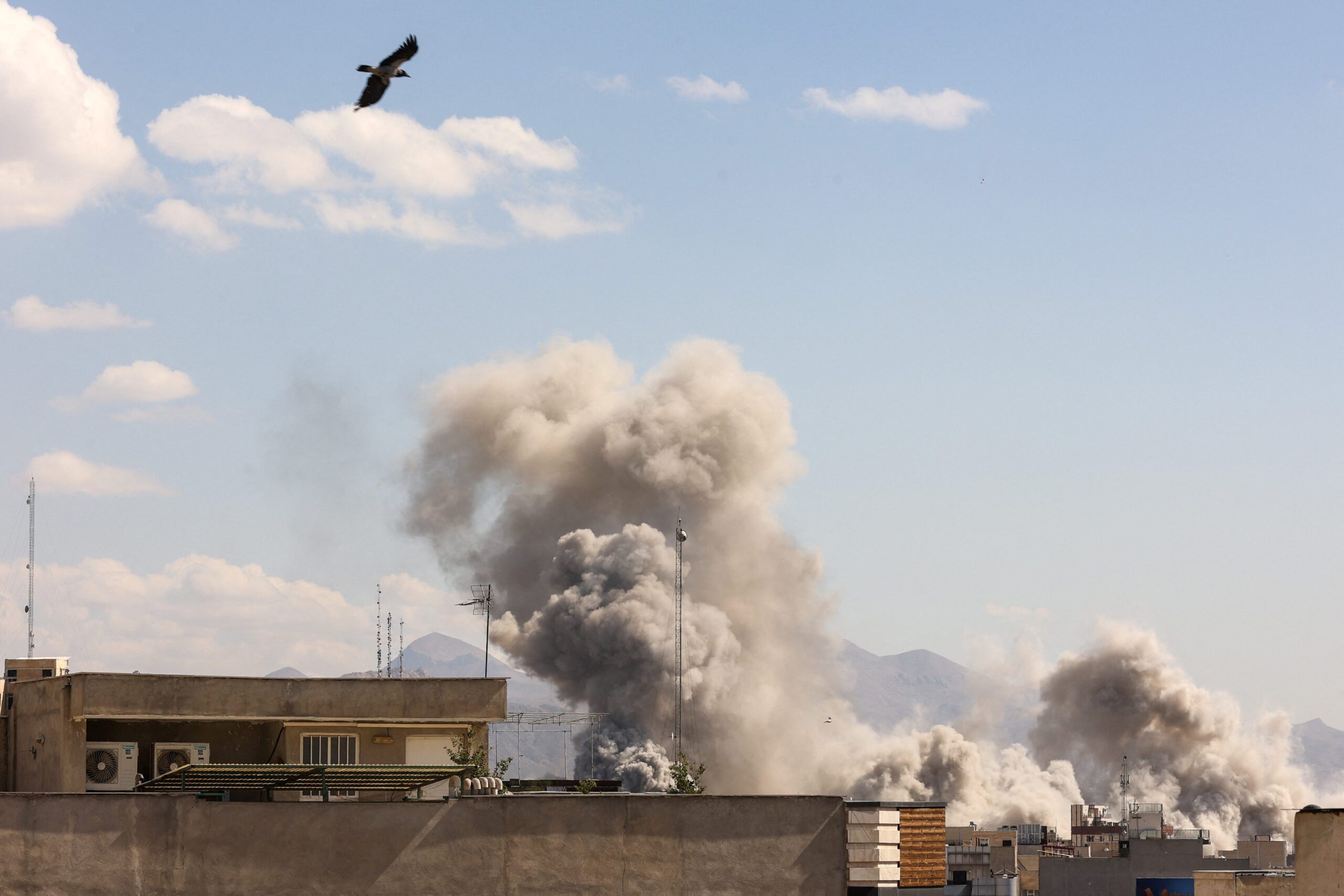
Ayatollah Ali Khamenei was killed in his office in Tehran at age 86, leaving behind a country in ruins and on the verge of civil war and potential disintegration.
Iran may still call itself an Islamic Republic. In practice, however, it increasingly resembles a state in which the military governs from behind clerical robes.
Ayatollah Ali Khamenei was killed in his office in Tehran at age 86, leaving behind a country in ruins and on the verge of civil war and potential disintegration.
Iran is signaling that it will not absorb attacks passively. But whether this strategy ensures the regime’s survival, seals its fate, or accelerates a broader catastrophe will shape the region for years to come.
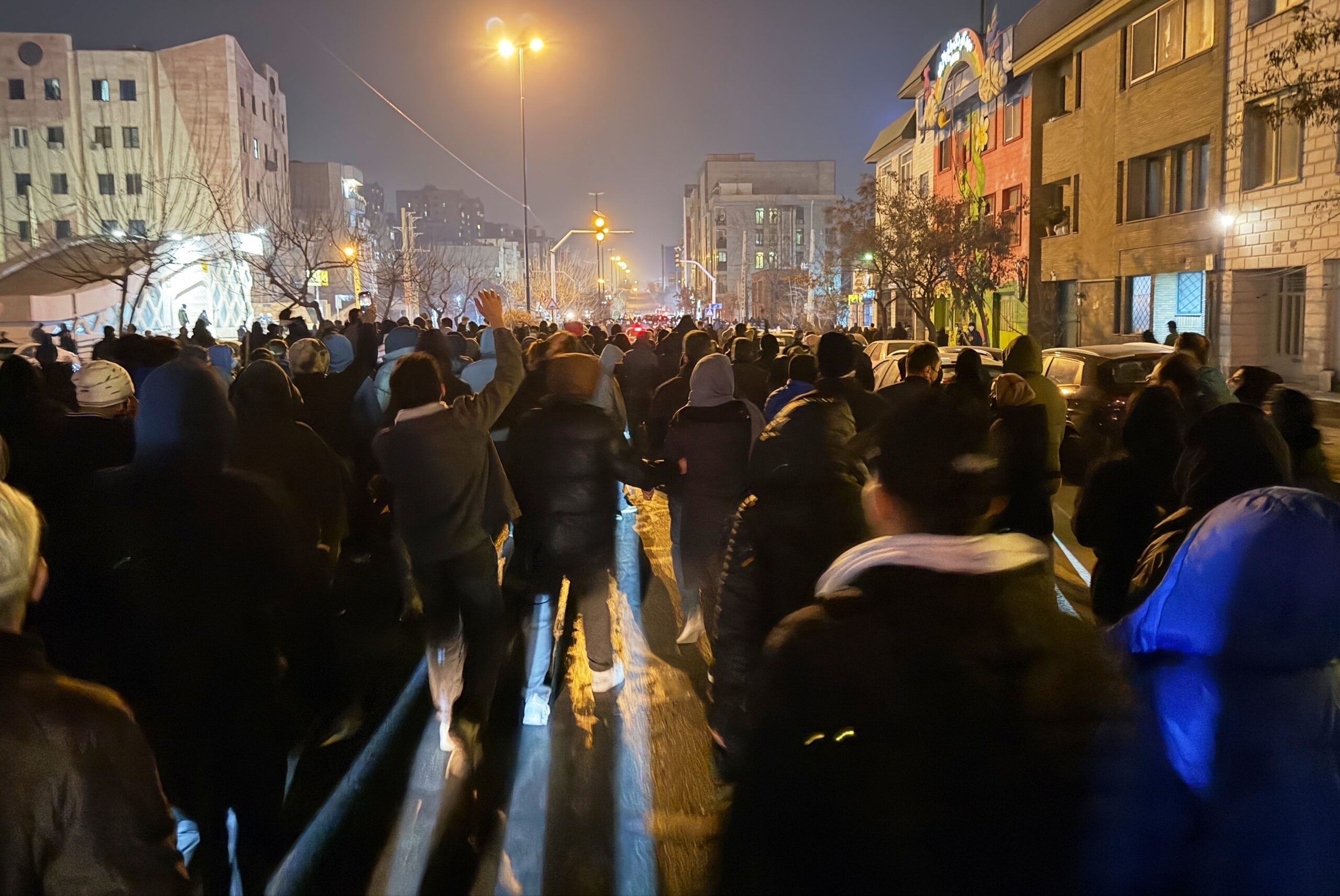
The erosion of the regime’s legitimacy across broad segments of society, combined with the breadth of the 2025-26 protest coalition, raises the possibility that a new confrontation could trigger renewed anti-regime mobilization.