Feb 20, 2026
Resigned to War Yet Still Working Toward a Deal
The February 20 edition of the Iran Media Review considers Iranian media analysis on the prospects for conflict and a potential deal to prevent it.

While many Iranian analysts appeared resigned to what they see as an inevitable war with the United States, media outlets affiliated with the Islamic Revolutionary Guard Corps sought to bolster morale by highlighting Iran’s military capabilities. Separately, Iranian officials appeared to be working toward a deal with the United States to prevent a war.
- February 19: Foreign policy analyst Rahman Qahremanpour wrote in economic newspaper Donya-ye Eqtesad:
- “Pessimistic analysts believe that Trump’s fundamental objective is to prepare for military action, and that the negotiations – like the spring 2025 talks – are nothing more than deception. At the same time, however, it seems that not all paths to a diplomatic agreement are closed, and this depends on the skills of both sides, especially concessions from the United States. If the United States grants specific concessions to Iran, there is a possibility that the negotiations could succeed. But as we noted, under the current conditions and with the available data, it does not seem possible to be very optimistic about achieving a diplomatic agreement that is satisfactory to both sides.”
- February 19: In an interview published in reformist Etemad, Deihim Mohammad-Khan-Beigi concluded:
- “The most likely scenario is controlled and targeted actions: limited strikes, deterrent operations, or multilayered security pressure to change Tehran’s calculation – not trigger its collapse … Under such circumstances, Tehran possesses a combination of hard and soft leverage. In the hard domain, asymmetric deterrence capabilities – from missile and drone power to the capacity to create controlled insecurity in the surrounding environment – enable Iran to raise the cost of any military action and push the scope of conflict beyond the opponent’s control.”
- February 19: An editorial in hard-line Kayhan argued:
- “If you still think U.S. aircraft carriers have given mythical power to the American military and the occupants of the White House, it should be said that before being targeted by these carriers, you have been caught in a psychological operation by America’s media soldiers. These iron giants in the 21st century – in the age of smart unmanned weapons and hypersonic, long-range, precision-guided missiles – are considered large targets and easy prey. There are now weapons that could turn America’s proudest assets into their most disastrous experience.”
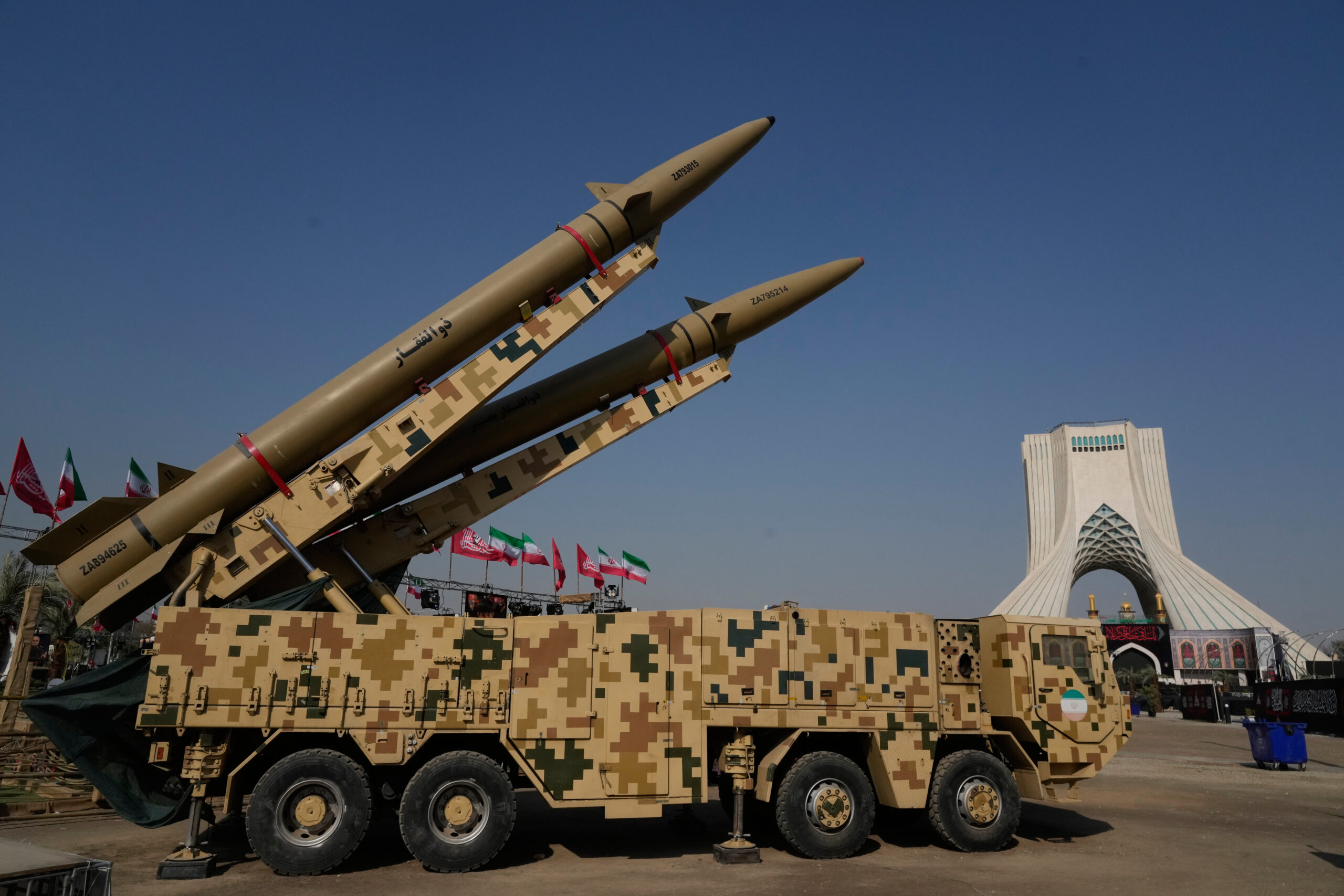
- February 19: Islamic Revolutionary Guard Corps-affiliated Mashregh News published an overview of Iran’s cruise and ballistic missile arsenal, claiming it could “send U.S. aircraft carriers to the bottom of the sea.”
- February 20: Foreign Minister Abbas Araghchi, in an interview with MSNBC, said, as quoted by IRGC-affiliated Mashregh News: “The United States has not demanded zero enrichment from us.”
- February 20: Oil Minister Mohsen Paknejad, in an interview with Iranian Labour News Agency, spoke about potential U.S.-Iranian oil and gas cooperation: “Anything is possible … But it is not yet clear if oil and gas cooperation between Tehran and Washington is operationalized right now.”
- Paknejad’s statements came in the wake of Iranian Deputy Foreign Minister Hamid Ghanbari’s February 15 statement, quoted by Donya-ye Eqtesad: “Shared interests in the fields of oil and gas, joint fields, mining investments, and even aircraft purchases have been included in the text of the negotiations with the United States.”
The views represented herein are the author's or speaker's own and do not necessarily reflect the views of AGSI, its staff, or its board of directors.
Related
Iran Media Review
Feb 17, 2026
Money Talks: U.S.-Iran Negotiations in Geneva
The February 17 edition of the Iran Media Review explores an Iranian deputy foreign minister’s discussion of potential economic incentives Iran is offering to the United States.
Iran Media Review
Feb 13, 2026
Revolution Day in Iran: Celebrating Survival
The February 13 edition of the Iran Media Review explores Iranian narratives surrounding the anniversary of the 1979 Islamic Revolution.
Iran Media Review
Feb 10, 2026
Iran’s State-Censored Media Reacts to the Oman Talks
The February 10 edition of the Iran Media Review examines cautiously optimistic Iranian media messaging following a new round of U.S.-Iran negotiations.
Feb 17, 2026
Money Talks: U.S.-Iran Negotiations in Geneva
The February 17 edition of the Iran Media Review explores an Iranian deputy foreign minister’s discussion of potential economic incentives Iran is offering to the United States.
Feb 13, 2026
Revolution Day in Iran: Celebrating Survival
The February 13 edition of the Iran Media Review explores Iranian narratives surrounding the anniversary of the 1979 Islamic Revolution.
Feb 10, 2026
Iran’s State-Censored Media Reacts to the Oman Talks
The February 10 edition of the Iran Media Review examines cautiously optimistic Iranian media messaging following a new round of U.S.-Iran negotiations.
Analysis
The Islamic Republic Returns to Offense
After U.S.-Israeli strikes killed Supreme Leader Ayatollah Ali Khamenei on February 28, Iran’s collective leadership has concluded that the best defense is a good offense.
Iran’s Collective Strategic Decision Making
Wartime pressure has temporarily aligned the leadership’s overriding interest in regime survival, even as its members continue to differ over the costs, methods, and ultimate objectives of the war.
The Islamic Republic’s Collective Leadership
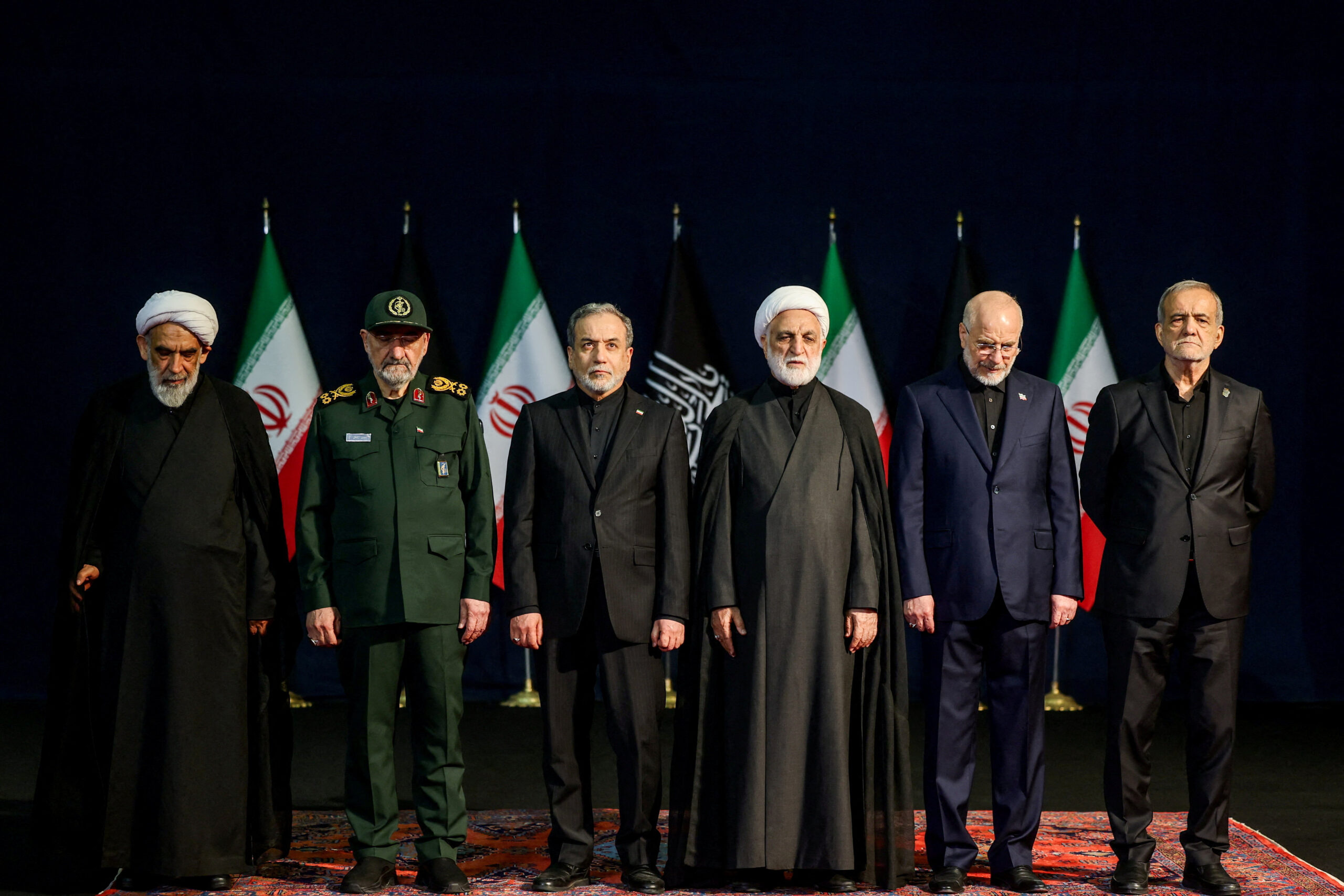
While there is historical precedent for collective leadership in Iran, today’s leadership includes representatives of the IRGC and regular military – a reflection of the IRGC’s expanding role and the necessities of governing under wartime conditions.
How Did the IRGC Seize Power in Iran?
The IRGC did not seize power in a single stroke. It accumulated it – patiently, methodically – until no counterweight remained.
Events
Oct 6, 2026
10:00am - 11:00am
Is the U.S.-Iran Stalemate a “New Normal” or the Prelude to Another Explosion?
On October 6, AGSI will host a discussion on the U.S.-Iran stalemate and the prospects for a cease-fire.
Speakers



Book Talk: Iran and the Bomb: The United States, Iran and the Nuclear Question
On June 16, AGSI hosted a discussion on the evolution of Iran's nuclear program.

Speakers

Apr 21, 2026
Inside Iran’s Wartime Leadership: Power, Succession, and Regime Stability
On April 21, AGSI hosted a discussion on the evolution of Iran's leadership during the war.
Speakers

Mar 18, 2026
In Its Conflict With the United States and Israel, Does Escalation Favor Iran?
On March 18, AGSI hosted a discussion on the escalation of the Iran war.
Speakers