Dec 5, 2025
Is Tehran Rethinking Its Approach to the GCC States?
The December 5 edition of the Iran Media Review examines Iranian responses to a new communique from the Gulf Cooperation Council on three contested islands and a disputed oil field.

At the conclusion of the 46th session of the Supreme Council of the Gulf Cooperation Council, the GCC released a statement supporting the sovereignty of the United Arab Emirates over three islands and Kuwaiti and Saudi ownership of an oil field – both contested by Iran. The statement has triggered strong reactions not only from media outlets affiliated with the Islamic Revolutionary Guard Corps but also from key figures in the regime. While these forceful responses may be largely propaganda, seeking to bolster domestic legitimacy by presenting the regime as a defender of Iran’s territorial integrity, Iran may also be reassessing its broader approach to the GCC states, particularly the UAE and Saudi Arabia, whose policies continue to provoke irritation in Tehran.
- December 3: Islamic Revolutionary Guard Corps-affiliated Tasnim News Agency and Mashregh News Agency published identical articles condemning the latest Gulf Cooperation Council communique:
- “The repetition of the United Arab Emirates’ threadbare claims regarding the three islands in this statement is of little news value to many in Iran, but this time the GCC statement has taken on an unusually harsh and unprecedented tone.”
- “This insulting statement even describes visits by our officials to the three islands as an act of aggression. What is more striking is that the statement condemns the visit of Admiral Ali Reza Tangsiri, IRGC navy chief, to the islands of Abu Musa and Siri. The insolence of the Persian Gulf sheikhs did not end there. The statement goes on to repeat Kuwait’s claims regarding the Arash oil field and asserts that it belongs to Kuwait and Saudi Arabia. Moreover, the GCC countries reiterate in the statement their demand for active participation in the nuclear negotiations and for raising the issues about which they claim to have concerns.”
- Speculating about the motives behind the communique, the article rhetorically asked: “Do they have the impression that, as a result of the 2-year war between the ‘axis of resistance’ on the one hand and the United States and the Zionist regime on the other, the balance of power in the region has shifted in their favor, leading them to make such hostile statements against Iran? Are these hostile remarks a response to the Islamic Republic of Iran’s neighbor-focused, conciliatory policy, and have they come to believe that now is the time to increase political pressure on Tehran?”
- The article concluded with a veiled threat directed at the GCC states: “Iran’s relations with the Persian Gulf states in recent years have been shaped by the Beijing agreement, and, in light of efforts to repair its damaged ties with Saudi Arabia, Iran has acted with greater restraint in response to the claims and positions of the GCC countries. Nevertheless, it appears that the GCC states interpret these political considerations in Tehran differently and are seeking confrontation with Iran. It seems that this time our Ministry of Foreign Affairs must go beyond issuing a routine spokesperson’s statement and take practical measures, such as canceling certain political consultation meetings with GCC countries. While the United States and the Zionist regime, following the war, are seeking reconstruction, they intend to provoke the adventurous leaders of the sheikhdoms against Iran and gradually push them toward confrontation with the Islamic Republic of Iran.”
- December 3: The municipality of Tehran’s newspaper, Hamshahri, called the GCC communique “ridiculous.”
- December 4: In an interview with IRGC-affiliated Fars News Agency, Ali Akbar Velayati, senior foreign policy advisor to Supreme Leader Ayatollah Ali Khamenei, condemned the GCC communique and singled out the UAE for particularly harsh criticism:
- “The three islands and the Arash oil field were, are, and will remain an inseparable part of Iranian territory, and no political statement can alter this fact.”
- “Nevertheless, it is necessary to state openly a point we had refrained from expressing publicly until now: The UAE has for years concealed the unfortunate realities of its foreign policy from public opinion. Now that the true face of its adventurous policies has become apparent, one cannot remain silent in the face of such destructive behavior.”
- “The irresponsible and interventionist government of the UAE must be asked: What were you doing in Yemen? Why did you occupy the island of Socotra? How did you transfer groups of defenseless Sudanese people and send them as mercenaries to the war in Yemen? The blood of tens of thousands of Yemeni Muslims was shed as a result of your expansionist and ambitious policies, and after the heroic resistance of Ansarallah, you suffered complete defeat.”
- “Will you answer with whom – including the old colonial power Britain – you cooperated to play a key role in the formation of rebel groups in Sudan? The consequences of these actions included the killing of thousands of innocent people in that country effectively revealing the path of your unceasing interference in the Islamic world.”
- December 4: Admiral Ali Shamkhani, former Supreme National Security Council secretary, wrote on X about the communique and warned GCC member states:
- “The GCC claims regarding the Iranian islands and the Arash field, made amid the malign actions of the United States and the Zionist regime, are unconstructive. During the 12-day war, despite some support for the aggression, Iran exercised restraint. Iran’s power in the Persian Gulf should not be misread; the role of neighboring states is to contribute to security not to play with the red lines of the Iranian nation.”
The views represented herein are the author's or speaker's own and do not necessarily reflect the views of AGSI, its staff, or its board of directors.
Related
Iran Media Review
Dec 2, 2025
Shadow of 2019 Unrest Looms Over Gasoline Subsidy Reform
The December 2 edition of the Iran Media Review explores commentary regarding the Iranian government’s proposed gas price reforms.
Iran Media Review
Nov 25, 2025
Tehran Reacts to Assassination of Lebanese Hezbollah Commander
The November 25 edition of the Iran Media Review examines Iranian reactions to Israel’s killing of Haytham Ali Tabatabaei, Lebanese Hezbollah's chief of staff.
Iran Media Review
Nov 21, 2025
Iran’s State-Censored Media on Saudi Mediation Between Tehran and Washington
The November 21 edition of the Iran Media Review highlights Iranian commentary on U.S.-Iranian relations and considers the possibility of Saudi mediation.
Dec 2, 2025
Shadow of 2019 Unrest Looms Over Gasoline Subsidy Reform
The December 2 edition of the Iran Media Review explores commentary regarding the Iranian government’s proposed gas price reforms.
Nov 25, 2025
Tehran Reacts to Assassination of Lebanese Hezbollah Commander
The November 25 edition of the Iran Media Review examines Iranian reactions to Israel’s killing of Haytham Ali Tabatabaei, Lebanese Hezbollah's chief of staff.
Nov 21, 2025
Iran’s State-Censored Media on Saudi Mediation Between Tehran and Washington
The November 21 edition of the Iran Media Review highlights Iranian commentary on U.S.-Iranian relations and considers the possibility of Saudi mediation.
Analysis
Debating Policy in Public: Iranian Elites Turn to YouTube
Rival camps within the Islamic Republic are increasingly turning to YouTube for policy debate, but there is a limit to the regime’s tolerance for that debate.
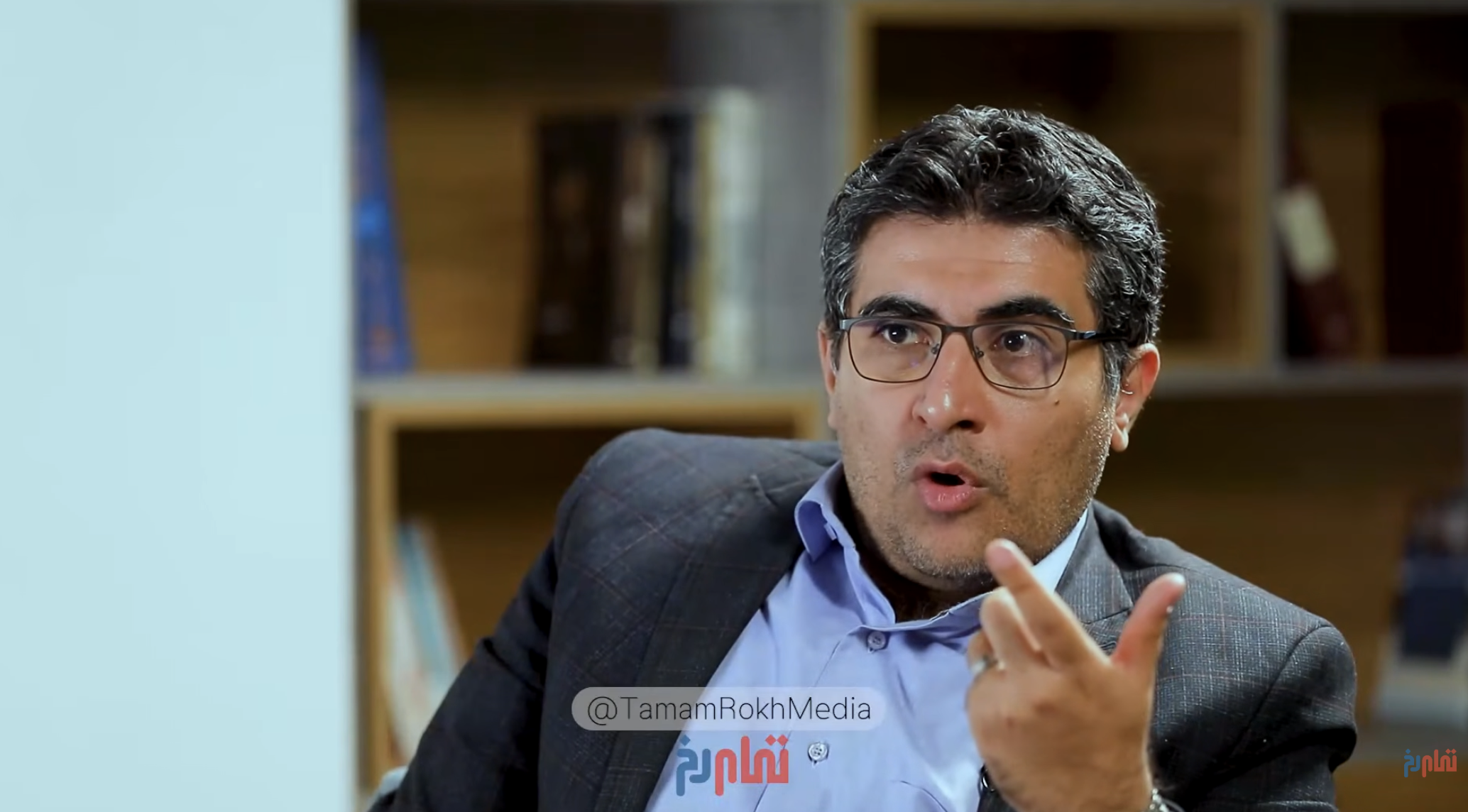
The Committee of Six and Strategic Decision Making in Iran
Remarks by Iran’s president offer a rare glimpse of how the Islamic Republic has adapted its decision making to the absence of its supreme leader.
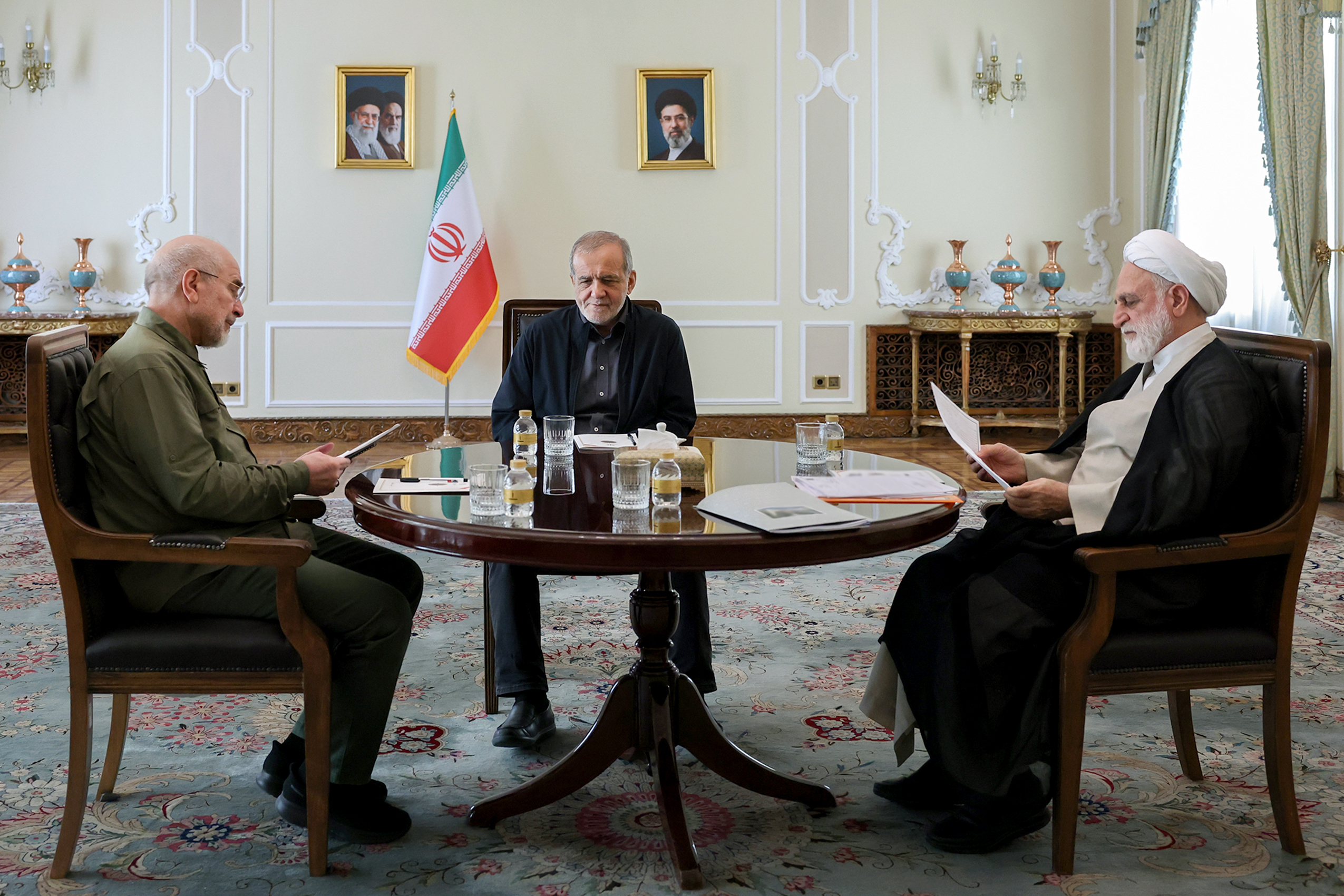
Mohsen Rezaei at the Helm of Iran’s Supreme National Security Council
Under Rezaei, the SNSC could prove constructive or paralyze strategic decision making.
The Islamic Republic Returns to Offense
After U.S.-Israeli strikes killed Supreme Leader Ayatollah Ali Khamenei on February 28, Iran’s collective leadership has concluded that the best defense is a good offense.
Events
Oct 6, 2026
Is the U.S.-Iran Stalemate a “New Normal” or the Prelude to Another Explosion?
On October 6, AGSI hosted a discussion on the U.S.-Iran stalemate and the prospects for a cease-fire.
Speakers



Book Talk: Iran and the Bomb: The United States, Iran and the Nuclear Question
On June 16, AGSI hosted a discussion on the evolution of Iran's nuclear program.
Speakers
Apr 21, 2026
Inside Iran’s Wartime Leadership: Power, Succession, and Regime Stability
On April 21, AGSI hosted a discussion on the evolution of Iran's leadership during the war.
Speakers

Mar 18, 2026
In Its Conflict With the United States and Israel, Does Escalation Favor Iran?
On March 18, AGSI hosted a discussion on the escalation of the Iran war.
Speakers