What Iran’s Military Journals Reveal About the Goals of the Quds Force
A pilot survey of the complete series of two journals published by the Islamic Revolutionary Guard Corps’ Imam Hussein University provides valuable information about the internal deliberations of the Quds Force.
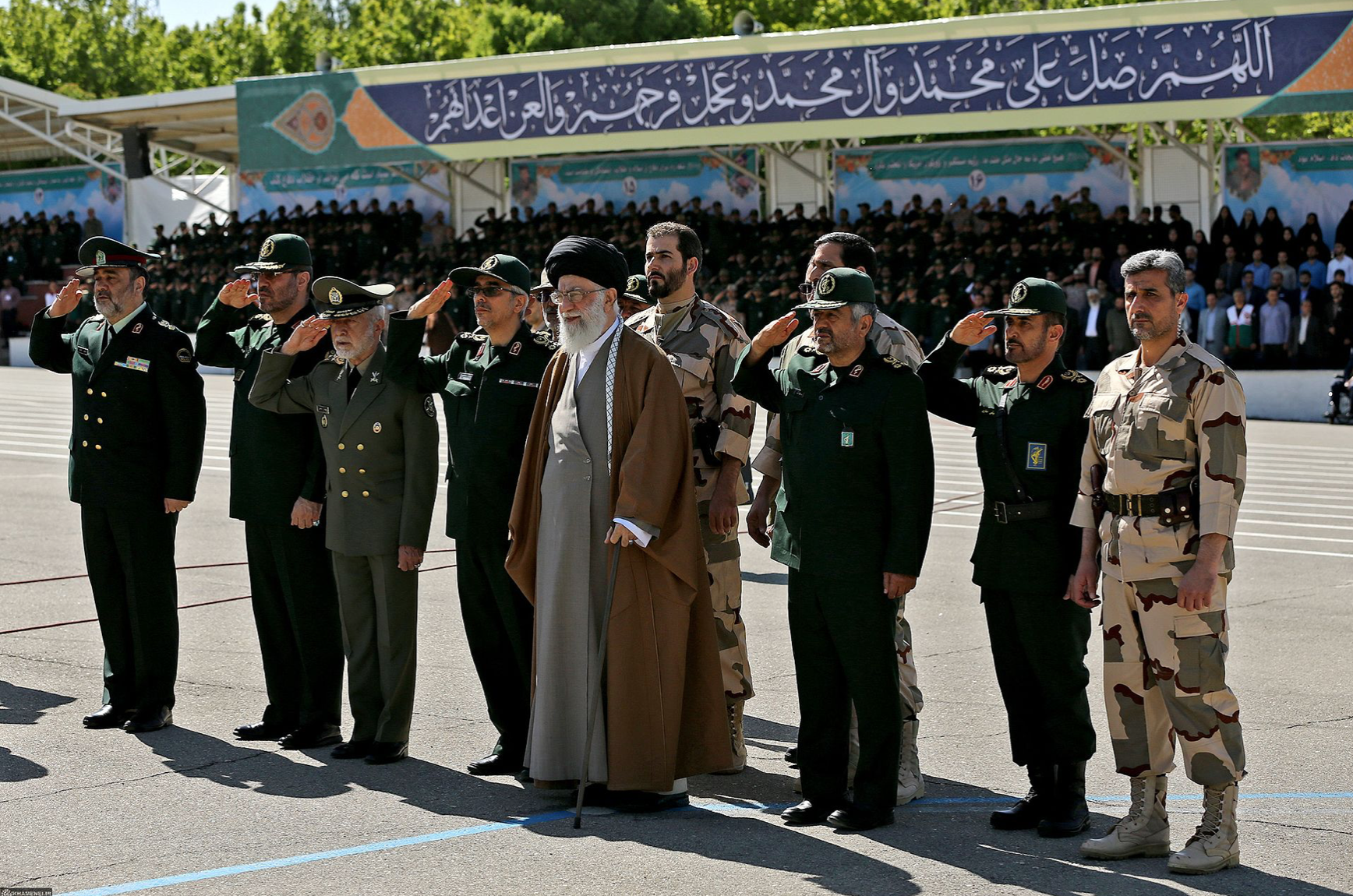
Iranian Supreme Leader Ayatollah Ali Khamenei at the graduation ceremony of Imam Hussein University, May 10, 2017. (Khamenei.ir)
To what extent are the internal deliberations of the Islamic Revolutionary Guard Corps’ expeditionary Quds Force reflected in military journals published in Iran? A pilot survey of the complete series of two journals published by the IRGC Imam Hussein University provides limited but valuable information.
Since its establishment in 1986, the university has gradually developed into the academic backbone of the IRGC. Today, it boasts 31 peer-reviewed journals, almost one for each postgraduate program offered. Among the journals, the Siasat-e Defaee(Defense Policy, published since 1991) and Afaq-e Amniat(Security Horizon, published since 2010), quarterlies are dedicated to strategic issues. Among hundreds of articles published in these journals over the years, only 10 articles address regional security issues involving Shia communities and armed militias in a substantive way. Since regional security falls under the portfolio of the Quds Force, and most of the authors are faculty members at the university, one can cautiously assume that the articles, to some extent, reflect the internal deliberations of the organization.
Between 1991 and the attacks of September 11, 2001, Siasat-e Defaeedid not publish anything referring to the Quds Force or, for that matter, the concept of asymmetric warfare. That changed in the wake of the U.S.-led invasion of Afghanistan in 2001, and in particular, after the 2003 invasion of Iraq.
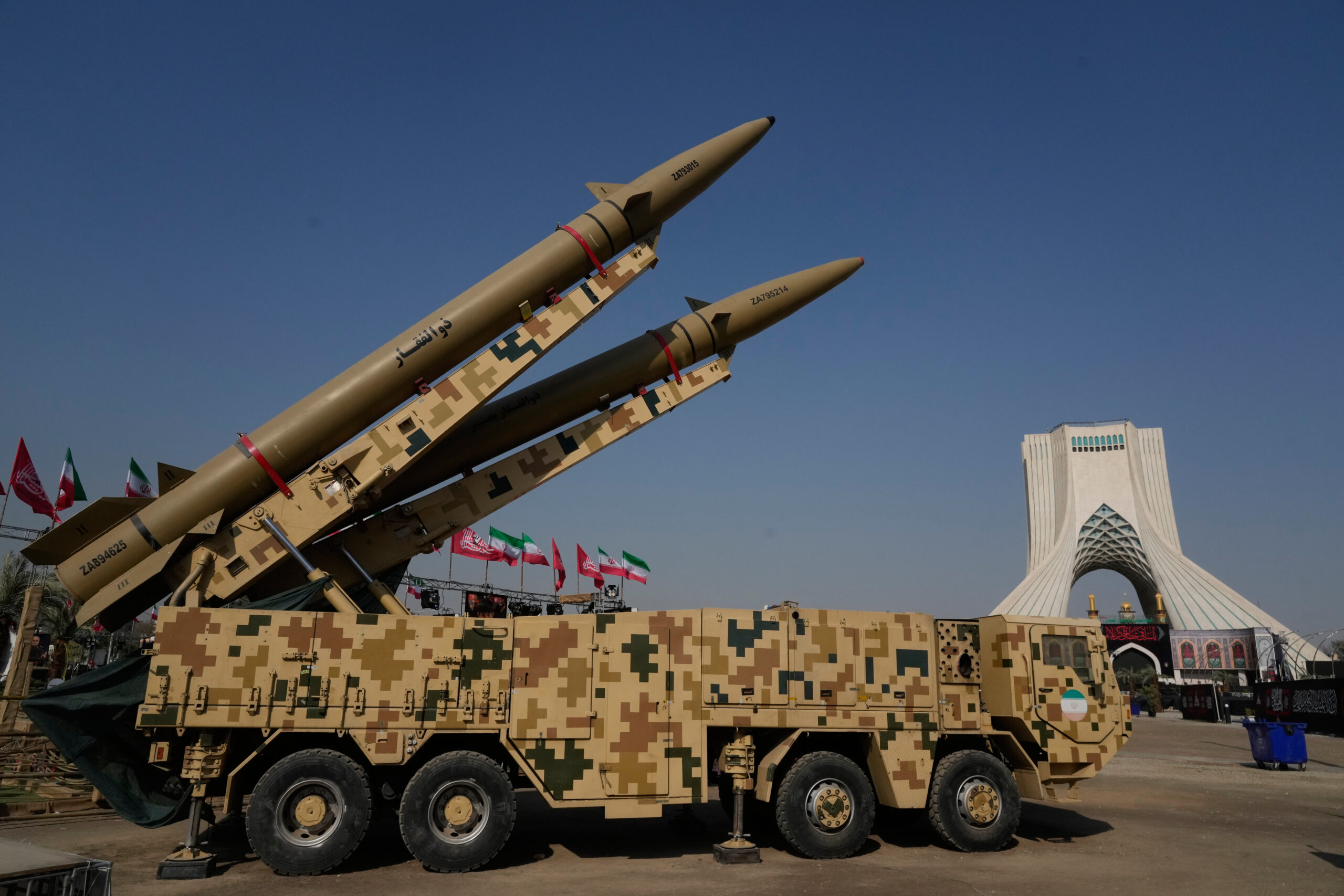
The first empirical analysis with specific reference to allies and proxies of the Quds Force appeared in the Autumn 2008 edition of Siasat-e Defaee. Here, the authors discussed how the Islamic Republic, through its influence among the Iraqi Shia, had managed to turn the threat of the U.S. military presence in Iraq into an opportunity. The Winter 2013 edition of Afaq-e Amniatwent as far as describing Shia communities in the Gulf region and beyond as a “deterrent network.” Elaborating on the same idea, an article published in the Winter 2013 Siasat-e Defaeeclaimed Iran’s substate allies and proxies are on par with the deterrent force of Iran’s arsenal of cruise and ballistic missiles. The Winter 2015 article on Lebanese Hezbollah and the Winter 2017 article on Yemen’s Ansar Allah advanced similar arguments.
An assistant professor at the university, Hossein Baqeri, offered a most accurate analysis of ethno-sectarian political dynamics in Iraq and its implication for Iran’s security in the Autumn 2013 edition of Afaq-e Amniat, while providing deeper insights into the Quds Force’s internal deliberations. The article’s assessment of the vulnerabilities of the Shia community is particularly revealing. The Iraqi Shia are split between religious versus secular, and the religious are further divided into currents, each following a particular religious leader, Baqeri argues. Separately, “Shia opponents [of the Baath regime previously] based in Iran and Syria, were severed from Iraqi society … They lack the infrastructure to reestablish the bonds. [In the meantime,] the vacuum may provide [Iran’s regional] competitors with the opportunity to create competing groups and elements,” Baqeri warns. The article also points at the difficulties Iran’s Shia allies are facing in their attempt to change themselves from secretive political-military organizations into inclusive political parties and organizations engaged in cultural and educational activities.
Some prominent IRGC commanders are among the contributors to the military journals. The Autumn 2013 edition of Afaq-e Amniatboasted a piece co-authored by Brigadier General Mohammad-Hossein Afshordi, better known as Mohammad Baqeri, who currently serves as the chief of staff for the Armed Forces of Iran, and Imam Hussein University’s Hossein Akbari. Here, the authors raise a question: To what extent does the presence of Shia communities outside Iran play a role in the “expansion and continuity of the doctrine of the Islamic Revolution in the region?” The authors conclude the Islamic Republic is capable of using the non-Iranian Shia to gain regional influence, but military seniority does not necessarily ensure good scholarship, and the article is more of a political manifesto.
Fazl-Allah Nowzari’s article on asymmetric wars in the Winter 2014 edition of Siasat-e Defaee, on the other hand, provides concise tactical recommendations for asymmetric defense in the event of U.S. aggression. However, the most remarkable articles appeared in Afaq-e Amniat in 2018 and 2019, in particular those authored by a pair of the university’s assistant professors, Behzad Qassimi and Ruhollah Qaderi Kangavari.
Qassimi’s article, “Geopolitics of the Axis of Resistance,” openly discusses the Islamic Republic’s policy of supporting regional Shia as “a threat against conservative and nondemocratic regimes of the region, but also against the West and the United States.” Qaderi Kangavari’s article in the Autumn 2019 edition of Afaq-e Amniat unapologetically and unequivocally explains the concept of “exportation of the revolution” as the national security strategy of the Islamic Republic: “Historically, whenever Iran defined its national security within its political border, its independence and national sovereignty were violated and its territorial integrity threatened … Therefore, Iran cannot counter external threats absent a robust regional or even extra-regional presence.”
Qaderi Kangavari then moves on to explicitly explain the goals of the Quds Force:
1. To secure the survival of the Syrian regime… in order to preserve the overland corridor from Iran, over Iraq and Syria to Lebanon, for transport of forces, arms and equipment … 2. To deter the Zionist regime … by strengthening Hezbollah positions in the Golan Heights … 3. To secure the territorial integrity of Iraq, governed by a Shia regime aligned with Iran and protected by the paramilitary Shia al-Hashd ash-Shabi, which are under command of the Quds Force and advance Iran’s agenda in Iraq … 4. To expel United States forces from the region … 5. To increase Iran’s political, economic, religious, and cultural influence in Syria, Iraq, and Lebanon, in particular through postwar reconstruction of Syria and Iraq.
This effort of the Quds Force, Qaderi Kangavari argues, improves the Islamic Republic’s diplomatic bargaining position.
By themselves, these journal articles may not provide the entire truth about the Quds Force, but neither does any other single source. It is the bits and pieces of information collected from all available open sources that help solve the puzzle.
The views represented herein are the author's or speaker's own and do not necessarily reflect the views of AGSI, its staff, or its board of directors.
Under its new leadership, the Quds Force is no longer a popular mobilization force but commands a multinational Shia army and remains the dominant force within the Islamic Revolutionary Guard Corps.
After U.S.-Israeli strikes killed Supreme Leader Ayatollah Ali Khamenei on February 28, Iran’s collective leadership has concluded that the best defense is a good offense.
Wartime pressure has temporarily aligned the leadership’s overriding interest in regime survival, even as its members continue to differ over the costs, methods, and ultimate objectives of the war.
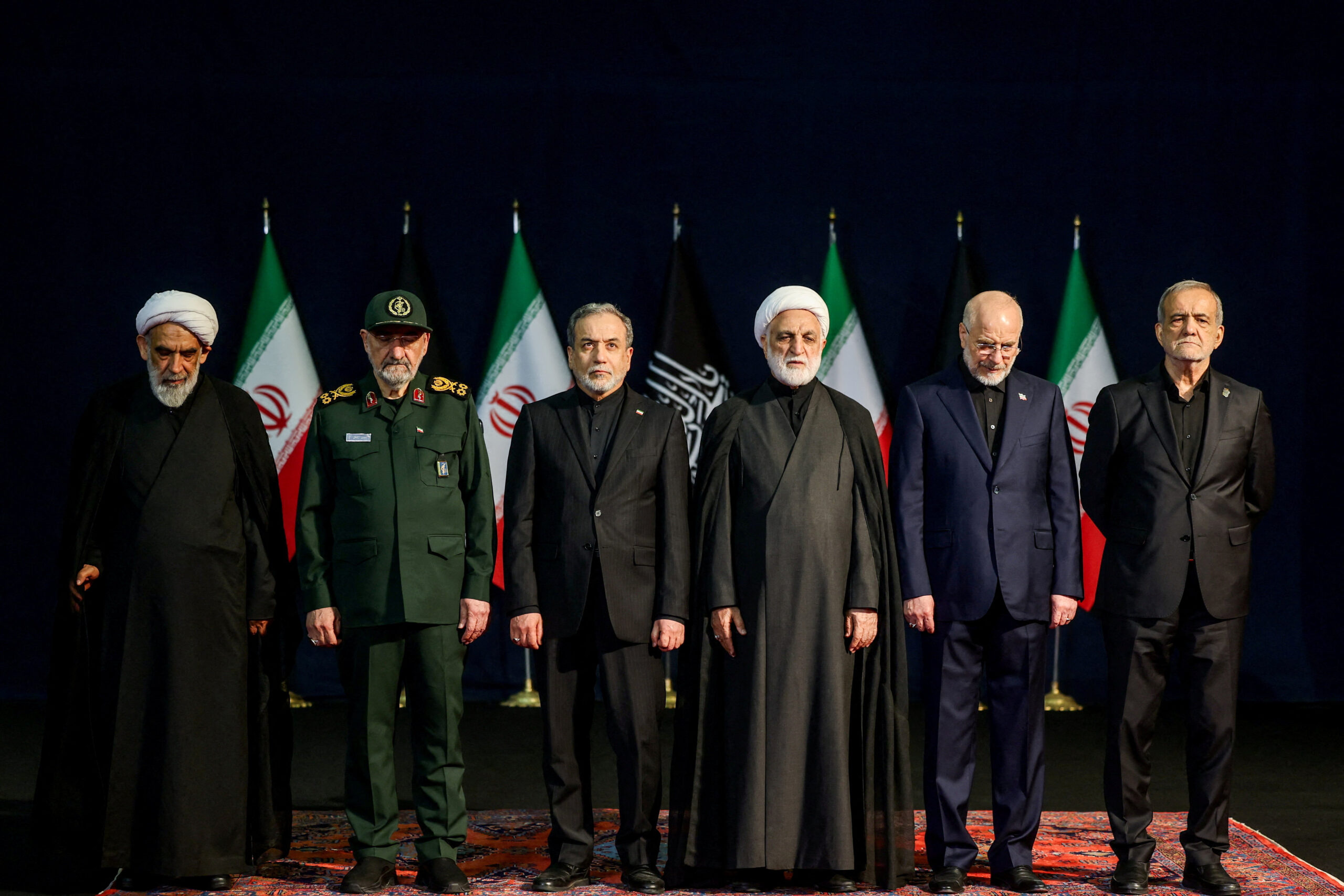
While there is historical precedent for collective leadership in Iran, today’s leadership includes representatives of the IRGC and regular military – a reflection of the IRGC’s expanding role and the necessities of governing under wartime conditions.