Iraqi-Iranian Maritime Exercises Send Message to Gulf Arab States
Overshadowed by the fall of Aleppo and terrorism in Europe, the stakes between Iran and the Gulf Arab countries in the strategic waters of the Gulf seem to have been significantly raised in recent days. Two joint naval exercises in less than a week were conducted by Iraqi and Iranian naval forces at Shatt al-Arab,...
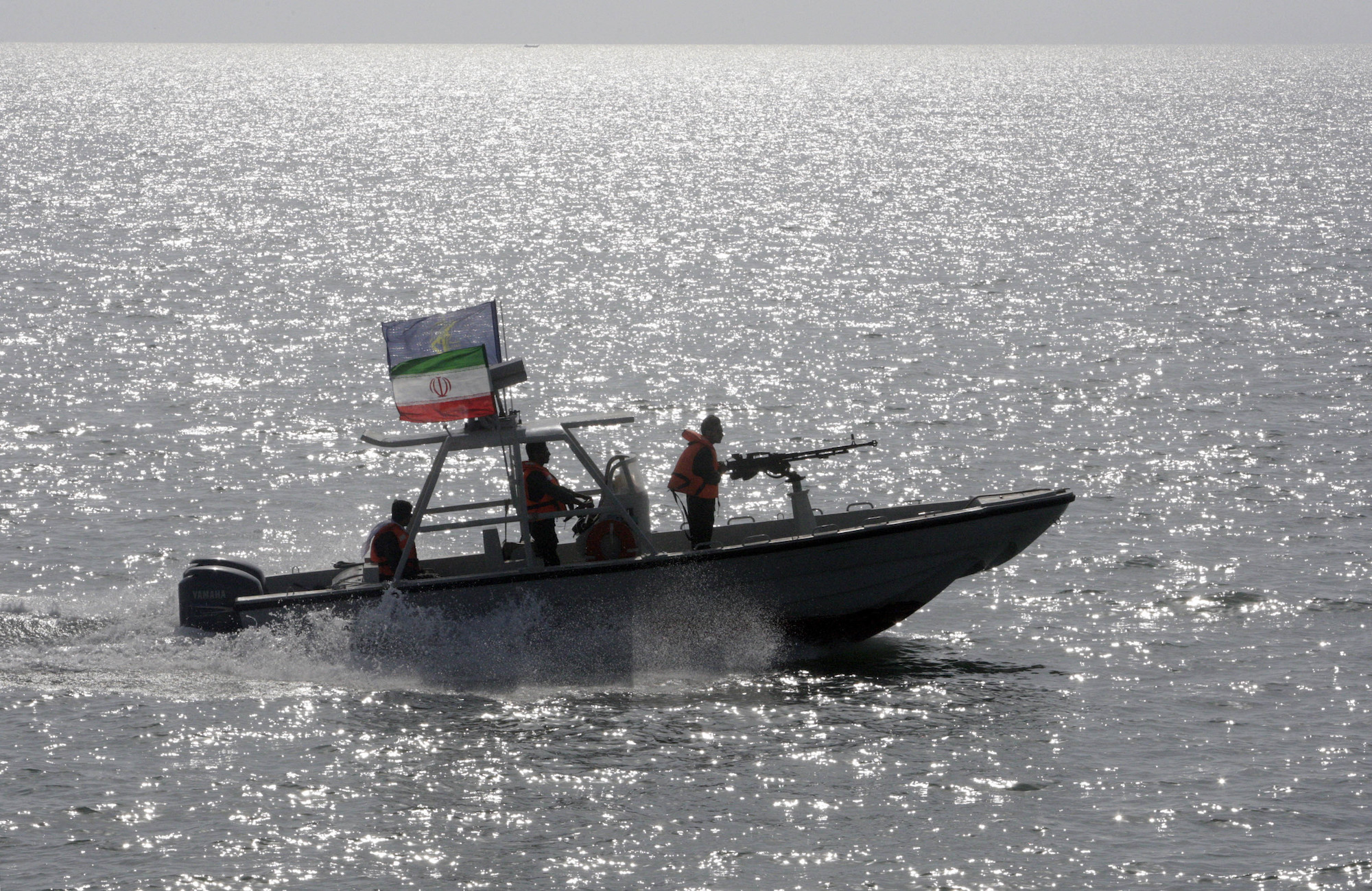
'An Iranian Islamic Revolutionary Guard Corps speedboat escorts a passenger ship, unseen, July 2, 2012. (AP Photo/Vahid Salemi)'
Overshadowed by the fall of Aleppo and terrorism in Europe, the stakes between Iran and the Gulf Arab countries in the strategic waters of the Gulf seem to have been significantly raised in recent days. Two joint naval exercises in less than a week were conducted by Iraqi and Iranian naval forces at Shatt al-Arab, within Iraqi territorial waters. The first was conducted on December 15, dubbed “Muhammad (PBUH), the Messenger of God,” and the second took place on December 19. The exercises marked the first joint naval cooperation between the two countries. While they did not involve sophisticated warships from either side, the exercises signal Tehran’s determination to demonstrate its influence with a prominent neighbor of the Gulf Arab states.
Details on the exercises are sketchy and initial reports indicate only patrol boats from the two countries took part. According to the Iraqi Defense Ministry, 32 patrol boats, including 16 Iranian and 16 Iraqi vessels (including six U.S.-made Navy defender-class patrol boats), participated in the exercises under the supervision of Iranian and Iraqi commanders.
Al-Araby Al-Jadeed, quoting local residents and fishermen in Basra, dismissed the Defense Ministry accounts, calling Iraqi participation “symbolic.” From a Gulf Arab perspective, this may be all the more alarming if Iraq’s participation is nominal and serves, in effect, as a fig leaf for a demonstration of Iran’s military and political ability to project naval power, not only in Gulf waters, but also within the territorial waters of a neighboring Arab state that was once a bulwark of Gulf Arab security.
Iraqi and Iranian military commanders said the exercises were aimed at enhancing cooperation between the two countries in the Gulf and focused on the prevention of piracy and smuggling. However, the Iranian Border Guards Commander Brigadier General Qassem Rezayee added, “These maneuvers confirm that the two countries will not allow any third party to intervene in the security affairs of the region in order to sow the seeds of discord and division between our countries.” This reference to third parties could be seen as aimed at the United States, its Gulf Arab partners, or both. However, the message is clear: Iran is expanding its presence and reach in Iraqi and Gulf waters.
Echoing Iran’s tone but with more diplomatic tact, the commander of the Iraqi Border Guards, Brigadier General Hamid Abdullah al-Husseini, affirmed the objective of the exercises: to secure maritime routes of the Gulf, fighting against piracy and trafficking, and to achieve stability in the region.
Iraqi military expert Mazin Ahmed said the joint drill was “strange militarily and carried out within Arabian Gulf waters on Basra within the al-Taluk line from the Iraqi side. This is a closed commercial area in which no military maneuvers of this size can be done.” According to Ahmed, the drill was a political message to the Gulf Arab states, indicating, “Iran is in Iraq comfortably.”
Baghdad has had rocky diplomatic relations with the Gulf Arab countries, in particular Saudi Arabia, for almost 25 years. The relationship soured further following a diplomatic crisis in September between the two countries, prompted by accusations from Riyadh’s former ambassador to Baghdad, Thamer al-Sabhan, that Shia militias and Iran attempted to assassinate him. Iraq demanded that Riyadh recall its ambassador; Riyadh complied.
On December 18, Iraqi Foreign Minister Ibrahim al-Jaafari said that Baghdad “is seeking to improve its relations with Saudi Arabia as a neighbor, an Arab and a Muslim country, as well as the country of the Two Holy Mosques.” He added that his country would welcome a new Saudi ambassador.
Notably, there has been no public reaction from the Gulf states to the joint Iraqi and Iranian maritime exercises thus far, although it is fair to assume they did not go unnoticed. The silence may suggest recognition by Gulf Arab governments that sharp criticism of Baghdad’s behavior would, in fact, drive it deeper into Tehran’s corner, exactly the response they wish to avoid.
The views represented herein are the author's or speaker's own and do not necessarily reflect the views of AGSI, its staff, or its board of directors.
In tandem with President Trump’s refusal to offer help with the Houthis, the Saudis are facing grim options to reverse Houthi military successes and a chokehold over their oil exports.
U.S. force projection in the Gulf is increasingly relying on artificial intelligence, unmanned platforms, and space technology, using these systems to augment existing military infrastructure.
With the Strait of Hormuz closed and alternative export routes infeasible in the short term, a comprehensive agreement with Erbil can help Baghdad address its critical lack of oil export capability.
The flow of Kurdish oil via the Iraq-Turkey pipeline to the international market after more than two years demonstrates the effectiveness of sustained U.S. diplomacy.
Decentralized governance efforts in the region, while offering promise to societies fractured by years of dictatorship and war, will be messy, inconsistent, and vulnerable to reversal and external manipulation.