A Muslim American is the person “most responsible for keeping America safe since the Sept. 11 attacks,” wrote former CIA acting director Michael J Morell in the New York Times last week. Mr Morell was referring to “Roger”, an American convert to Islam (he cannot be identified because he still works for the agency) who...
A Muslim American is the person “most responsible for keeping America safe since the Sept. 11 attacks,” wrote former CIA acting director Michael J Morell in the New York Times last week. Mr Morell was referring to “Roger”, an American convert to Islam (he cannot be identified because he still works for the agency) who headed the CIA’s counterterrorism centre for almost 10 years.
The extraordinary fact that American counterterrorism efforts were led by a Muslim for most of the past decade is unknown to most Americans, including Muslims. Yet it upends almost all stereotypes, even most positive perceptions, about the relationship between Muslim Americans and the dangers of, and responses to, terrorism.
The past two weeks has demonstrated the urgent need to shatter these assumptions with such underappreciated and, for some, counterintuitive facts. Mr Morell was explaining his opposition to the presidential candidacy of Donald Trump, who has built his campaign of hate around fear of minorities, particularly Mexicans and Muslims.
It is ironically appropriate that one of the greatest crises of his fraught campaign has been Mr Trump’s confrontation with Khizr and Ghazala Khan, the parents of a heroic American soldier killed in Iraq.
Mr Khan spoke in support of Hillary Clinton at the Democratic National Convention, and criticised Mr Trump’s bigoted policies and pronouncements.
Rather than allowing Mr Khan’s comments to quickly fade from attention, Mr Trump went on a bizarre rampage of ethnic and religious scapegoating against the couple.
He began by suggesting Mrs Khan was not allowed to speak at the convention because she is an “oppressed” Muslim woman (she later explained she was too grief-stricken to publicly discuss her son’s death).
Mr Trump ultimately couldn’t restrain himself and, seemingly inevitably, accused Mr Khan of sympathy for terrorism. Citing his supposed future effectiveness in combating terrorists, Mr Trump said: “I think that’s what bothered Mr Khan more than anything else.”
One of Mr Trump’s key supporters, the veteran political dirty trickster Roger Stone, accused Mr Khan of being an anti-American extremist and “Muslim Brotherhood agent”. Trump campaign officials promoted an article, written by two well-documented frauds and crackpots, that suggested their heroic son, Capt Humayun Khan, was actually planning a terrorist attack against the very American troops he gave his life protecting.
In fact, the Khans’ hideous experience at the hands of Mr Trump and his supporters is not only familiar, it’s virtually universal. Virtually everyone from the Muslim American community, myself included, who has come to the least public attention since September 11, 2001 – regardless of their actual religious or political beliefs or activities (including sacrificing their life for the country) – has been subjected to precisely the same accusations levelled at the Khan family.
Each and every noted Muslim American, as far as I can tell without any exception at all, has been publicly accused of being a religious extremist, supporter of terrorism and practitioner of “taqqiya” (which is supposed to signify religiously permitted, or even mandatory, lying).
The “taqqiya” myth is the crucial Islamophobic trope, because it allows anyone and everyone – no matter what they really believe, or have said and done, without exception – to be smeared as a crypto-radical. This gem of paranoia allows for no exemptions or escape, and twists all contrary evidence into reinforcement (“See how clever they are?” etc. )
Were his existence more widely known and discussed, as it certainly should be, “Roger” himself would definitely be subjected to all of these accusations. Indeed, every national counterterrorism setback or policy failure would be reinscribed as evidence of his ineluctable treachery.
For all its ugliness the Khan controversy has definite positive aspects. It revealed not only how tenacious and vicious American Islamophobia is, but also the extent to which it remains a fringe phenomenon.
In some ways Mr Trump has undeniably brought Islamophobia closer to the mainstream. But, less obviously, he may have simultaneously tainted it with his own prodigious unpopularity, as recent polling data indicating a sudden and significant recent improvement in American perceptions of Islam and Muslims suggests.
The controversy reminded their fellow citizens that Muslim Americans serve, and die, in the military, and demonstrated the ugliness of religious bigotry. It’s an argument Mr Trump and his fellow hate-mongers simply could not win, and has therefore been a net plus for Muslim Americans.
It has helped normalise Muslims in American society. Their compatriots, including Republicans, clearly not only sided with the Khans, many identified with them as well.
There is a danger of creating an unfair and unworkable “good Muslim” standard that stigmatises ordinary, unremarkable citizens or establishes an implicit test of loyalty. Nonetheless, the Khan affair demonstrates why it’s imperative to celebrate Muslim American contributions, including to security.
Unknown, unnamed and unappreciated, “Roger” should be exhibit A in the rebuttal to Islamophobia. Almost no one’s heard of him, but every single American, Mr Trump included, needs to discover and digest the fact that for most of the past 10 years, the CIA’s counterterrorism efforts were ably and effectively led by a Muslim.
This article was originally published by The National.
The views represented herein are the author's or speaker's own and do not necessarily reflect the views of AGSI, its staff, or its board of directors.
If the U.S. F-35 sale goes through, it will add a new layer to Saudi airpower. But the fifth-generation fighter by itself will not address Saudi Arabia’s present and future vulnerabilities.
President Trump has led the United States into an impossible dilemma in which resuming and intensifying the war presents one set of alarming consequences while ending it under current circumstances offers at least as many disasters for Washington.
The Trump administration has positioned the United States at a crossroads between a new regime of containment against Iran or a historic drawdown of U.S. influence in the Gulf and broader Middle East.
Riyadh and Abu Dhabi urged President Trump not to attack Iran, but now that the war is into its second month, leaving the current situation in place would be an unthinkable fiasco for them.
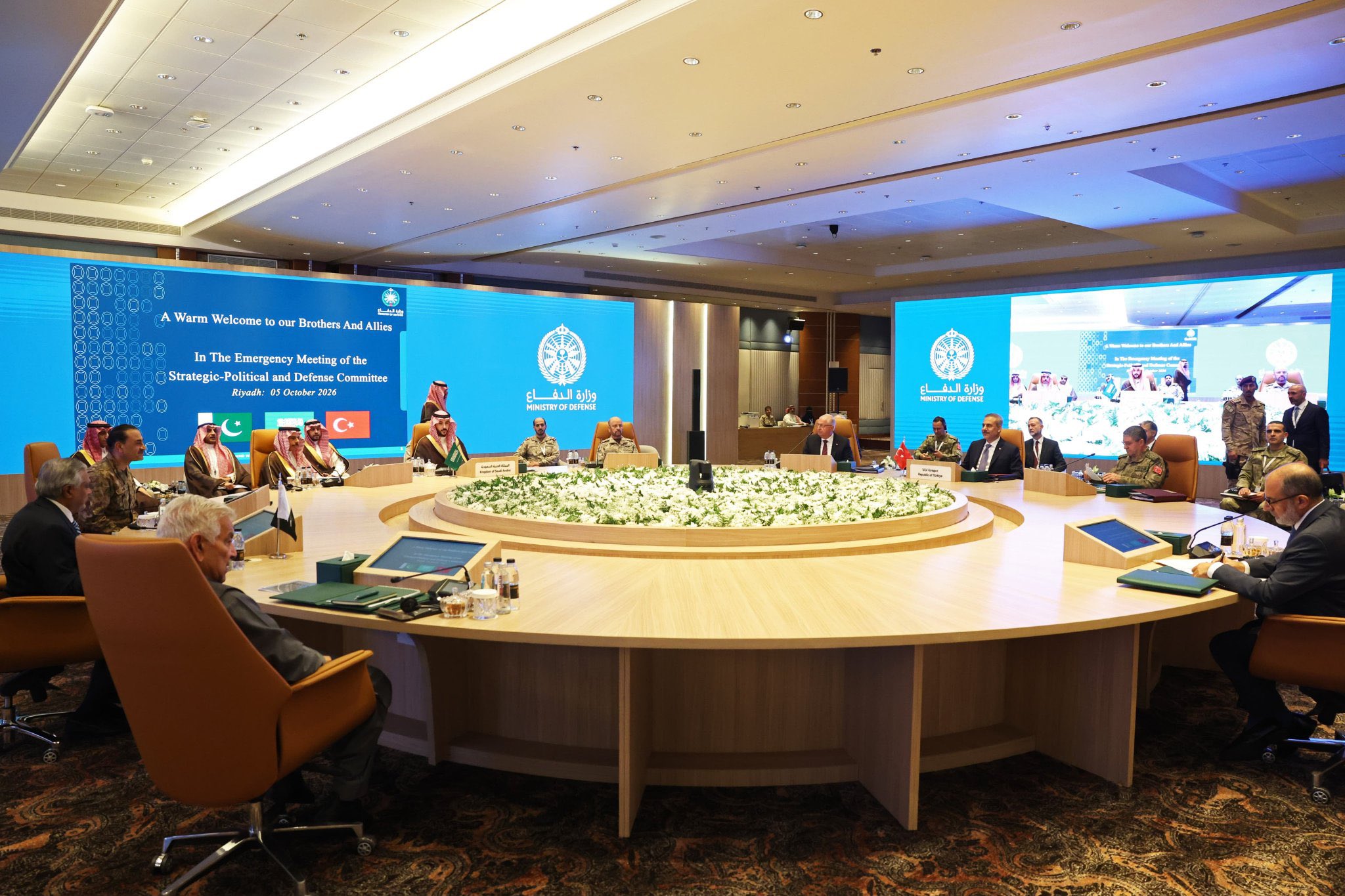
Though they were unsuccessful in preventing the current conflict, and, as expected, have been dragged into the U.S.-Israeli confrontation with Iran, Gulf Arab countries remain crucial to hopes for limiting the war and bringing it to a quick resolution.






Aug 8, 2016
The Unknown Muslim Who Has Kept America Safe
A Muslim American is the person “most responsible for keeping America safe since the Sept. 11 attacks,” wrote former CIA acting director Michael J Morell in the New York Times last week. Mr Morell was referring to “Roger”, an American convert to Islam (he cannot be identified because he still works for the agency) who...
4 min read