Kuwait’s Energy Industry Suffering from Ministerial Musical Chairs
Kuwait is struggling to increase oil production capacity. To put the country on a path toward a more sustainable energy future, Kuwait needs stability between its two branches of government and continuity in the energy sector.
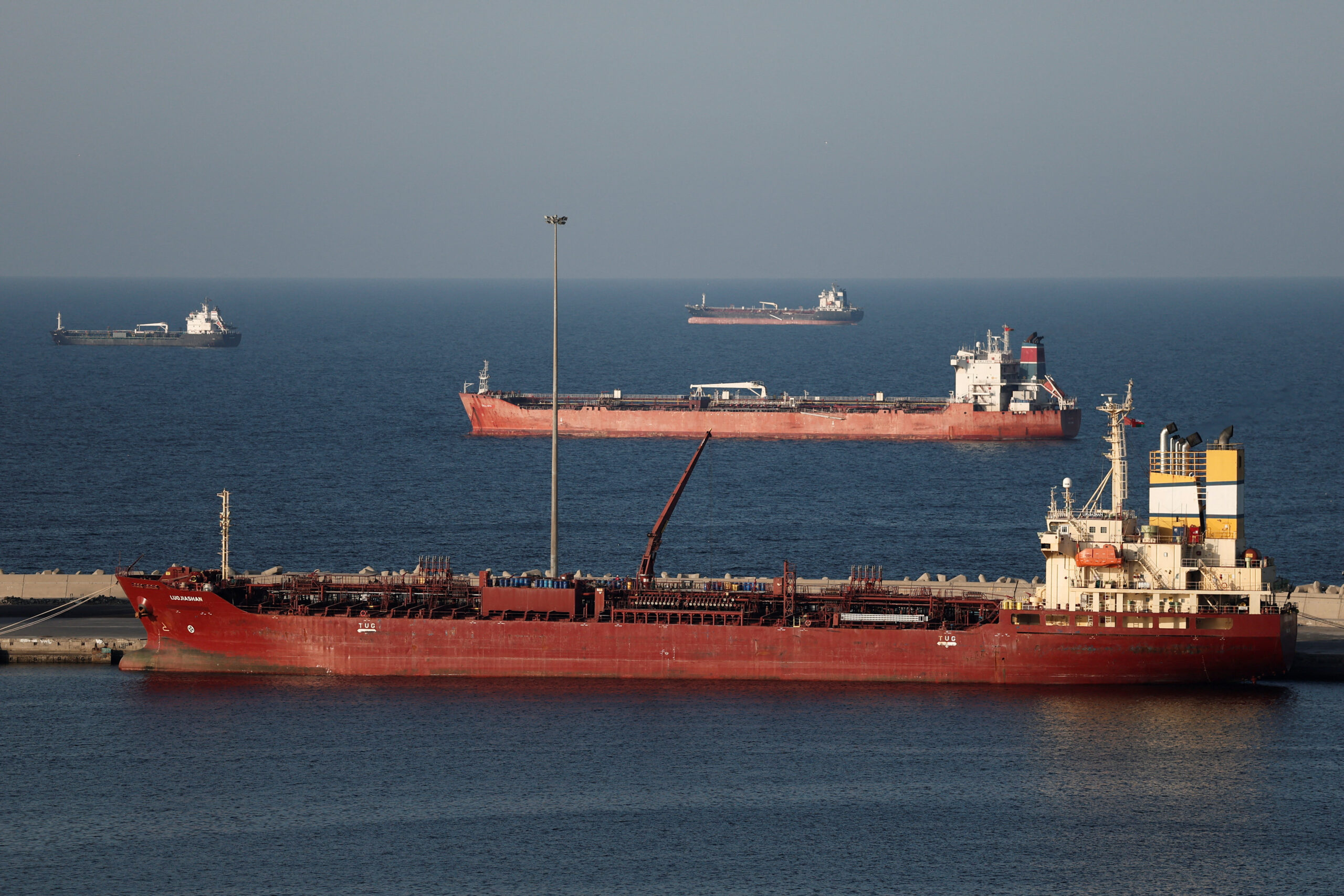
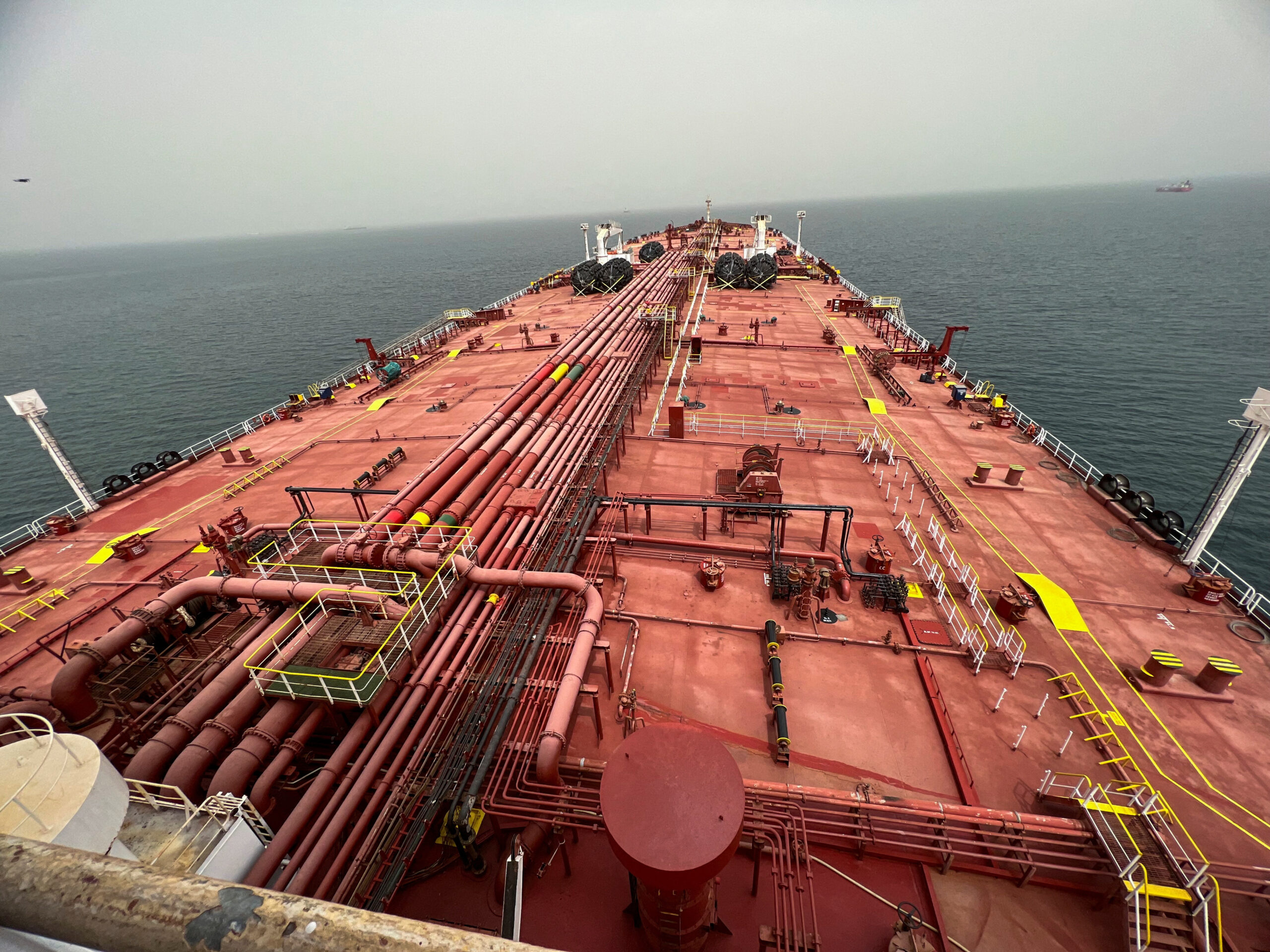
An oil tanker loading crude oil at Mina Al Ahmadi Port in Kuwait (AP Photo/Gustavo Ferrari)
Kuwait is one of the world’s top 10 oil producers, with current reserves estimated at 101.5 billion barrels of crude oil. Yet its oil production is stagnating. Multiple ministerial changes at the Ministry of Oil over the past decade, an obstructionist Parliament, project delays, and runaway consumption have frustrated long-standing plans to increase production capacity. Kuwait is today an importer of liquefied natural gas and is likely to remain so for decades to come as its own gas development plans have not progressed at a pace that has matched demand growth.
But things may be about to change. In December 2018, Khaled al-Fadhel was appointed Kuwait’s new oil minister, and Hashem Hashem was appointed chief executive officer of Kuwait Petroleum Corporation, the state oil company. Hashem is tasked with restructuring the company and streamlining its operations. What Kuwait needs now more than anything is stability between its two branches of government and continuity in the vital sector that accounts for 90 percent of its export revenue.
Fadhel, who holds the oil as well as electricity and water portfolios, is Kuwait’s fourth oil minister in two years. In the last two decades, Kuwait has had 15 oil ministers, some of whom served for less than a year. This is hardly a recipe for success and the energy industry has suffered as a result.
Fadhel’s predecessor, Bakheet Al-Rashidi, resigned in December 2018 after coming under parliamentary pressure over allegations of mismanagement and cost overruns at key projects. These include the much-delayed Al Zour refinery, which may now be completed in 2020, more than a decade since it was first conceived. The refinery, which will have capacity to process 615,000 barrels per day of crude oil, will be the largest in the Middle East when completed.
The constant wrangling between the government and Parliament has led to projects being delayed endlessly or cancelled altogether.
The Kuwait Oil Company, the upstream arm of Kuwait Petroleum Corporation, puts current production capacity at just 3 million barrels per day, below the 3.15 mb/d it had reported in its 2017-20 annual report. This is puzzling considering Kuwait Oil Company had brought online 120,000 b/d of new production in 2018. This is likely because of a decline at Kuwait’s largest and oldest producing field, Burgan, the second largest oil field in the world after Saudi Arabia’s Ghawar. Production from Burgan, which was producing 1.7 mb/d, has fallen by between 100,000 and 200,000 b/d and will require investment in enhanced oil recovery technology to prevent further decline.
One of the reasons for delays in increasing oil production capacity has been Parliament’s opposition to the participation of international oil companies in Kuwait’s upstream sector. Kuwait does not offer production-sharing contracts to foreign companies, but it does offer technical service contracts. Parliament had previously rejected any participation by foreign companies, forcing technical service contracts with oil majors, including Shell and BP, to be scrapped in 2009 – a decade after they were first negotiated. In 2016, the government secured approval from a majority of members of parliament to award enhanced technical service contracts to multinational oil companies, whose technical expertise is needed to boost production from fields that are in decline and develop heavy oil fields that have been awaiting development for years. However, the delay proved costly.
As a result, Kuwait is likely to miss its target of 3.65 mb/d of production capacity in 2020 while its longer-term target of 4 mb/d has drifted further into the future. The International Energy Agency, in its Oil 2019 report covering through 2024, downgraded its expectations of Kuwait’s oil capacity growth. Having previously forecast that Kuwait would achieve capacity of 3.07 mb/d in 2019, this year’s report puts capacity at just 2.95 mb/d, a level that will remain unchanged until at least 2024. This downgrade is partly due to the continued shutdown of production from the Neutral Zone shared equally by Kuwait and Saudi Arabia. The dispute between Saudi Arabia and Kuwait over this oil field has meant a reduction of 250,000 b/d of production for Kuwait, which can ill afford the loss. Saudi Arabia has the ability to make up for the loss of its share by increasing output from other fields. There appears to be no end in sight to the dispute that led to the shutdown in 2015.
This new forecast by the International Energy Agency may be overly pessimistic but it highlights the dysfunctional nature of Kuwait’s energy policy in recent years.
Now the Kuwait Institute for Scientific Research has produced an energy roadmap to 2035 to help policymakers plan for a more sustainable and diversified energy future. The outlook provides a roadmap that could, if implemented, put Kuwait on a path toward a more sustainable energy future. Among the recommendations in the report are curbs on consumption of fossil fuels and diversification of the energy portfolio, emphasizing energy efficiency and price reform as critical pathways.
The outlook predicts that if Kuwait stays on its current course, its greenhouse gas emissions and per capita consumption will remain among the highest in the world. Kuwait relies almost exclusively on oil and gas, much of it imported liquefied natural gas, to meet its energy needs. Renewables, mostly solar, satisfy less than 1 percent of energy demand today, and will meet just 3 percent of demand by 2035.
Oil products, electricity, and water are all heavily subsidized, which encourages high consumption, particularly in the transportation and residential sectors, where demand for air conditioning in the arid desert country accounts for 70 percent of residential energy demand. The government passed a law in 2017 raising tariffs for electricity and water consumption on all sectors but the residential sector.
Gasoline and diesel prices at the pump are among the lowest in the world and there has been no effort to introduce alternative means of transportation or more fuel-efficient vehicles. Plans to build a metro have been scrapped. The transportation sector is projected to account for nearly one-third of total energy consumption by end users in 2035 and for all the increase in greenhouse gas emissions from the use of oil and oil products, according to the outlook. Given the low cost of energy, there is little incentive for consumers to conserve it.
Despite the wealth of its energy resources, these high levels of consumption and lack of investment in new generating capacity over previous decades have resulted in electricity blackouts in recent years, and reserve margins are falling to alarmingly low levels. The Ministry of Electricity and Water intends to avoid these shortfalls in the future and plans to add 17.6 gigawatts of generation capacity over the outlook period – a 70 percent increase over current capacity. This, in theory, is to be achieved with the help of independent operators.
However, rigidities in the electricity sector’s structure and the lack of coordination between the various institutions in the power sector are the main reasons for the lack of private sector involvement and the slow development and deployment of renewable energy technologies, according to the outlook.
Kuwait has some way to go before it can recalibrate its energy sector to meet its climate objectives, sustain its oil export volumes, and design a more balanced energy architecture. As a step in that direction, the government has established a Higher Energy Committee, to improve coordination between ministries, regulatory agencies, and service providers. But for the committee to be truly effective, the game of musical chairs at the Oil Ministry has to end.
The views represented herein are the author's or speaker's own and do not necessarily reflect the views of AGSI, its staff, or its board of directors.
More spending, low growth, and recurring deficits are not a recipe for long-term economic sustainability, but this concoction may be a necessary pill for Gulf states to swallow as the hard work of economic reform sets in.
Oil, economic growth, and politics have long been intertwined in the Middle East, transforming the region over the past 50 years into a dynamic player on the global stage.
There was a growing war risk premium in the oil markets tied to escalating regional tensions; the shift from shadow confrontation to direct military action changes the calculus.
From the Gulf to the eastern Mediterranean and North Africa, governments are recalibrating fiscal terms, monetization strategies, and partnership models to attract international players.
A founding member of OPEC is now effectively under external control, raising questions about sovereignty, influence, and the resilience of producer-led market management.