How the UAE Became Serbia’s Most Important Arab Partner
Through its increasing ties with Serbia, the UAE has secured a lasting strategic foothold in the Western Balkans, and Serbia has gained an influential Arab partner that is likely to remain central to Belgrade’s multipolar foreign policy calculus.
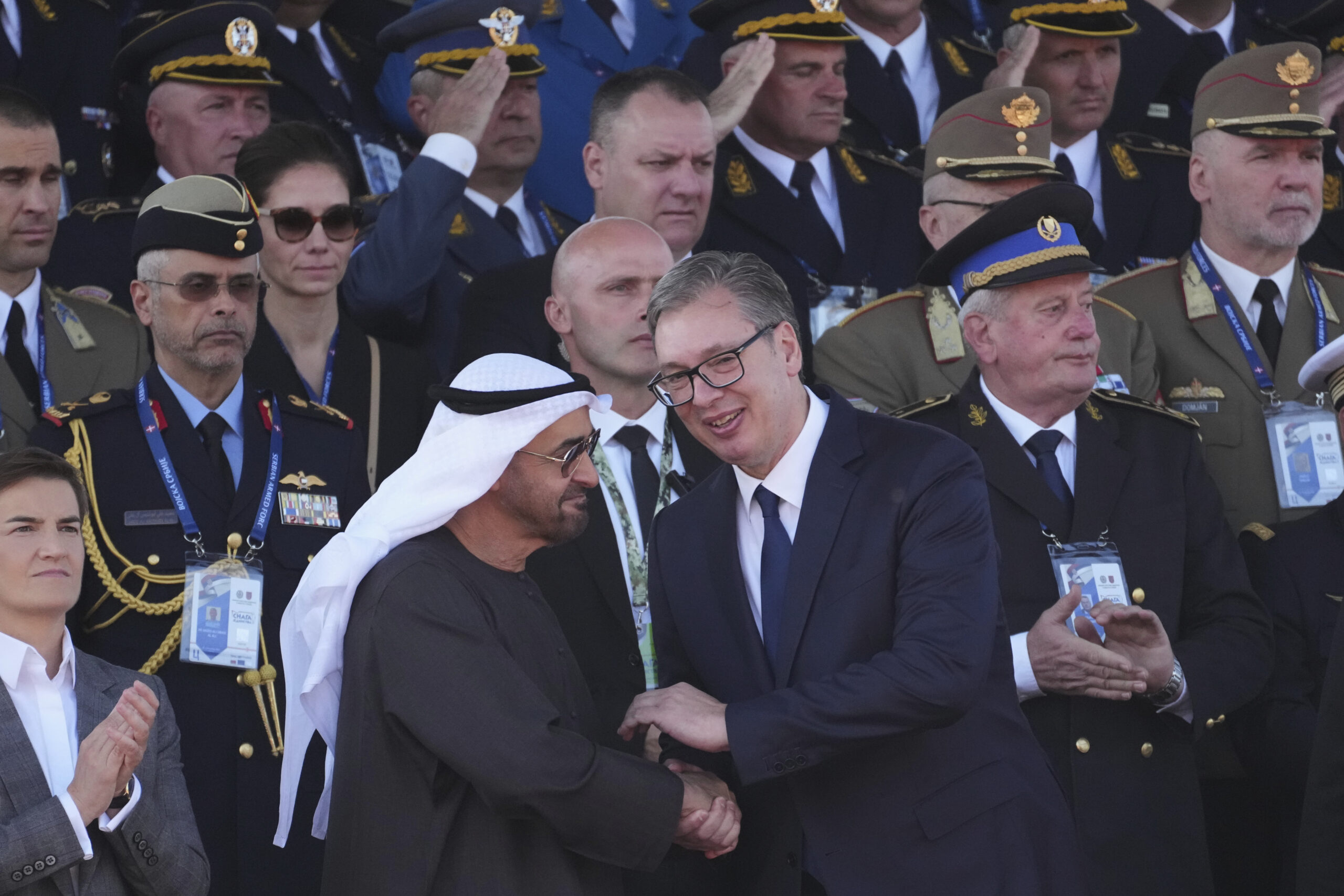
Serbian President Aleksandar Vucic shakes hands with UAE President Mohammed bin Zayed al-Nahyan, as they attend a military parade in Belgrade, Serbia, September 20, 2025. (AP Photo/Darko Vojinovic)
As Western sanctions on Russia place Serbia in an increasingly precarious position, Belgrade’s closest partner in the Gulf, the United Arab Emirates, is reportedly weighing a move to help the Balkan state weather the pressure. With Serbia’s Russian-majority-owned oil and gas company, the Petroleum Industry of Serbia, under U.S. sanctions since October 2025, the Abu Dhabi National Oil Company has been a leading candidate to acquire Russia’s 56.15% stake. Such a transaction would offer Belgrade a rapid path to alleviating its looming winter energy crisis. Rather than an ad hoc rescue, this prospective deal is part of a deepening strategic partnership between Serbia and the UAE, which has been steadily consolidating since the 2010s and underscores the extent to which Abu Dhabi and Belgrade increasingly see long-term value in bilateral relations.
The UAE and Serbia’s distinctive partnership is marked by high-level ties, with UAE President Mohammed bin Zayed al-Nahyan and Serbian President Aleksandar Vucic sharing a strong personal rapport bolstered by multiple visits in recent years. But bilateral ties have not always been warm. During the 1990s and 2000s, relations were significantly strained. Amid the breakup of Yugoslavia, the UAE supported Bosniak forces during the 1992-95 Bosnian war and was one of a few Arab states that backed NATO’s military campaign against Slobodan Milosevic’s regime in 1999. The Gulf country also contributed troops to NATO’s peacekeeping mission in Kosovo and was the first Arab state to recognize Kosovo in 2008.
The relationship began to evolve in the late 2000s and early 2010s, as Serbia, while reeling from the 2008-09 global financial crisis, sought urgently needed foreign direct investment, making the Gulf an increasingly important region for Belgrade to cultivate closer ties. From 2010-19, the UAE became Serbia’s fourth-largest foreign direct investor – trailing only the European Union, Russia, and China. In 2025, a comprehensive economic partnership agreement between the UAE and Serbia came into effect, designed to enhance bilateral trade, investment, and private sector cooperation across key sectors, such as renewable energy, agriculture, logistics, and technology. By reducing or eliminating duties on more than 96% of tariff lines, the agreement is expected to significantly boost trade between Serbia and its leading Gulf Cooperation Council trading partner. Notably, this comprehensive economic partnership agreement with Serbia became the UAE’s 10th to come into force.
Beyond the economic benefits of bilateral ties, relations with the UAE and other Middle Eastern countries have enabled the Vucic government to frame Belgrade’s ties with the Islamic world in markedly positive terms, emphasizing cooperation, stability, and economic partnerships – language that contrasts sharply with Serbia’s pariah status and the Islamophobic rhetoric of the 1990s, when Vucic and other officials in the Milosevic regime were associated with nationalist anti-Muslim discourse.
Over the years, the UAE has come to view Serbia as a strategically attractive destination for investment, owing to its geographic position at the crossroads of Central Europe and the Balkan Peninsula and between the European Union and Middle East. Serbia has also been particularly important to the UAE for food security. With the desert country heavily reliant on food imports, Emirati entities, such as the UAE Development Fund and Al Dahra agriculture company, have invested heavily in Serbia’s agricultural sector.
The UAE’s overseas investment approach, with investments typically state coordinated, politically supported, and negotiated at the government-to-government level rather than on purely commercial terms, has proved particularly appealing to the Vucic government. It has also likely functioned more smoothly within Serbia’s political and institutional environment than it would in a European Union member state, where transparency requirements, rule-of-law standards, and anti-corruption regulations are far more stringent than in a Balkan country outside the bloc.
Belgrade Waterfront: Flagship Investment
The most high-profile Emirati investments in Serbia have come from UAE-based developer Eagle Hills. Since 2015, Eagle Hills has been playing a major role in the financing and construction of the Belgrade Waterfront – a vast mixed-use development project promised to attract 3.5 billion euros (approximately $4.1 billion) in investments along the Sava River. The project has played a significant role in reshaping Belgrade’s skyline, lending it a distinctly Dubai-inspired profile, and positioning the city as an emerging European capital seeking to narrow the gap with its Western European counterparts. Its realization has been heavily facilitated by close coordination at the highest levels of leadership in the UAE and Serbia, firmly rooted in broader diplomatic ties.
At the same time, Eagle Hills’ involvement in the Belgrade Waterfront has not been without controversy. Allegations of corruption, deaths of construction workers, and illegal demolitions to expedite construction, alongside environmental concerns and limited transparency, have generated substantial criticism and public discontent within segments of Serbian society.
Aviation Ties and Strategic Connectivity
In 2013, Etihad Airways acquired a 49% stake in Serbia’s national carrier, Air Serbia, playing a central role in the rebranding and management of the former Jat Airways. In 2020, Etihad reduced its ownership stake to 18% as the Serbian government recapitalized the airline to help it during the coronavirus pandemic crisis. Despite this substantial divestment, the partnership proved instrumental in strengthening Belgrade’s air connectivity not only with the UAE but also with the wider Gulf region. By 2023, Air Serbia had returned to full state ownership. Nevertheless, bilateral cooperation in the aviation sector endured, including a codeshare agreement concluded between Etihad Airways and Air Serbia in 2024.
Defense and Arms Cooperation
The arms trade is a key pillar of Emirati-Serbian relations. In 2013, Serbia and the UAE announced their first arms deal, estimated at $214 million. The partnership has continued through ammunition sales and joint projects. It offers Serbia access to lucrative Middle Eastern arms markets, as it seeks to expand its presence as a global arms supplier and provides the UAE with a dependable supply of weapons and the means to distribute them to its regional partners.
In the lead-up to Belgrade’s September 2025 “Unity of Strength” military parade, the Serbian armed forces conducted exercises with UAE-developed Shadow 25 and Shadow 50 one-way attack drones. This was the first time these systems had been seen publicly in Europe. Developed by Abu Dhabi-based advanced technology and defense conglomerate EDGE Group, the drones differ in speed and payload yet share mobile launch capabilities. Their public display came on the heels of recent EDGE agreements to broaden defense cooperation and promote these systems across Europe. While Serbian officials have not formally confirmed the acquisition, the drones’ presence signals deepening defense ties with the UAE and underscores Serbia’s growing interest in loitering munitions amid escalating regional security concerns.
Artificial Intelligence and Digital Statecraft
In February 2024, at the World Government Summit in Dubai, Serbia and the UAE signed a memorandum of understanding to advance cooperation in artificial intelligence, aiming to deepen collaboration on AI development and its practical applications. According to Serbian officials, the agreement enables Serbian scientific institutes, startups, and other entities to use a UAE-developed large language model, described as practically equivalent to ChatGPT, to support their AI projects. It builds on a series of prior AI- and technology-focused partnerships, including the establishment with Emirati support of smart police stations in Serbia, Serbian collaboration with Abu Dhabi-based AI firm G42, and joint initiatives in health care, biotechnology, and digital infrastructure.
Serbia is also part of the UAE’s broader strategy to expand its global AI and digital footprint. Belgrade signed an agreement with technology group e& enterprise to triple Serbia’s data center capacity to 40 megawatts, complementing similar UAE-backed projects across Europe.
Belgrade’s Multipolar Foreign Policy
Rooted in the nonaligned foreign policy tradition of Yugoslavia under Josip Broz Tito, the Vucic government has long sought to navigate competing geopolitical currents to safeguard Serbia’s autonomy. Constantly striving to keep multiple options open, Belgrade deliberately avoids overly deep alignment with any single bloc at the expense of others. While seeking to carefully balance relations between East and West, Serbia has also consistently pursued stronger ties with influential states in the Global South, including across the Arab world, and the UAE has become the most consequential Arab state in this strategy.
The deepening UAE-Serbia partnership reflects more than opportunistic dealmaking amid geopolitical strain. It also illustrates how two states with distinct but complementary strategic objectives have identified enduring value in one another. For Belgrade, Abu Dhabi offers a rare combination of capital, political backing, and geopolitical flexibility at a time of mounting pressure from broadly gauged Western sanctions focused on Russia, regional insecurity, and economic vulnerability. For the UAE, Serbia represents a receptive gateway into Europe, expanding Abu Dhabi’s geostrategic reach and influence across emerging markets and offering economic diversification opportunities.
A Strategic Foothold in the Western Balkans
Yet this relationship is neither cost free nor necessarily assured for the long term. Emirati investments and defense cooperation have been enabled by highly centralized decision making and strong personal ties between leaders, a dynamic that has facilitated speed and scale but also generated controversy surrounding transparency, governance, and public accountability. As Serbia faces growing domestic unrest and the eventual transition to a post-Vucic political landscape, the sustainability of this model may be increasingly tested.
The UAE-Serbia relationship appears resilient but contingent. Its future will depend not only on broader regional and global shifts but also on whether bilateral cooperation becomes more institutionalized and transparent or remains heavily personalized and transactional. What is clear, however, is that the UAE has secured a lasting strategic foothold in the Western Balkans, and Serbia has gained an influential Arab partner that is likely to remain central to Belgrade’s multipolar foreign policy calculus.
The views represented herein are the author's or speaker's own and do not necessarily reflect the views of AGSI, its staff, or its board of directors.
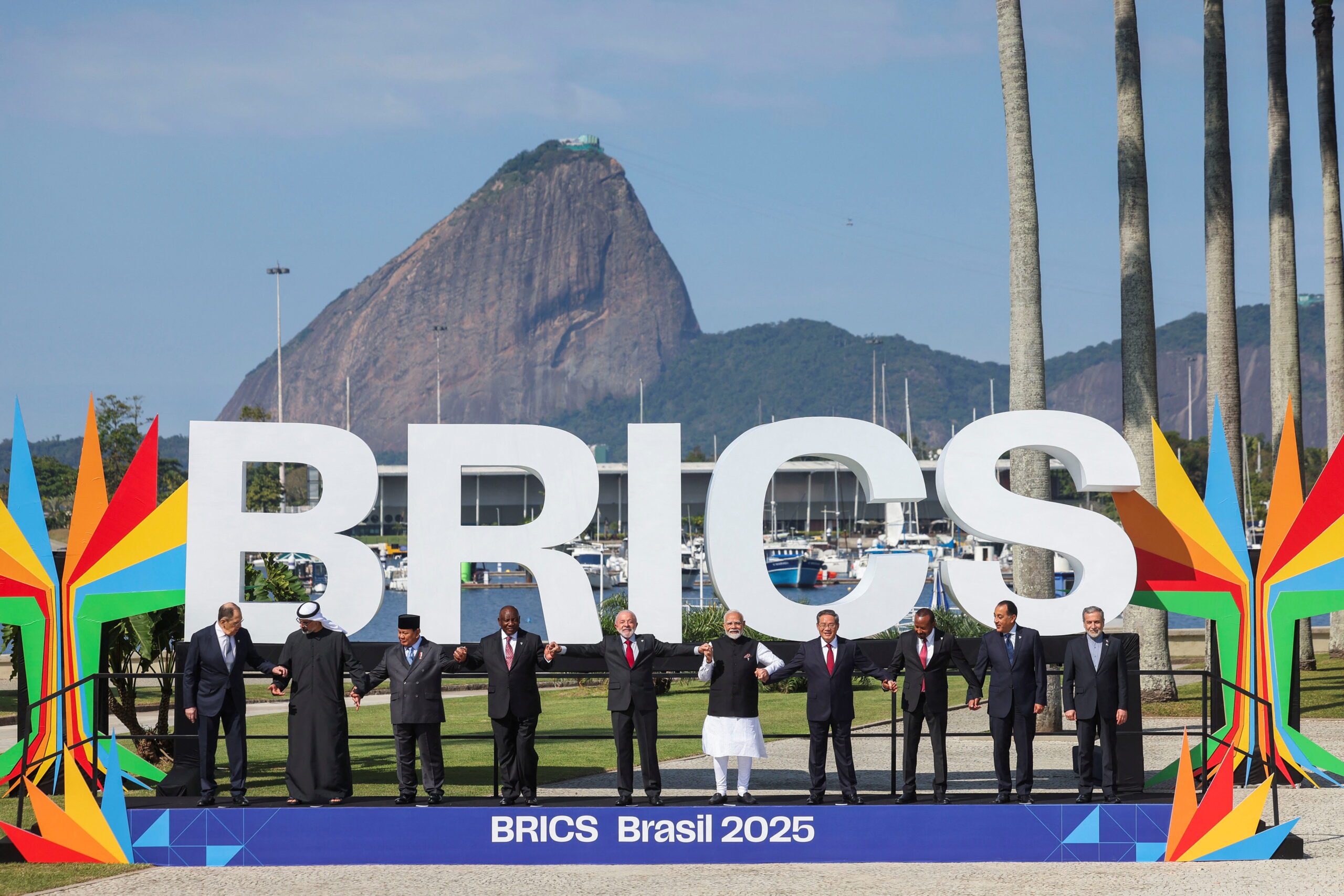
Participation in new country groupings offers the UAE additional avenues to navigate reconfigurations in global trade and reinforce economic partnerships.
As new trade routes are emerging in Eurasia, Gulf states are increasingly looking to the transit and investment potential of the South Caucasus, particularly Azerbaijan and Georgia.
With the E3 triggering the JCPOA’s snapback mechanism and aligning more closely with Washington’s hard-line stance, Europe’s role as an independent diplomatic actor in Tehran is effectively over.
In the wake of the Iran-Israel conflict, Iran is pivoting closer to China, deepening defense and economic cooperation as part of a long-term effort to reduce Western dependence and increase resilience.