Maaden Aluminium in Ras Al-Khair, Saudi Arabia, November 23, 2016. (REUTERS/Zuhair Al-Traifi)
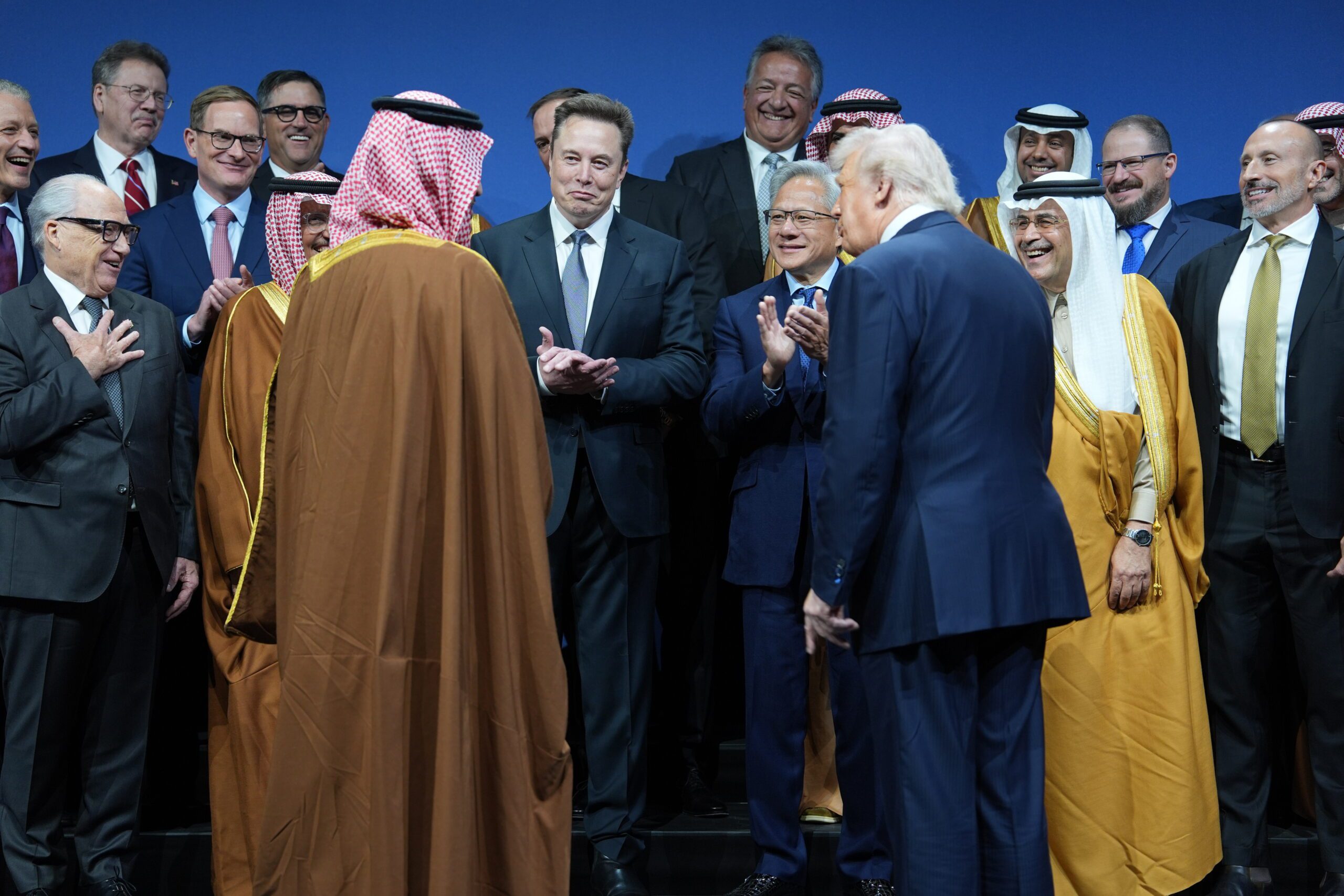
On November 18, President Donald J. Trump welcomed Saudi Crown Prince Mohammed bin Salman to the United States. The visit produced several major agreements across defense, technology, and economic cooperation. Notably, MP Materials and Saudi Maaden, in collaboration with the Department of Defense, announced a joint venture to build a rare earths refinery in the kingdom. Given Saudi Arabia’s significant rare earth reserves, the project could help reduce U.S. reliance on China for these minerals.
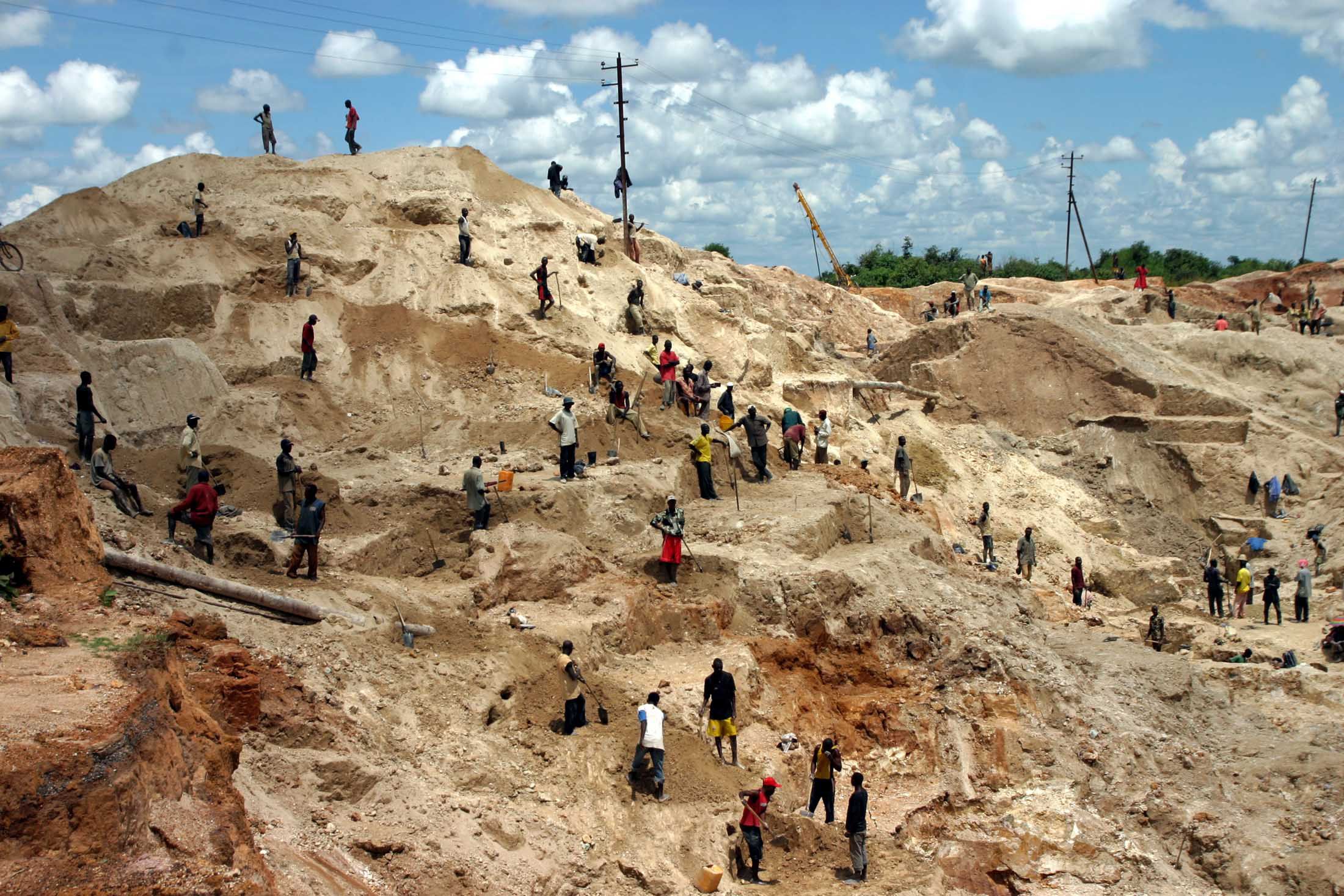
Rare earth minerals, along with other metals, such as lithium, copper, cobalt, and nickel, are critical for the technologies driving the global transition to clean energy. They serve as core components in everything from electric vehicle batteries and wind turbines to advanced electronics and defense systems. As demand accelerates, securing reliable supply chains for critical minerals has become a top priority for countries worldwide.
In recent years, Gulf states have become increasingly focused on critical minerals as part of their economic diversification efforts, with Saudi Arabia and the United Arab Emirates playing leading roles. These states’ strategies, however, differ significantly: Saudi Arabia is building an integrated mining sector, while the UAE, Qatar, Oman, and Bahrain are adopting more selective investment approaches. These differences reflect each state’s distinct national priorities and capacities within the global critical mineral landscape.
Saudi Arabia’s Integrated Mining Sector
Mining is the “third pillar” of Saudi Arabia’s national economy under Vision 2030, playing a crucial role the kingdom’s efforts to diversify away from fossil fuels. With Saudi Arabia’s untapped mineral and mining resources valued at an estimated $2.5 trillion, the kingdom has the capacity to develop an integrated mining ecosystem by leveraging its vast domestic deposits while also using its substantial capital to expand investments in global supply chains. This ability to build a strong domestic mining base and pursue strategic opportunities abroad is what distinguishes Saudi Arabia from other Gulf states when it comes to critical minerals.
Domestically, Saudi Arabia has accelerated efforts in recent years to develop its mining sector through regulatory reforms, expanded geological surveying, and partnering with various global entities. In 2021, the kingdom passed the “Mining Investment Law” to make investment processes more efficient and investor friendly. In parallel, the Saudi Geological Survey, the country’s national geological authority, launched the “Regional Geological Survey Program” in late 2020, working with both local and foreign partners to map 230,000 square miles of the Arabian Shield to identify mineral resources and attract greater foreign participation.
These efforts have already produced tangible results. Saudi Arabia’s estimated mineral wealth rose from $1.3 trillion in 2016 to roughly $2.5 trillion in 2024, reflecting new discoveries and improved mapping techniques. Exploration activity has also expanded significantly, with investments in exploration growing from $28.4 million in 2019 to $140 million in 2024. Additionally, by 2025, foreign mining investors accounted for two thirds of the total license bidders in the country. The kingdom has further sought to capitalize on its domestic critical mineral potential through strategic partnerships with international entities, notably signing nine mineral deals, valued at $9.3 billion, in late 2024 with companies including India’s Vedanta Resources and China’s Zijin Mining Group, and, more recently, establishing a joint venture between Maaden and MP Materials to build a rare earth refinery in Saudi Arabia.
Through Manara Minerals, a joint venture between Maaden and the Public Investment Fund, Saudi Arabia has been acquiring stakes in major global mining entities. In 2023, Manara Minerals invested $2.6 billion to acquire a 10% stake in Brazil’s Vale Base Metals. In 2024, it expressed interest in investing at least $1 billion in Pakistan’s Reko Diq copper and gold project as well as up to $2 billion in First Quantum Minerals’ copper and nickel assets in Zambia, extending the kingdom’s reach across global critical mineral supply chains.
The UAE’s Global Reach
Unlike Saudi Arabia’s resource-rich landscape, the UAE has limited domestic critical mineral reserves. So, Abu Dhabi has centered its strategy on investing in critical mineral projects globally, notably in Africa. In 2023, the UAE, through International Resources Holding, invested $1.1 billion to acquire a 51% stake in Mopani Copper Mines in Zambia. Most recently, International Resources Holding acquired a 56% majority stake in Alphamin Resources for $366 million, giving it access to the Bisie tin complex in the Democratic Republic of Congo. Additionally, in 2024, International Resources Holding formed joint ventures for iron ore mining in Angola and announced that it was in advanced talks to potentially acquire mines in Burundi, Kenya, and Tanzania.
Beyond Africa, the UAE is expanding its global footprint through various large-scale partnerships, namely with the United States. In January, Abu Dhabi’s ADQ, with Orion Resource Partners, a U.S.-based global investment firm specializing in metals and materials, created a 50/50 joint venture based in Abu Dhabi with a $1.2 billion commitment to invest in mining companies in Africa, Asia, and Latin America. Additionally, in October, a broader fund, Orion Critical Mineral Consortium, was established by the U.S. International Development Finance Corporation, Orion Resource Partners, and ADQ with an initial funding commitment of $1.8 billion and a plan to expand to $5 billion. The consortium’s goal is to invest in existing or near-term producing assets, further underscoring the UAE’s emphasis on gaining strategic exposure to global critical mineral assets.
Qatar, Oman, and Bahrain
Qatar’s distinct critical mineral investment strategy is more conservative than that of the UAE. Through its sovereign wealth fund, the Qatar Investment Authority, Qatar’s approach is focused on gaining financial exposure by acquiring stakes in well-established critical mineral companies rather than investing directly in mines. In 2024, QIA invested $180 million in Dublin-based TechMet, and, more recently, it invested $500 million in Canada’s Ivanhoe Mines through a private placement. This targeted approach gives Qatar exposure to the critical mineral sector while avoiding the operational risks associated with running mining projects.
In Oman, mining has been designated a strategic sector under Oman Vision 2040. Oman’s investment strategy in critical minerals is grounded in domestic development but at a much smaller scale than Saudi Arabia’s, given its smaller resource base. The country advances its exploration and investment agenda through the Ministry of Energy and Minerals and state-backed Minerals Development Oman.
Oman’s ophiolite-rich mountains are believed to host a wide range of metals, including chromite, cobalt, copper, and nickel. The country was also the first in the Gulf to produce and export ferrochrome. In 2023, the Ministry of Energy and Minerals signed an agreement with United Kingdom-based Knights Bay to extract nickel, Oman’s first mining agreement with a foreign investor. In January, Minerals Development Oman exported copper concentrates from its Lasail mine for the first time and plans to start production at Al Baydha copper mine in the years ahead. More recently, the Ministry of Energy and Minerals signed three mining exploration agreements valued at $500 million and signed a memorandum of understanding with Turkey’s Ministry of Energy and Natural Resources to enhance cooperation on critical mineral exploration.
Bahrain has also been trying to enter the critical mineral space, despite its small size and limited resource base. In September, Bahrain became the first Middle Eastern country to sponsor a deep-sea mining permit after backing California-based Impossible Metals’ bid to explore part of the Pacific Ocean. Although Bahrain has not made any financial commitments, Impossible Metals CEO Oliver Gunasekara noted that Bahrain could potentially fund a refinery in the future. While Bahrain’s initiatives remain extremely limited compared to those of other Gulf states, recent moves suggest a desire not to be left behind in the global critical mineral race.
The Gulf states are increasingly active in critical minerals, hoping to capitalize on their resources and strategic investments to prepare for a post-hydrocarbon economy. However, their different approaches reflect each state’s distinct resource capacities, national priorities, and ambitions.
The views represented herein are the author's or speaker's own and do not necessarily reflect the views of AGSI, its staff, or its board of directors.
Saudi and Emirati efforts to expand the countries’ presence in Africa’s critical mineral industry bring the potential for both economic collaboration and geopolitical tension with China.
U.S. authorizations for exporting advanced chips to the leading Gulf technology firms is sure to please regional authorities, who will push to broaden and accelerate technology collaboration with the United States.
New investment deals, mainly from the Gulf states and Turkey, are opening a path for Syrian reconstruction. But the fragile security situation and financial environment remain hurdles for foreign investment.
While hydrocarbons will likely continue to dominate Kuwait-China economic ties, the two countries are increasing cooperation in sectors such as construction, logistics, and renewable energy, suggesting a growing appetite to broaden ties beyond oil.
For Syria to have a chance at stability, the United States and the EU need to urgently consider lifting the layers of economic sanctions imposed on Syria under Assad and allow Gulf countries to help rebuild the war-torn country.