Beyond the Cube: Rethinking Urban Ambition in Riyadh
If the first phase of Vision 2030 was designed to capture imagination and reposition the kingdom globally, the next phase may focus on livability and affordability.
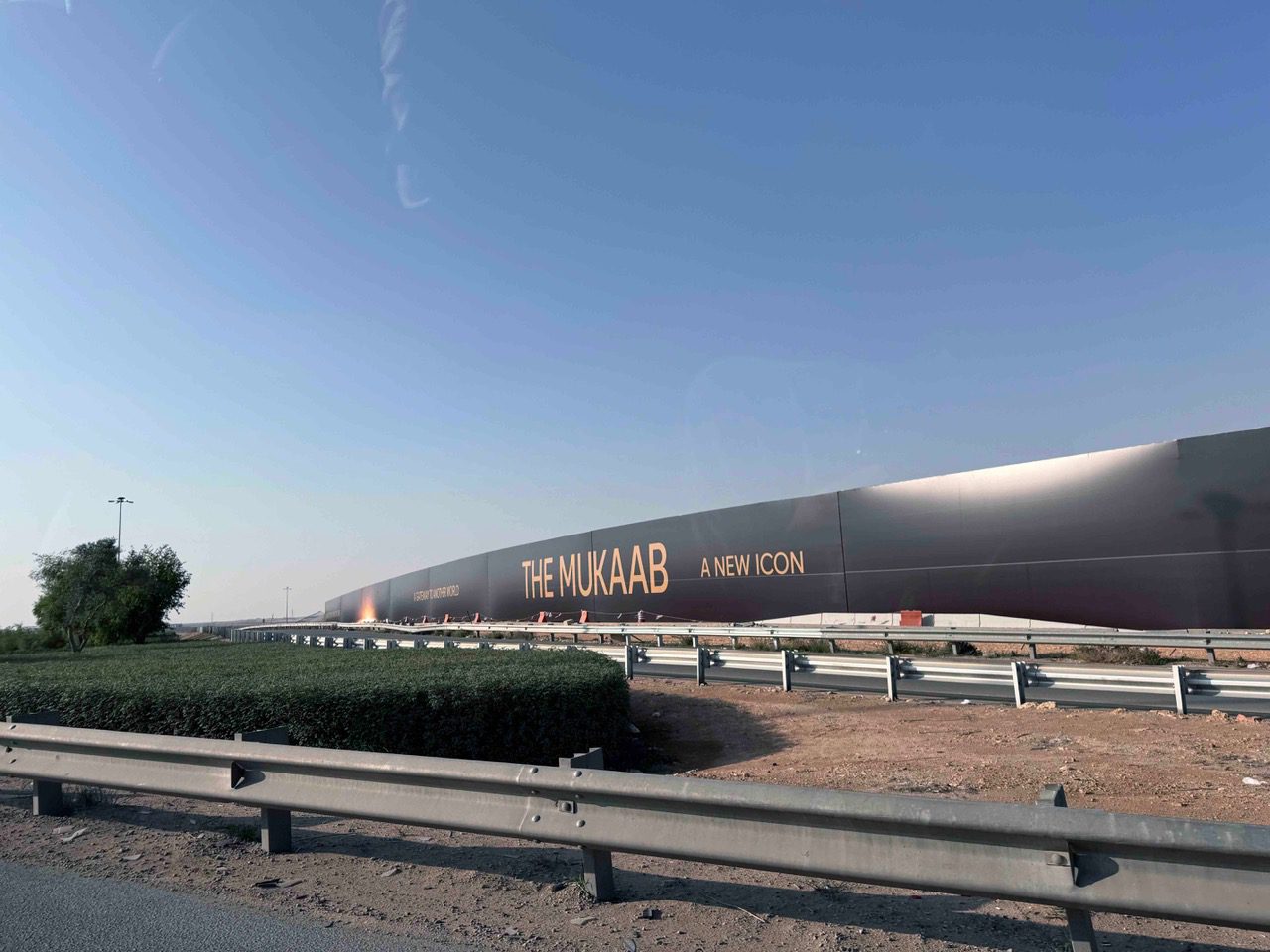
The Mukaab site, Riyadh, Saudi Arabia. ( Credit: Yasser Elsheshtawy)
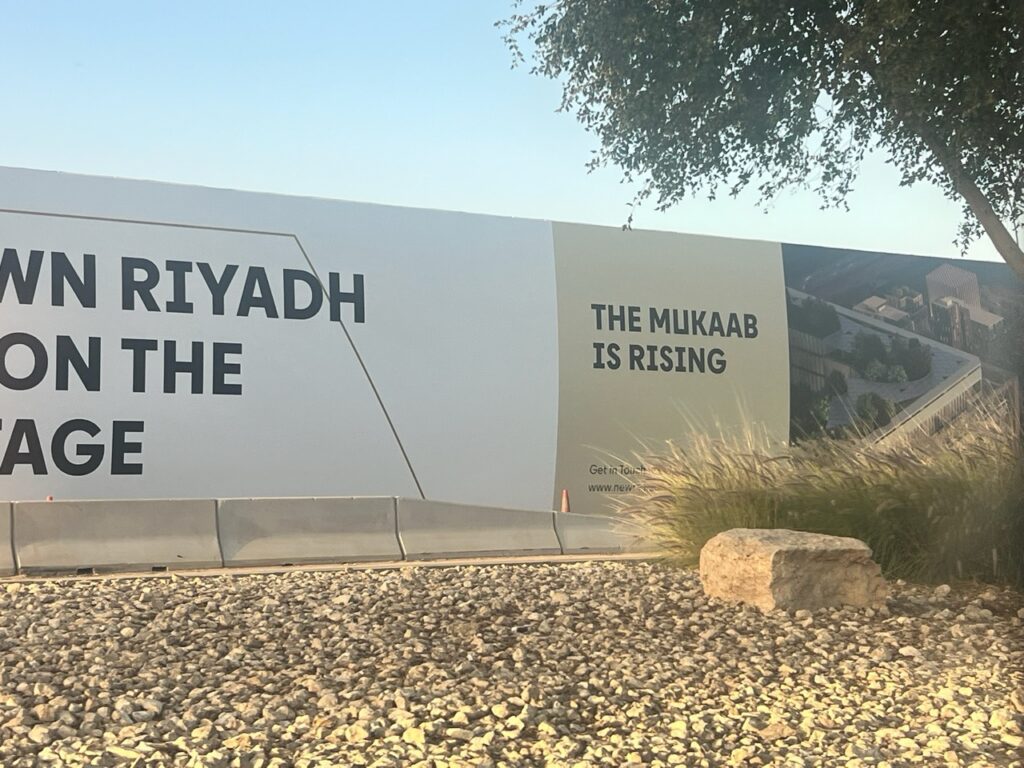
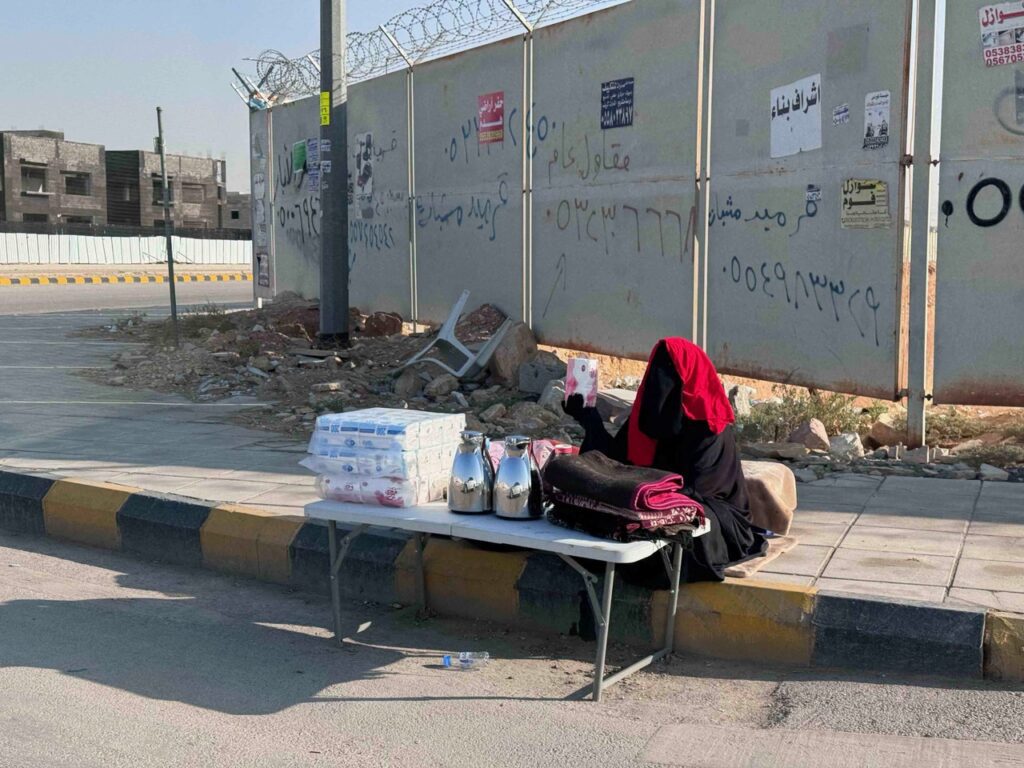
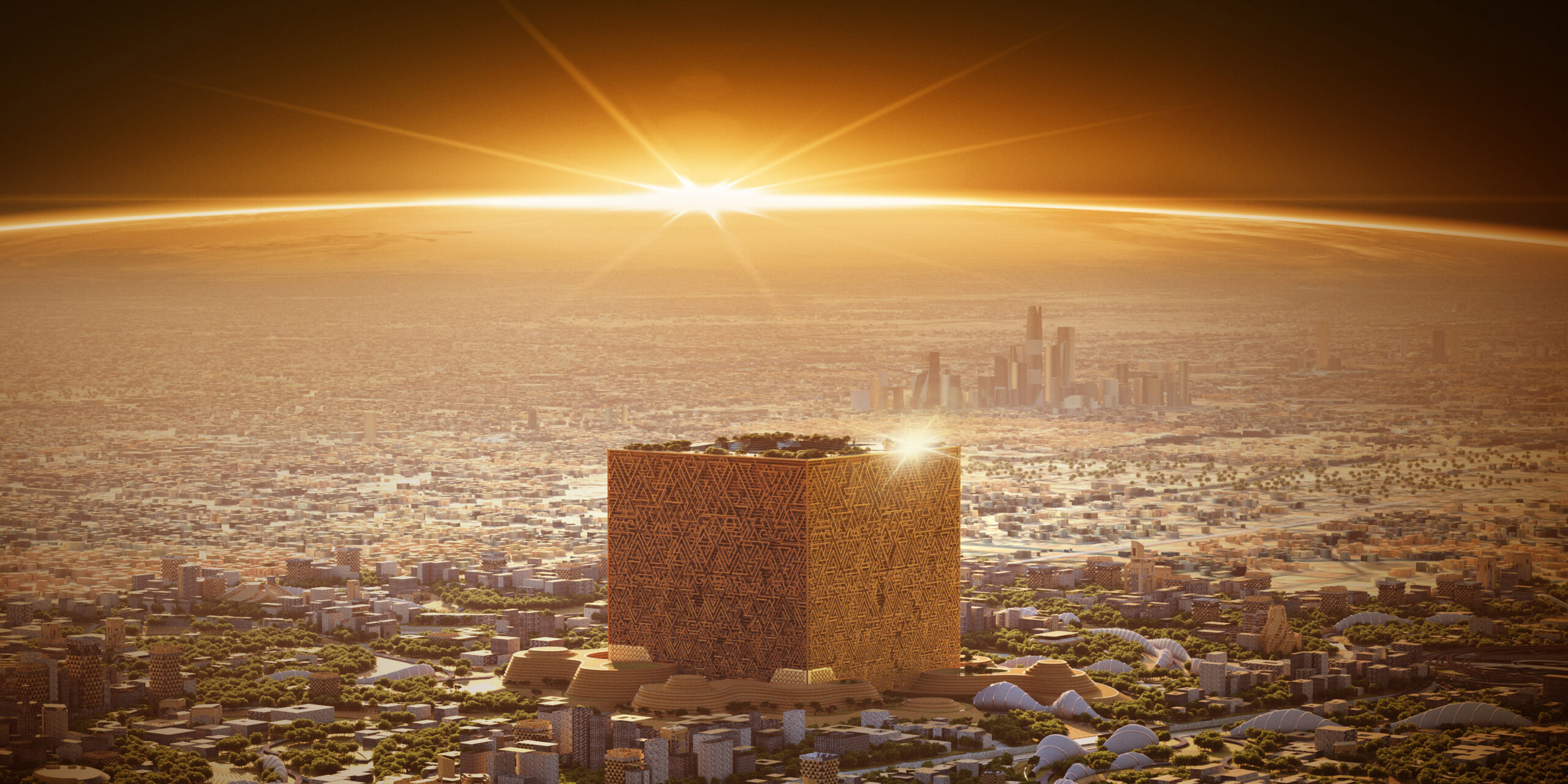
In 2023, visitors driving through north Riyadh toward the excavation site of the Mukaab encountered a vast construction zone wrapped in glossy renderings. The approach cut across an indistinct suburban landscape of highways, vacant plots, and low-rise sprawl – an urban fabric still in formation. At a small distance from the perimeter fence, an informal vendor was selling snacks and drinks to workers and passersby. It was an unassuming scene: a woman, a small table, transactions taking place through passing car windows. Behind her a colossal billboard promised something altogether different – immersive digital panoramas, simulated rainforests, alpine climates, and a self-contained interior world housed inside what was promoted as the most voluminous building ever conceived. Behind the hoardings shielding the project from view and unauthorized access, cranes and heavy equipment moved methodically across the site. The scale of excavation conveyed inevitability. The 400-by-400-by-400-meter cube – anchoring the New Murabba development – appeared to be a fait accompli. It embodied the audacity of Saudi Arabia’s Vision 2030: architectural spectacle as economic catalyst; urban form as geopolitical statement. Yet the juxtaposition – informal vendor with massive project site – lingered.
The Mukaab site, Riyadh, Saudi Arabia. (Credit: Kristin Smith Diwan)
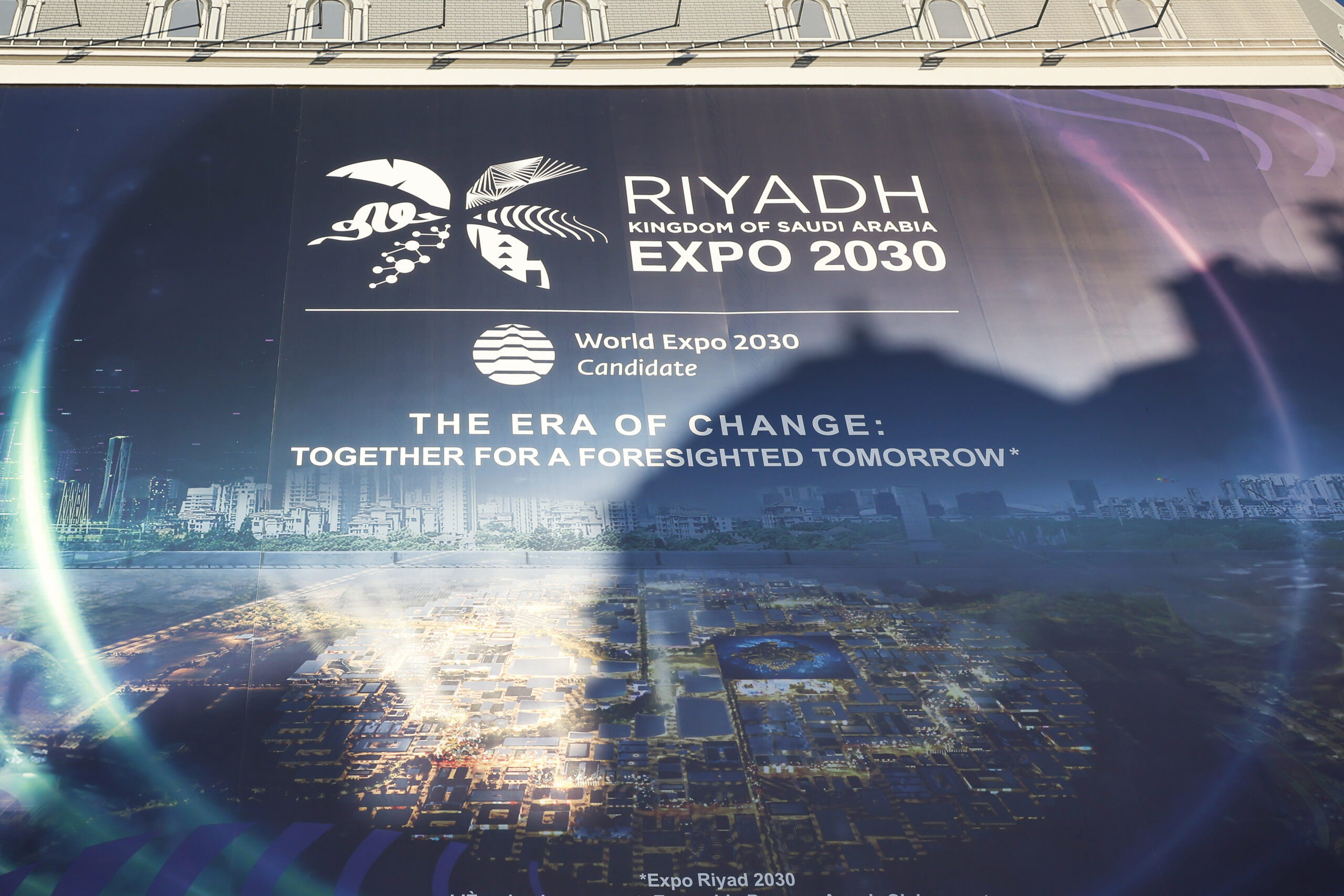
Three years later, that inevitability has been interrupted. In February, The Economist reported that construction of the Mukaab had been halted, as Saudi Arabia reassessed the affordability and sequencing of its “giga-projects” amid persistently low oil prices and tightening fiscal constraints. The same report noted that work has largely stalled on The Line – the over 100-mile linear city once framed as a $500 billion reinvention of urban life. Even the 2029 Asian Winter Games were relocated to Kazakhstan after delays to the planned Trojena mountain resort in the kingdom’s northwest. Financial Times similarly observed that Saudi authorities are reviewing and slowing major projects to preserve liquidity and prioritize near-term deliverables, including Expo 2030 and the 2034 FIFA World Cup. Outgoing Minister of Investment Khalid al-Falih has suggested that priorities have shifted and that the Public Investment Fund is slowing down capital-intensive ventures while maintaining strategic focus on projects such as Qiddiya City and King Salman International Airport – and of course EXPO 2030 and the World Cup.
This shift signals more than fiscal prudence. It reflects mounting structural pressures within the Saudi economy and society. As The Economist reported, while Vision 2030 has generated visible transformation in Riyadh, real wages have failed to keep pace with cumulative inflation. Average salaries have risen modestly since 2016, but inflation has eroded purchasing power. At the same time, rents in the capital have increased by more than 50% since 2020, and apartment prices have doubled.
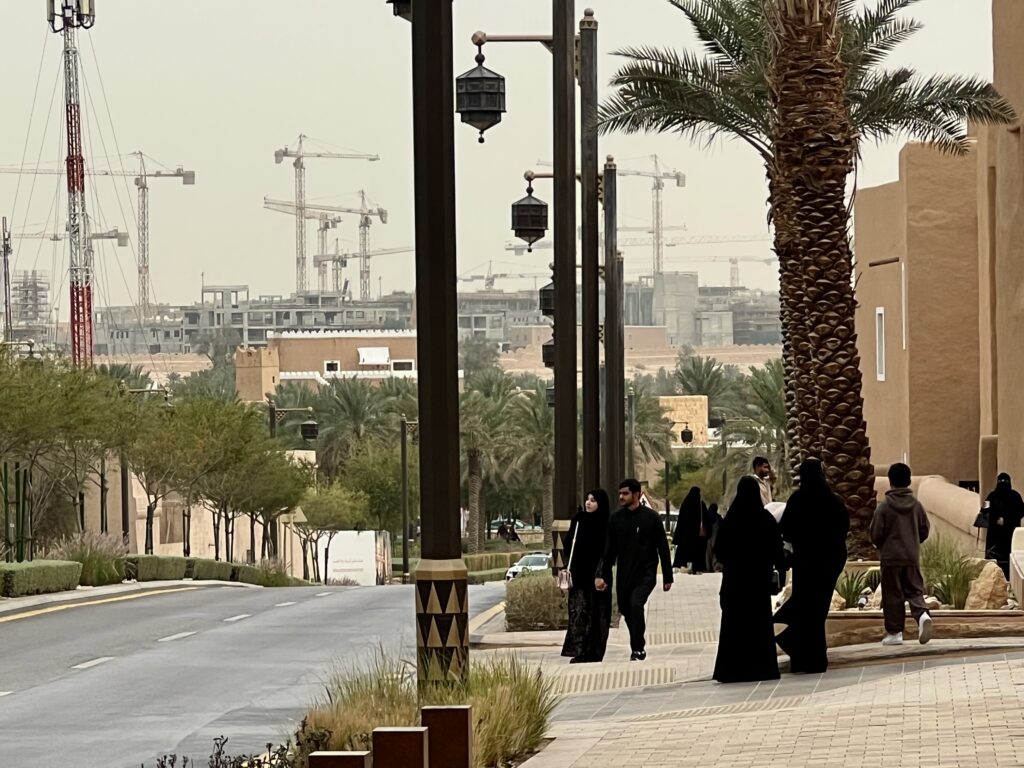
People walk on a street in Diriyah with cranes visible in the distance, Riyadh, Saudi Arabia. (Credit: Kristin Smith Diwan)
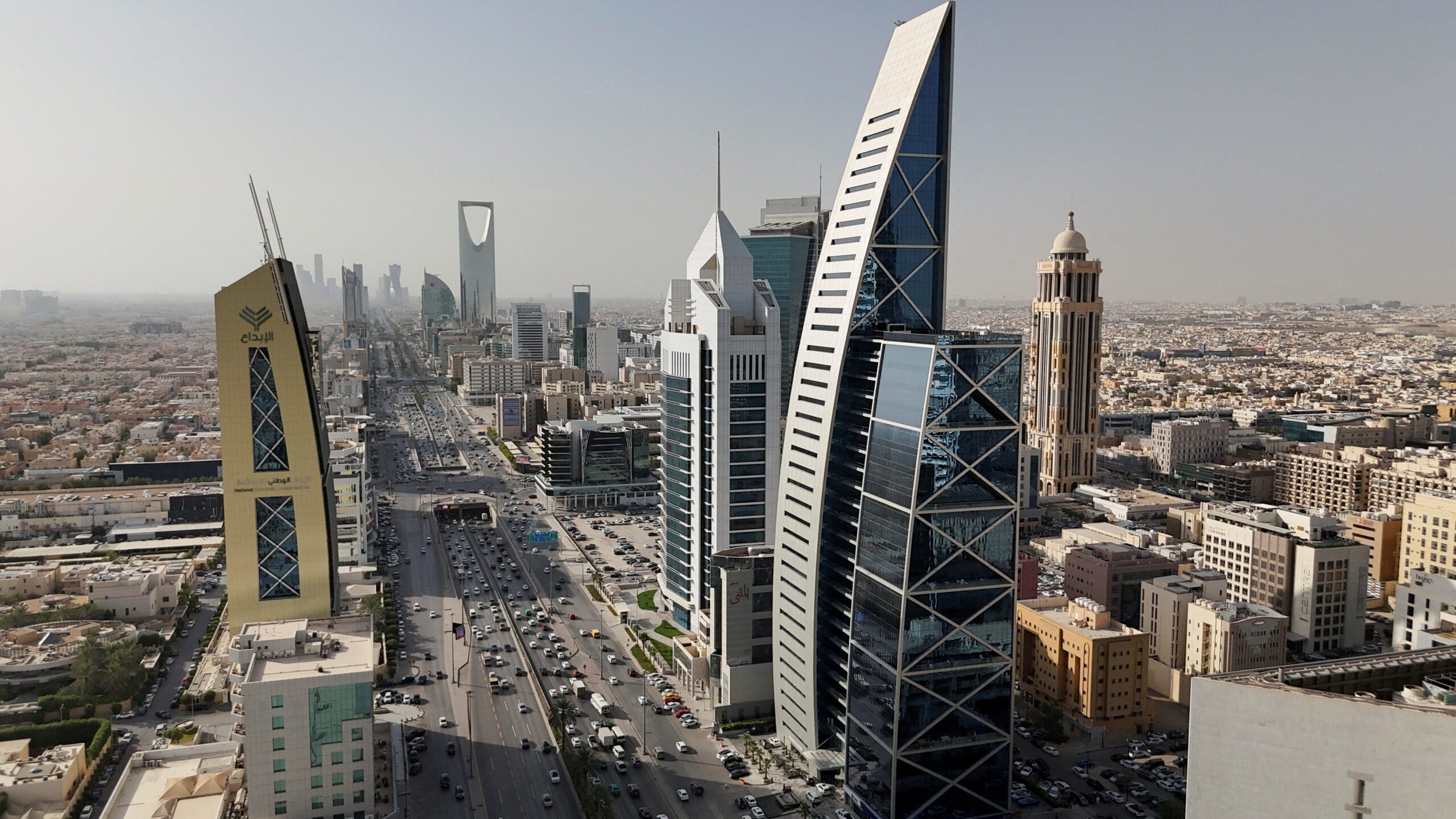
Riyadh is booming – financially, demographically, culturally. It has become the gravitational center of the kingdom’s economic diversification strategy, drawing young Saudis and expatriates alike. Yet this concentration has strained housing markets and public services. The social contract is evolving. Citizens are being steered toward private-sector employment, subsidies on fuel and utilities have been reduced, the value-added tax remains elevated, and retirement ages have increased. Women’s labor-force participation has risen dramatically – a remarkable achievement – but many of these jobs are in lower-paid service sectors.
In such a context, the optics of mega- and gigaprojects become complicated. Spectacular architecture projects confidence. It attracts global investors and signals entry into the ranks of world cities. Yet megaprojects are capital intensive, technically complex, and slow to yield returns. They require sustained high oil revenue or consistent external investment flows. Their timelines stretch across decades. Their engineering challenges – particularly in the case of a cubic megastructure of unprecedented dimensions – are formidable.
The Mukaab exemplified these contradictions. Conceived as a vast interior city within a single building, it was to anchor a mixed-use district of housing, retail, and cultural venues. It had symbolic potency, yet its scale raised questions about feasibility, phasing, and long-term demand. Could immersive digital experiences substitute for the organic unpredictability of urban life? Could a singular icon meaningfully address housing affordability or wage stagnation?
None of these questions diminish the ambition behind Vision 2030. The program has catalyzed reforms unimaginable a decade ago – expanding women’s employment, liberalizing aspects of social life, and repositioning Saudi Arabia on the global stage. But the recalibration underway suggests a transition from spectacle to humanistic urbanism.
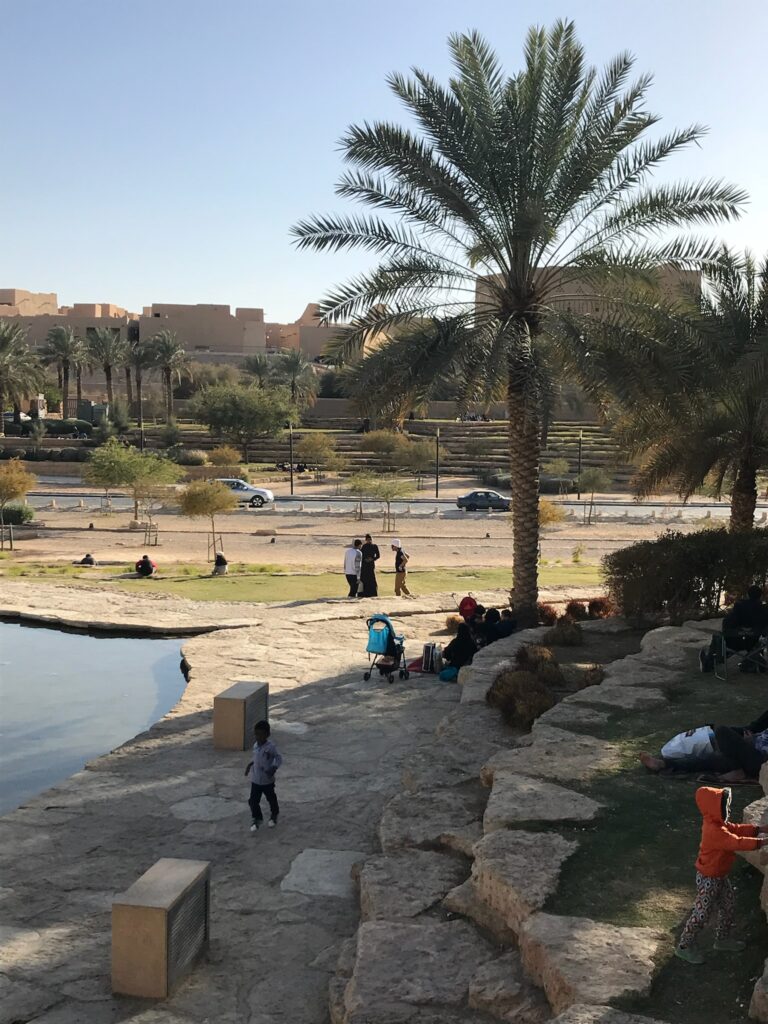
The heritage site at Diryiah in Riyadh, Saudi Arabia. (Credit: Kristin Smith Diwan)
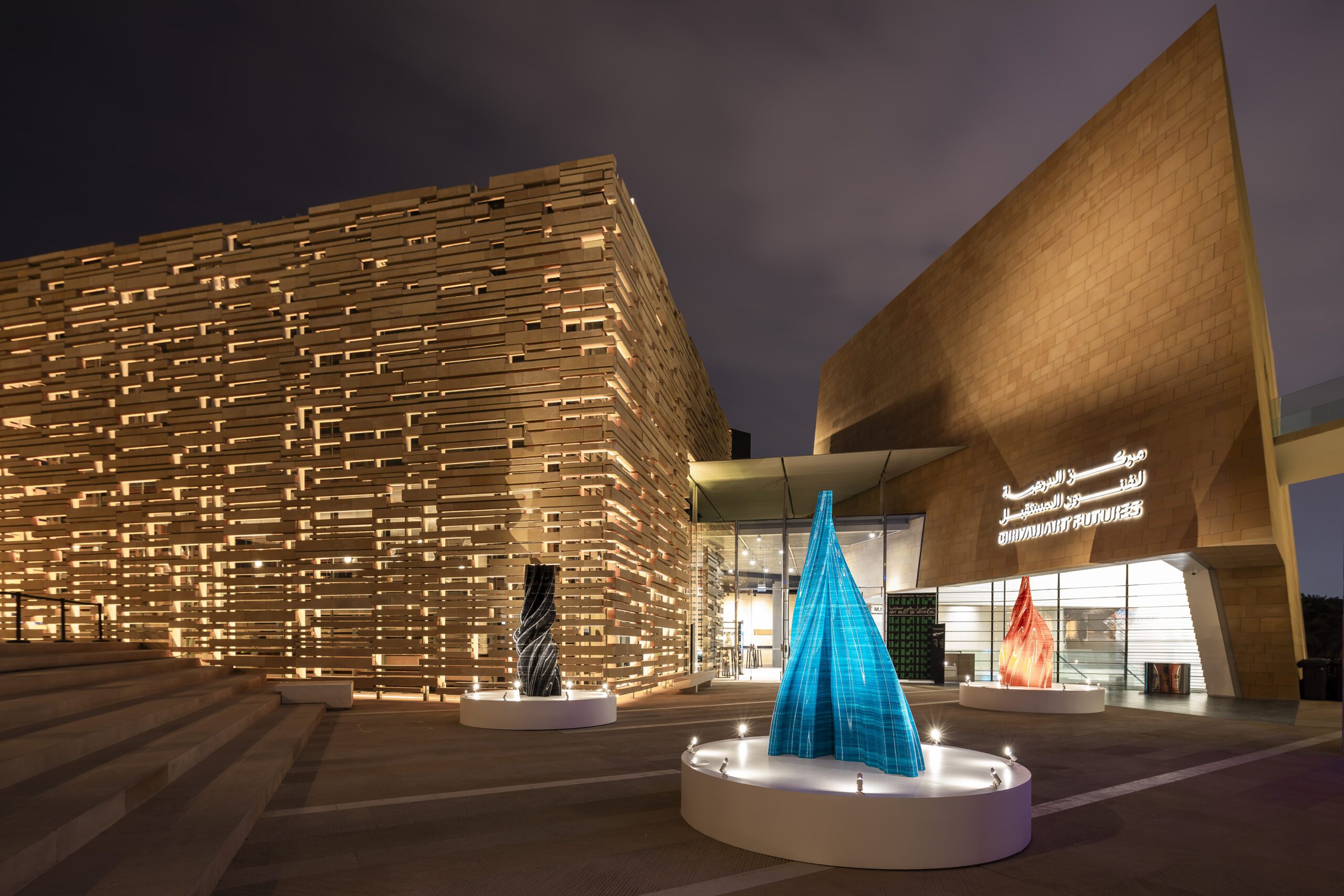
Across Riyadh, a quieter urban narrative is emerging. Projects such as Sports Boulevard prioritize walkability, recreation, and public health – linking neighborhoods through shaded pathways and cycling routes. In Diriyah, heritage-led regeneration foregrounds continuity, craft, and public space. Developments such as Bujairi Terrace and Diriyah Art Futures embed culture within accessible urban settings rather than isolating it within monumental enclosures. These interventions succeed not because they dominate skylines but because they integrate into daily routines. They are phased, adaptable, and accommodate incremental growth. They cultivate social mixing rather than curated spectacle, foreground human scale over monumentality.
Housing policy has likewise gained urgency. Vision 2030’s goal of increasing home ownership to 70% reflects recognition that stability underpins economic productivity. Yet affordability in Riyadh remains strained. Addressing this challenge requires supply, regulatory reform, infrastructure, and transit integration – not singular icons.
The pause on the Mukaab and similar ventures therefore may represent neither failure nor retreat but maturation. Urban development at the scale envisioned by early Vision 2030 announcements was always contingent on favorable macroeconomic conditions. When oil prices soften and fiscal discipline tightens, prioritization becomes a crucial aspect of urban policy. Moreover, Saudi Arabia’s global ambitions – Expo 2030, the 2034 World Cup – demand deliverability. International events impose deadlines and scrutiny. They privilege transportation networks, airport capacity, hospitality infrastructure, and public realm improvements. In this sense, the shift from speculative futurism toward tangible, time-bound infrastructure may strengthen Riyadh’s long-term urban fabric.
Vendor at the Mukaab site, Riyadh, Saudi Arabia. (Credit: Yasser Elsheshtawy)
Returning to the vendor at the edge of the Mukaab site clarifies what is at stake. Her small enterprise was neither futuristic nor symbolic. It addressed immediate needs: shade, sustenance, exchange. It operated within the rhythms of a city under construction. That modest presence captured something fundamental about urbanism. Cities endure not because of singular monuments but because of repetition – daily transactions, accessible housing, public spaces that invite lingering. The recalibration of Saudi megaprojects therefore raises a fundamental question: Is dialing back utopian visions a sign of diminished confidence or of strategic clarity?
If the first phase of Vision 2030 was performative – designed to capture imagination and reposition the kingdom globally – the next phase may be oriented to more modest pursuits. It may focus on livability and affordability as well as incremental infrastructure. The Mukaab may yet rise in some form. The Line may evolve rather than vanish. But the deeper measure of Riyadh’s success will lie elsewhere – whether the capital can absorb growth without pricing out its young; whether public spaces become genuinely inclusive; whether housing supply matches demographic reality; and whether economic diversification translates into sustainable livelihoods.
In this light, the pause on spectacle may mark not an abandonment of ambition but its refinement. The future of Riyadh may depend less on immersive digital forests than on shaded sidewalks, accessible neighborhoods, and the ordinary yet essential exchanges that constitute urban life.
The views represented herein are the author's or speaker's own and do not necessarily reflect the views of AGSI, its staff, or its board of directors.
It is difficult to reconcile Saudi Arabia’s vision for sustainability with The Mukaab in its current form – but it’s not too late for a course correction.
The announced curtailing of The Line megaproject is an inflection point that will continue to influence Saudi Arabia as it keeps building for the future.
The announced curtailing of The Line megaproject is an inflection point that will continue to influence Saudi Arabia as it keeps building for the future.
Bahrain’s pavilion at the 2025 Venice Biennale of Architecture is emblematic of how Gulf states are leveraging architecture to address – or at least narrate – pressing environmental and social questions.
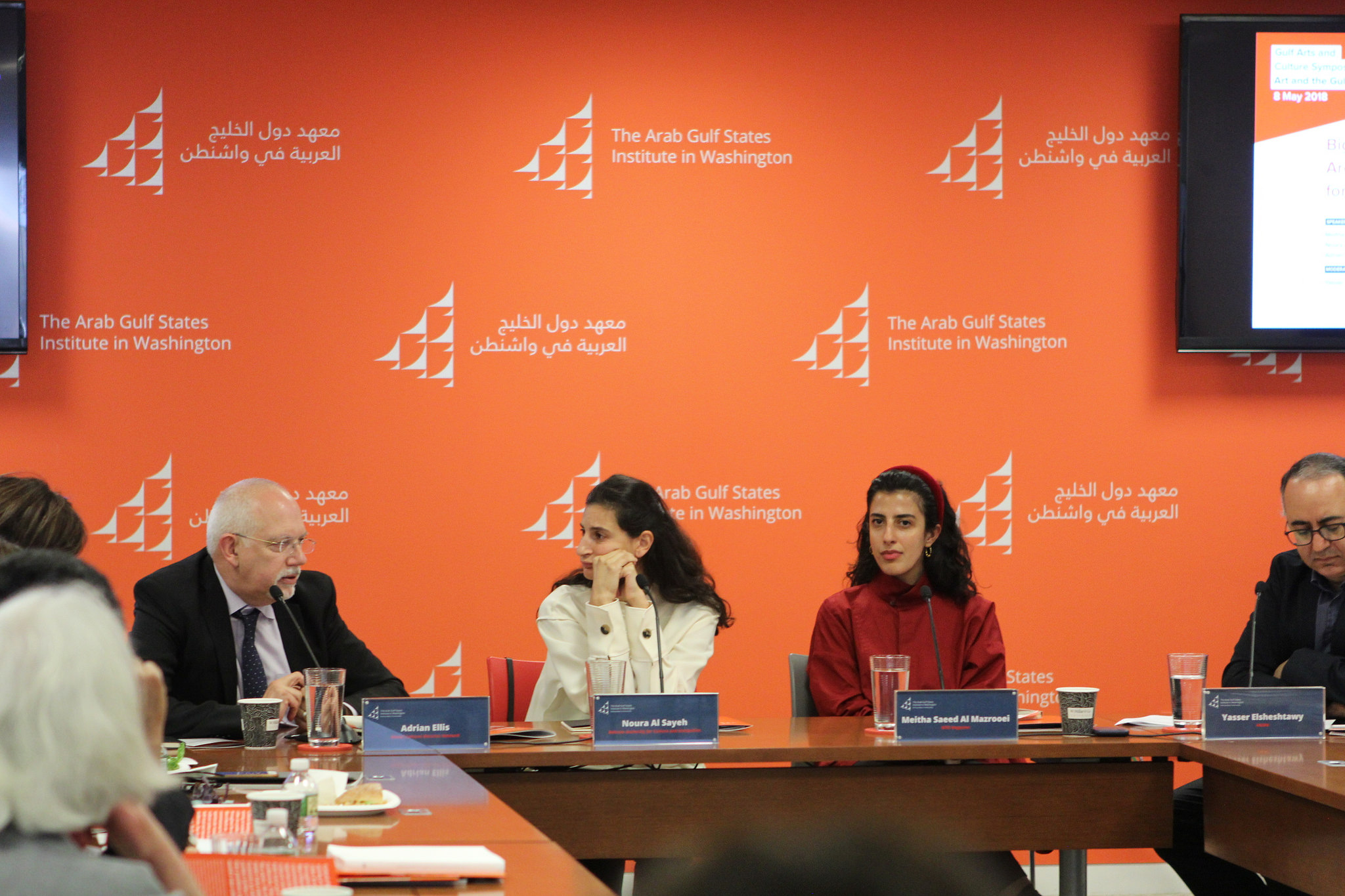
This panel, part of the 2018 Gulf Arts and Culture Symposium, examined the proliferation of art districts in Gulf cities, covering the involvement of government agencies and the private sector in the development of art districts and consider urban and architectural strategies for integration of these districts within the city. The discussion considered regional case...