From Basra 2023 to Jeddah 2026: Football, Soft Power, and Gulf Ambitions
As host of Gulf Cup 27, Saudi Arabia won its first trophy in over 20 years while demonstrating how sports can project soft power and foster connections.
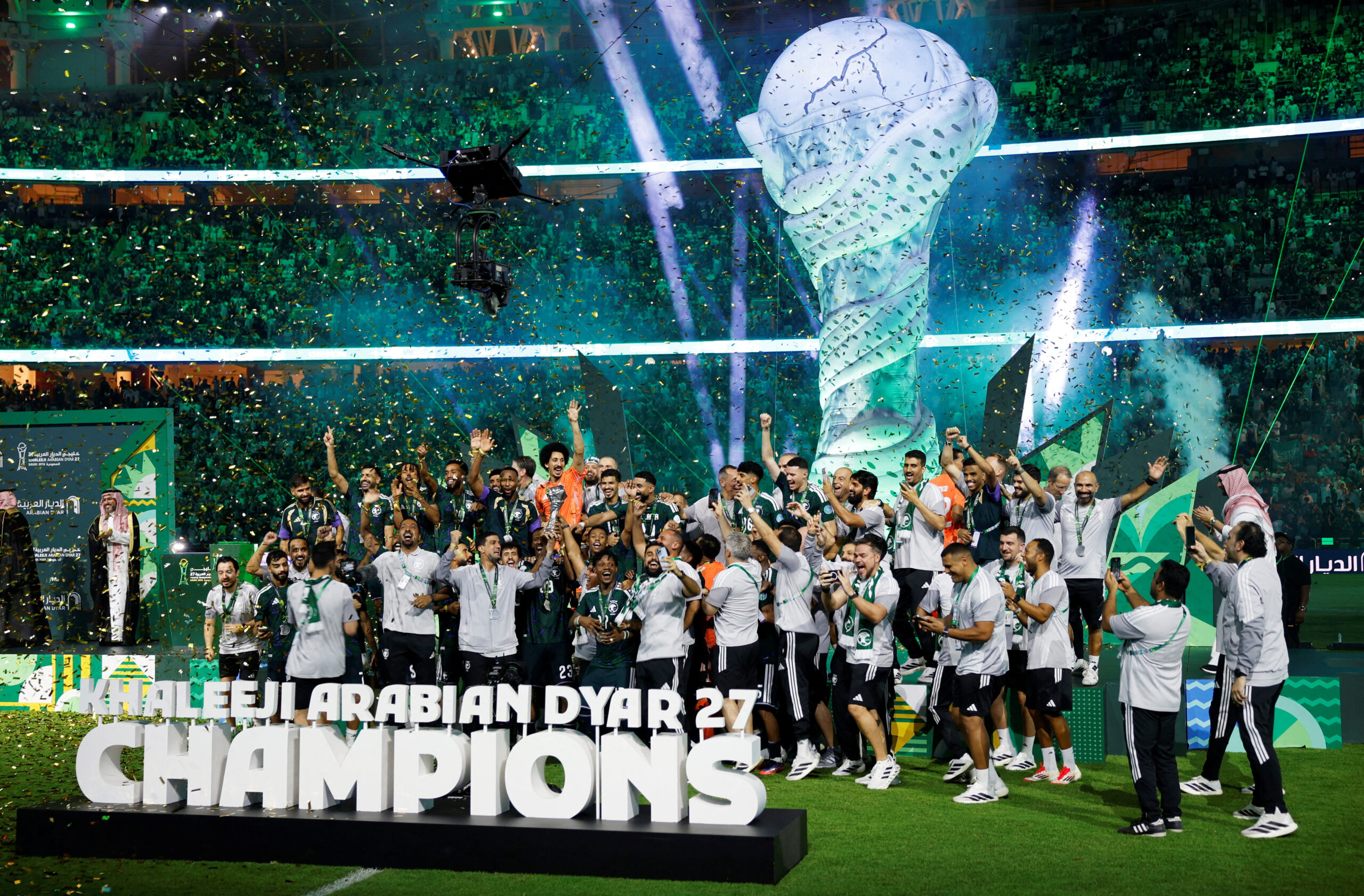
Players and staff from Saudi Arabia's team celebrate with the trophy after winning the Gulf Cup at the King Abdullah Sports City stadium, Jeddah, Saudi Arabia, October 6. (REUTERS/Ibraheem Abu Mustafa)
On October 6, Saudi Arabia defeated the United Arab Emirates 2-0 to win its first Arabian Gulf Cup trophy in 22 years, bringing the 27th Gulf Cup to a close. Over two weeks, the football, or soccer, competition extended beyond the stadium, with fans visiting Jeddah’s waterfront, entertainment venues, restaurants, and the historic Al-Balad district. The tournament reflected Saudi Arabia’s growing use of sports as part of a broader strategy of tourism, economic diversification, and global projection.
Yet the Gulf Cup looked very different just three years earlier. When Basra hosted the tournament in 2023, its significance was less about infrastructure than the people who welcomed visitors into their homes and communities. Comparing Basra and Jeddah reveals how the same regional tournament can serve different purposes: one as a vehicle for social cohesion and reintegration, the other as a platform for economic ambition and global projection.
Bahrain hosted the inaugural Gulf Cup in 1970 with four teams: Bahrain, Kuwait, Qatar, and Saudi Arabia. Iraq joined in 1976, followed by Yemen in 2003, bringing the competition to its current eight-team format. Over more than five decades, the tournament has provided a space for Gulf societies to compete, interact, and reinforce social and cultural ties. But how that purpose is expressed has changed alongside the countries hosting it.
Basra 2023: Emotion and Reintegration
In January 2023, thousands of Gulf football fans arrived in Basra for the 25th Arabian Gulf Cup, Iraq’s first opportunity to host the tournament since 1979. After years of war, political instability, and security concerns, Iraq had been subjected to a three-decade FIFA ban from hosting international football events, lifted only in 2018. The Gulf Cup therefore represented a significant return to hosting international football on Iraqi soil.
The tournament’s impact extended beyond the stadium. Despite 35 new hotels opening in Basra, there was a shortage of accommodations for the more than 50,000 spectators who arrived. Local families responded by opening their homes, providing meals and transportation, and some businesses and individuals refused to charge visitors for food and other services. Visitors became not simply spectators but guests of the city. This hospitality became a powerful representation of Iraq’s reintegration into the Gulf community. At a time when Iraq was attempting to reshape how it was perceived by its neighbors, Iraqis presented an image of the country centered on generosity and pride.
The tournament also offered broader social and economic benefits. The United Nations Development Program’s Iraq Accelerator Lab found that the Gulf Cup generated a strong sense of pride and unity. Hosting the tournament contributed to improvements in Basra, including renovation of the Corniche, repaving of streets, and the opening of new small businesses.
The Gulf Cup also carried diplomatic significance. It offered Iraq an opportunity to reassert its place within the Arab regional community after years of conflict and strained relations with neighboring Gulf states. The decision to waive visa entry fees for neighboring countries further facilitated the movement of fans across borders.
Iraq ultimately defeated Oman 3-2 in the final, winning the Gulf Cup for the first time since 1988 – and this time, on home soil.
Jeddah 2026: Global Ambition
Three years after Basra used the Gulf Cup to demonstrate Iraq’s return to regional football, the tournament arrived in Jeddah as part of a very different national project. The tournament took place within a Saudi sports and tourism ecosystem that has expanded under Vision 2030, which identified tourism, private-sector growth, and other non-oil sectors as priority areas for economic diversification.
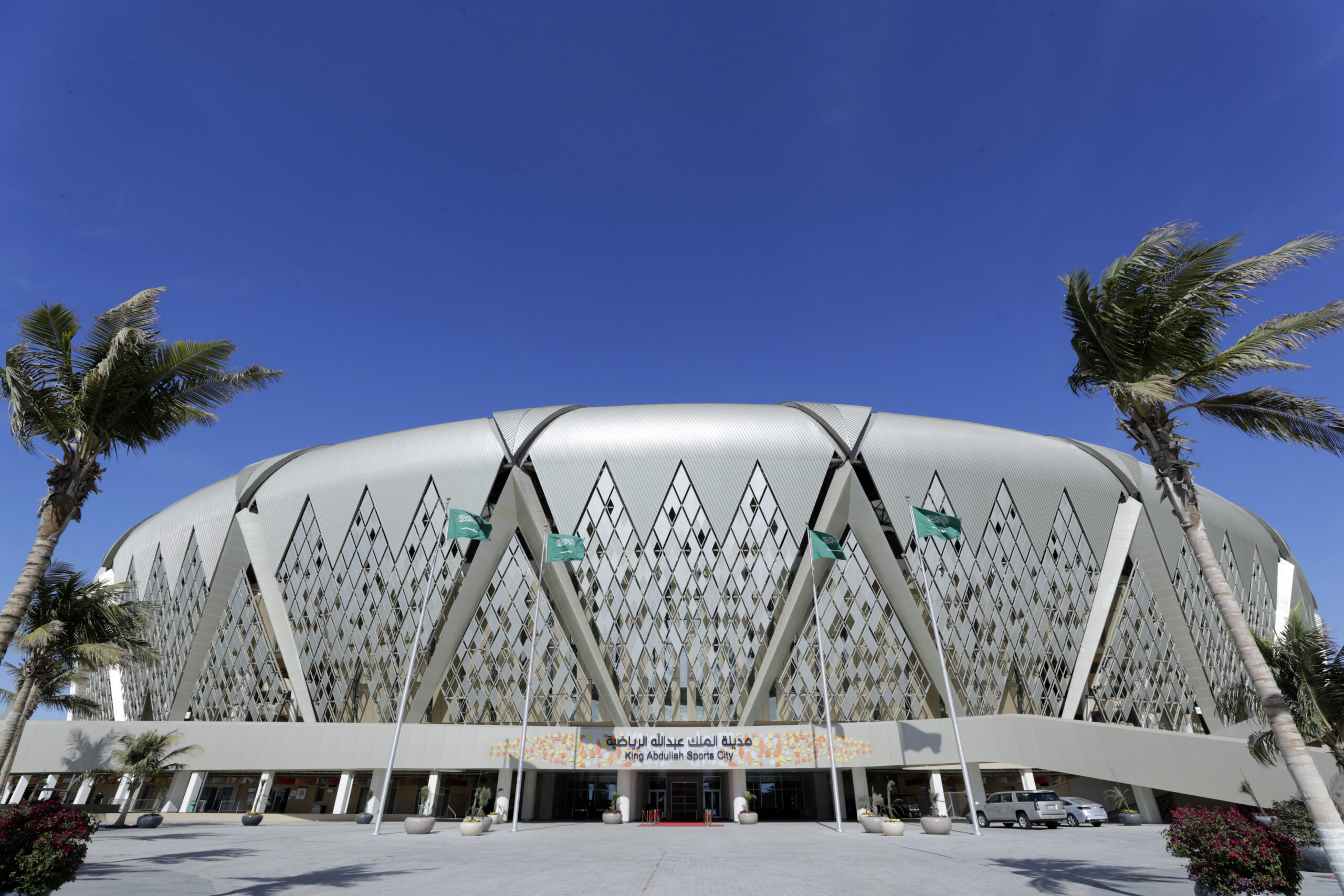
Sports has become part of that transformation, with Saudi Arabia investing heavily in sports infrastructure and positioning itself as a destination for major international events. This includes the highly anticipated hosting of the World Cup, the most popular global sports event, in 2034. Consequently, the Gulf Cup benefited from existing infrastructure rather than requiring facilities to be built specifically for the tournament. The 15 games were held at the Alinma Stadium at the King Abdullah Sports City and Prince Abdullah Al-Faisal Sports City Stadium, both of which were renovated or expanded under Saudi Vision 2030.
The tournament in Jeddah also connected football to a broader tourism and entertainment ecosystem. Fans were encouraged to experience the Corniche, ROSHN Waterfront, restaurants, entertainment venues, and historic sites. Al-Balad became a particular gathering point, with fans from across the Gulf filling its historic streets and squares.
Limits on Unity
While the Gulf Cup is designed to bring the region together, football’s ability to foster regional unity has its limits. The same competition that creates shared experiences across borders can also intensify national rivalries and expose existing tensions. Notably, Iraqi midfielder Zidane Iqbal faced abuse related to his mixed Pakistani Iraqi heritage during Iraq’s match against Kuwait. And, in the final, sections of the Saudi crowd whistled and jeered during the UAE national anthem, while videos circulated of Saudi and Emirati fans throwing water at one another. These incidents do not erase the broader connections created by the tournament, but they demonstrate its contradictions.
Two Tournaments and Functions, One Shared Region
The contrast between the Basra and Jeddah experiences ultimately reflects two different forms of soft power. Basra relied on people-to-people connections and grassroots hospitality to demonstrate Iraq’s reintegration into the region. Jeddah showcased institutional capacity through an established sports, tourism, and entertainment ecosystem.
Basra 2023 and Jeddah 2026 show how the Gulf Cup can serve different purposes depending on its host, from helping Iraq reconnect with its neighbors to supporting Saudi Arabia’s broader ambitions in tourism and entertainment. Together, they both show how the same regional tournament can support both social connection and national development goals.
The views represented herein are the author's or speaker's own and do not necessarily reflect the views of AGSI, its staff, or its board of directors.
Following Saudi Arabia’s early exit from the World Cup, the kingdom’s soccer authorities may enter a period of introspection considering challenges that have cast a shadow over the post-2023 landscape of Saudi soccer.
A Saudi decision to invite Gulf partners to cohost the World Cup would reinforce the kingdom’s role as the driving force behind a more integrated, connected, and resilient Gulf.