As hostile actors recognize the vulnerability of critical water infrastructure, recognizing water as a national security priority is the first step toward resilience.
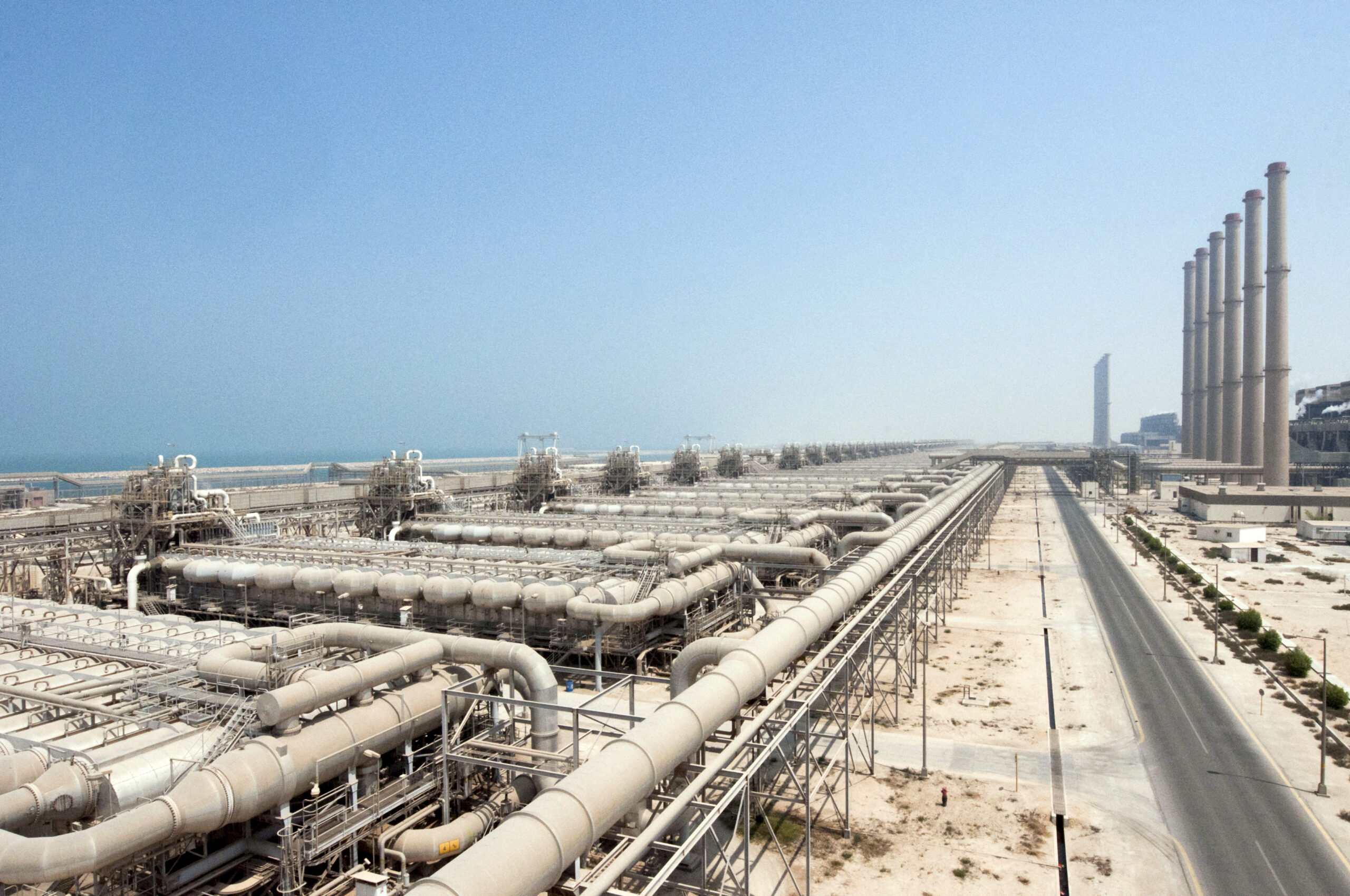
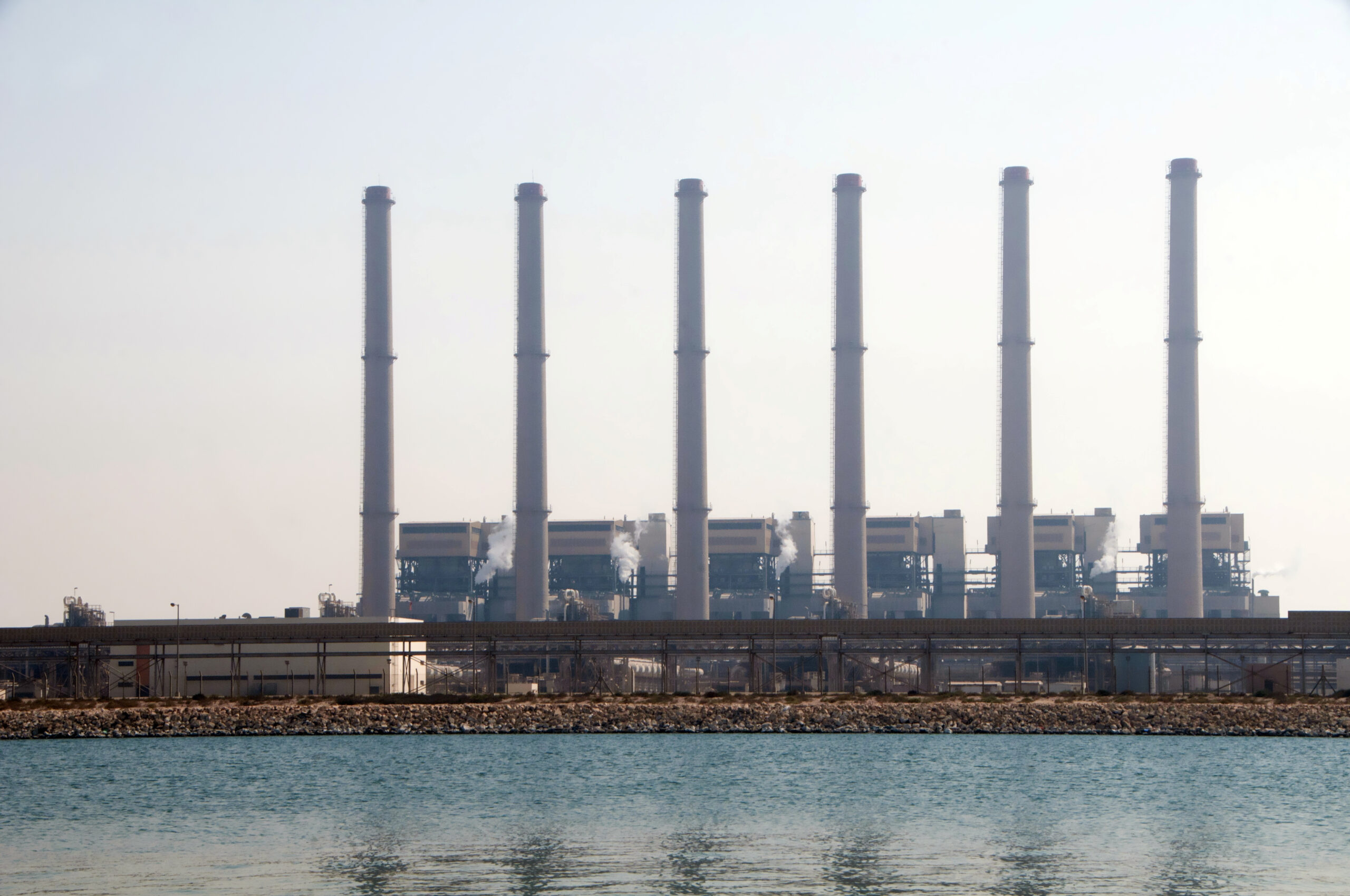
A general view of the Saline Water Conversion Corporation in Jubail, Saudi Arabia. (Saline Water Conversion Corporation (SWCC)/Handout via REUTERS)
In 1926, Saudi Arabia’s founding father, King Abdulaziz al-Saud, ordered the importation of two seawater desalination units to meet the needs of hajj and umrah pilgrims. His reasoning was simple: to ensure there was enough water to meet demand.
Nearly a century later, this rationale remains a major pillar of modern Gulf water policy. Policy frameworks, such as the Gulf Cooperation Council Unified Water Strategy, and water policies across the region have focused on meeting the region’s rising water demand. This has led to initiatives to expand desalination capacity, diversify water resources through the increased use of treated wastewater, and introduce measures to reduce the region’s high per capita water consumption.
The threats to the Gulf’s ability to meet water demand have always been associated with climate change, groundwater depletion, and rising demand. However, during the U.S.-Israeli war with Iran, water has emerged as a critical vulnerability.
The primary vulnerability for Gulf states lies in their heavy dependence on a moderate number of large-scale desalination plants located along the Gulf coast that supply between 60% and 100% of their drinking water. By contrast, the impact on Iran’s desalination infrastructure would be less significant, as desalinated water meets only around 3% of the country’s total water demand.
This asymmetry highlights a critical reality: Adversaries increasingly view water infrastructure as a strategic vulnerability for the Gulf. To build long-term resilience, governments in the region must develop a new water policy framework that places water at the center of national security planning, treating water security not merely as an infrastructure challenge but as a strategic security imperative.
Integrating National Security Institutions Into Water Policy
Over the years, the Gulf Arab states have developed increasingly sophisticated water governance regimes, supported by a network of ministries, regulatory agencies, state-owned corporations, and partnerships with leading international water technology companies. Together, these institutions oversee the planning, regulation, and operation of critical water infrastructure, ensuring that projects meet environmental, technical, and economic standards before they are approved and implemented.
Many of these institutions possess statutory authority and play a direct role in government decision making. Their legal mandates often require them to evaluate major water infrastructure projects through regulatory processes, such as environmental impact assessments, technical feasibility studies, and compliance reviews. Institutions including Bahrain’s Supreme Council for Environment, Saudi Arabia’s National Center for Environmental Compliance, and the Environment Agency – Abu Dhabi in the United Arab Emirates are central to these approval processes, helping ensure that new projects are environmentally sustainable and aligned with national development objectives.
The Gulf’s water strategies are centered primarily on resource management rather than security. National security institutions currently only play a limited role in national water governance, and critical infrastructure protection is not fully integrated. And there is limited cross-sector coordination between environmental agencies and national security institutions.
As a result, most government approaches to water policy remain reactive rather than preventive. While governments have developed water reservoirs, emergency response mechanisms, and crisis management plans to address supply disruptions, far less attention is given to incorporating security considerations during the early stages of water infrastructure planning and development. For example, the UAE Water Security Strategy 2036 was coordinated primarily by civilian institutions, with no permanent role for national security actors. Similar patterns exist across Gulf Cooperation Council states, where water governance is led by water, environment, energy, and utility authorities.
While security institutions may be involved informally, they are not integrated through shared water-security committees or formal decision-making structures that bring together civilian and security actors. It is not that security institutions have no influence, but without institutional embedding, their ability to systematically shape water-policy planning remains limited.
Gulf governments can draw lessons from several countries that have developed mechanisms to integrate national security institutions into water governance and decision making. For example, in the United States, the Cybersecurity and Infrastructure Security Agency has participated in the Water Government Coordinating Council since 2018, contributing to efforts to protect critical water infrastructure after multiple attacks on water systems highlighted the sector’s vulnerabilities. Similarly, Australia’s Department of Home Affairs supports the protection of critical water assets through intelligence sharing, risk management, threat assessments, and coordination with water operators to strengthen resilience against both physical and cyber threats. Such approaches reflect a broader recognition among these countries of the national security implications of water, the range of threats facing water systems, and the cross-sectoral importance of water resources.
A Security Lens Can Strengthen Gulf Water Resilience
By viewing water as a national security concern and integrating national security institutions into water governance, several practical policy measures can be developed to strengthen the resilience of this critical resource. Security agencies can play an important role in forecasting and protecting against threats to critical water infrastructure, conducting risk intelligence and mapping, and supporting crisis response.
First, incorporating military threat and risk assessments into water infrastructure planning would be a way to strengthen resilience and identify which facilities are most vulnerable to sabotage, missile and drone attacks, and other security threats. Gulf Arab states have already deployed air and missile defense systems to protect critical infrastructure from missile and drone attacks. Notably, in late July, after Houthi missile and drone attacks targeted oil facilities in Saudi Arabia’s Yanbu industrial area, Saudi Arabia deployed a Greek-operated Patriot missile defense system to protect the refinery and surrounding energy infrastructure.
Having a similar approach for desalination plants would allow security considerations to be incorporated into water policy and infrastructure planning from the outset. By assessing missile and drone threats during the design and site selection process, governments can determine what protective measures may be necessary.
Second, treating water as a national security priority can strengthen resilience through the decentralization and diversification of water infrastructure. GCC states currently rely on a relatively small number of large desalination plants, with around 400 facilities accounting for approximately 40% of global desalination capacity. This is a clear strategic vulnerability. A more resilient approach would involve expanding the number of smaller desalination plants, reducing reliance on any single facility, and diversifying water sources through greater investment in wastewater reuse, groundwater management, and other nonconventional water resources.
Third, security integration is one of the few areas in which Gulf Arab states have consistently cooperated through the GCC, despite recurring political disagreements among member states. Throughout the war, Gulf militaries coordinated air defense, intelligence sharing, and broader security measures. This existing framework provides a strong foundation for extending cooperation into the water sector. Historically, water cooperation within the GCC has remained limited. However, the increasing vulnerability of critical water infrastructure should encourage a shift toward a more collective approach. Considering water is a shared regional asset, GCC countries can benefit from coordinating the protection of desalination plants, pipelines, and storage facilities.
A regional strategy would also allow states to take advantage of geographical differences in risk. For example, Saudi Arabia’s desalination plants on the Red Sea coast are less exposed to threats originating from Iran and Iraq than facilities near the Gulf. This creates an opportunity to develop a shared desalination network or regional water grid, enabling member states to provide mutual support if infrastructure on one coastline is disrupted.
Water as a National Security Priority
Meeting water demand through the most environmentally and economically efficient means is no longer enough. The emerging security threats to water infrastructure across the Gulf introduce a new and equally critical dimension that policymakers can no longer ignore. Technical solutions and resilience measures are necessary, but they will fall short without a fundamental shift in how governments perceive water itself. In an increasingly volatile region, adversaries recognize the Gulf’s dependence on vulnerable water systems as a pressure point. The first step toward resilience is therefore a political and strategic one: recognizing water as a national security priority. Only then can governments build an integrated approach that connects water policy with national security planning, ensuring that the region is prepared not only to meet future demand but also to withstand emerging threats.
The views represented herein are the author's or speaker's own and do not necessarily reflect the views of AGSI, its staff, or its board of directors.
Iran’s threats involving undersea internet cables and digital infrastructure in the Strait of Hormuz have transformed the crisis from an energy chokepoint into a hybrid risk for Gulf Arab economies.
While under current conditions achieving food self-sufficiency is likely to remain aspirational, taking bold steps could radically improve the UAE’s food security in the interim and make the goal of food self-sufficiency more achievable down the line.
Gulf governments are looking to privatize their energy-intensive utility sectors, aiming to make public utilities more environmentally and financially sustainable.