Resilient by Design: Infrastructure and the Future of UAE Urbanism
Rather than pursuing the next iconic tower or artificial island, the UAE’s urban development model is shifting toward systems that are less visible but more essential.
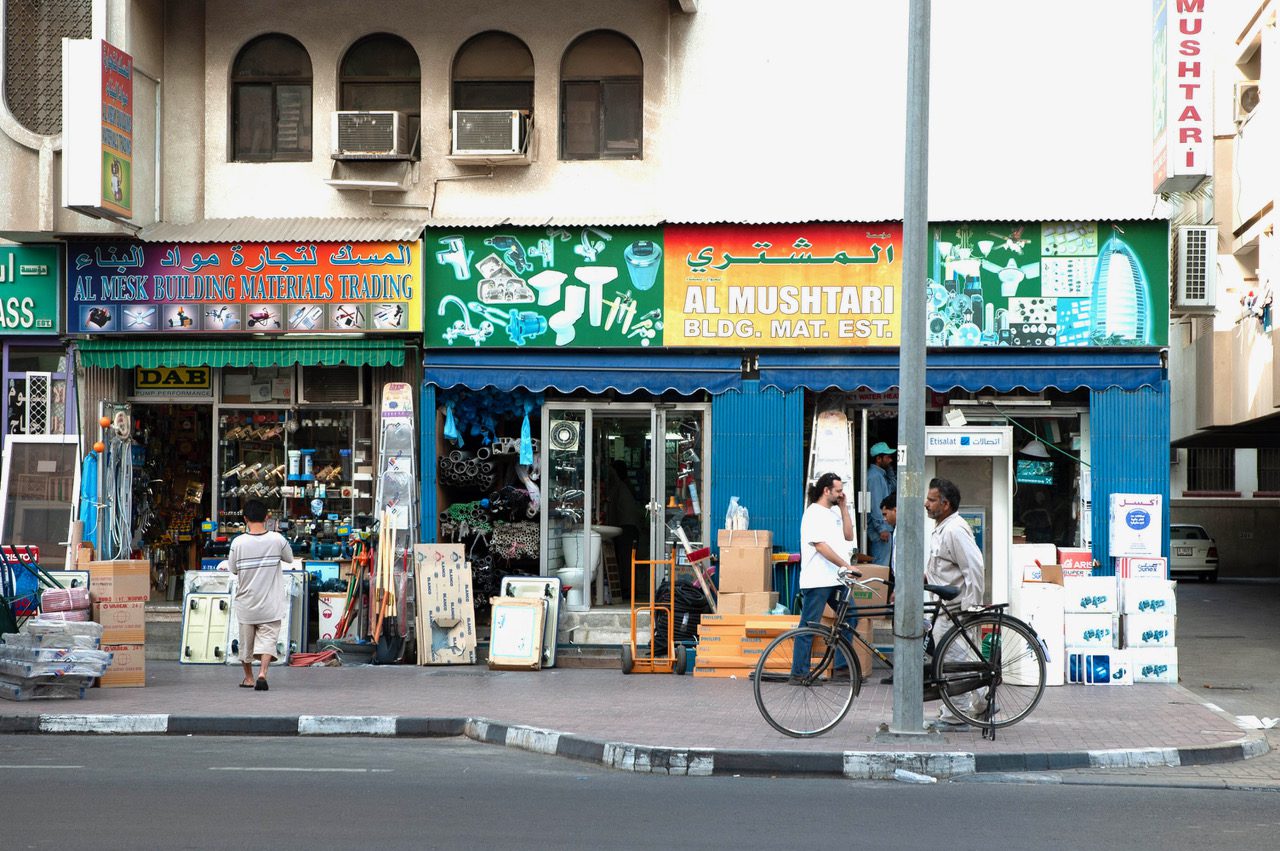
Satwa, Dubai, United Arab Emirates. (Credit: Yasser Elsheshtawy)
The atmosphere at the late 2008 Dubai real estate event Cityscape, then the epicenter of a globalized urban imagination centered on scale, speed, and spectacle, was full of excitement. Models of towers stretched across exhibition halls, brochures promised entire districts rising from sand, and billboards across the city heralded the ascent of what was still called “Burj Dubai,” emblazoned with the triumphant slogan “History Rising.” Among the many proposals circulating at the time was the wholesale redevelopment of Satwa – one of Dubai’s most vibrant and diverse neighborhoods – into a landscape of glass towers and artificial waterways. The city seemed to have surrendered entirely to an economy of fascination. Yet within weeks, the global financial crisis struck with devastating force. Projects vanished overnight, construction sites fell silent, and the exuberance of Cityscape gave way to uncertainty. And yet, as the prescient analysis “The beauty of bubbles” in The Economist noted at the time, Dubai – similar to speculative counterparts such as Miami – had invested in infrastructure, particularly the metro system, which provided a stable backbone during the collapse. That investment proved decisive. Within a few years, the city rebounded, expatriates returned, and the “Dubai model” regained its momentum – chastened, perhaps, but intact.
This moment of rupture and recovery offers a critical lens through which to understand the United Arab Emirates’ current urban trajectory. Today, the country once again finds itself navigating a volatile geopolitical landscape, shaped by the recent conflict involving Iran and its regional reverberations. The UAE, long positioned as a safe haven for investment and stability, has faced new vulnerabilities, including exposure to missile and drone strikes and threats that have unsettled investor confidence. Yet, the response has not been a retreat into caution or a renewed embrace of spectacle. Instead, there is a discernible shift toward infrastructure-led resilience – a recalibration that privileges connectivity, accessibility, and long-term value over headline-grabbing megaprojects.
Notably, the proposed Dubai Metro Golden Line project plans to extend the metro system into new urban territories. According to media reports, the line is expected to significantly enhance connectivity across the city while boosting property values in underserved areas. It is also hoped to play a role in alleviating congestion and supporting population growth. Unlike earlier phases of Dubai’s urban expansion, which often prioritized iconic form over functional integration, the Golden Line reflects a more mature urban logic. It is not simply about movement but about stitching together disparate parts of the city, enabling new patterns of everyday life, and reinforcing the metro as a social and economic spine.
This emphasis on connectivity extends beyond Dubai itself through the expansion of the Etihad Rail network, a national infrastructure project that promises to link all seven emirates – and eventually the wider Gulf – through a high-speed rail system. The network will connect major urban centers, industrial zones, and ports, fundamentally reshaping patterns of mobility and economic exchange. Crucially, the integration of Etihad Rail with Dubai’s metro system – particularly at planned stations within the city – signals a move toward multimodal urbanism. The station itself becomes more than a connection node; it is a transit hub around which new forms of development can emerge. This could facilitate a reconfiguration of peripheral areas into transit-oriented districts, where housing, commerce, and public space coalesce around accessibility rather than exclusivity.
At a more local scale, the Al Ras Walking Master Plan – part of Dubai’s broader ambition to become a “20-minute city” – offers perhaps the most compelling illustration of this infrastructural turn. The project involves the creation of extensive pedestrian pathways within one of Dubai’s oldest districts, transforming it into a more walkable, human-centered environment. The plan is part of a larger initiative to develop nearly 4 miles of walkways across the city. What is striking here is not just the scale of the intervention but its orientation. Al Ras, with its dense fabric and historical significance, stands in contrast to the tabula rasa developments that have defined much of Dubai’s recent past. By investing in pedestrian infrastructure within this context, the city is effectively revalorizing the everyday – prioritizing walkability, social interaction, and environmental quality over spectacle.
Taken together, these projects suggest a strategic pivot in the UAE’s urban development model. Rather than pursuing the next iconic tower or artificial island, the focus is shifting toward systems that are less visible but more essential. This is not to say that spectacle has disappeared – indeed, it remains a powerful tool in the region’s urban repertoire – but it is increasingly complemented, and perhaps tempered, by a recognition of the importance of resilience. Infrastructure, in this sense, becomes a form of insurance – a way of ensuring that the city can continue to function, adapt, and recover in the face of external shocks.
This shift is particularly significant in light of the current geopolitical context. The conflict with Iran has exposed the vulnerabilities of even the most advanced urban systems, underscoring the fragility of a model that relies heavily on external capital and global flows. Yet it has also highlighted the value of embedded, locally grounded infrastructure. Metro lines, rail networks, and pedestrian pathways may not capture headlines in the same way as record-breaking towers, but they are precisely the systems that sustain urban life during periods of unrest. They enable movement when other systems fail, support local economies when global flows are disrupted, and provide spaces for coming together when formal institutions are under strain.
Of course, this strategy is not without its challenges. Infrastructure projects are capital intensive and require long-term commitment, often in the face of uncertain returns. The current economic climate, shaped by fluctuating oil prices and the broader impacts of regional instability, may constrain funding and delay implementation. There is also the question of inclusivity: Will these new systems serve all residents, including the large migrant population that underpins the UAE’s economy, or will they primarily benefit more affluent segments and investors? And, perhaps most important, can this infrastructural turn be sustained over time, or will it give way once again to the allure of spectacle?
If the lessons of 2008 are any indication, the answer may lie in a careful balance. Dubai’s recovery from the financial crisis was not achieved by abandoning ambition but by grounding it in a more robust urban framework. The metro, once seen as a supplementary system, proved to be the city’s backbone. Today, the Golden Line, Etihad Rail, and Al Ras Walking Plan suggest a similar recalibration that acknowledges the limits of spectacle while reaffirming the importance of infrastructure. This is not a retreat but a strategic shift toward resilience.
The story of the UAE’s urban future may not be written in the height of its towers but in the visibility of its everyday urbanity. It is in the quiet, daily movements of people along the metro, through railway stations, and across shaded walkways that a more durable form of urbanism is taking shape – one that is less about making history rise and more about ensuring that it endures.
The views represented herein are the author's or speaker's own and do not necessarily reflect the views of AGSI, its staff, or its board of directors.
The war has hit the United Arab Emirates during a period of cultural and economic flourishing. While life goes on amid continuous Iranian attacks, the country’s residents rally for its postwar return.
If the first phase of Vision 2030 was designed to capture imagination and reposition the kingdom globally, the next phase may focus on livability and affordability.
If the first phase of Vision 2030 was designed to capture imagination and reposition the kingdom globally, the next phase may focus on livability and affordability.
The announced curtailing of The Line megaproject is an inflection point that will continue to influence Saudi Arabia as it keeps building for the future.
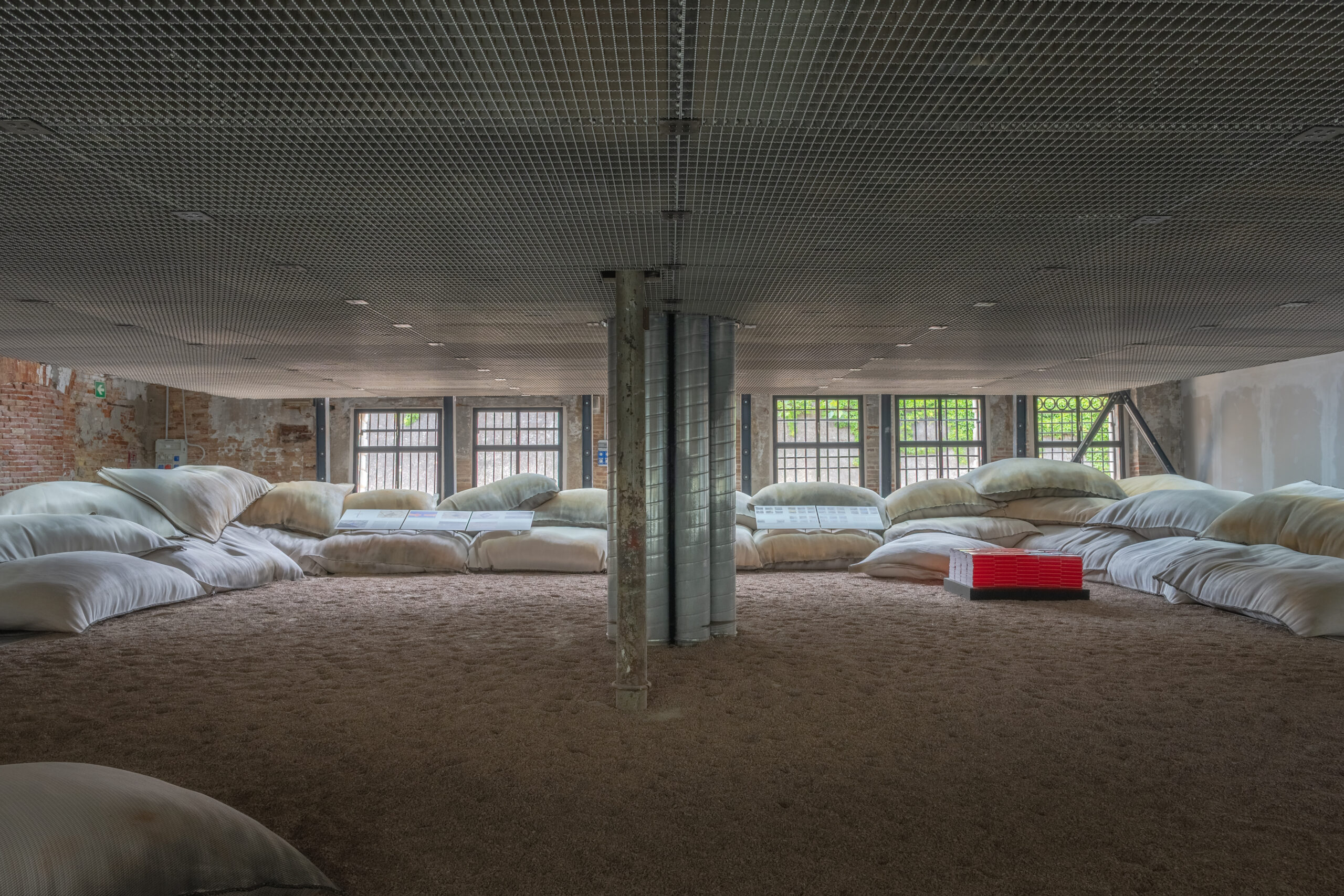
Bahrain’s pavilion at the 2025 Venice Biennale of Architecture is emblematic of how Gulf states are leveraging architecture to address – or at least narrate – pressing environmental and social questions.
This panel, part of the 2018 Gulf Arts and Culture Symposium, examined the proliferation of art districts in Gulf cities, covering the involvement of government agencies and the private sector in the development of art districts and consider urban and architectural strategies for integration of these districts within the city. The discussion considered regional case...