Downstream Ambitions: Saudi Arabia’s Move Toward Rare Earth Processing
Newly announced joint ventures to build rare earth refineries in Saudi Arabia are part of a larger strategy to capitalize on Western markets’ need for rare earth elements.
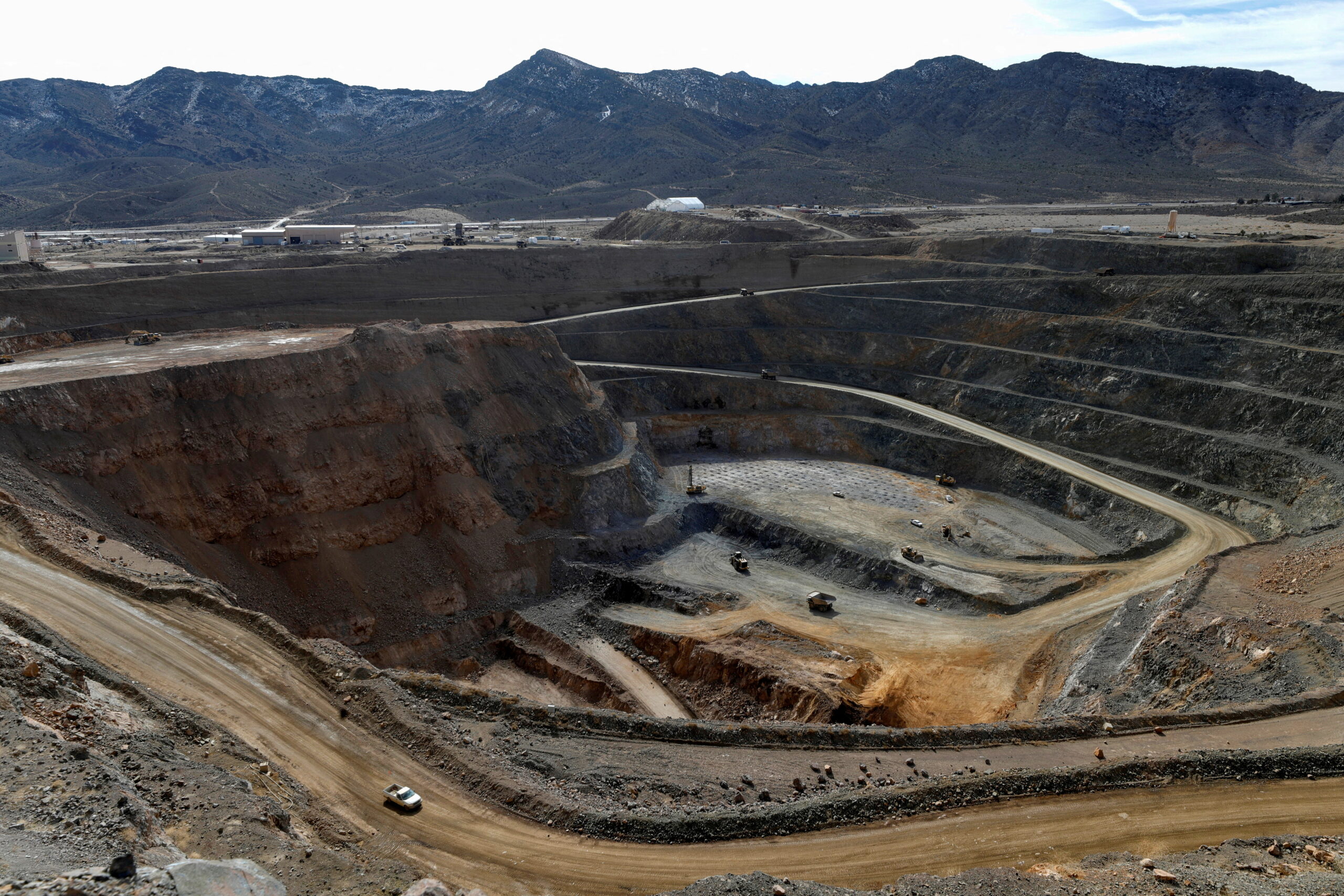
A view of the MP Materials rare earth open-pit mine in Mountain Pass, California, January 30, 2020. (REUTERS/Steve Marcus)
In June, Saudi-based Tariq Abdel Hadi Abdullah Alqahtani & Sons is set to launch a “multibillion-dollar” fund in collaboration with U.S.-based firm Cove Capital to invest in rare earth and other critical mineral mines in Africa. The announcement came weeks after the Saudi firm signed a nonbinding agreement to form a 50-50 joint venture with Critical Metals Corporation that would develop a rare earth refinery in the kingdom. If the agreement is finalized, the refinery would process up to 25% of the expected capacity of the planned Tanbreez mine in Greenland. Tanbreez contains one of the world’s largest rare earth deposits. This builds on earlier efforts, including a November 2025 joint venture between Saudi Arabia’s Maaden and MP Materials to build another rare earth refinery in the kingdom.
Rare earth elements play a central role in modern technology, supporting advanced defense capabilities, renewable energy systems, electronics, and electric vehicles. Once extracted, these elements must undergo a rigorous and technically complex refining and separation process before they can be transformed into usable materials. The refining process is not only about material quality but also about where strategic value is concentrated the most along the supply chain.
Today, China is responsible for refining roughly 90% of the world’s rare earths. This dominance over global refining capacity means that the vast majority of mined rare earths pass through Chinese refineries, even when extraction happens elsewhere. This grants Beijing not only significant economic gains but also substantial geopolitical leverage. As past export restrictions imposed by China have shown, this leverage can be used in ways that risk disrupting critical global supply chains.
Western governments have looked for alternative ways to reduce their heavy reliance on Chinese-processed rare earths in recent years. Saudi Arabia has signaled its intent to position itself as a promising hub for downstream rare earth processing, notably through joint ventures with MP Materials and Critical Metals Corporation, leveraging its abundant energy resources, capital, and strategic location. This will not only help the kingdom expand its mining sector’s role in its economic diversification efforts but also help position Riyadh at the most strategically valuable stage in the critical mineral supply chain.
A Promising Hub for Downstream Processing
Mining serves as a key component of Saudi Arabia’s Vision 2030 initiative to diversify its economy away from fossil fuels. Recent announcements indicate that Riyadh is implementing a broader push to pivot from mega construction projects toward sectors viewed as more profitable, such as mining. Saudi Arabia’s untapped mineral and mining resources are estimated at $2.5 trillion, providing the kingdom with an opportunity to establish an integrated mining sector. Saudi Arabia holds roughly 1.5% of global rare earths, with the Jabal Sayid deposit one of the world’s most valuable reserves. Investing in these resources and refining processes not only creates an avenue for economic diversification but also helps strengthen Riyadh’s strategic leverage within the global critical mineral supply chain.
As the rivalry between the United States and China over critical minerals intensifies, global supply chains are growing increasingly fragmented along geopolitical lines. As Western governments scramble in search of alternatives to Chinese rare earth refining, they also face obstacles to domestic refining, including environmental regulatory constraints, political pushback, and financial gaps. This has limited the number of processing locations these governments deem acceptable under their national security benchmarks, and Saudi Arabia’s strategic advantage here is evident.
Strategic Advantages
One strategic advantage Saudi Arabia holds in downstream rare earth processing is an abundance of cost-effective energy resources. Energy is among the most expensive aspects of rare earth refining, given how energy-intensive separation processes can be. As a result, access to reliable and cheap power significantly lowers operating costs.
Another strategic advantage is Saudi Arabia’s vast capital base and the government’s clear commitment to integrating mining as a core component of its economic diversification efforts. Mining is categorized as the “third pillar” of the kingdom’s national economy under Vision 2030. In 2021, the country passed the “Mining Investment Law” to streamline investment processes and improve regulatory clarity. Through state-owned Maaden and Manara Minerals, Saudi Arabia has also invested large sums of capital in mining projects both domestically and abroad.
Saudi Arabia’s geographic location at the intersection of Europe, Asia, and Africa enhances its strategic advantage as a promising rare earths processing hub. This is bolstered by the kingdom’s existing logistics infrastructure, anchored by major ports on the Gulf and Red Sea and established shipping corridors. This enables quick and cost-effective shipments of processed metals.
Challenges Ahead
On the other hand, becoming a processing hub for rare earths comes with its own set of challenges for Saudi Arabia. The most obvious is that rare earth processing is chemically intensive and requires large volumes of water. In an arid country like Saudi Arabia, scaling such activities would add additional pressure on water resources and increase pollution risk.
There are also technological gaps. While companies such as MP Materials and, if the recent nonbinding agreement materializes, Critical Metals Corporation would contribute technical expertise to help build and operate these refineries, their capabilities still lag behind those of China, which has developed deep processing and separation expertise over several decades. This technological gap underscores why downstream processing remains one of the most difficult stages of the rare earth supply chain to replicate.
The ongoing U.S.-Israeli conflict with Iran has revealed an additional challenge related to maritime security. Disruptions in the Strait of Hormuz have increased shipping costs, raised insurance premiums, and created uncertainty around cargo flows. While Saudi Arabia has been able to redirect some shipping operations toward the Red Sea, the potential for disruptions in the Bab el-Mandeb, particularly amid Houthi threats and attacks on shipping during the Gaza war, underscores the vulnerability of those alternative routes. For the kingdom, this complicates efforts to position itself as a stable and reliable processing hub.
Another potential challenge is geopolitical balancing. Positioning itself as a metals processing hub to reduce Western reliance on Chinese-processed rare earths could place Saudi Arabia more directly within strategic competition between the West and China. However, this is unlikely to put the kingdom at odds with Beijing. Saudi Arabia remains a relative newcomer to downstream metal processing, particularly when compared with China’s overwhelming dominance in the field, and the two countries continue to share deep economic ties – China was Saudi Arabia’s top trading partner in 2024. Rather than directly challenging China’s position, Riyadh’s push into downstream processing reflects an effort to capitalize on growing demand for politically acceptable alternatives among Western governments and commercially viable diversification options for producers.
Saudi Arabia’s move toward downstream processing underscores the increasing strategic value of refining capacity amid efforts to diversify global supply chains. The kingdom brings several structural advantages to this effort, though significant environmental, technical, and geopolitical challenges remain. As such, Saudi Arabia is likely to emerge as a supplementary processing option rather than a primary alternative in the global rare earths market.
The views represented herein are the author's or speaker's own and do not necessarily reflect the views of AGSI, its staff, or its board of directors.
Saudi and Emirati efforts to expand the countries’ presence in Africa’s critical mineral industry bring the potential for both economic collaboration and geopolitical tension with China.
Joining the Mecca agreement could offer strategic benefits to both Damascus and its existing members while also introducing political and security complications that could test the agreement’s credibility.
Despite the massive disruptions caused by the Iran conflict, how Bahraini policymakers address structural vulnerabilities moving forward will be the critical determinant of the country’s longer-term economic outlook.
New investment deals, mainly from the Gulf states and Turkey, are opening a path for Syrian reconstruction. But the fragile security situation and financial environment remain hurdles for foreign investment.