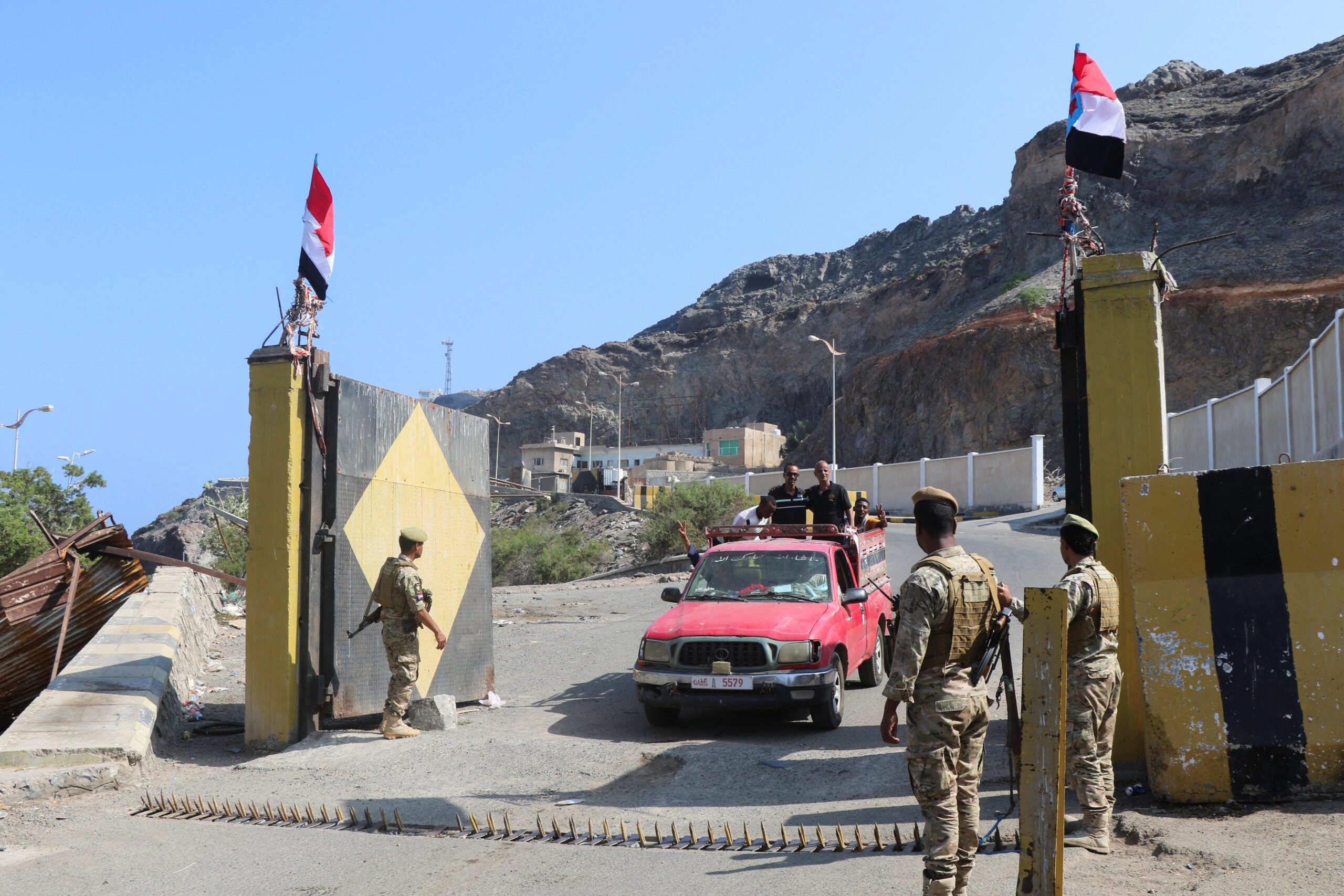
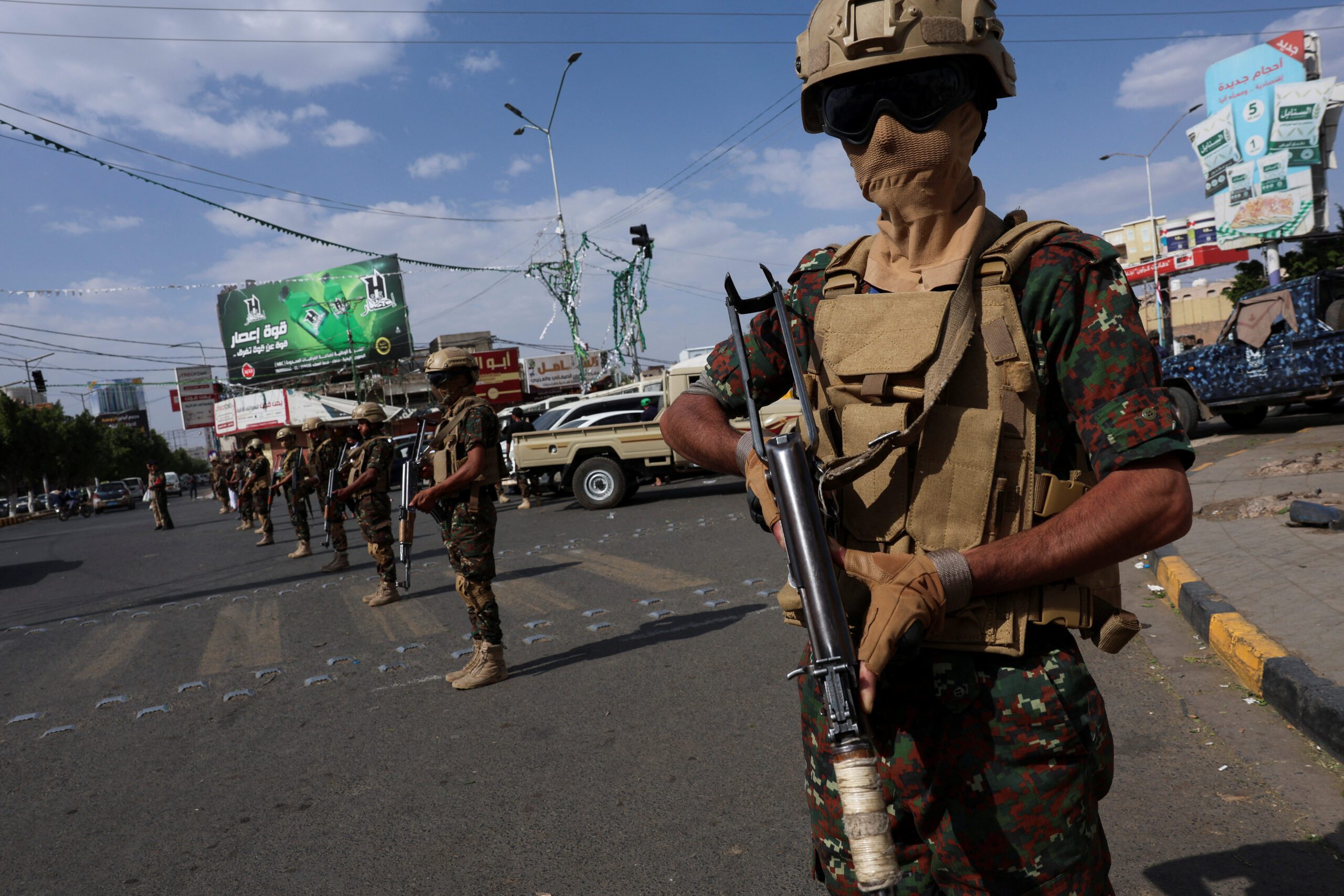
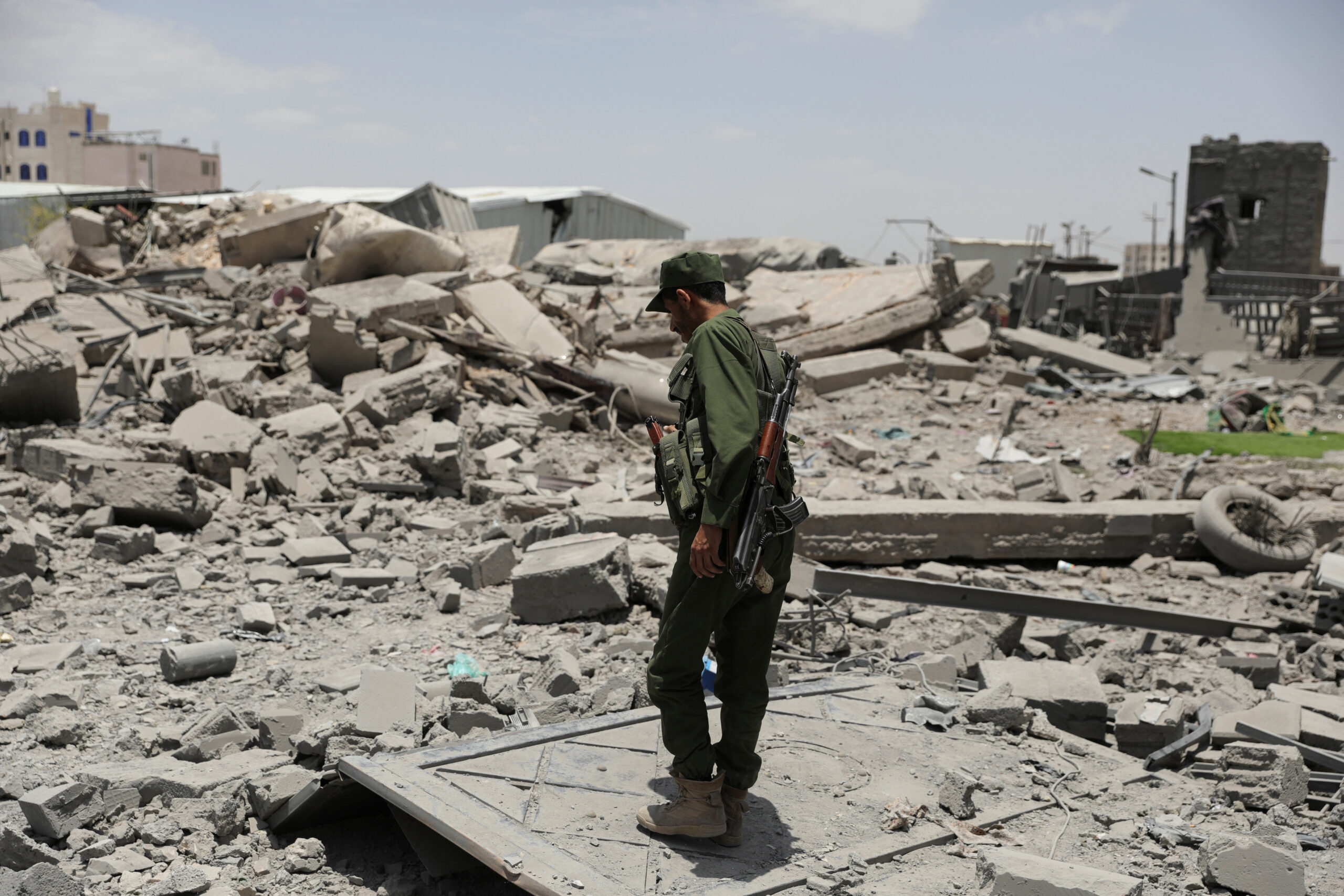
A Southern Transitional Council soldier stands at a check point in Aden, Yemen, Dec. 31, 2025. (AP Photo)
In early December 2025, the Southern Transitional Council gambled big, gobbling up territory across Southern Yemen in an apparent attempt to lay the groundwork for declaring an independent South Yemen. One month later, the STC is in full retreat, withdrawing from the territory it seized. Its forces were bombed by Saudi Arabia, then its primary international backer, the United Arab Emirates, announced its complete withdrawal from Yemen. Now the STC’s members are being summoned to Riyadh, and the STC’s dream of an independent Southern state appears shattered. Perhaps even more concerning, the STC’s failure to unify the South means that even a two-state solution in Yemen – with the Houthis in the North and an independent South – is unlikely in the foreseeable future.
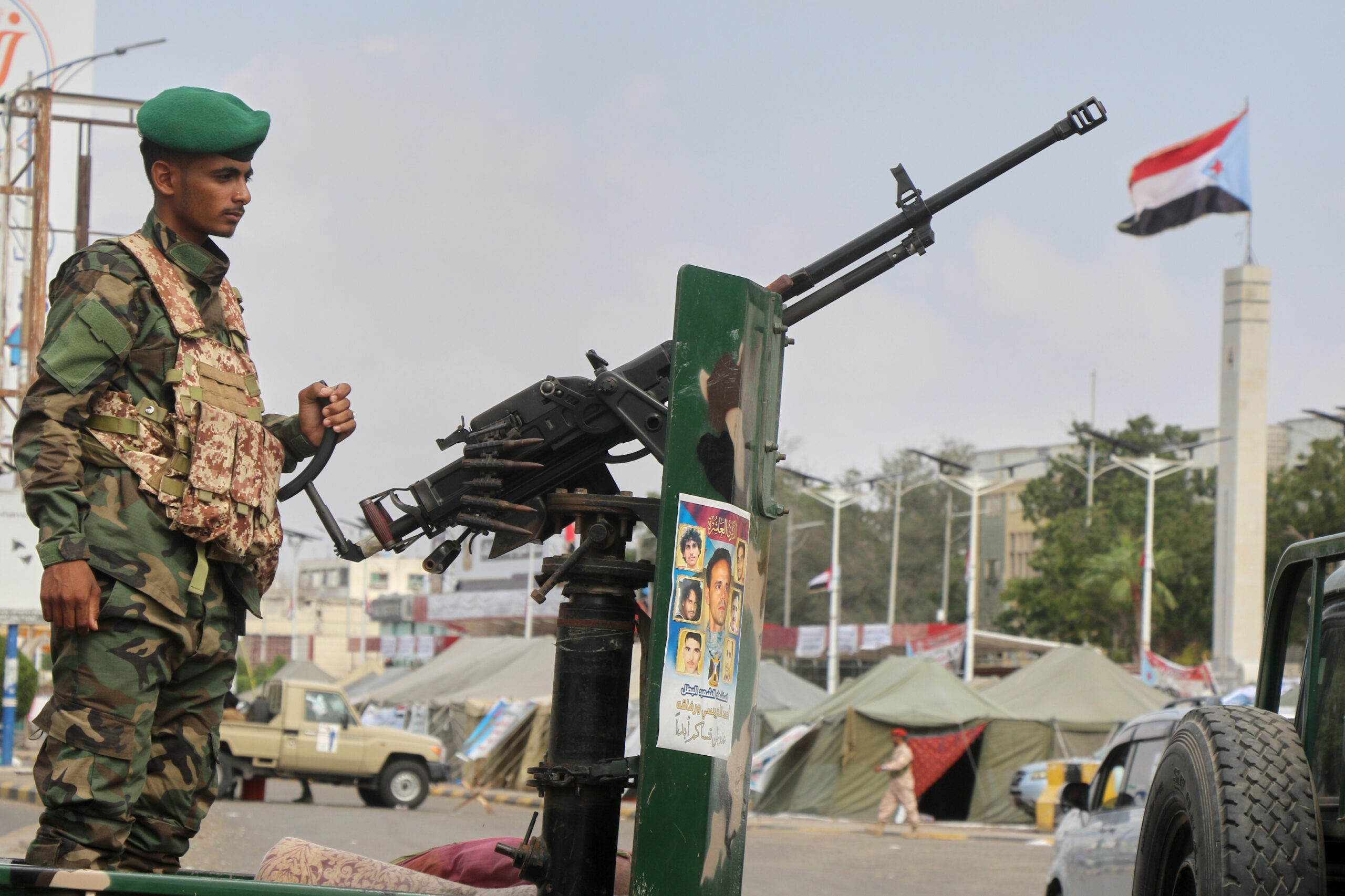
The STC’s December gamble, at least on the surface, made a lot of sense. The Presidential Leadership Council, the eight-member body that represents what passes for Yemen’s internationally recognized government, was in disarray and riven with infighting. The economic situation in the South was a disaster and looked to be growing worse. Plus, the STC seemed to have the acquiescence if not the active encouragement of the UAE. The STC was formed in 2017 with the explicit goal of forming an independent Southern state in Yemen. By late November and early December 2025, all it needed was a spark, which it got when a local commander in Hadramout deployed troops around an oil field in an attempt to secure more revenue. The STC responded with a military offensive, quickly taking much of the oil-rich governorate of Hadramout as well as Mahra, Yemen’s easternmost governorate on the border with Oman. Within days the STC had control of much of Southern Yemen, and it looked as if all that was missing was an official declaration of independence.
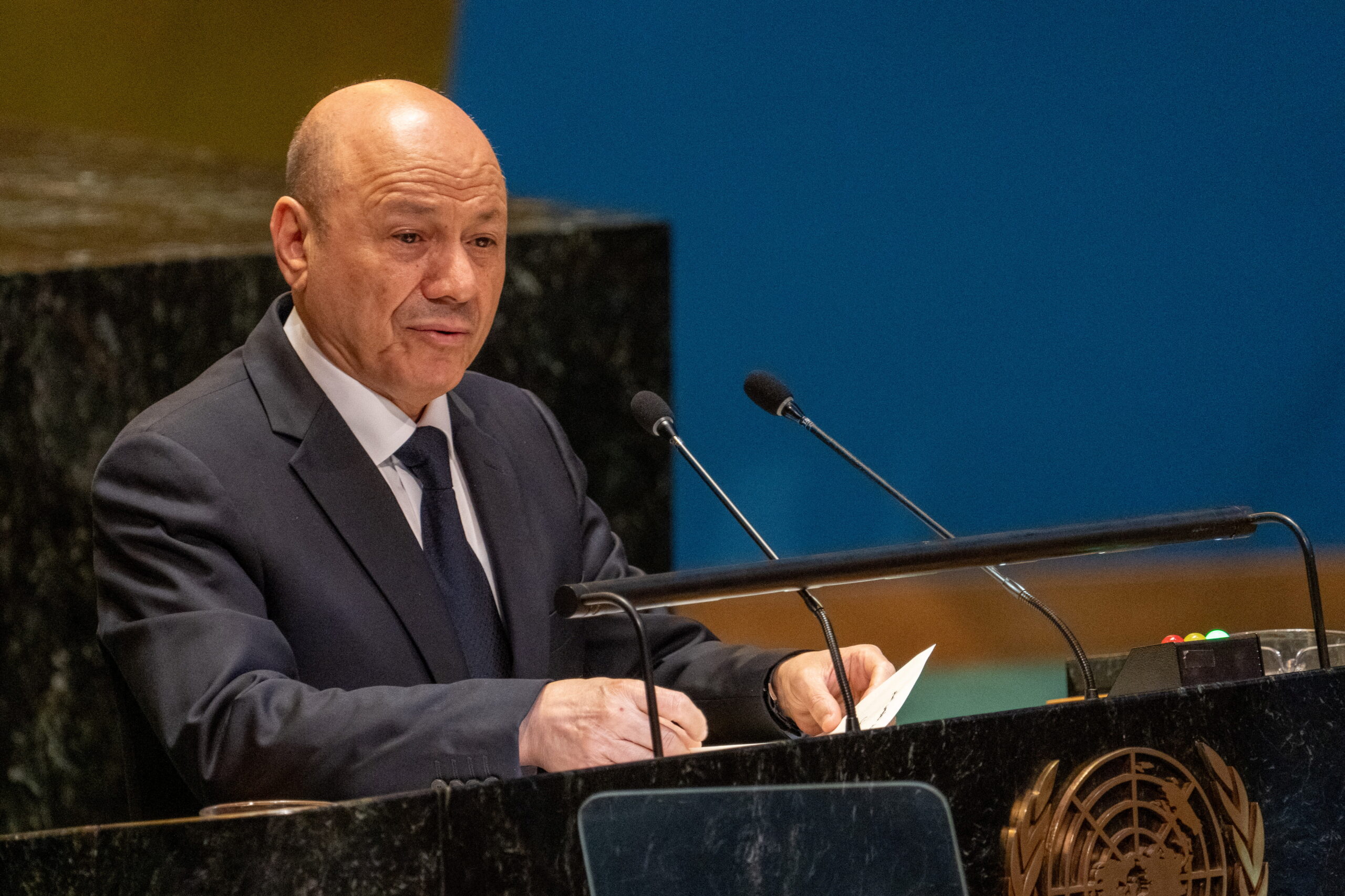
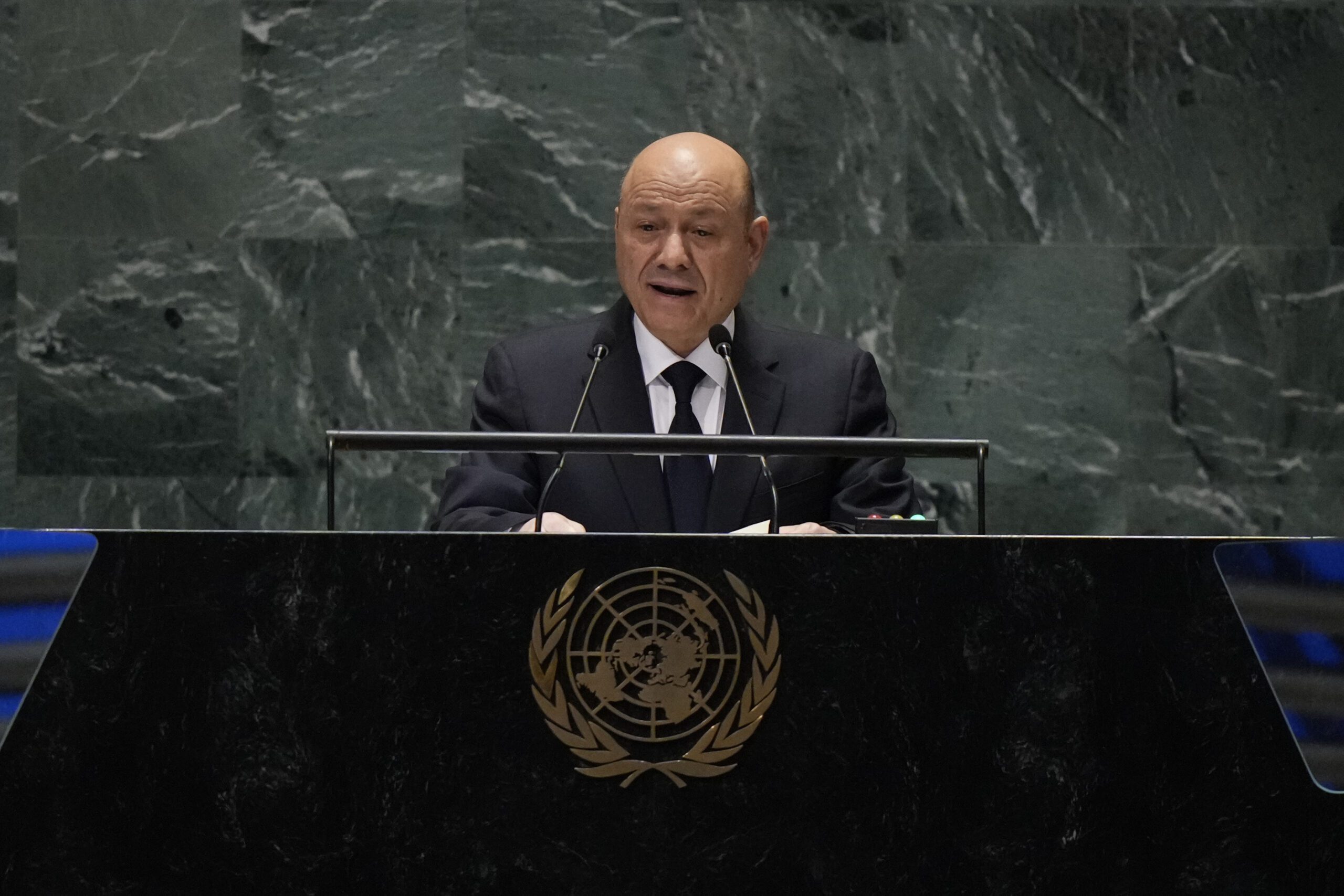
On December 26, Rashad al-Alimi, the head of the Presidential Leadership Council, called on Saudi Arabia to intervene militarily in Yemen to reverse the STC’s military gains. For many, Alimi’s request echoed the one made a decade earlier by then Yemeni President Abd Rabbu Mansour Hadi, who called on Saudi Arabia and the UAE to use military force in Yemen to expel the Houthis from Sanaa. That intervention exacerbated a conflict in Yemen that still hasn’t ended.
Despite that history, however, Saudi Arabia quickly signaled that it was willing to intervene militarily in Yemen, even against ostensible allies. This is likely because, as analyst Maysaa Shuja al-Deen pointed out, the STC offensive upended the “implicit power-sharing arrangement” that had held for much of the past several years. “UAE backed forces dominate coastal areas and islands and maintain strong influence in Aden, while Saudi-backed forces control land borders and oil facilities.”
The day after Alimi’s request, Saudi Minister of Defense Khalid bin Salman posted a statement on X calling for the STC to withdraw. When that didn’t work, Saudi Arabia carried out an airstrike on an Emirati shipment of arms and vehicles that was destined for the STC, though the UAE denied the shipment included weapons. Worried about the implications of a Saudi-Emirati conflict in Yemen, the UAE announced that it was withdrawing all of its remaining forces from Yemen, which effectively left the STC exposed without air cover. After that, Saudi Arabia and its allies on the ground made quick work of the STC, carrying out a few airstrikes and forcing the units that had advanced with such optimism a month earlier to retreat. In some cases, STC fighters were forced to flee the area in buses after their military vehicles were destroyed.
On January 2, Aidarous al-Zubaidi, the head of the STC and a member of the Presidential Leadership Council, attempted to save face by announcing what he termed a “constitutional declaration,” basically laying out a two-year transitional period for an independent Southern state. Saudi Arabia responded by summoning several members of the STC, who also sit on the Presidential Leadership Council, in an apparent attempt to divide the movement from within.
What comes next in Yemen is likely to be messy and chaotic. Already there has been looting in Hadramout and Mahra as well as calls for reform and transition within the STC. Whether it survives in its current form or is able to implement its two-year constitutional transition toward independence are both open questions as is what role the UAE will play in Yemen moving forward. Will it continue to support the STC to the degree it did before, or will it look to diversify and increase support to other proxies, such as Tariq Saleh, who are not tied to dreams of Southern independence? One thing is certain, the withdrawal of UAE troops from Yemen does not mean the end of the UAE in Yemen.
Beyond the immediate implications for the STC, however, are broader ones for Yemen. After nearly 15 years of protest, revolution, chaos, uncertainty, and war, the country seems more divided than ever. The STC, despite its vision of an independent Southern state, never had the type of popular support across the South that could make that dream a reality. Instead, it is and was largely a regional movement, with much of its leadership and backing coming from Dhala and Lahj, which are close to Aden but far from Hadramout, where the STC was pushing to take over. Meanwhile, Hadramis prize their own regional identity, and even a few independent Hadrami state flags have popped up on X recently. The same could be said about Mahra and Socotra, both of which have distinct languages, although neither has the economic resources of Hadramout. Local allegiances over a national identity, a handful of competing militias none of which are strong enough to compel others to bend to their will, and meddling outside powers, taken together, constitute a recipe for continued conflict.
The STC’s failed attempt at independence likely means that Yemen won’t split along North and South lines. There will be no return to pre-1990 borders, at least not anytime soon. Instead, Yemen appears headed for a future in which no one party will manage to achieve superiority. The country will be divided along regional lines with local warlords, backed by outside powers, seizing as much territory as they can hold and administering as they see fit. There may be a veneer of national government, but its power won’t stretch much beyond the capital. Such a country will continue to spread insecurity – from Houthi threats to Red Sea shipping and a still active al-Qaeda threat to drug smuggling and a refugee problem, Yemen’s challenge to the region is only going to grow.
The views represented herein are the author's or speaker's own and do not necessarily reflect the views of AGSI, its staff, or its board of directors.
The Southern Transitional Council is betting that if the South can be united under its leadership it can cordon the South off from the Houthis in the North, utilize oil and gas revenue, and create a stable and functioning state.
Negotiations in Riyadh will determine whether the Presidential Leadership Council emerges as a functional governing body or dissolves into a symbol of Yemen’s enduring divisions.
To eliminate the Houthis' capabilities, the United States will need the support of Yemen's Presidential Leadership Council, a body plagued by infighting and incompetence.
The Southern Transitional Council is betting that if the South can be united under its leadership it can cordon the South off from the Houthis in the North, utilize oil and gas revenue, and create a stable and functioning state.
By attacking the Houthis’ support system, the United States can use indirect means to accomplish what it couldn’t through direct military intervention.