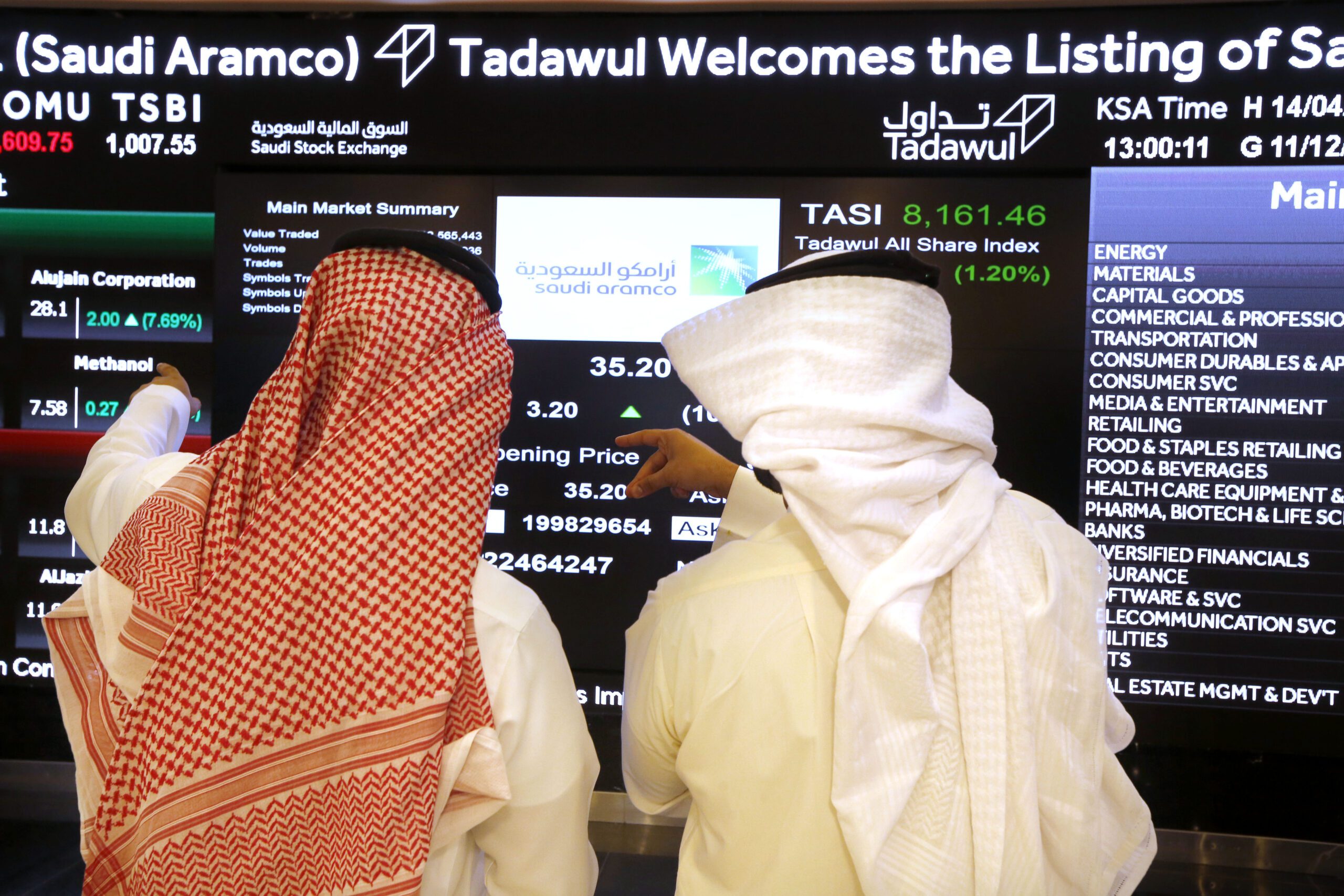
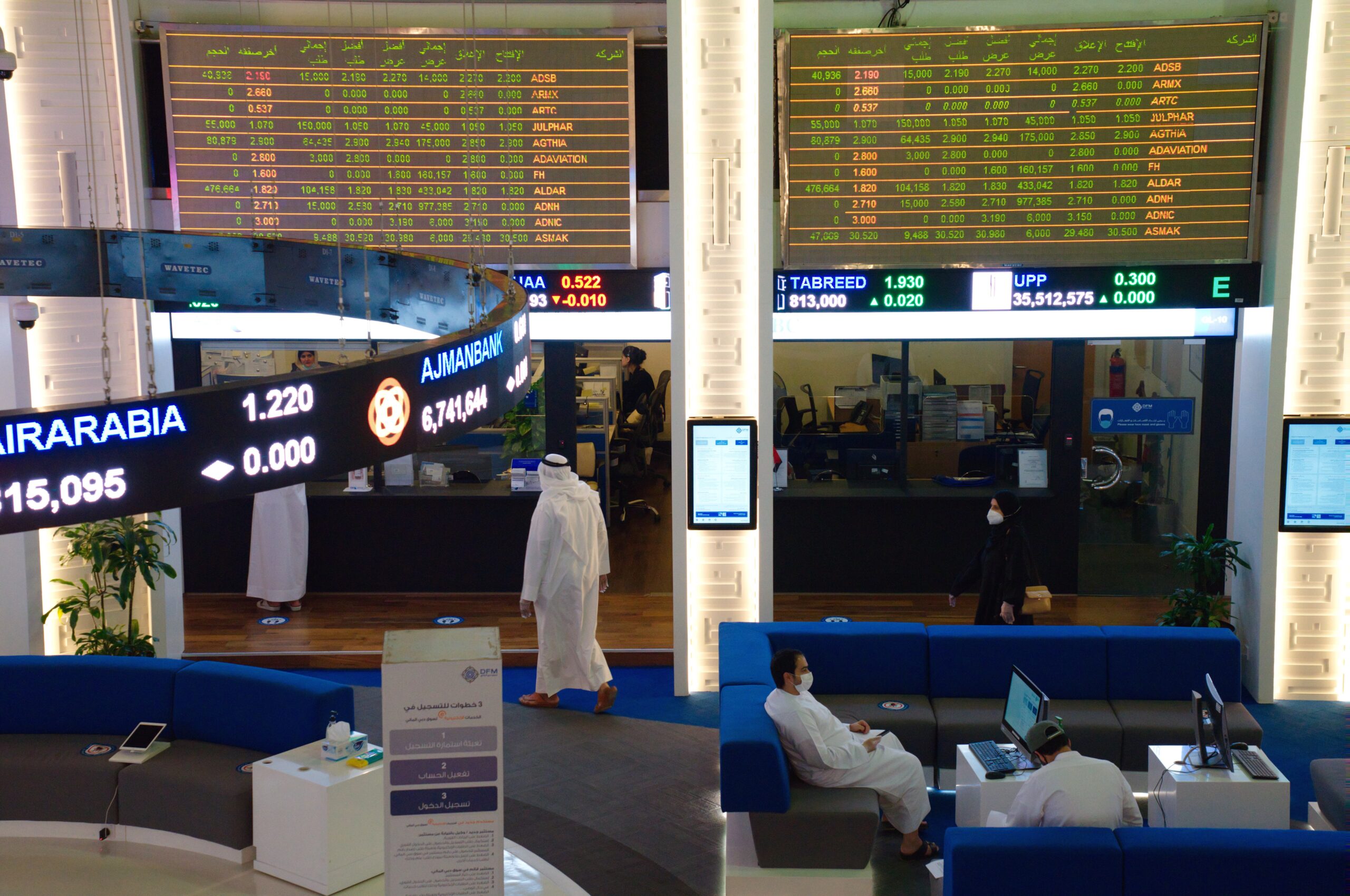
Saudi stock market officials watch the market screen displaying Saudi Arabia's state-owned oil company Aramco after the debut of Aramco's initial public offering on Riyadh's stock market in Riyadh, Saudi Arabia, Dec. 11, 2019. (AP Photo/Amr Nabil)
In the third quarter of 2025, capital markets in the Middle East and North Africa raised around $700 million through 11 initial public offerings. Saudi Arabia accounted for eight of these listings and raised $637 million in total, making it the most active IPO market in the region. The top three IPOs in the kingdom alone brought in $514 million and spanned a range of sectors, including real estate, fitness and leisure services, and construction.
Since 2022, there has been an exceptional wave of IPO activity in Gulf stock exchanges, raising over $50 billion. Saudi Arabia and the United Arab Emirates accounted for most of these proceeds, followed by Oman to a lesser yet still notable extent. These listings have taken place across the Saudi Stock Exchange, Saudi Parallel Market (Nomu), Abu Dhabi Securities Exchange, Dubai Financial Market, and Muscat Stock Exchange.
Government-led initiatives and regulatory reforms have laid the foundation for the Gulf’s IPO surge, strengthening capital markets and opening the door for a wider range of companies to list. What began as a wave dominated by large, high-profile issuers in energy, logistics, and utilities has since expanded to include mid-sized and emerging firms across industries alongside a noticeable shift toward more selective investor behavior. Taken together, these changes suggest that the region’s IPO landscape is entering a more mature and globally aligned phase.
Government-Supported Momentum
Government-led initiatives and regulatory reforms across Gulf states have helped set the stage for the strong IPO momentum in recent years. Capital markets now serve as a key pillar of these countries’ economic diversification strategies. In Saudi Arabia, the Financial Sector Development Program was established in 2018 under Vision 2030 to transform the kingdom’s capital market into a global financial hub. That same year, a privatization program was launched to boost private sector participation by identifying select state-owned assets across various industries to be privatized and listed on the market.
In the years since, Saudi Arabia has rolled out a series of additional reforms to enhance capital market activity. Notably, in 2024, Saudi Arabia introduced the “Updated Investment Law” to streamline the registration process for foreign investors, ensure equal treatment between foreign and domestic investors, and provide protection against expropriation. More recently, the Capital Market Authority, Saudi Arabia’s financial regulatory entity, has reportedly been considering removing restrictions for foreign investors when buying Saudi stocks in an effort to boost capital market liquidity.
In the UAE, both Dubai and Abu Dhabi have taken active steps to deepen their capital markets and attract a more diverse base of issuers and investors. In Dubai in late 2021, the government announced its plan to list 10 state-owned assets on the Dubai Financial Market as part of a broader push to expand the emirate’s stock market size to $816 billion. Abu Dhabi, meanwhile, has focused on strengthening investor access and benchmark visibility, with the Abu Dhabi Exchange partnering, for the first time in the region, with FTSE Russell, a subsidiary of the London Stock Exchange Group, in March 2022 to launch a locally branded benchmark index, the “FTSE ADX 15 Index” as part of a strategy to attract a wider base of international investors.
In January 2022, the UAE shifted to a Saturday-Sunday weekend, from the Friday-Saturday weekend common across the region, to align with global markets. Additionally, the Securities and Commodities Authority issued the Gulf’s first regulatory framework for special purpose acquisition companies.
For Oman, increasing private sector participation in the country’s economy is one of the main objectives of its Vision 2040. In 2022, Oman implemented the “Securities Law” to strengthen investor protection and increase participation in raising capital. In September, Muscat Clearing & Depository introduced its “Internal Regulatory Rulebook” to better align the country’s capital market with international best practices. Additionally, in November, the Muscat Stock Exchange, in cooperation with several government entities, launched the Alternative Investment Market to offer small and emerging companies a more flexible platform for public listing, supporting broader private sector involvement in capital markets.
Broader and More Diverse IPO Markets
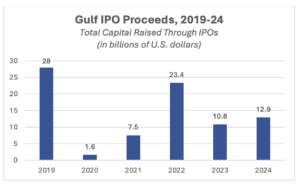
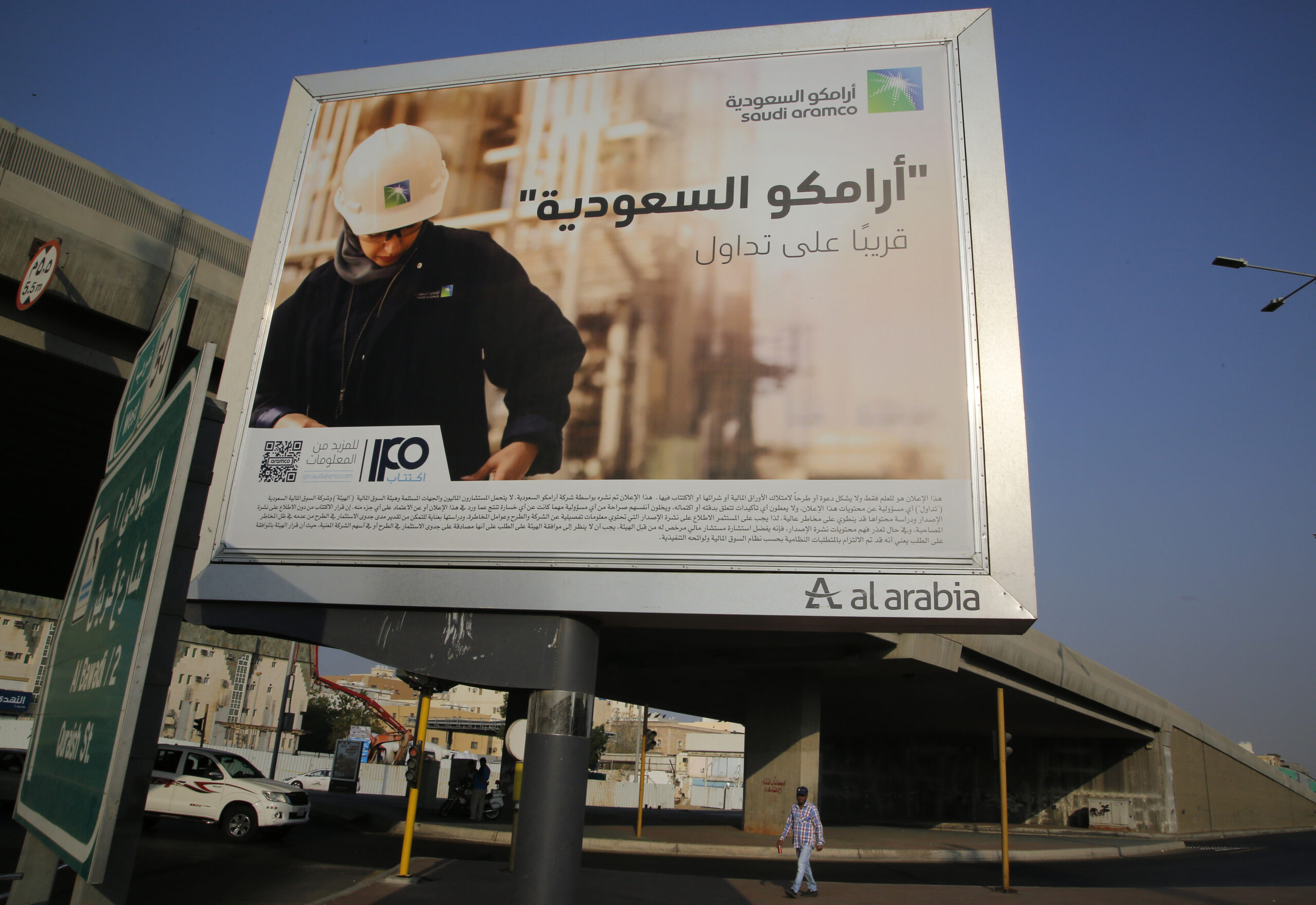
Saudi Aramco’s 2019 IPO initially raised $25.6 billion, however, this grew to $29.4 billion after the company exercised its “greenshoe option,” a tool that enables underwriters to sell additional shares to stabilize the share price if demand exceeds supply. The IPO became the largest in history, helping pave the way for other state-linked entities in the region to go public in the years that followed. The momentum accelerated into 2022, when Gulf states, namely Saudi Arabia and the UAE, raised $23.4 billion through IPOs, accounting for roughly 13% of global issuance. The region maintained a strong pipeline in 2023 and 2024, with Saudi Arabia, the UAE, and Oman accounting for the majority of issuance, collectively raising $10.8 billion in 2023 and $12.9 billion in 2024. However, in the first half of 2025, Gulf markets raised $3.4 billion, reflecting a 6% year-on-year decline, likely driven by wider global market uncertainty related to unfavorable trade tariffs that led some firms to delay listings.
Although energy, logistics, and utilities dominated in terms of total capital raised, the overall IPO count in 2022 and 2023 was diversified, with a growing number of smaller and medium-sized companies going public across sectors, such as consumer services, pharmaceuticals, and infrastructure. Notable listings from other sectors included Americana Restaurants at $1.8 billion, Salik at $1 billion, Nahdi Medical Co at $1.36 billion, and PureHealth at $986 million.
Besides the growing participation of smaller-sized firms and a wider sectoral base in Gulf IPO markets, investor behavior in the Gulf is also evolving. This was evident in late October, when Dubai-based classifieds platform Dubbizle announced its plans to postpone its listing, despite robust IPO activity in the region. The company was expected to seek a valuation of around $2 billion through its listing, but the delay came at a time when several newly listed UAE-based firms, including Talabat Holding, Lulu Retail Holdings, and Alec Holdings PJSC, have been trading below their offer price.
This reflects a mismatch between issuer valuation expectations and investor appetite, suggesting that investors in the Gulf are becoming more selective and performance driven in their decisions, marking a notable shift from earlier years when IPO deals were often oversubscribed regardless of financial performance.
As capital markets in the Gulf continue to develop, the next phase of IPO activity will likely place greater emphasis on company performance, transparency, and sustainable earnings growth, mirroring investment behavior in more mature global markets.
The views represented herein are the author's or speaker's own and do not necessarily reflect the views of AGSI, its staff, or its board of directors.
The Saudi government does not see a viable, long-term future in oil and gas but continues to hope that investors will measure the country’s crown jewel, Saudi Aramco, differently.
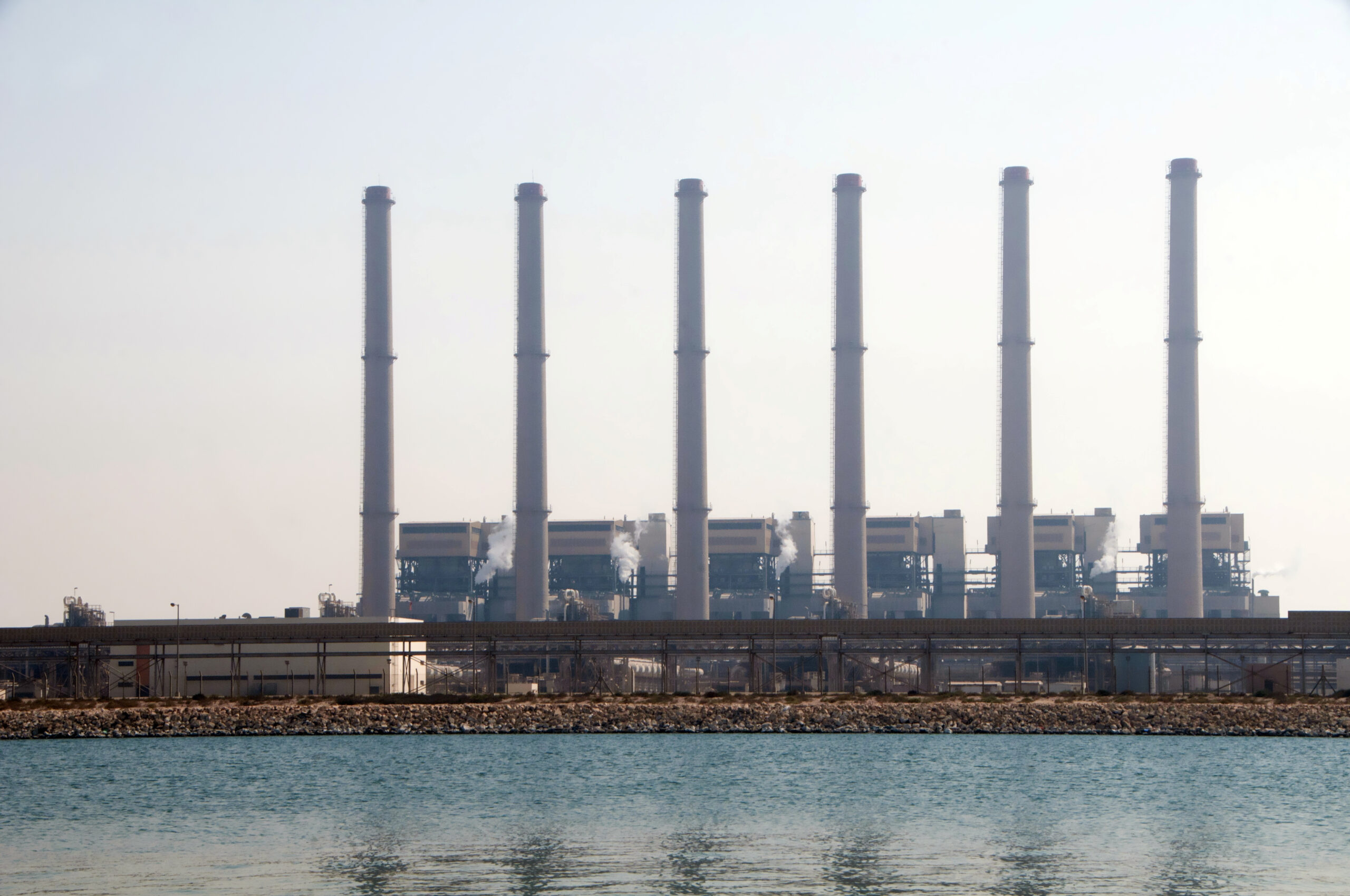
Gulf governments are looking to privatize their energy-intensive utility sectors, aiming to make public utilities more environmentally and financially sustainable.
Amid a global financial slump, government reforms in the Gulf Arab states have helped stock markets achieve a remarkable boost in market capitalization.
New investment deals, mainly from the Gulf states and Turkey, are opening a path for Syrian reconstruction. But the fragile security situation and financial environment remain hurdles for foreign investment.
While hydrocarbons will likely continue to dominate Kuwait-China economic ties, the two countries are increasing cooperation in sectors such as construction, logistics, and renewable energy, suggesting a growing appetite to broaden ties beyond oil.
For Syria to have a chance at stability, the United States and the EU need to urgently consider lifting the layers of economic sanctions imposed on Syria under Assad and allow Gulf countries to help rebuild the war-torn country.