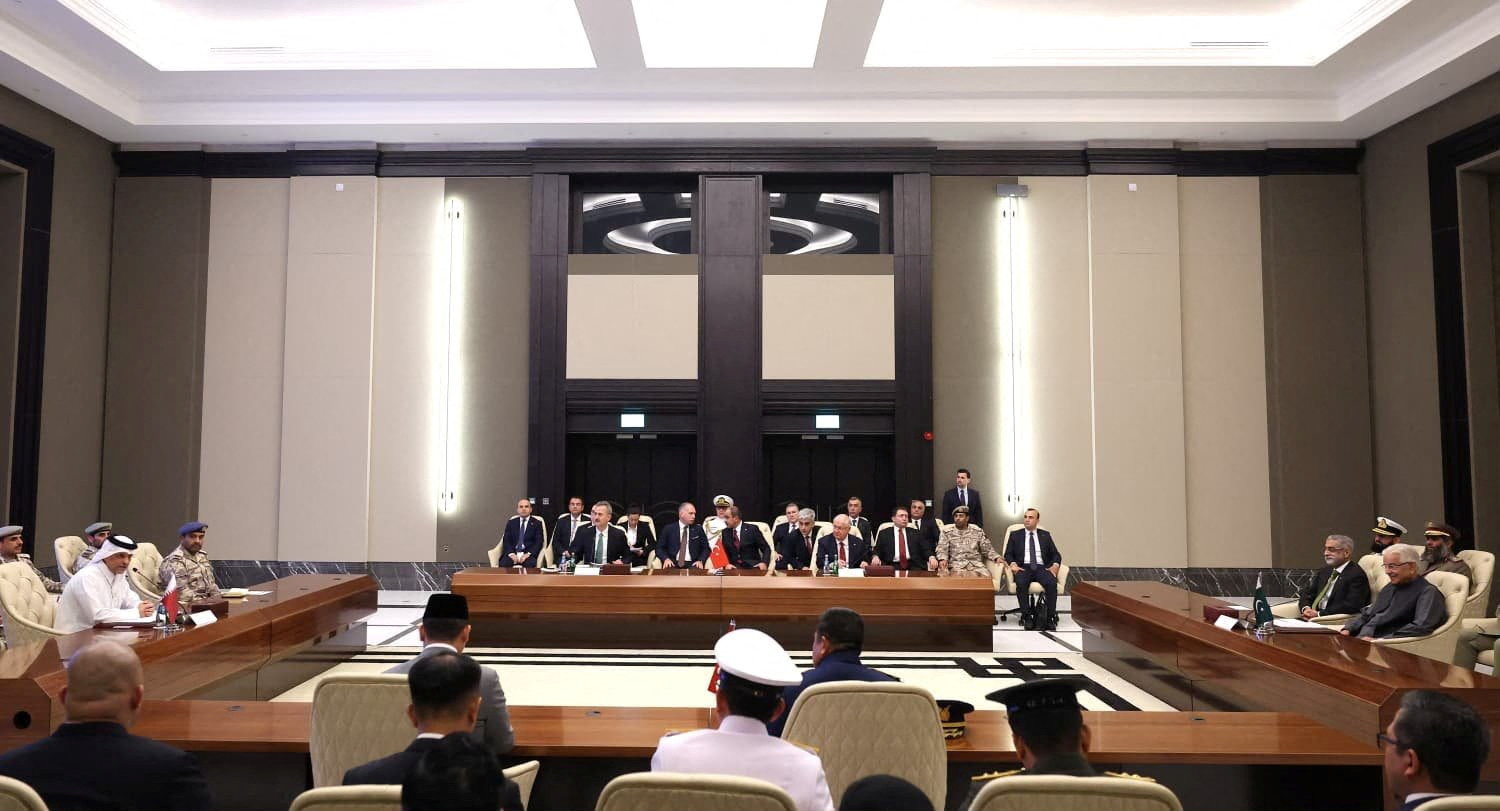
Turkey, Qatar, Pakistan, and Indonesia sign an agreement aimed at boosting defense cooperation and strengthening defensive capabilities, in Doha, Qatar, October 21. (Qatar News Agency/Handout via REUTERS)
Qatar’s Saoud bin Abdulrahman al-Thani, deputy prime minister and minister of state for defense affairs, revealed at the Global Security Forum in Doha on October 19 that Qatar was developing a defense production hub in partnership with another, unnamed country in the region as well as France, the United Kingdom, and the United States. While not detailing specifics, he indicated that Qatar was “building capability” against the threats of ballistic missiles, drones, and cyberattacks. This could indicate a possible expansion of manufacturing in the region to take the burden off production lines in Europe and the United States while reducing the time from manufacture to delivery. Such a change to regional manufacturing will come with a need for some significant policy and commercial shifts in the West that would increase agency for participating Gulf states and boost sovereignty around defense operations.
The announcement marked another expansion in Qatar’s collaborative defense industrial strategy following the Badr agreement among Qatar, Turkey, Indonesia, and Pakistan on October 21. When taken in tandem, the two agreements show that Qatar is seeking to position itself as an international defense industrial enabler. At the same time, the partnership with Western countries shows the significant interest in both supporting allied states in the region while moving production away from home factories that may prioritize domestic needs. The role of the unnamed Gulf country may, however, indicate some ongoing negotiations among the participating countries that may delay implementation.
Scaling – A Benefit for the Region and Its Partners
A hub-based approach to equipment production would, ultimately, help support regional defense industrial ambitions. Building consumable and expendable systems, such as air defense interceptors or ammunition, would reduce time between order and delivery and scale inventories accordingly. Similarly, promoting the use of common military platforms and systems among partner countries would strengthen interoperability while creating economies of scale and expanding opportunities for regional defense exports. This could include countries within the region as well as international partners.
Collaboration among Gulf countries would require a common approach to procurement covering demand signals for production pipelines as well as supply chain agreements that would continue to operate during times of increased political competition and crisis. The pattern of diplomatic crises and resolutions over the past decade has had a broad impact on defense readiness, with political disputes between Saudi Arabia, the United Arab Emirates, and Qatar causing breakdowns in trade and multilateral security operations in the region.
Properly managed defense collaboration could be one way to help contain intra-Gulf competition and periodic crisis, as mutual security threats are recognized and addressed. Developing a production hub could prove challenging, as existing industrial capability for localized development or licensed manufacture of air defense systems is limited. Hesitation for foreign manufacture or assembly of U.S. anti-aircraft systems, such as the Patriot missile, has caused some consternation among allies in Europe and has only begun to be unblocked over the past year – despite the Patriot system being used by European armies since the 1980s. Areas where collaboration could be achieved, such as munitions manufacturing, could be a “quick win” for the region through existing domestic industrial capabilities. Scalable production supporting rearmament after the current conflict with Iran serves regional security needs and self-sufficiency in addition to further development centered around future procurement.
The expansion of production opportunities also lends itself to supporting regional ambitions for defense technology exports. The UAE’s Edge Group has highlighted its success with the integration of the Skyknight missile into Rheinmetall’s Skynex air defense system as well as exports of other platforms and equipment, from small arms to naval vessels.
Partnerships with France, the U.K., and the United States also have the potential to build up pre-positioned war materiel for operational deployment. The closure of the U.S. Army’s pre-positioned stock facility in Qatar in 2021 and U.S. Marine Corps’ facility in Kuwait in 2022 moved logistics hubs farther from the Gulf region. However, operational requirements for equipment to be located closer to the Gulf area of operations reduces the logistical burden and would underscore the need to maintain weapons and equipment within the region. Similarly, pre-positioned stocks support faster times for operations, as logistical buildups can utilize equipment already in the region. Positioning manufacturing capability closer to deployed bases may prove a cost savings for allied forces and help to increase defense equipment exports for regional manufacturers.
Reinforcing Western Relationships
The integration of regionally manufactured equipment would come with a corresponding entrenchment of Western technological partnerships and standards. Creating an integrated air and missile defense system with Western technology requires secure data links and communication systems that are governed by security protocols. For security and operational reasons, Chinese and Russian equipment would not be supported nor would equipment from some non-NATO Western partners. Fully integrating new technologies can be a lengthy process as a result, requiring sponsorship by a partner country or the operation of systems in parallel.
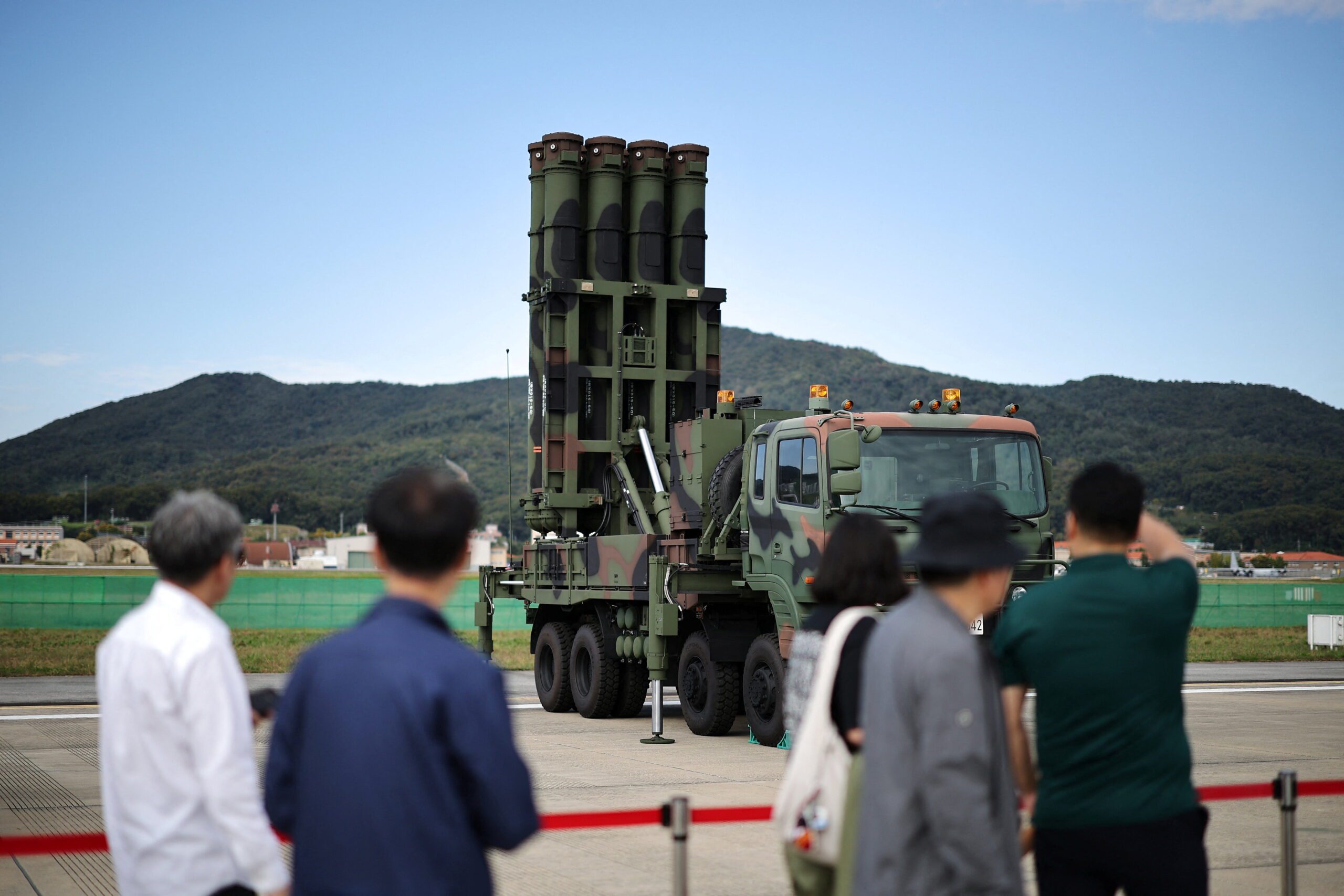
To support rapid integration and localized manufacture, the smoothest and quickest route to deployment is to turn to systems and technologies that are already in use or approved by Western partners. However, Western procurement processes driven by a need for technological agility still lag operational demand. While the war in Ukraine has driven innovation in unmanned systems and methods to counter them, key defensive abilities remain rooted in exquisite systems, such as the Patriot missile system, that cost too much to effectively prevent massed attacks. Integrating Gulf-manufactured Western technology and defensive systems may limit the options available to states increasingly trying to diversify their air defense systems. Procurement diversification, as with the UAE’s acquisition of the South Korean LIG Defense & Aerospace M-SAM, can lead to more systems in operation that may not integrate with Western command-and-control systems that coordinate air defense.
An Erosion of Western Localization?
While investment in production facilities in the region would help to ensure scalable production and shorten logistics trains, there would likely be pushback from the domestic populations of international partners. Policies to support domestic industry, such as the U.S. “Buy American, Build American” regulations have supported domestic employment in the defense industry and the retention of key technologies within national borders.
The leveraging of offset and industrial participation policies in the Gulf has created a paradox – foreign companies are being asked to sacrifice workshare or technology capabilities to win contracts despite domestic politicians pushing for increased manufacturing at home. The scaling up of defense manufacturing has the added benefit of appealing to voters in France, the U.K., and the United States, showing that the government is taking foreign policy, defense, national security, and workforce growth seriously.
There may, however, be an underlying benefit for Western companies that have been trading in the region. As Qatar, Saudi Arabia, and the UAE have been significantly scaling up their inventories of high-end equipment, a corresponding offset and industrial participation burden has weighed heavily on both buyers and vendor companies. Localization of defense equipment manufacturing, particularly consumable or attritable systems that are deployed at scale, may work to discharge large obligations that are potentially becoming onerous or at risk of default.
The Changing Security Dynamic
Ultimately, enhancing defense industrial capabilities in the region in participation with Western partners could lead to a changing security dynamic between the Gulf Arab states and the West. As the Gulf Arab states have been dragged onto the front line of the Iran war, prioritizing and expanding defensive capabilities means that Gulf countries can decide where, and how, their defenses are deployed to protect what they define as critical locations – economic, military, or political.
The views represented herein are the author's or speaker's own and do not necessarily reflect the views of AGSI, its staff, or its board of directors.
The war is demonstrating that missile defense can blunt Iran’s strategy – but only if the United States and its regional partners ensure that their defenses can keep pace with the scale and speed of future conflicts.
As Iranian strikes exposed structural gaps, Gulf states are expanding their air defense architecture through new suppliers, lower-cost systems, and operational partnerships.
If the U.S. F-35 sale goes through, it will add a new layer to Saudi airpower. But the fifth-generation fighter by itself will not address Saudi Arabia’s present and future vulnerabilities.