Cracks Showing in OPEC+ Alliance as Ministerial Meeting Approaches
Signs of strain within OPEC could reflect negatively on the market by casting doubt on the commitment of OPEC+ countries to adhere to production targets.
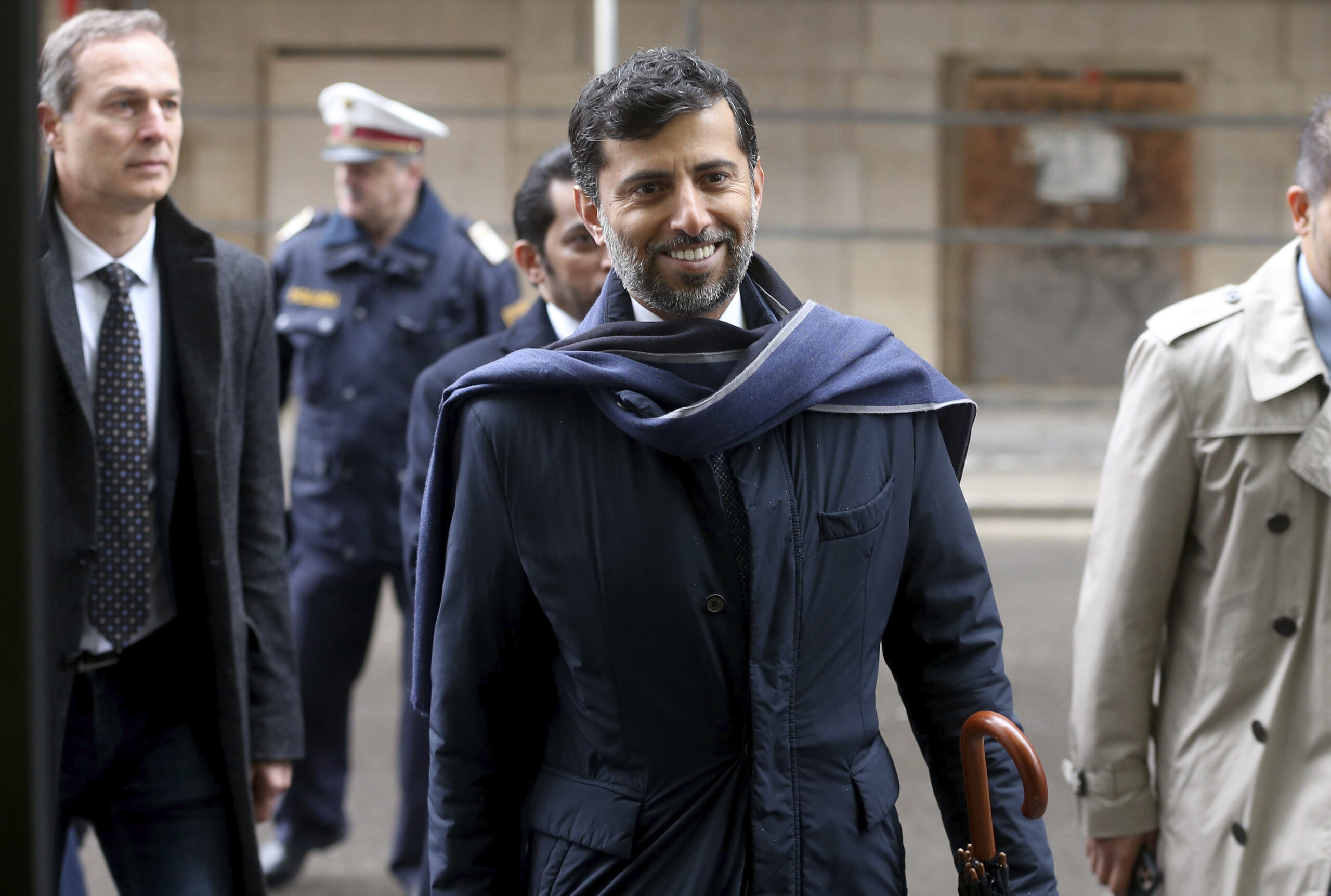
UAE Minister of Energy Suhail Mohamed Faraj Al Mazrouei, center, arrives for a meeting of OPEC, and non-OPEC members in Vienna, Austria, March 6. (AP Photo/Ronald Zak)
Oil producers are likely to continue production restrictions through early 2021 after OPEC and the International Energy Agency revised down their oil demand forecasts for 2020 and 2021. Coupled with higher supply, mainly from Libya and Iraq, the task of balancing the market will pose a dilemma for energy ministers from the OPEC+ alliance when they meet December 1.
There are already signs of strain within OPEC amid reports that the United Arab Emirates is questioning the benefits of membership. Iraq, meanwhile, has been exceeding its allocated oil production target to shore up its crumbling economy. Iraq’s deputy prime minister, Ali Allawi, said on November 23 that OPEC should take account of members’ economic and political conditions. Speaking at a virtual conference, he said Iraq “had reached the limit of our ability and willingness to accept a policy of one size fits all.”
This has coincided with the return of Libyan oil to markets after summer shutdowns caused by internal conflict and a resumption of U.S. production shut in by hurricane activity. Overall, this has translated into 2 mb/d of additional oil supply, which may frustrate efforts to draw down massive inventories that accumulated as demand plummeted in the early months of the year due to the coronavirus pandemic.
All this is testing the group’s cohesion, which could reflect negatively on the market by casting doubt on the commitment of OPEC+ countries to adhere to production targets.
A brief spike in oil prices earlier in November had little to do with fundamentals as the market reacted to news that effective coronavirus vaccines could be rolled out in a matter of weeks.
The IEA’s November Oil Market Report notes that vaccines are unlikely to boost demand until well into next year. Market fundamentals and weak historical data as well as the resurgence of the coronavirus in Europe and the United States prompted the IEA to revise oil demand down by 700,000 barrels per day for the first quarter of 2021. Oil demand for 2020 has been revised to 8.8 million barrels per day compared with an October estimate of 8.4 mb/d. For 2021, the OECD’s energy watchdog revised its outlook for demand by 120,000 b/d to 5.8 mb/d, some 3 mb/d below the pre-pandemic level. OPEC’s November Monthly Oil Market Report is even more bearish in its outlook, revising this year’s demand down by 300,000 b/d. It expects demand to contract by 9.8 mb/d year on year as a result of weaker-than-expected oil use in the third quarter from the major economies of North and South America and containment measures in several European countries. For the fourth quarter of 2021, it reduced demand estimates by 1.2 mb/d compared with the lower IEA estimate of a 700,000 b/d drop.
The IEA’s analysis assumes additional supply of around 2 mb/d from OPEC+ starting in January 2021, when the oil alliance had hoped to start a phased rollback of production cuts agreed to in April. This now may be deferred in light of the latest revisions and the apparent reluctance by some producers, like Iraq and Nigeria, to wait out the crisis. Libya, which is not party to the agreement, has increased oil production from around 100,000 b/d in August to just over 1 mb/d in November, an unexpected development that will have to be taken into account. Iraq, which relies almost exclusively on income from oil sales to fund the government, had pledged to compensate for overproduction, but its commitment faltered as its revenue sank, making it difficult for the government to meet public sector payrolls. Its exports surged in October by 263,000 b/d over September’s amid indications from Iraqi officials that Baghdad may be unable to sustain a period of lower production due to its perilous fiscal position.
Source: Kpler Analytics
Source: Kpler Analytics
This has sewn seeds of discord within OPEC, which has made much of the need for full compliance with the 10 mb/d production cut agreement, but it alone would not imperil the group’s survival. However, the threat of a defection by the UAE risks causing irreparable damage to OPEC, which marked its 60th anniversary in September. Energy Intelligence reported on November 17 that the UAE, OPEC’s third-largest producer after Saudi Arabia and Iraq, was holding internal discussions about its position in the OPEC+ alliance and questioning the merits of OPEC membership. It cited grievances by the UAE and a number of producers with Saudi-Russian domination of the group. A statement by UAE Minister of Energy Suhail Mohamed Faraj Al Mazrouei did not explicitly deny the reports and failed to quell speculation as to the country’s intentions: “As a reliable and longstanding member of OPEC, we have always been open and transparent in all our decisions and strategies in support of OPEC.”
The reports came after the UAE, which has a track record of respecting OPEC quotas, broke ranks in the summer and raised its oil production, citing the need for associated gas during the peak demand period for electricity generation. It compensated for the increase by making steeper reductions in September and October, but the act of truancy did not go unnoticed. Rumors have swirled for some time about cracks in the relationship between Saudi Arabia and the UAE because of policy differences mainly over Yemen and Syria. On OPEC oil policy, the two Gulf Arab allies have historically been aligned, but the changed dynamics with the introduction of Russia as a dominant force within the expanded oil coalition has rankled Abu Dhabi.
Whether there is substance to the reports or not, they distract from the more urgent matter of managing a delayed recovery when not all members appear fully on board. The 13 members of OPEC produced 24.39 mb/d of crude oil in October, based on secondary source estimates. Taking into account the revised demand estimate, demand for OPEC oil in 2021 is estimated at 27.4 mb/d, which gives the group some room to maneuver if demand picks up in the first half of the year. A deferred decision to relax output restraints into the second or third quarter would allow stocks to draw down faster and defend oil prices, currently in a range of $40 to $45 per barrel. However, this would require a level of discipline that, given recent developments, is not guaranteed.
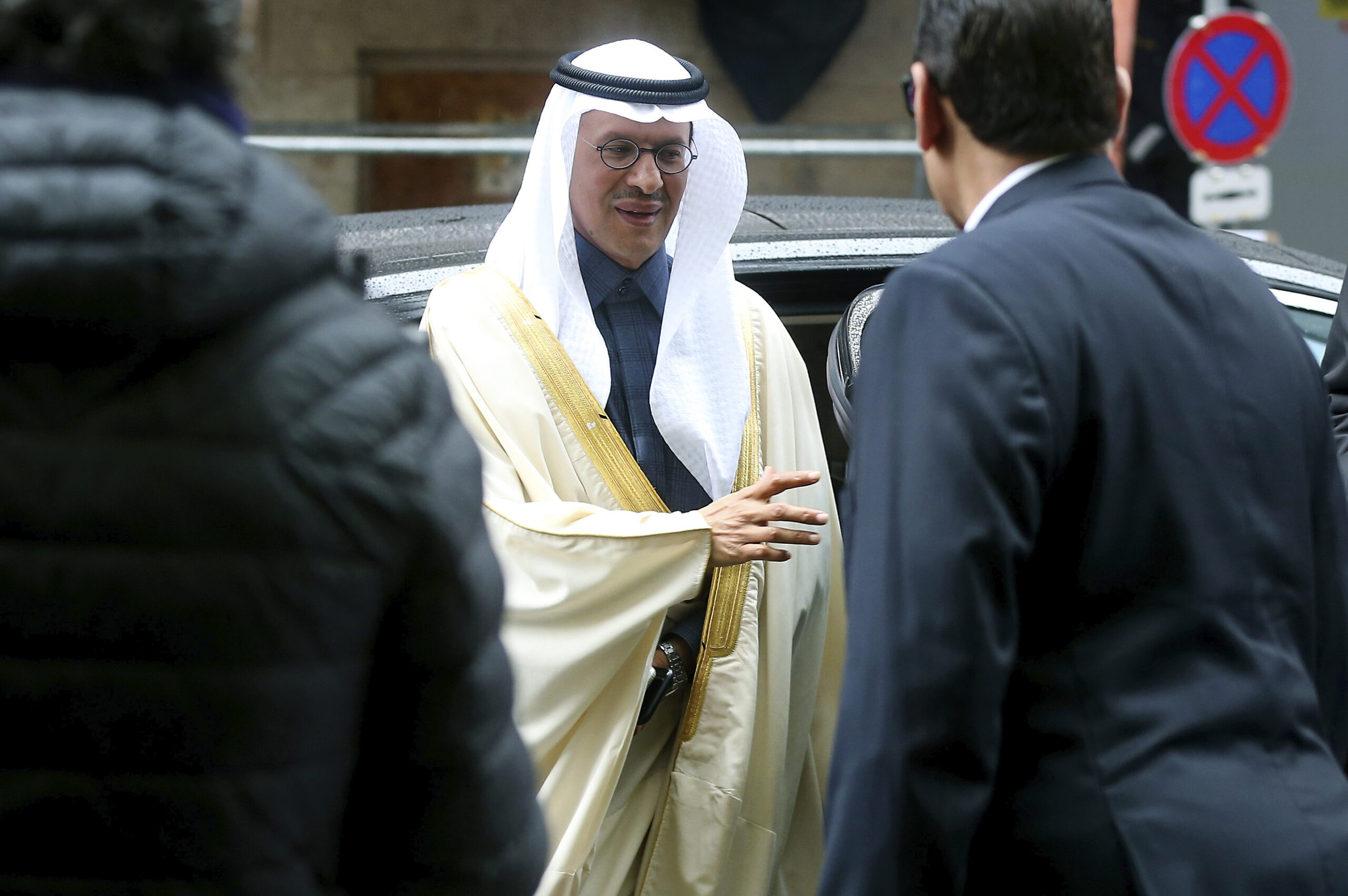
Saudi Minister of Energy Prince Abdulaziz bin Salman has insisted in remarks to fellow OPEC ministers, since he struck the hard-won deal with Russia, on the need for full adherence to the production cuts. Libya and Iran are exempt because of their special circumstances, but Iraq is not. As one of OPEC’s top producers, Iraq’s participation is crucial if OPEC and its allies are to succeed in managing the market through the turbulent months ahead.
The views represented herein are the author's or speaker's own and do not necessarily reflect the views of AGSI, its staff, or its board of directors.
AGSIW's sixth annual Petro Diplomacy conference focused on the impact of the coronavirus pandemic on the energy sector and the transition to a low carbon economy.
There was a growing war risk premium in the oil markets tied to escalating regional tensions; the shift from shadow confrontation to direct military action changes the calculus.
From the Gulf to the eastern Mediterranean and North Africa, governments are recalibrating fiscal terms, monetization strategies, and partnership models to attract international players.
A founding member of OPEC is now effectively under external control, raising questions about sovereignty, influence, and the resilience of producer-led market management.